PA Public Adjuster in Tampa: Your Complete 2026 Guide to Hiring the Right Claims Advocate
Quick Answer
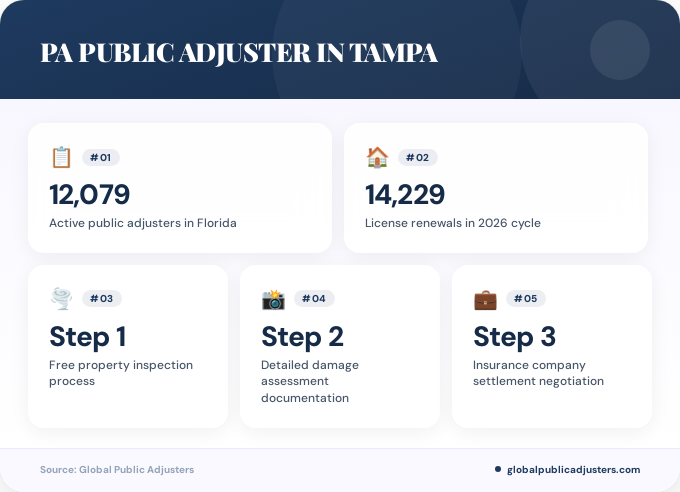
A PA public adjuster in Tampa is a state-licensed professional who represents homeowners and business owners, not the insurance company, when negotiating a property damage claim. Florida’s public adjuster workforce remains large, with14,229 license renewalsreported in the 2026 cycle and12,079professionals actively practicing statewide, making Tampa a competitive but well-served market for claim advocacy.
Here’s a number that should give every Tampa homeowner pause: Florida’s public adjuster workforce reported14,229 license renewalsin the most recent cycle, with12,079professionals actively practicing in the state for at least one month, according to a workforce survey published by theFlorida MQA public adjuster workforce report. That’s a massive professional network, but it also means the quality, experience, and specialization of apa public adjuster in Tampacan vary dramatically from one license holder to the next. If you’re filing a property claim after a hurricane, roof leak, or plumbing failure, understanding who these professionals are and how they operate can be the difference between a lowball settlement and a full, fair payout.
Tampa sits in one of the most claim-active insurance markets in the country. Between wind events, tropical storm surge risk along Bayshore Boulevard and Davis Islands, and aging housing stock in neighborhoods like Seminole Heights and Ybor City, property owners here file claims at rates well above the national average. This guide breaks down exactly what a public adjuster does, what the local data shows, and how to decide if hiring one makes sense for your situation.
What Is a PA Public Adjuster in Tampa?
A public adjuster is a licensed insurance professional who works exclusively for the policyholder, never the insurance company. This distinction matters enormously. The insurer’s own adjuster, no matter how courteous, is paid to protect the carrier’s bottom line. A public adjuster’s entire job is to document, quantify, and negotiate your claim so you receive the maximum amount owed under your policy.
The Pennsylvania Insurance Department’s consumer guidance offers one of the clearest plain-language explanations of this role, noting that apublic adjuster helps insureds navigate the claims processas an advocate separate from the company’s own claims staff. While that guidance comes from Pennsylvania’s regulator, the core function applies identically in Florida: public adjusters inspect damage, prepare detailed estimates, interpret policy language, and negotiate directly with insurance companies on your behalf.
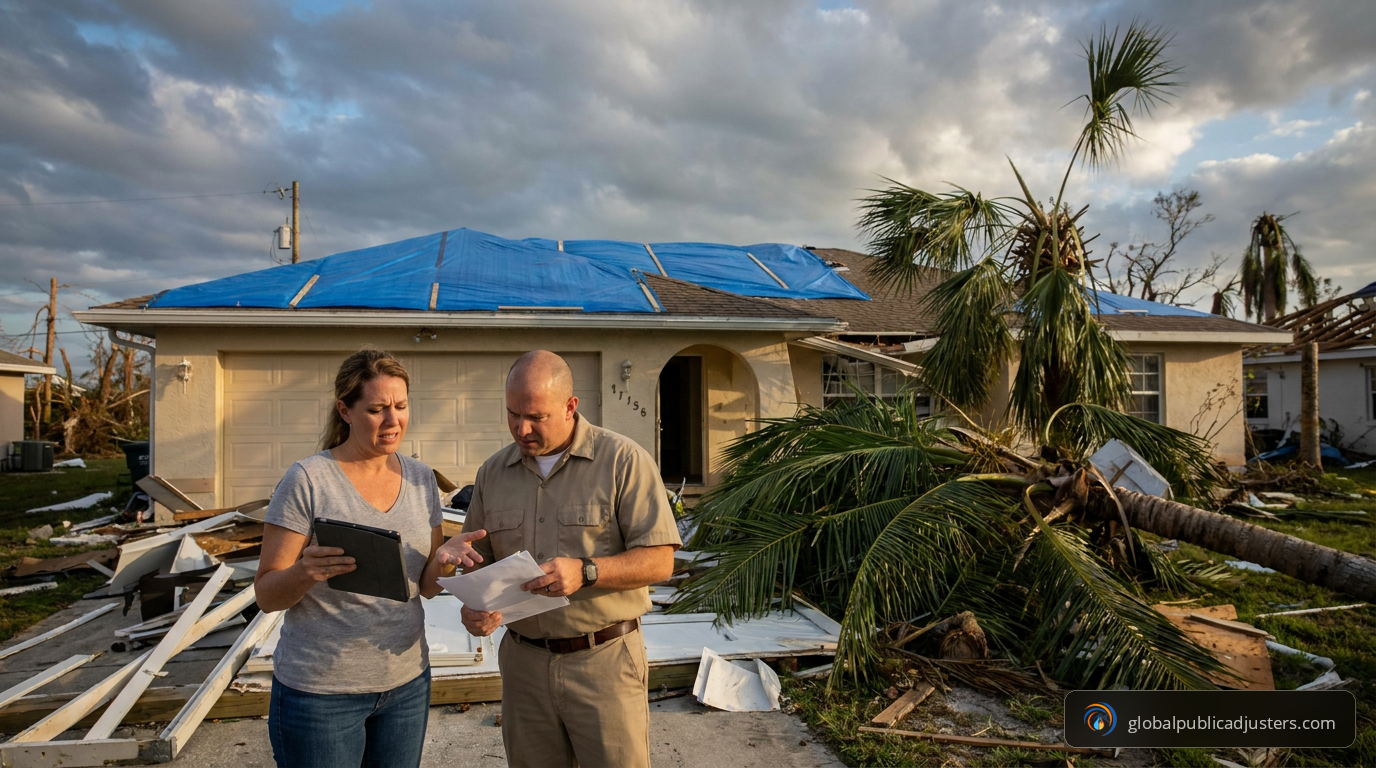
In Tampa specifically, this role has taken on added importance because of the sheer complexity of modern property claims. Wind-driven rain, roof uplift, and secondary water intrusion often overlap in a single storm event, and distinguishing covered damage from excluded wear-and-tear requires real technical expertise.
How Does a Public Adjuster Work on Your Claim?
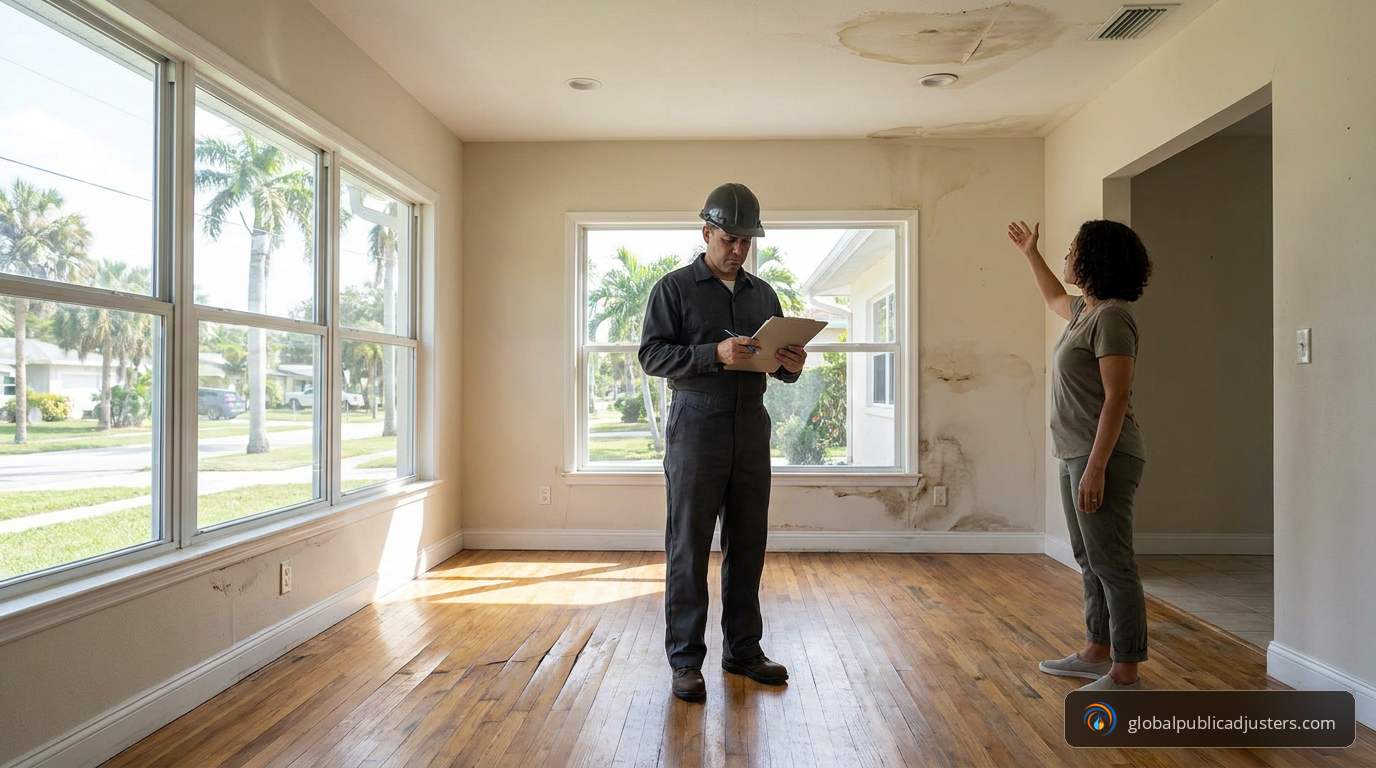
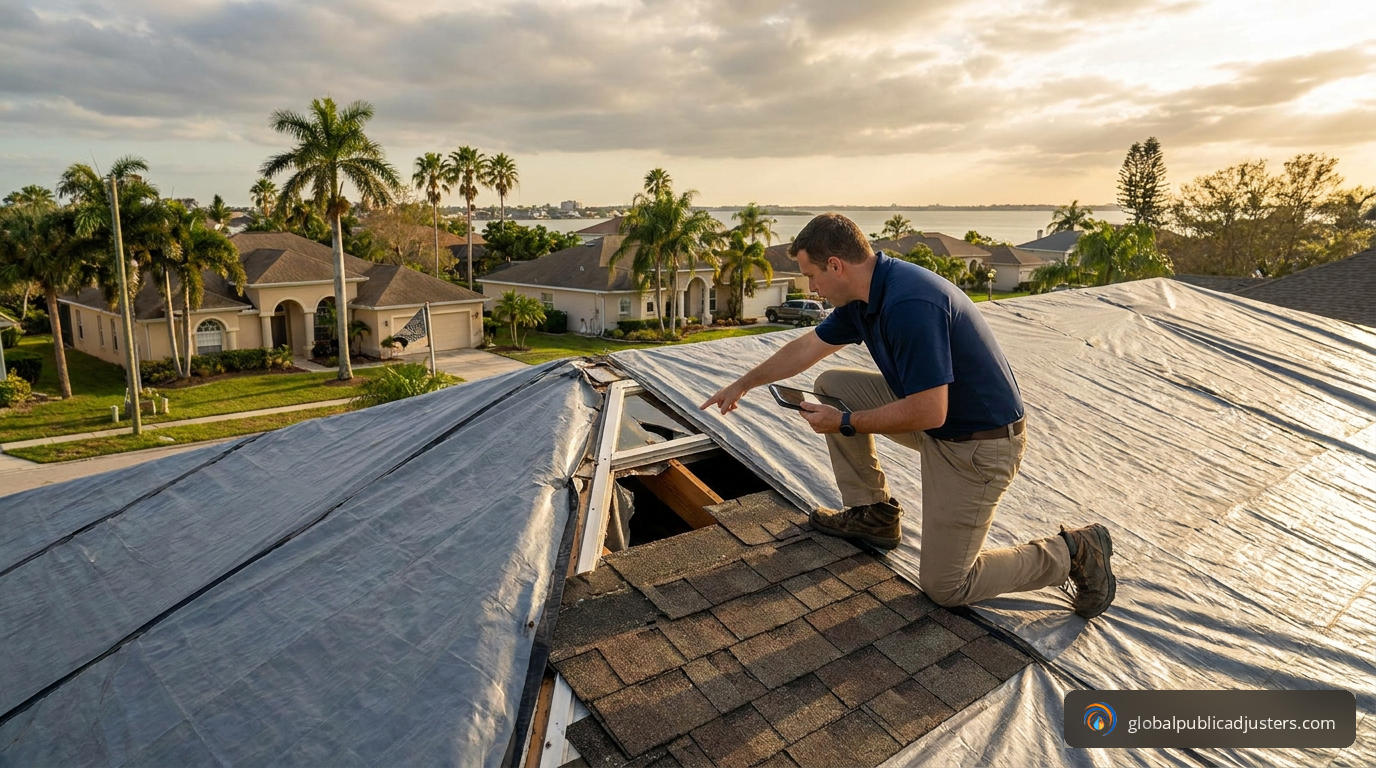
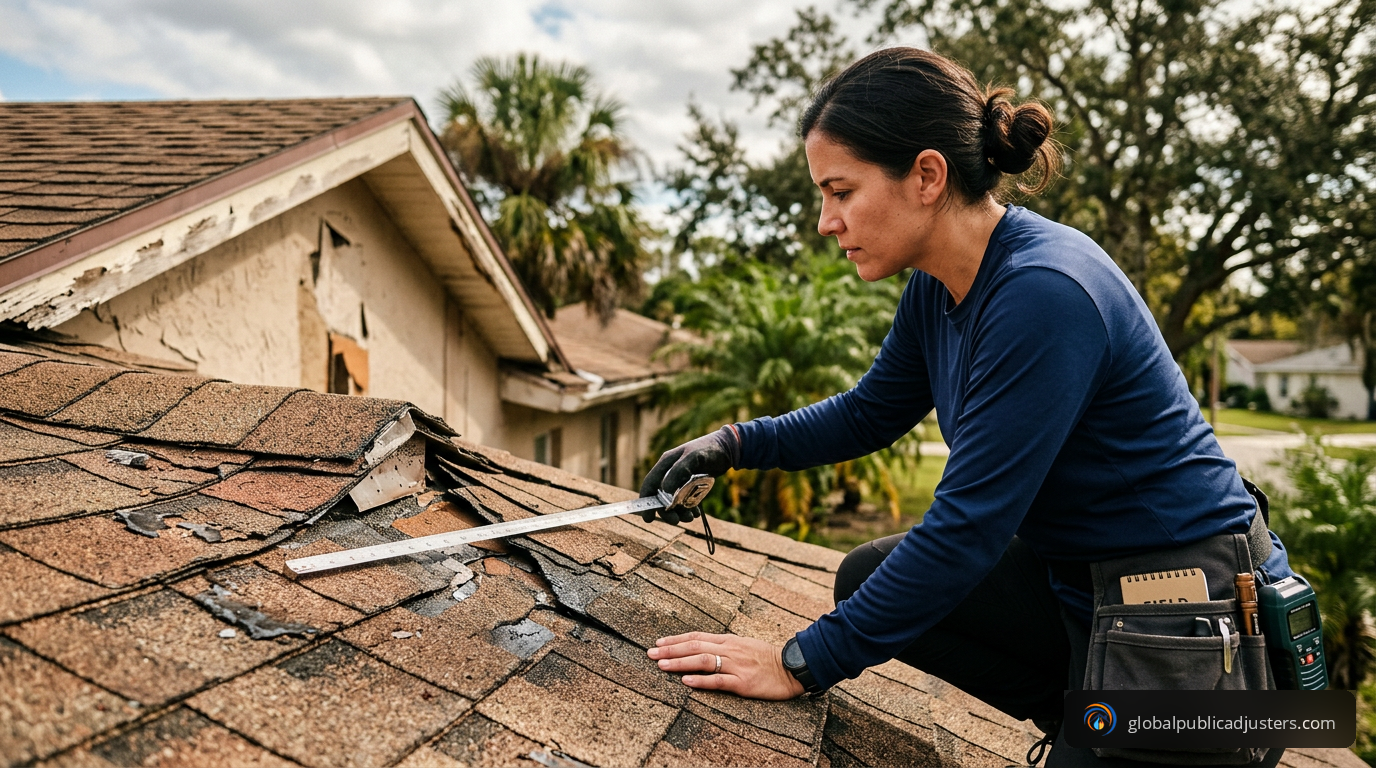
The process typically starts with a free property inspection, followed by a detailed damage assessment that includes photos, moisture readings, structural notes, and a line-item repair estimate. From there, the public adjuster files or amends the claim, handles all communication with the insurance company, and negotiates the settlement.
Unlike a contractor’s estimate, a public adjuster’s report is built specifically to match your policy’s coverage language, exclusions, and endorsements. This is why many Tampa homeowners bring in a public adjuster even after receiving an initial settlement offer that feels too low.
- Initial inspection:Full documentation of visible and hidden damage.
- Policy review:Identifying coverage limits, exclusions, and applicable endorsements.
- Estimate preparation:Detailed, itemized repair or replacement costs.
- Claim negotiation:Direct back-and-forth with the insurer’s adjuster.
- Settlement review:Ensuring the final payout matches the actual scope of loss.
For a deeper dive into how this process plays out with specific claim types, see our guide onnavigating the water damage insurance claim process in Tampa, which walks through timelines and documentation requirements step by step.
Why Does Tampa’s Market Matter for Claim Outcomes?
Tampa’s broader economic and labor conditions shape how claims get handled locally. The Bureau of Labor Statistics reports that theTampa metropolitan area’s unemployment rate stood at 4.7% in April 2026, while regional employment data shows nonfarm payrolls at roughly1,564,600 jobs, up just0.1% year-over-year. That near-flat growth points to a maturing, more competitive labor market, including for claims professionals, adjusters, and contractors who support the insurance repair ecosystem.
A regional economic analysis from PNC similarly frames Tampa Bay as entering a “post-boom rebalancing” phase, a trend also discussed byTampa Bay business news coverage of the region’s post-boom economic shift. For homeowners, this matters because slower labor growth can mean longer wait times for contractors and adjusters during peak storm season, making early, professional claim documentation even more valuable.
Inflation in the Tampa area has cooled to around2.1% year-over-year, which eases some cost pressure, but material and labor costs tied to storm repairs remain sensitive to catastrophe-driven demand spikes rather than general inflation trends.
“Policyholders often assume the insurance company’s adjuster is working for them. In reality, the public adjuster is the only licensed professional in the claims process whose sole obligation is to the policyholder’s financial recovery, not the carrier’s loss ratio.”
What Do Tampa Public Adjuster Salary Trends Reveal?
Compensation data offers a useful window into how active and competitive the Tampa public adjusting market really is. Job-board figures show meaningful variation depending on job title and employment structure.
| Metric | Tampa Figure |
|---|---|
| Average pay, “Public Adjuster” title | $61,373 (as of Jun. 17, 2026) |
| Average pay, “Public Insurance Adjuster” title | $70,573 (as of Jul. 18, 2026) |
| Typical range (25th–75th percentile) | $45,400 to $94,500 |
| Top earners (90th percentile) | $96,391 annually |
| Florida statewide self-reported average | $133,473 (median $130,000) |
The gap between Tampa job-board averages and the statewide self-reported figure of$133,473likely reflects the difference between salaried employee postings and independent, commission-based public adjusters who handle catastrophe claims across multiple regions. High-volume, storm-season work tends to push earnings well above baseline salary data.
Municipal salary tables, like Tampa’s own budget documentation oncity government positions and salaries for fiscal year 2026, provide useful context for comparing claims-adjacent public sector roles, though public adjusters themselves operate almost entirely in the private sector.
When Should You Hire a Public Adjuster in Tampa?
Not every claim needs a public adjuster, but certain situations make hiring one especially valuable. If your claim involves significant structural damage, a denied or underpaid settlement, or complex coverage questions, professional representation typically pays for itself.
If your claim has already been denied, our detailed walkthrough onhow to successfully appeal a water damage claim denial in Floridaoutlines the exact steps to challenge an unfavorable decision. And if you’re wondering about timelines, our resource onhow long an insurance claim takes in Tampasets realistic expectations for the process.
How Much Does a Public Adjuster Cost in Tampa?
Public adjuster fees in Florida are typically structured as a percentage of the final settlement, and pricing varies based on your specific claim’s complexity, size, and whether it involves a declared catastrophe. Rather than quoting a flat number, most reputable firms will assess your policy, damage scope, and claim history before proposing terms.
Costs can range widely depending on factors like property type, claim size, and whether litigation support is needed, so it’s worth requesting a custom consultation rather than relying on general estimates found online. Firms that emphasize thorough documentation, licensed expertise, and a proven negotiation track record often deliver settlement increases that far outweigh the fee itself. For a full breakdown of available services, visit ourpublic adjusting services pageor review specificclaims types we handleacross residential and commercial properties.
How Do You Choose the Right Public Adjuster?
Licensing verification is the first step. Florida requires public adjusters to hold an active state license, and organizations like theFlorida Association of Public Insurance Adjustersmaintain professional standards and continuing education requirements for members. TheNational Association of Public Insurance Adjusters directoryis another resource for verifying credentials nationally.
Beyond licensing, look for experience with your specific claim type, transparent fee structures, and a track record of settlement outcomes. If you’re comparing options across state lines or evaluating out-of-state firms working Florida claims, our guides onhiring public adjusters across state linesandcross-state licensing requirementsexplain what to verify before signing an agreement.
Finally, understand exactly how Florida law defines the role you’re hiring. Our companion piece on thepublic adjuster definition and what Florida law actually saysapplies statewide and clarifies licensing obligations, fee caps, and fiduciary duties that every Tampa policyholder should know before signing a contract. You can also learn more about our team’s approach on theabout us pageor reach out directly through ourcontact pagefor a claim consultation.
Key Takeaways
- Apa public adjuster in Tampaworks exclusively for the policyholder, never the insurance company, throughout the claims process.
- Florida’s public adjuster workforce includes12,079actively practicing professionals statewide, based on the most recent MQA workforce survey.
- Tampa job-board salary data ranges from$61,373 to $70,573on average, while statewide self-reported earnings average$133,473.
- Tampa’s labor market shows4.7% unemploymentand near-flat job growth, factors that can affect contractor and adjuster availability during storm season.
- Hiring a public adjuster is especially valuable for hurricane damage, denied claims, and complex commercial property losses.
- Fees are typically percentage-based and should always be discussed through a custom consultation rather than a flat quoted rate.
- Always verify licensing through Florida regulators or professional associations before signing a representation agreement.
People Also Ask
What does a public adjuster do differently than an insurance company adjuster?
A public adjuster represents the policyholder’s interests exclusively, while the insurance company’s adjuster works for the carrier. This means the public adjuster’s goal is maximizing your settlement, not minimizing the insurer’s payout.
Is it worth hiring a public adjuster in Florida?
For complex, denied, or underpaid claims, yes, since professional documentation and negotiation often recover significantly more than an initial insurer offer. Simpler, smaller claims may not require the same level of representation.
How many public adjusters are licensed in Florida?
A 2026 workforce survey recorded 14,229 renewals with 12,079 professionals actively practicing in Florida for at least one month, indicating a large and mature statewide industry.
How much do public adjusters earn in Tampa?
Job-board data shows Tampa averages between $61,373 and $70,573 annually, with top earners reaching $96,391, though independent and commission-based adjusters often earn more during active storm seasons.
Frequently Asked Questions
What is a PA public adjuster in Tampa?+
A PA public adjuster is a state-licensed claims professional who represents policyholders, not insurance companies, in Tampa property damage claims. They inspect damage, prepare estimates, and negotiate settlements on your behalf.
Do public adjusters charge upfront fees?+
Most Florida public adjusters work on a contingency basis, meaning they are paid a percentage of the final settlement rather than an upfront fee. Exact terms vary by firm and claim complexity, so always request a written agreement.
How do I verify a public adjuster’s license in Florida?+
You can check licensing status through Florida’s Department of Financial Services or professional associations like FAPIA and NAPIA, which maintain member directories and verify active credentials.
Can a public adjuster help with a denied claim?+
Yes, public adjusters frequently handle denied or underpaid claims by re-documenting damage, reviewing policy language, and filing formal appeals or supplemental claims with the insurer.
How long does a claim take with a public adjuster in Tampa?+
Timelines vary based on claim complexity, insurer responsiveness, and whether the loss occurred during a high-volume catastrophe period. Straightforward claims may resolve in weeks, while disputed or large-loss claims can take several months.
Is hiring a public adjuster different from hiring a contractor?+
Related:Los Angeles Public Adjuster in Jacksonville: What Florida Homeowners Need to Know
Yes, contractors estimate repair costs, while public adjusters interpret your policy, document the full scope of loss, and negotiate directly with the insurance company to secure the appropriate settlement.
Further reading:Fire Damage Adjuster in Jacksonville: Your 2026 Guide to Maximizing Fire Claims
Further reading:Public Adjuster Charlotte NC in Orlando: Comparing Multi-State Claims Advocacy for Florida Property Owners