Quick Answer
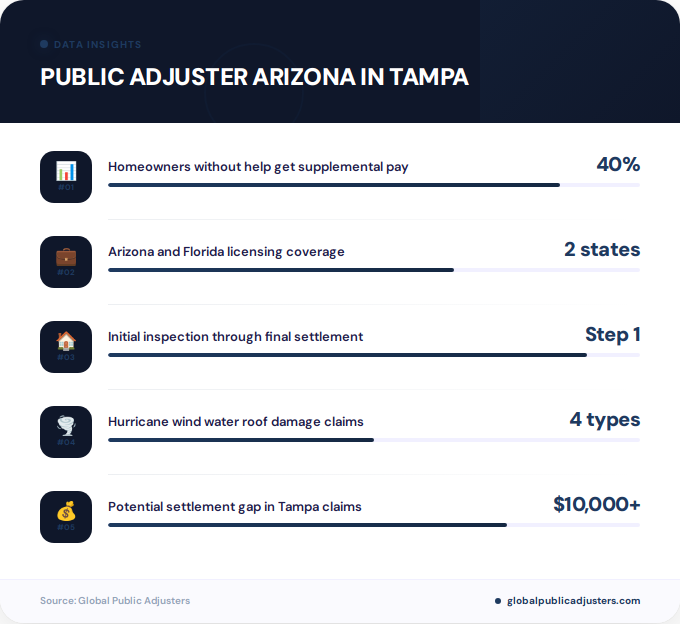
A public adjuster licensed to work claims in both Arizona and Florida, including Tampa, manages a property damage claim from initial inspection through final settlement, handling documentation, damage valuation, and direct negotiation with the insurance company on the policyholder’s behalf. Firms serving both states typically work on a contingency fee tied to the settlement amount, with pricing and timeline depending on claim complexity, storm season demand, and policy type. Homeowners in Tampa most often hire public adjusters after hurricane, wind, water, or roof damage claims that insurers underpaid or denied.
Fewer than40% of homeownerswho file a property damage claim without professional help ever see a supplemental payment, even when the first insurer estimate misses significant repair costs. In a market like Tampa, where roof claims, wind damage, and water intrusion from seasonal storms are routine, that gap between what’s owed and what’s paid can run into tens of thousands of dollars. Searches forpublic adjuster arizona in Tampausually come from policyholders who’ve either worked with a firm that holds licenses across multiple states or who are comparing how claims handling differs between Arizona’s drier, hail-and-wind-driven losses and Florida’s hurricane and water-damage-heavy claim environment.
This guide breaks down exactly what a public adjuster does at every stage of a claim, what separates a thorough assessment from a rushed one, and what actually drives pricing and timelines whether the loss is in Scottsdale or South Tampa.
What Is a Public Adjuster, and Why Does Tampa Need Multi-State Licensed Firms?
A public adjuster is a licensed professional who represents the policyholder, not the insurance company, during a property damage claim. Unlike the insurer’s own adjuster, a public adjuster’s only job is to document the loss accurately and negotiate the highest settlement the policy actually allows.
Firms that hold licenses in both Arizona and Florida are increasingly common because many property owners, especially retirees and investors, hold assets in both states. A company that understands Arizona’s monsoon and hail claim patterns alongside Tampa’s hurricane and flood exposure can apply the same disciplined claims methodology regardless of geography. Learn more about the full scope of this work on theservices pageor reviewthe different claims typeshandled across both markets.
When Do You Actually Need a Public Adjuster in Tampa?
Not every claim requires a public adjuster. A small, straightforward loss with a cooperative insurer may resolve fine on its own. But certain situations consistently benefit from professional representation.
- Hurricane and tropical storm damage:Roof, window, and structural damage from systems moving through the Gulf often involves complex causation disputes (wind vs. flood).
- Water damage and pipe failures:Hidden damage behind walls or under flooring in older Tampa homes, especially in neighborhoods like Hyde Park, Seminole Heights, and Ybor City, is frequently underestimated.
- Denied or lowballed claims:If the insurer’s offer doesn’t match your own contractor estimates, that’s a signal to get a second opinion.
- Large commercial losses:Business interruption and multi-building commercial claims require detailed financial documentation most owners aren’t equipped to produce alone.
- Delayed claims:If it’s been weeks with no adjuster visit or no written explanation, a public adjuster can push the process forward.
If your claim was recently denied, the article onwhat to do after a denied water damage claimwalks through your appeal options in more detail.
How Does the Claims Process Work From Start to Finish?
A professionally managed claim moves through a sequence of stages. Skipping or rushing any one of them is usually where policyholders lose money.
- Initial claim evaluation:The adjuster reviews your policy, declarations page, and any prior correspondence with the insurer to understand coverage limits, exclusions, and deadlines.
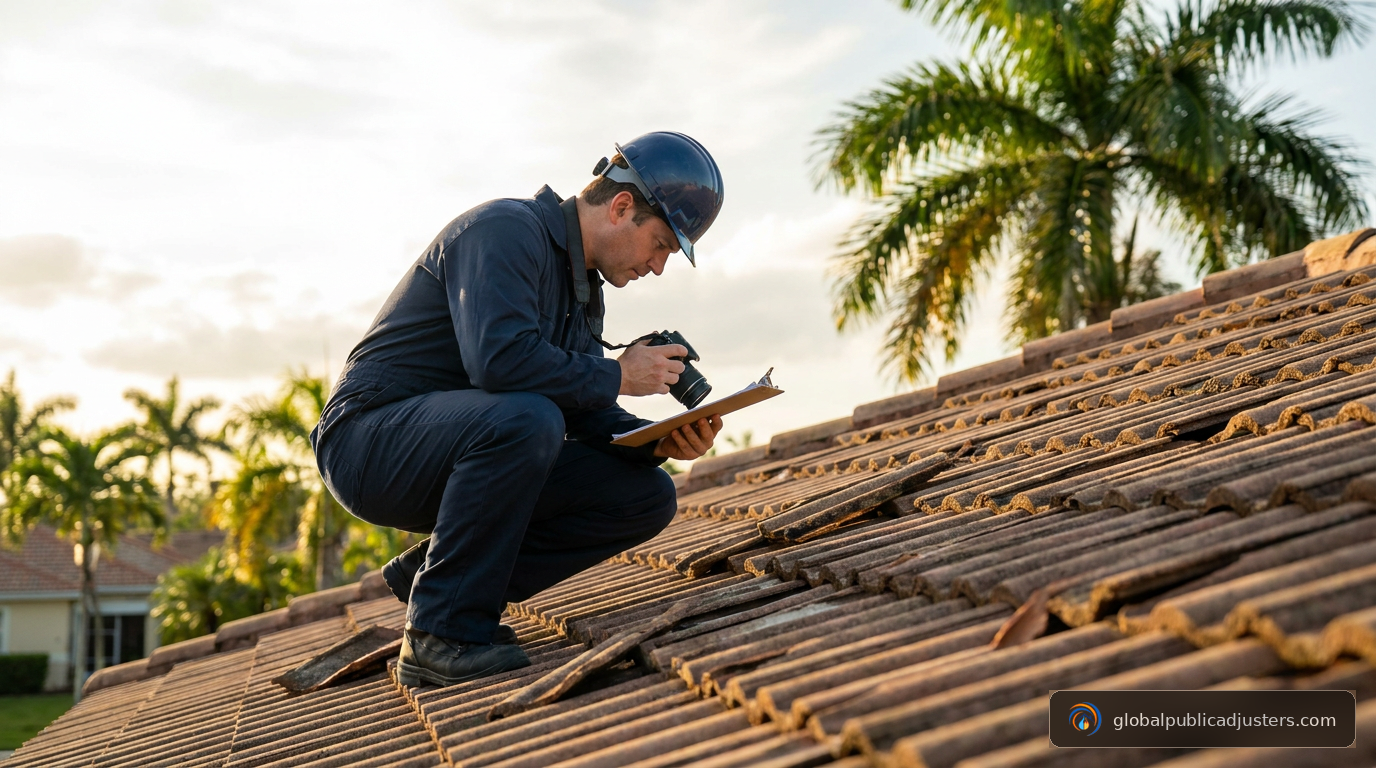
- On-site inspection:A full walkthrough of the property, inside and out, identifying both obvious and hidden damage.
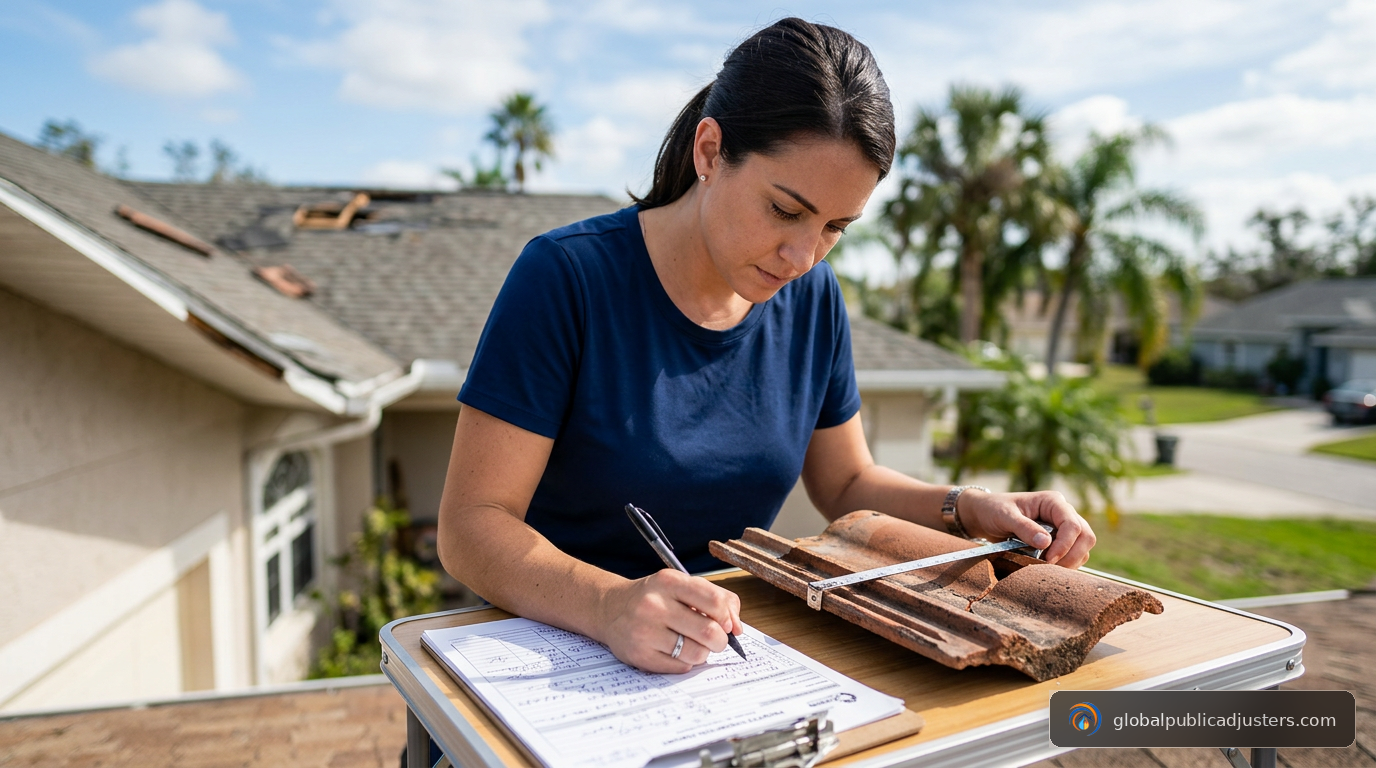
- Damage documentation:Photos, moisture readings, structural measurements, and contractor estimates are compiled into a formal report.
- Claim filing or re-filing:The adjuster submits (or amends) the claim with full supporting documentation, often far more detailed than what a homeowner would submit alone.
- Insurer inspection and counter-estimate:The insurance company’s adjuster conducts its own review, which frequently differs from the public adjuster’s figures.
- Negotiation:Back-and-forth discussion, supported by evidence, to close the gap between estimates.
- Settlement and payment:Once both sides agree, the insurer issues payment, sometimes in multiple disbursements tied to repair completion.
For a side-by-side look at how this plays out specifically in Tampa, seehow much a public adjuster costs in Tampaand what that fee includes.
What Does Damage Assessment and Documentation Actually Involve?
This is the stage where claims are won or lost. Insurers rely heavily on their own adjuster’s notes, so if your documentation is thin, their offer will reflect that.
A thorough assessment typically includes high-resolution photo and video evidence of every affected area, moisture mapping for water intrusion claims, detailed line-item repair estimates matched to current regional labor and material costs, and, where relevant, engineering or roofing specialist reports. In Tampa’s humid climate, mold growth documentation is often critical since delayed water damage claims can develop secondary mold issues within 24 to 72 hours.
“The single biggest difference between a denied claim and a paid one is almost always documentation depth. Insurers don’t pay for damage they can’t see in writing, in photos, or in a line-item estimate. Our job is to make the loss undeniable on paper,” says a senior claims strategist at Global Public Adjusters.
For a deeper look at documentation strategy in water-related claims, theJacksonville water damage documentation guideoffers a useful framework that applies equally well to Tampa Bay properties.
How Do Public Adjusters Negotiate With Insurance Companies?
Negotiation isn’t a single phone call. It’s a structured process built on evidence, policy language, and persistence.
Public adjusters typically start by submitting a detailed proof of loss that outlines the full scope and cost of repairs. When the insurer’s counter-estimate falls short, the adjuster identifies exactly where the gap exists: missed damage, outdated pricing, misapplied depreciation, or misinterpreted policy language. They then present supplemental documentation to close that gap, and if necessary, request a joint inspection or invoke the appraisal clause in the policy.
- Appraisal clause:A formal dispute resolution process where each side selects an appraiser and a neutral umpire settles disagreements.
- Supplemental claims:Additional damage discovered after the initial settlement, common in hidden water or structural damage cases.
- Reinspection requests:When new evidence justifies a second look at the property.
Understanding your rights during this stage matters, especially if you ever feel the adjuster representing you isn’t performing. Theguide to filing a complaint against a public adjuster in Floridaoutlines when and how to escalate concerns.
What Affects Pricing and Timeline in Arizona and Florida Claims?
Public adjusters generally work on a contingency fee, meaning they’re paid a percentage of the final settlement rather than an upfront flat rate. The exact percentage and timeline depend on several factors, and pricing varies based on your specific claim’s size, complexity, and state regulations.
| Factor | Impact on Pricing or Timeline |
|---|---|
| Claim complexity | Multi-peril or disputed-cause claims require more documentation and negotiation time. |
| Storm season demand | Hurricane season surges in Tampa can extend insurer response times by weeks. |
| Policy type | Commercial and large-loss residential policies often involve longer negotiation cycles. |
| State regulations | Arizona and Florida each set statutory caps and rules for public adjuster fees after declared disasters. |
| Insurer responsiveness | Some carriers settle in weeks; others require appraisal, adding months. |
For a full fee breakdown specific to Florida regulations, seethe Florida public adjuster contingency fee explainer. If you’d rather discuss your specific situation directly,reach out for a free claim evaluationbefore deciding how to proceed.
Documentation needs:Moderate
Negotiation intensity:Low to moderate
Documentation needs:High
Negotiation intensity:High
Documentation needs:Very high
Negotiation intensity:High
Key Takeaways
- A public adjuster represents you, not the insurance company, throughout the entire claims process.
- Thorough documentation, photos, moisture readings, contractor estimates, is usually the deciding factor in whether a claim settles fairly.
- Tampa’s hurricane season and humid climate create unique risks around hidden water damage and mold that require fast, detailed assessment.
- Firms licensed in both Arizona and Florida bring broader claims experience across different disaster types.
- Negotiation often involves supplemental claims, reinspections, or formal appraisal when gaps remain between estimates.
- Pricing is typically contingency-based and depends on claim complexity, policy type, and how quickly the insurer responds.
- Getting a free claim evaluation early can prevent missed deadlines and underpaid settlements.
People Also Ask
What does a public adjuster do exactly?
A public adjuster inspects property damage, documents the loss, prepares a detailed estimate, files or amends the claim, and negotiates directly with the insurance company to secure a fair settlement on the policyholder’s behalf.
Is it worth hiring a public adjuster in Tampa?
For significant hurricane, water, or structural damage claims, a public adjuster often increases the final settlement enough to more than cover their fee, since insurer-side adjusters are incentivized to minimize payouts.
How long does a public adjuster claim take to settle?
Simple claims can resolve in four to eight weeks, while complex hurricane or commercial claims can take several months, particularly if appraisal or reinspection is required.
Can a public adjuster work on claims in both Arizona and Florida?
Yes, adjusters who hold active licenses in both states can represent policyholders in either location, applying the same documentation and negotiation standards to claims regardless of regional disaster type.
How much does a public adjuster charge?
Most public adjusters charge a contingency fee based on a percentage of the final settlement, with the exact rate depending on claim size, complexity, and state fee caps, so it’s best to request a written quote for your specific case.
Frequently Asked Questions
What’s the difference between a public adjuster and the insurance company’s adjuster?+
The insurance company’s adjuster works for and is paid by the insurer, while a public adjuster is hired by and works exclusively for the policyholder. This creates a clear distinction in whose interests are being protected during damage assessment and settlement negotiation.
Do I need a public adjuster if my claim was already denied?+
A denial doesn’t always mean the claim is over. A public adjuster can review the denial reason, gather additional documentation, and often refile or appeal with stronger evidence supporting coverage.
What types of damage do Tampa public adjusters handle most often?+
Hurricane and wind damage, roof leaks, water intrusion, mold growth, and commercial business interruption claims are among the most common cases in the Tampa Bay region due to the area’s seasonal weather patterns.
How soon after damage occurs should I contact a public adjuster?+
As soon as possible. Early involvement allows for better documentation before damage is cleaned up or repaired, and helps ensure you meet your policy’s claim-filing deadlines.
Does hiring a public adjuster slow down my claim?+
In most cases it speeds things up, since a public adjuster handles paperwork, deadlines, and insurer communication that homeowners often delay or mishandle on their own.
Can a public adjuster help with homeowners insurance claims beyond hurricanes?+
Yes, public adjusters assist with a wide range of homeowners insurance claims including fire, theft, plumbing failures, and storm damage. For more detail on scope, seethis breakdown of homeowners insurance claim support.
Related:How Does an Insurance Adjuster Get Paid in Jacksonville? Understanding the Money Behind Your Claim
Related:Hurricane Season Claims: Understanding Adjuster Pay and Your Payout in Orlando
Related:What Makes a Trustworthy Public Adjuster in Atlanta Serving Tampa Homeowners
Whether your property sits in Tampa or you’re comparing service across state lines, the fastest way to know where you stand is a direct conversation with a licensed professional. VisitGlobal Public Adjustersor explore theteam’s background and licensing historybefore you file or appeal your next claim.
Further reading:Adjusters License Lookup in Jacksonville: How to Verify an Insurance Adjuster’s License Step by Step
Further reading:Choosing a Public Adjuster in Orlando: Questions to Ask Before You Sign