Quick Answer
A trustworthy public adjuster serving Tampa carries an active state license, proof of a surety bond, errors and omissions insurance, and a written contingency fee agreement that discloses every term before you sign. Homeowners researching apublic adjuster Atlanta in Tampaconnection should verify credentials through the Florida Department of Financial Services and confirm the firm has local, hands-on experience handling hurricane, water, and roof claims across the Tampa Bay region.
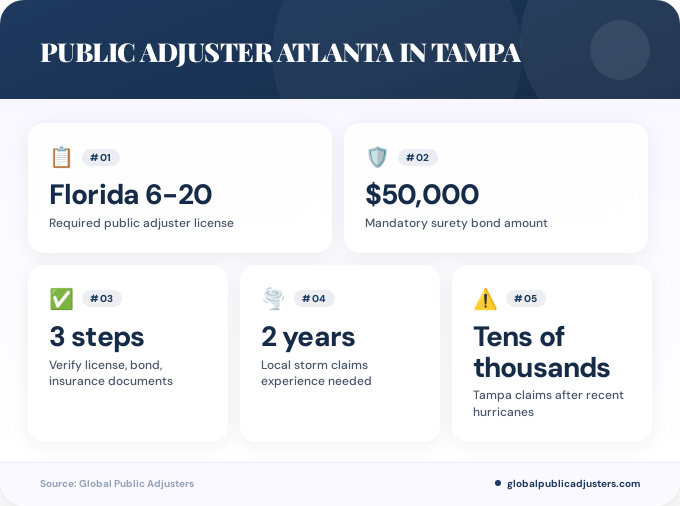
Tampa homeowners filed tens of thousands of property insurance claims following recent hurricane seasons, and a troubling share of those policyholders later discovered they had hired someone with no valid license at all. When people search for apublic adjuster Atlanta in Tampa, they are often comparing out-of-state firms against local Florida-licensed professionals, and that comparison matters more than most homeowners realize. Florida requires its own license for anyone adjusting claims on Florida property, regardless of where a company is headquartered.
This guide is not a sales pitch. It is a practical breakdown of the credentials, bonding, fee transparency, and process safeguards that distinguish a reputable public adjuster from an opportunist chasing storm damage. If you are evaluating a firm to represent you in Tampa, Brandon, Riverview, or anywhere across Hillsborough County, this is what to check before you sign anything.
Why Does Licensing Matter So Much in Public Adjusting?
Every public adjuster working on Florida property claims, including anyone marketing services as apublic adjuster Atlanta in Tampa, must hold an activeFlorida 6-20 public adjuster licenseissued by the Florida Department of Financial Services (DFS). A license from Georgia or any other state does not authorize someone to adjust a Tampa claim. This single fact eliminates a surprising number of operators who advertise broadly but lack proper Florida credentials.
Licensing also means the adjuster has passed a state exam covering policy language, claims procedure, and ethics, and has submitted to a background check. You can confirm any adjuster’s license status in seconds using the DFS online license lookup tool, and you should never skip this step. For context on how licensed adjusters operate from the first phone call through settlement, see our breakdown ofwhat licensed adjusters do from filing to final settlement.
What Are Bond Requirements and Why Do They Protect You?
Florida requires every public adjuster to maintain a surety bond on file with the state. This bond exists to compensate policyholders if an adjuster mishandles funds, breaches fiduciary duty, or commits fraud during a claim. The specific bond amount is set by state regulation, and it is not optional. A lapsed or missing bond is one of the clearest signs of an operator cutting corners.
Alongside the bond, reputable firms also carryerrors and omissions (E&O) insurance, which covers mistakes in professional judgment that could cost a homeowner money. Ask for proof of both documents before signing a contract. A firm with nothing to hide will produce them without hesitation.
What Professional Standards Separate Reputable Adjusters From the Rest?
Beyond baseline licensing, trustworthy firms follow a consistent set of professional practices. These standards are not legally mandated line by line, but their absence is a strong warning sign.
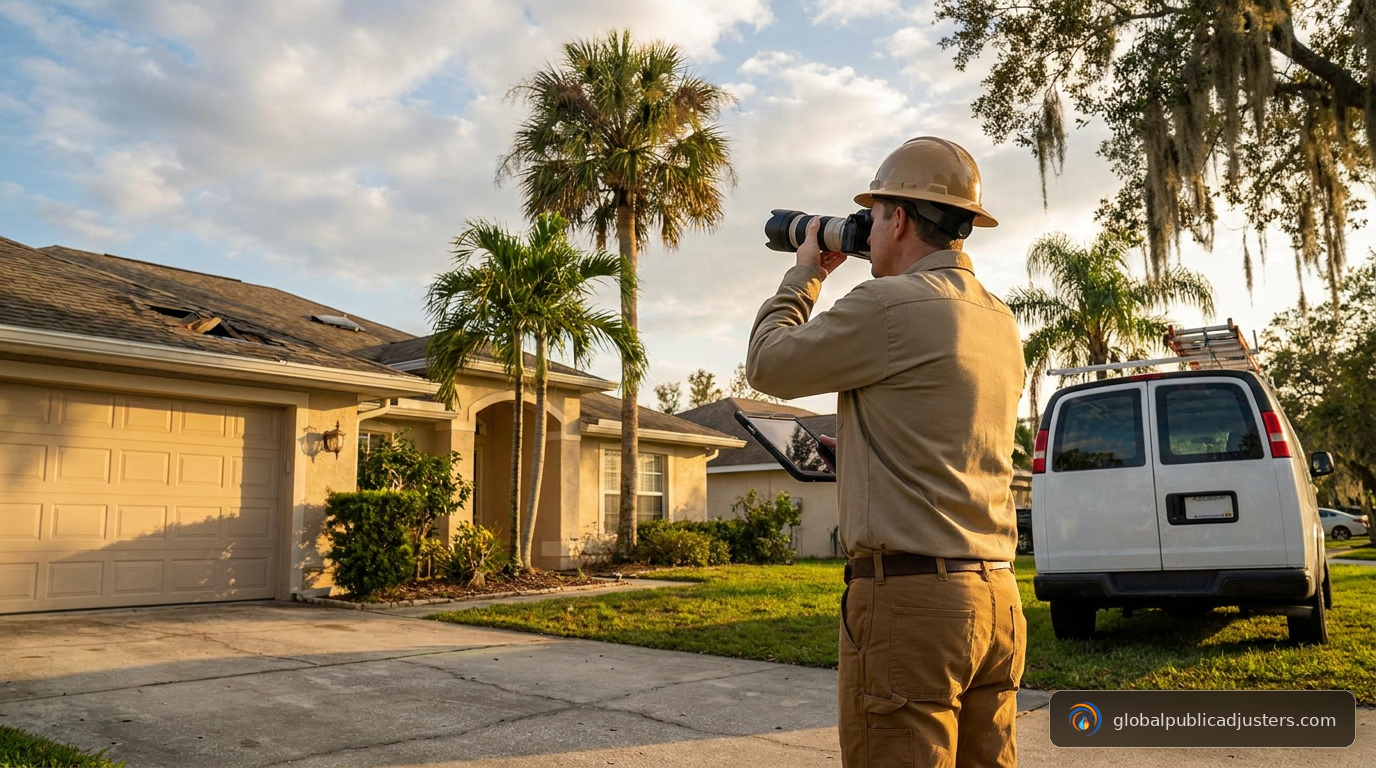
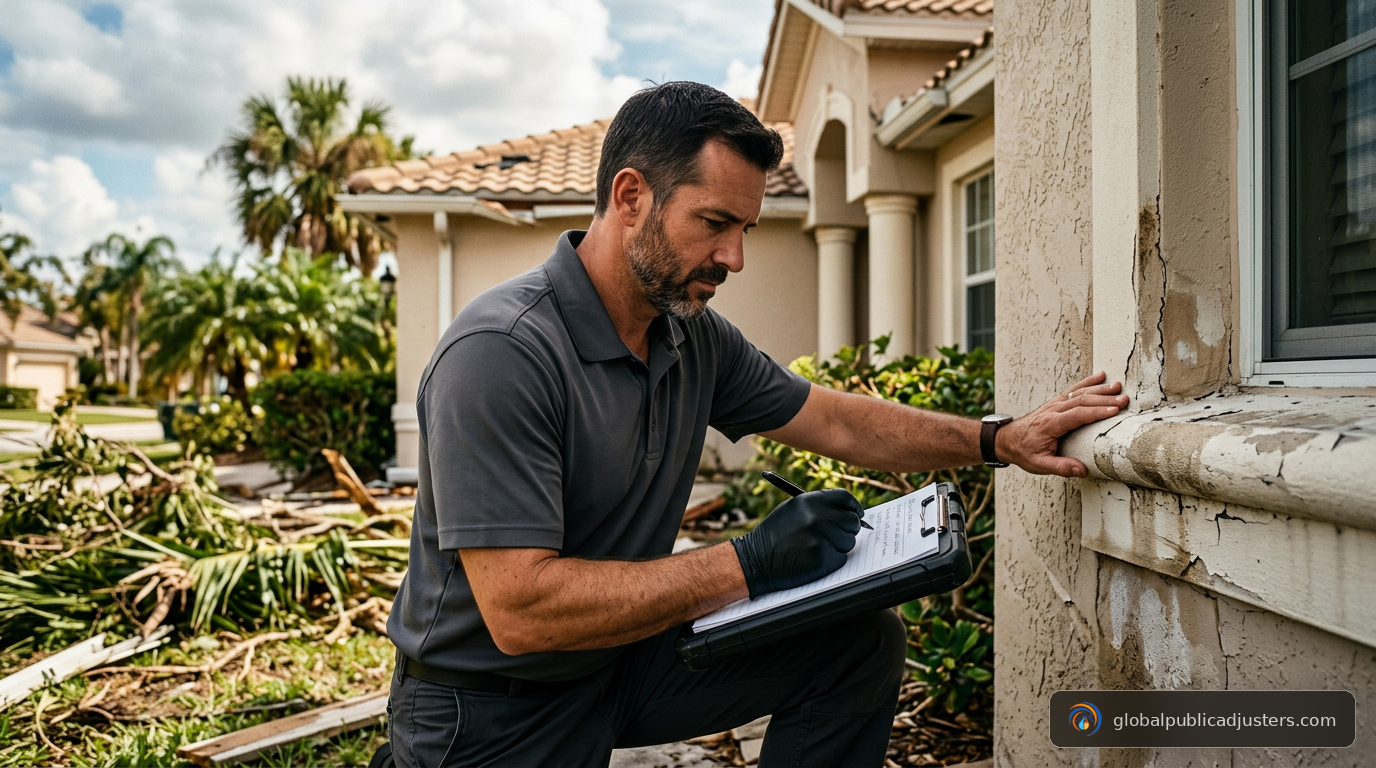
- Documented inspection methodology:photos, moisture readings, and itemized damage logs rather than vague estimates.
- Membership in professional associationssuch as the National Association of Public Insurance Adjusters (NAPIA), which requires continuing education.
- No upfront cash demandsbefore any inspection or contract review has occurred.
- Clear communication timelines, including how often you’ll receive status updates during negotiation.
- Willingness to explain policy exclusions honestly, even when the answer disappoints the homeowner.
Firms that meet these standards typically also publish their process openly. You can review how claims investigations, documentation, and negotiation are structured on ourservicespage and by claim type on ourclaims typeoverview.
| Credential or Practice | Reputable Adjuster | Fly-By-Night Operator |
|---|---|---|
| Florida 6-20 License | Verifiable, active, no disciplinary history | Out-of-state only, expired, or unverifiable |
| Surety Bond | Bond current and filed as required by state regulation | No proof provided or lapsed |
| Fee Agreement | Written, state-compliant, percentage disclosed upfront | Verbal promises, vague or buried terms |
| Local Experience | Years handling Tampa Bay storm and water claims | Generic nationwide marketing, no local footprint |
How Should a Transparent Fee Agreement Be Structured?
Florida law caps and regulates public adjuster contingency fees, and a trustworthy firm will walk you through exactly how the percentage is calculated, what happens if the insurer had already made a partial payment before you hired the adjuster, and what the fee structure looks like for a state of emergency declared loss. Nothing should be left to a handshake.
A proper agreement spells out the percentage, the scope of the claim covered, your right to cancel within the statutory window, and what services are included. For a full breakdown of how these percentages work and what homeowners actually pay in practice, read our guide on theFlorida public adjuster contingency fee explained. Pricing for any related repair or restoration work tied to your claim varies based on the scope of damage, materials needed, and urgency. For a detailed, itemized breakdown of what your specific claim might require, call for a free written quote rather than relying on verbal estimates.
It’s also worth understanding how adjuster compensation compares across markets. Homeowners researching claims in other Florida cities often ask similar questions, as covered in our piece onhow an insurance adjuster gets paidand in our Orlando-focused article onhurricane season claims and adjuster pay.
What Does a Trustworthy Claims Process Actually Look Like?
A reputable adjuster follows a predictable, documented sequence rather than improvising. Here is the process a trustworthy firm typically follows for a Tampa property claim:
- Free initial consultationto review your policy and assess whether representation makes sense for your situation.
- Written contingency agreementreviewed line by line before signature, with time to ask questions.
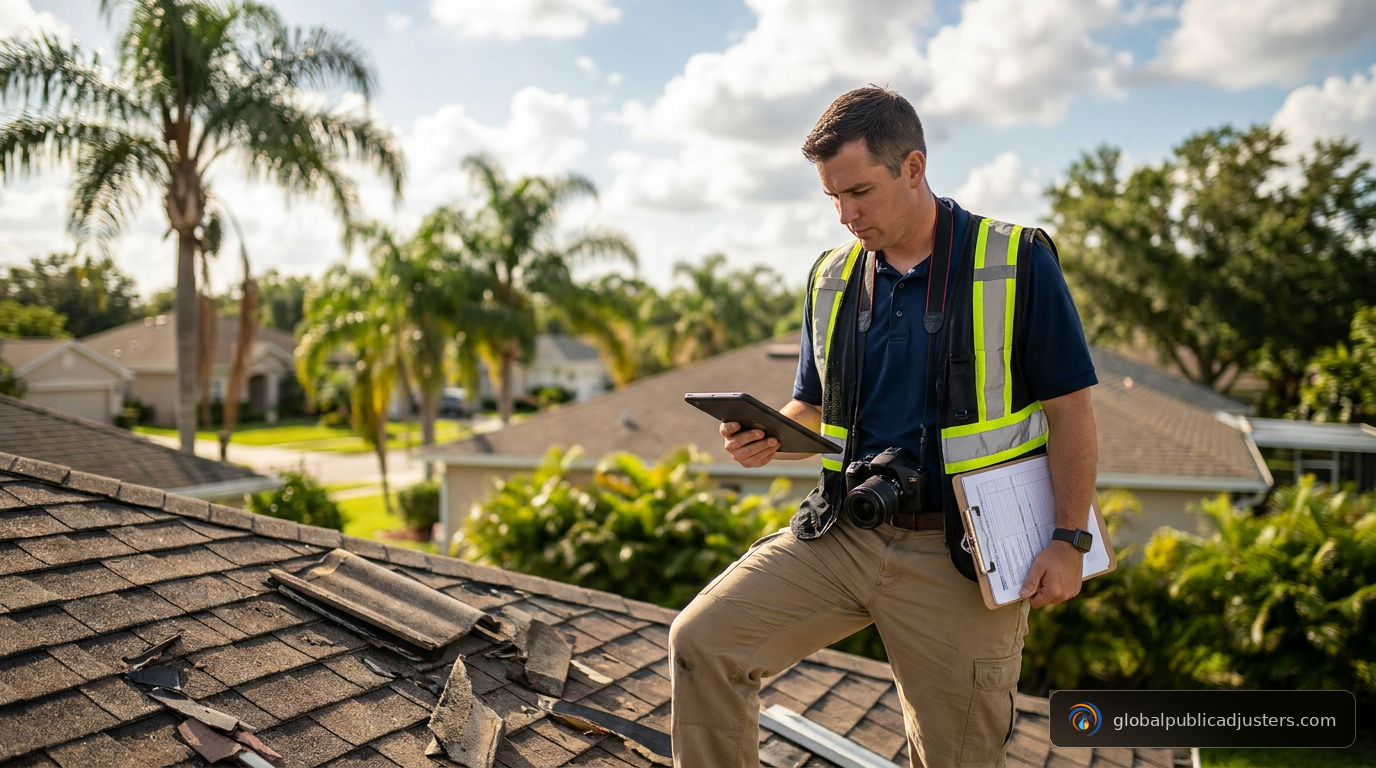
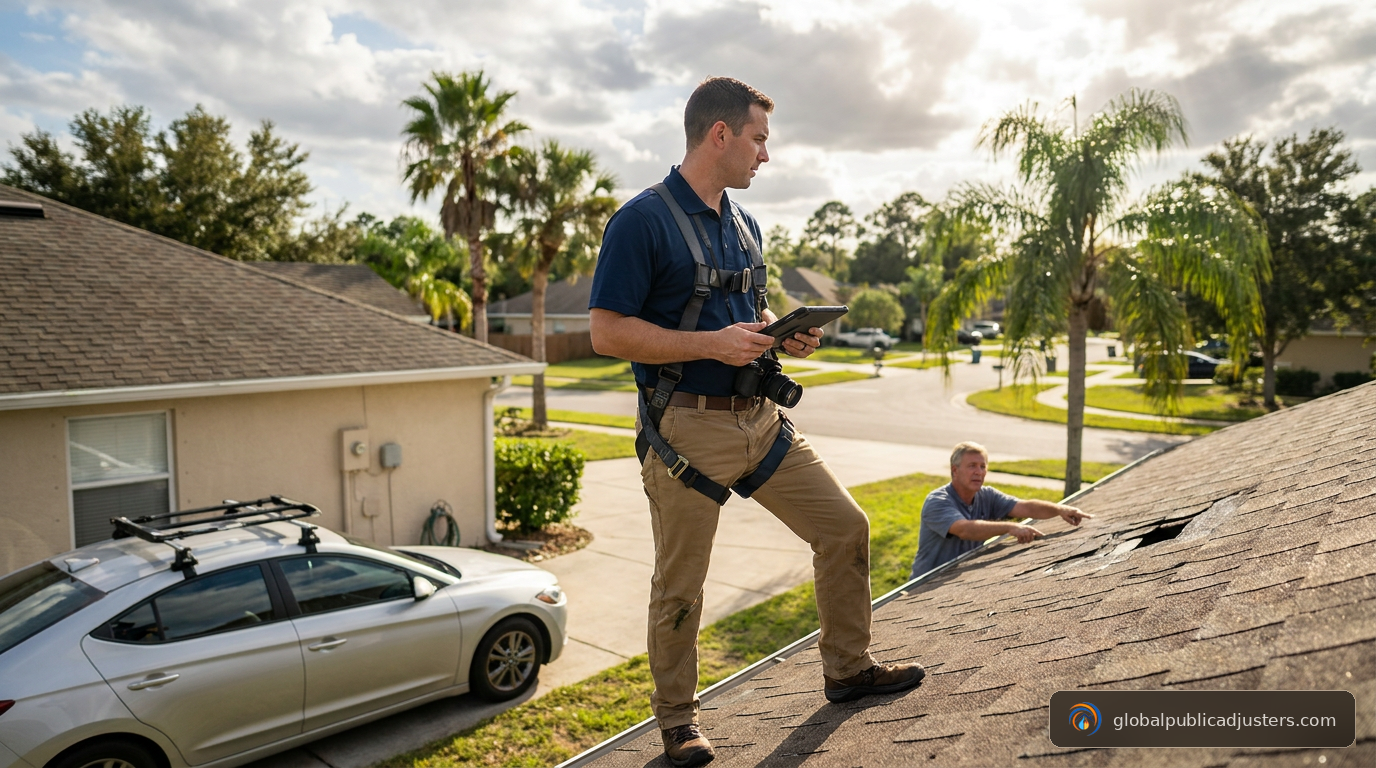
- Thorough property inspectiondocumenting damage with photos, measurements, and moisture testing where relevant.
- Independent damage estimateprepared using industry-standard software, separate from the insurer’s figures.
- Claim submission and negotiationdirectly with the insurance company on your behalf.
- Regular status updatesso you always know where the claim stands.
- Final settlement reviewbefore funds are disbursed, with your fee calculated transparently.
This structure protects homeowners from surprises and gives you leverage if anything feels off midway through. If you’ve experienced a water intrusion claim specifically, our Jacksonville-focused guide ondocumentation and negotiation for water damage claimsoffers additional detail that applies equally to Tampa properties.
What Red Flags Signal a Fly-By-Night Operator?
After major storms, Tampa Bay sees an influx of adjusters and contractors who appear overnight and vanish once the insurance check clears. Watch for these warning signs:
- Door-to-door solicitation immediately after a storm, pressuring you to sign on the spot.
- Reluctance to provide a license number or bond documentation.
- Vague verbal fee promises instead of a written agreement.
- No permanent local office or verifiable business address in the Tampa Bay area.
- Guarantees of a specific settlement amount before any inspection has occurred.
If you ever feel misled or suspect misconduct, Florida homeowners have a formal path to raise concerns, outlined in our guide onhow to file a complaint against a public adjuster in Florida.
Key Takeaways
- Any adjuster working Tampa claims must hold a validFlorida 6-20 license, not just credentials from another state.
- A current surety bond and E&O insurance as required by state regulation are non-negotiable protections for homeowners.
- Reputable firms providewritten, transparent fee agreementsbefore any work begins.
- A trustworthy process includes documented inspections, independent estimates, and regular communication.
- Door-to-door pressure and vague verbal promises are classic signs of an unreliable operator.
- Local Tampa Bay experience with hurricane, wind, and water claims matters as much as licensing alone.
- You can verify any adjuster’s license and bond status directly through the Florida DFS before signing anything.
People Also Ask
Can an Atlanta-based public adjuster legally work on a Tampa claim?
Only if that individual or firm holds an active Florida 6-20 public adjuster license, since licensing is state-specific. A Georgia license alone does not authorize work on Florida property claims.
How do I verify a public adjuster’s license in Florida?
Use the Florida Department of Financial Services online license lookup tool, which shows license status, expiration date, and any disciplinary actions. This check takes only a minute and should be done before signing any agreement.
What is the surety bond requirement for public adjusters?
Florida requires public adjusters to maintain a surety bond as set by state regulation, which protects homeowners if the adjuster mishandles claim funds or breaches professional duty. Always ask for proof the bond is current.
Do public adjusters charge upfront fees?
Reputable public adjusters work on contingency and do not demand payment before an inspection or signed agreement. Any firm requesting cash upfront before reviewing your policy should be treated with caution.
Frequently Asked Questions
What should I look for in a public adjuster Atlanta in Tampa connection?+
Confirm the firm or individual holds an active Florida 6-20 license even if headquartered elsewhere, and verify their surety bond and local Tampa Bay claims experience. Licensing determines legal authority, not where a company’s main office sits.
How long does a public adjuster have to settle a Tampa claim?+
Timelines vary by claim complexity, insurer responsiveness, and whether the loss occurred during a declared state of emergency, which can extend certain statutory deadlines. A reputable adjuster will give you a realistic estimate after reviewing your specific policy and damage.
Does hiring a public adjuster help with homeowners insurance disputes?+
Yes, a licensed public adjuster represents your interests rather than the insurer’s, often uncovering damage or policy coverage the initial adjuster missed. For more detail on how this works, see our guide onwhether a public adjuster helps with homeowners insurance.
What exactly does a public adjuster do from start to finish?+
A public adjuster inspects the damage, documents the loss, prepares an independent estimate, files and negotiates the claim, and reviews the final settlement before you accept it. Our detailed walkthrough onwhat a public adjuster does exactlycovers each step with information on how costs are determined.
Can I switch public adjusters if I’m unhappy mid-claim?+
Yes, but review your existing contract’s cancellation terms first, since some agreements include conditions tied to work already performed. Consulting a new, properly licensed firm before making the switch helps avoid gaps in your claim’s progress.
Is it normal for a public adjuster to inspect my property before giving any estimate?+
Yes, a thorough, in-person inspection is standard practice and necessary before any honest estimate can be prepared. Be wary of anyone offering a settlement figure or fee quote before setting foot on your property.
Choosing the right representation after storm or water damage is one of the most consequential decisions a Tampa homeowner makes during the claims process. Learn more about our team’s background and credentials on ourabout uspage, or explore our full range of services atGlobal Public Adjusters. If you have questions about your specific policy or claim,reach out to our teamfor a free, no-pressure consultation.