Water Damage Insurance Adjuster in Florida: What Homeowners Must Know Before Filing a Claim
Quick Answer
A water damage insurance adjuster in Florida evaluates the cause, scope, and cost of water intrusion damage to determine what your insurer will pay. Insurance company adjusters work for the carrier and often minimize payouts, while independent public adjusters work exclusively for homeowners to maximize legitimate claim value. Understanding this distinction, along with Florida’s strict claims-filing deadlines, is critical to getting a fair settlement.
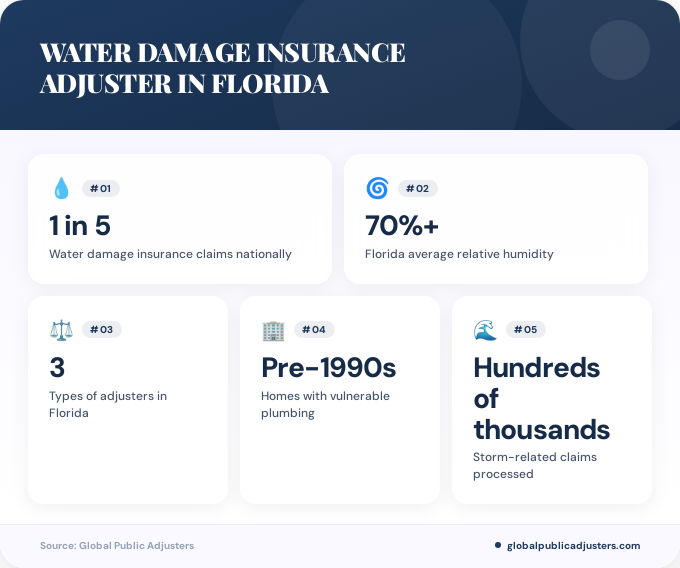
Did you know thatwater damage and freezing account for roughly one in five homeowners insurance claims nationally, and Florida’s humid, storm-prone climate pushes that ratio even higher? From burst pipes in Tampa condos to roof leaks after a Jacksonville thunderstorm, water intrusion is one of the most frequently disputed types of property damage claims in the state. If you’ve ever wondered what awater damage insurance adjuster in Floridaactually does, or why two adjusters can look at the same soaked drywall and reach wildly different dollar figures, this guide breaks down exactly how the process works and how to protect your payout.
What Is a Water Damage Insurance Adjuster in Florida?
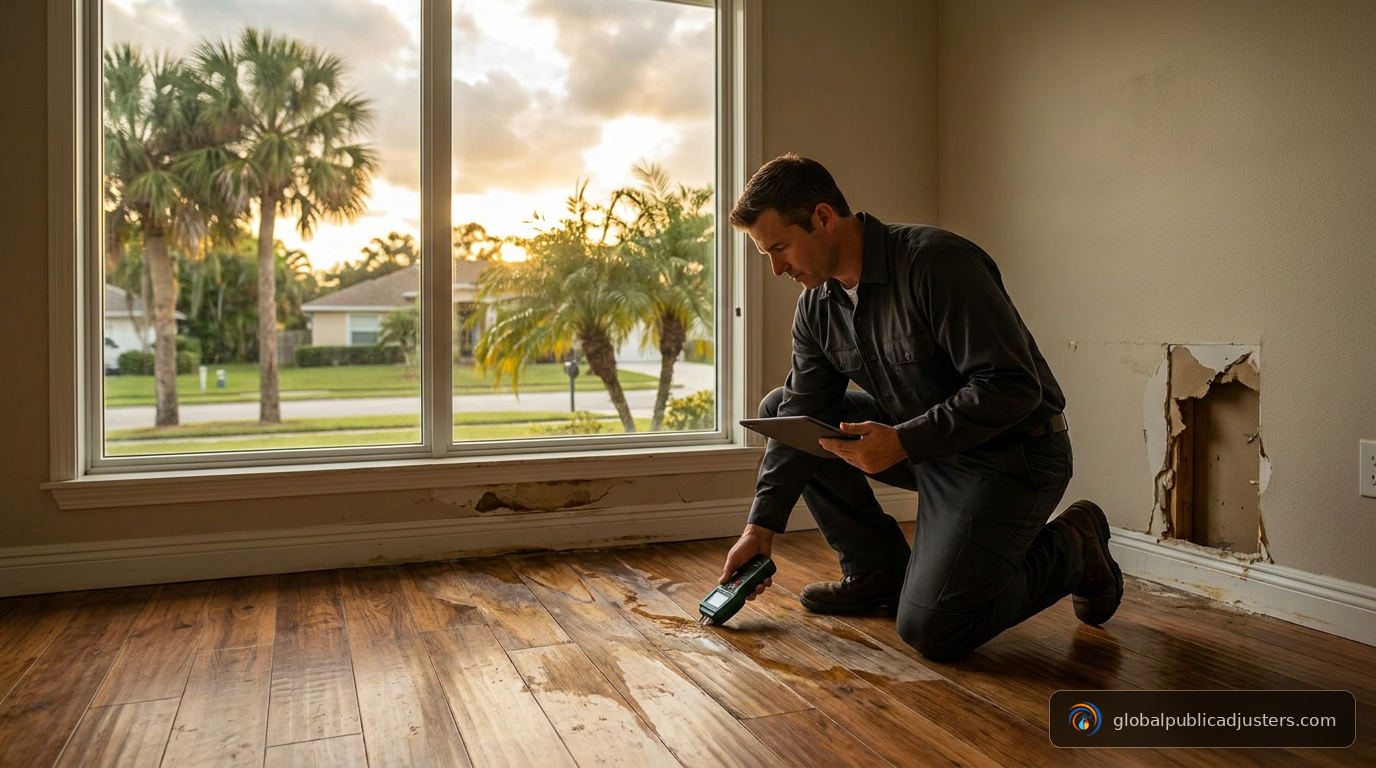
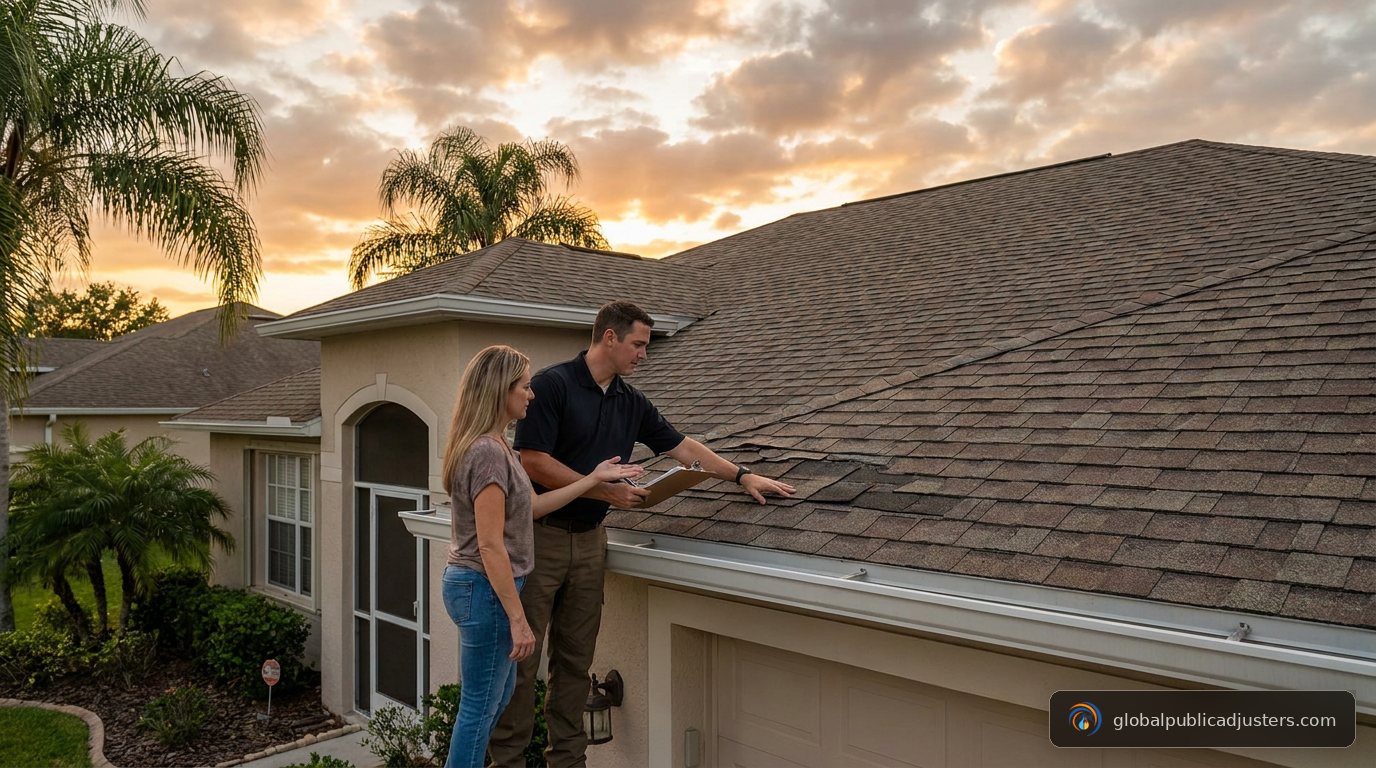
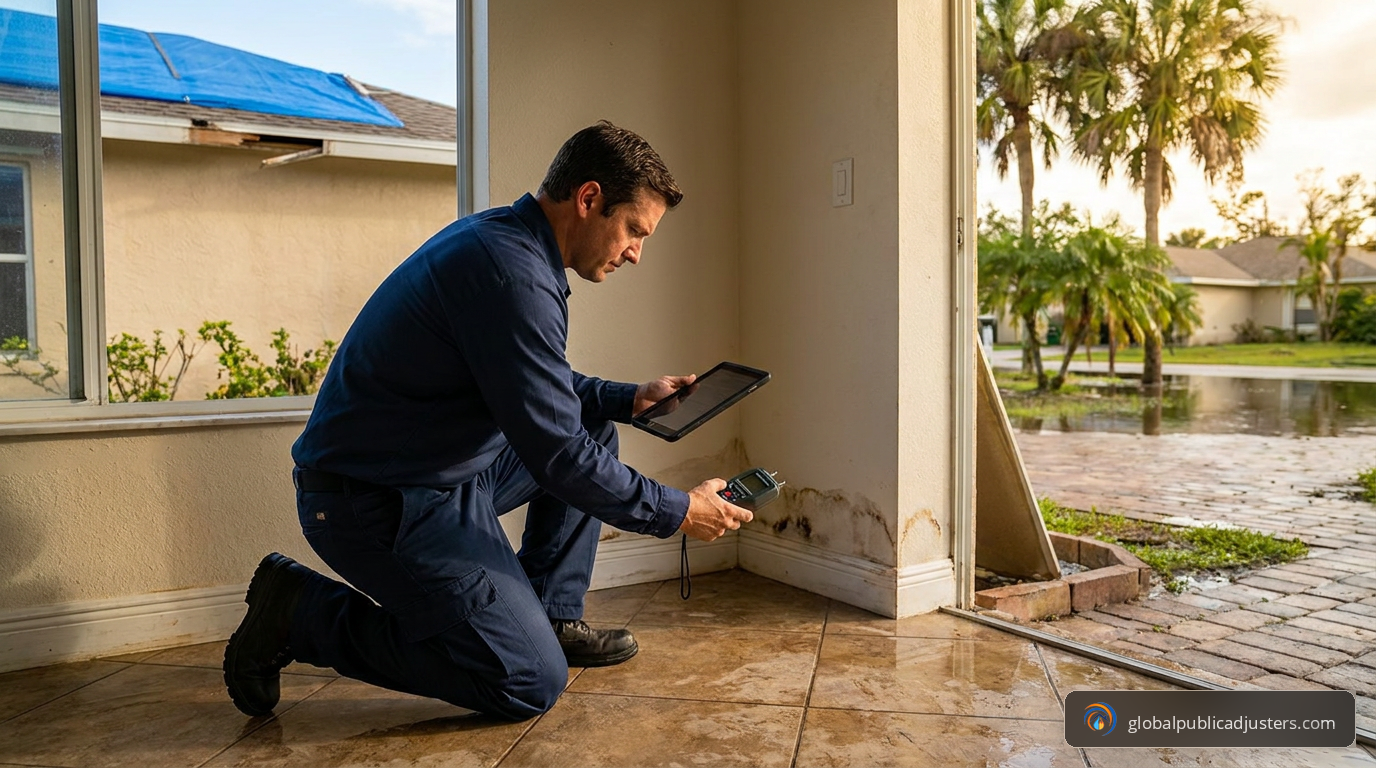
A water damage insurance adjuster in Florida is a licensed professional who inspects property damage caused by water intrusion, be it a pipe burst, roof leak, appliance failure, or storm surge, and estimates the cost of repairs. Adjusters document the source of the loss, measure moisture levels, photograph damage, and prepare a scope of repair that determines the payout under your homeowners policy.
There are three types of adjusters you may encounter:company adjusters(employed directly by your insurer),independent adjusters(contracted by insurers on a per-claim basis, often during catastrophe surges), andpublic adjusters(hired by the policyholder). Florida law regulates all three under Florida Statute 626.854, which specifically governs public adjuster licensing, conduct, and fee limits.
Why Is Water Damage So Common Across Florida?
Florida’s subtropical climate, aging plumbing infrastructure in many older neighborhoods, and its status as the nation’s most hurricane-exposed state combine to make water damage a near-constant threat. Afternoon thunderstorms roll through Central Florida almost daily in summer, while coastal cities like Miami, Fort Lauderdale, and Jacksonville face storm surge and wind-driven rain during hurricane season.
According to theFlorida Office of Insurance Regulation’s catastrophe reporting data, the state has processed hundreds of thousands of storm-related claims in recent hurricane seasons alone, with water damage frequently cited as a leading driver of claim costs. Homes in flood-prone zones near the Gulf Coast and older housing stock in cities like Tampa and Orlando are especially vulnerable to slow leaks that go undetected until mold sets in.
- Aging pipes:Many homes built before the 1990s have galvanized or polybutylene plumbing prone to failure.
- High humidity:Florida’s average relative humidity exceeds 70%, accelerating mold growth after any leak.
- Storm frequency:Florida sees more hurricane landfalls than any other U.S. state.
- Flat and low-slope roofing:Common in condos and commercial buildings, these are prone to ponding and leaks.
How Does an Insurance Company Adjuster Differ From a Public Adjuster?
This is the single most important distinction homeowners need to understand. An insurance company adjuster, whether staff or independent, is paid by and represents the insurer’s financial interests. A public adjuster is licensed to representyou, the policyholder, and is legally prohibited from also working for the insurance company on the same claim.
| Factor | Insurance Company Adjuster | Public Adjuster |
|---|---|---|
| Who pays them | The insurance company | The policyholder (contingency fee) |
| Who they represent | The carrier’s interests | Homeowner’s interests |
| Goal of inspection | Verify and often limit payout | Document full extent of loss |
| License oversight | Florida DFS | Florida DFS, per Florida CFO’s public adjuster guidance |
If you’re navigating a dispute after a lowball estimate, it helps to understandhow settlement negotiation works in Orlando, since many of the same tactics and leverage points apply statewide.
How Does the Water Damage Claims Process Work in Florida?
Filing a water damage claim in Florida generally follows a predictable sequence, though timelines can shift depending on your carrier and the severity of the loss. Understanding each stage helps you avoid the common mistakes that lead to reduced payouts.
- Mitigate the damage immediately.Florida policies require you to take reasonable steps to prevent further loss, such as shutting off water and drying the area.
- Document everything.Photograph and video the damage before cleanup begins, keeping receipts for emergency repairs.
- Report the claim promptly.Florida law generally requires notice within one year of the date of loss for property claims.
- Insurer sends an adjuster.The company or independent adjuster inspects the property and prepares an estimate.
- Review the settlement offer.Compare the insurer’s scope of repair to actual contractor estimates before accepting.
- Dispute if necessary.If the offer seems low, you can request reinspection, appraisal, or hire a public adjuster.
Resources like detailed water damage claims guidance from ClaimHero outline how policy language around “sudden and accidental” versus “gradual” damage often becomes the central point of dispute, since many policies exclude damage from long-term leaks or lack of maintenance.
What Happens If Your Water Damage Claim Is Denied or Underpaid?
Denials and lowball offers are unfortunately common in Florida, particularly for claims involving mold, hidden pipe leaks, or disputed causation. Insurers may argue the damage resulted from long-term neglect rather than a sudden event, which many policies exclude.
If your claim was denied, you have options. You can request the insurer’s full written explanation, order an independent inspection, invoke the appraisal clause in your policy, or file a complaint with the Florida Department of Financial Services. Homeowners dealing with hurricane-related water intrusion should review our guide onwhat to do when a hurricane damage claim is denied in Florida, since many of the appeal strategies overlap with standard water damage disputes.
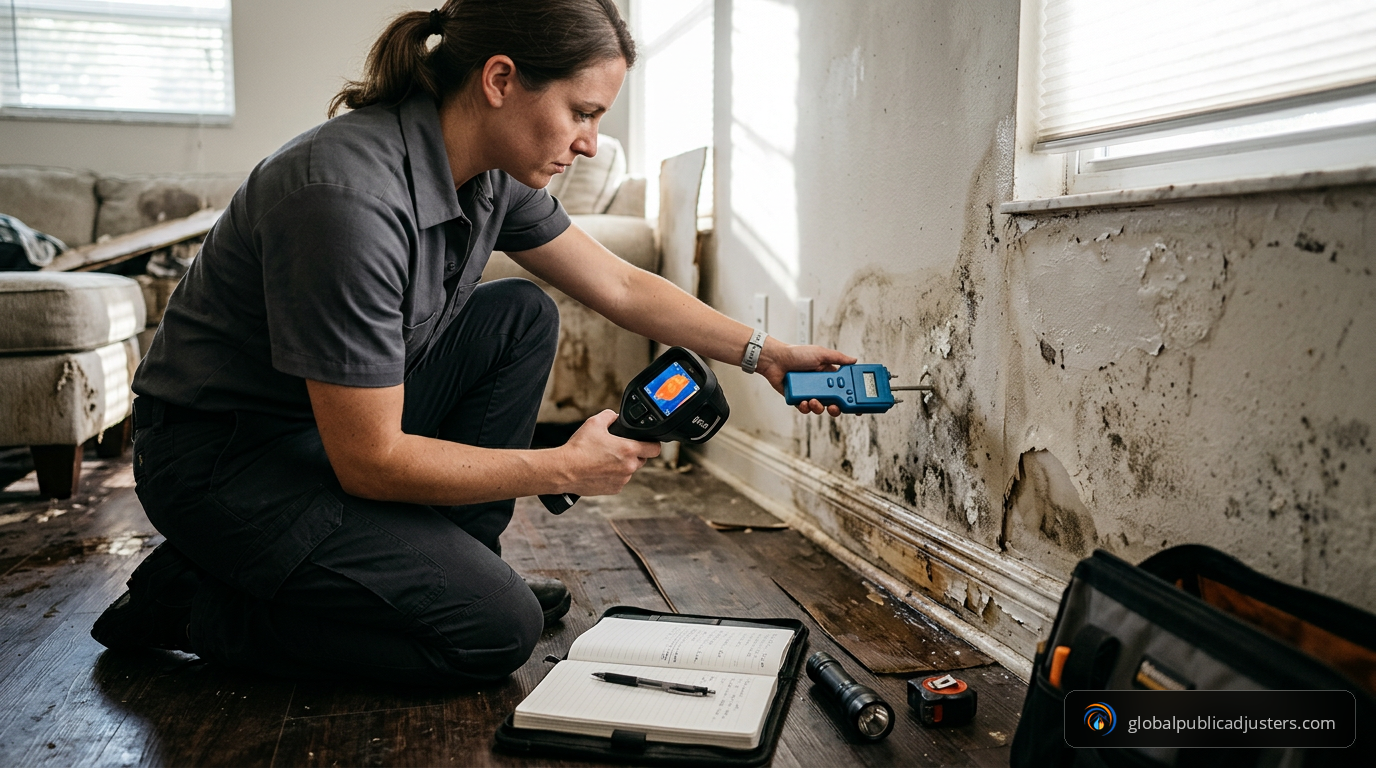
For Jacksonville-area homeowners specifically, our breakdown ofhurricane damage claims support in Jacksonvillecovers documentation strategies that also strengthen standalone water damage claims. Firms like Corbitt Public Adjusting’s Florida claims resources note that underpayment disputes often hinge on whether the adjuster properly accounted for hidden moisture behind walls and under flooring, which requires thermal imaging and moisture meters rather than a visual inspection alone.
How Much Does It Cost to Hire a Public Adjuster in Florida?
Public adjusters in Florida work on a contingency fee basis, meaning they are paid a percentage of your final settlement rather than an upfront fee. Florida law caps these fees, and rates can vary based on whether the claim stems from a declared state of emergency, the complexity of the loss, and the size of the property.
Pricing varies based on your specific project, the extent of documentation required, and whether litigation or appraisal becomes necessary. Rather than assuming a flat percentage applies to every case, it’s best to request a custom evaluation, since complex claims involving mold remediation, structural drying, and personal property loss require significantly more investigative work than a simple pipe leak.
- Simple, single-room water losses:Typically require less documentation and negotiation time.
- Multi-room or structural losses:Often range from $10,000 to $50,000+ in repair costs, requiring detailed engineering reports.
- Catastrophic or mold-involved claims:Can escalate well beyond $50,000 depending on remediation scope and displacement costs.
Organizations like the Florida Association of Public Insurance Adjusters maintain licensing standards and consumer resources to help homeowners vet qualified professionals before signing a contract.
How Do You Choose the Right Water Damage Adjuster?
Not all public adjusters are equally experienced with Florida’s unique climate risks, condo association disputes, or Citizens Property Insurance claims. Homeowners in coastal communities dealing with wind-driven rain intrusion, or condo owners near Miami and Fort Lauderdale, often need adjusters familiar with Citizens Property Insurance water and storm damage claim procedures, which can differ from private carriers.
Check:No disciplinary history
Track record:Multi-county claims history
No hidden costs:Fully disclosed upfront
Documentation:Detailed reporting
Homeowners near Orlando comparing out-of-state representation should also review howmulti-state claims advocacy compares to local Florida expertise, since state-specific statute knowledge often makes a measurable difference in claim outcomes. You can also explore the full range ofpublic adjusting services available statewideor reviewthe different claim typeswe handle before reaching out for a consultation.
Key Takeaways
- Water damage and freezing losses represent a significant share of Florida homeowners insurance claims, driven by humidity, aging pipes, and hurricane exposure.
- Insurance company adjusters represent the carrier’s financial interests, while public adjusters are legally bound to represent the homeowner.
- Florida Statute 626.854 governs public adjuster licensing, conduct, and fee structures.
- Documentation, including photos, moisture readings, and prompt reporting, is critical to avoiding claim denial.
- Public adjuster fees are contingency-based and vary by claim complexity, so always request a custom quote.
- Disputes over “sudden and accidental” versus “gradual” damage are among the most common reasons claims get denied or reduced.
- Working with a licensed, locally experienced professional significantly improves the odds of a fair settlement.
People Also Ask
What does a water damage adjuster look for?
An adjuster examines the source and cause of the water intrusion, measures moisture levels in walls and flooring, checks for mold growth, and estimates repair costs based on the policy’s covered perils.
Is water damage usually covered by homeowners insurance in Florida?
Sudden and accidental water damage, like a burst pipe, is typically covered, but gradual leaks, flooding, and lack of maintenance are usually excluded unless you carry separate flood insurance.
Can I hire my own adjuster for water damage in Florida?
Yes, Florida homeowners have the right to hire a licensed public adjuster to represent their interests independently of the insurance company’s adjuster.
How long do I have to file a water damage claim in Florida?
Florida generally requires property insurance claims, including water damage, to be reported within one year of the date of loss, though supplemental claims have separate deadlines.
Why do insurance companies deny water damage claims?
Common denial reasons include classifying the damage as gradual rather than sudden, disputing the cause of loss, citing lack of maintenance, or arguing the damage falls under a policy exclusion.
Frequently Asked Questions
What is the difference between a company adjuster and an independent adjuster in Florida?+
A company adjuster is a full-time employee of the insurance carrier, while an independent adjuster is a contractor hired by the carrier, often during high-volume catastrophe events. Both represent the insurer’s interests, not the homeowner’s.
Do I need a public adjuster for a small water damage claim?+
For minor, straightforward losses you may not need one, but if the damage involves multiple rooms, hidden moisture, mold, or a denied claim, a public adjuster can significantly improve your settlement outcome.
How is mold from water damage handled in Florida insurance claims?+
Most Florida policies impose sublimits on mold remediation coverage, often far lower than the cost of full remediation, so documenting the mold’s connection to a covered water event is essential to maximizing payout.
Can I negotiate directly with my insurance company after a low offer?+
Yes, homeowners can negotiate directly, but insurers rarely raise offers significantly without independent documentation or professional representation backing the counteroffer.
What documentation should I keep after water damage occurs?+
Keep photos and video of the damage before cleanup, receipts for emergency mitigation, moisture readings if available, contractor repair estimates, and all written communication with your insurer.
Are public adjusters regulated in Florida?+
Yes, public adjusters must be licensed through the Florida Department of Financial Services and comply with Florida Statute 626.854, which governs conduct, contracts, and fee limits.
Related:Missouri Public Adjuster in Tampa: Why Licensing and Location Both Matter
Related:Public Adjusting Company in Jacksonville: How to Choose the Right Advocate for Your Property Claim
Related:Public Adjuster Washington State in Jacksonville: What Policyholders Need to Know
If your Florida property has suffered water damage and you’re unsure whether the insurance company’s estimate reflects the true cost of repairs, don’t navigate the process alone. VisitGlobal Public Adjustersor ourcontact pageto request a professional claim review, or learn moreabout our team’s experience handling Florida property claimsbefore making your next move.
Further reading:Hurricane Damage Claim Adjuster Florida in Orlando: What Homeowners Need to Know
Further reading:Can You Negotiate Insurance Settlement Amount in Orlando? A Complete 2026 Guide
Further reading:Water Damage Claim Denial Florida: Why Insurers Say No and How to Fight Back
Further reading:Hurricane Damage Insurance Claim Denied in Florida: What Homeowners Need to Know
Further reading:How Does Insurance Adjuster Get Paid in Tampa: A Local Guide