Water Damage Claim Denial Florida: Why Insurers Say No and How to Fight Back
Quick Answer
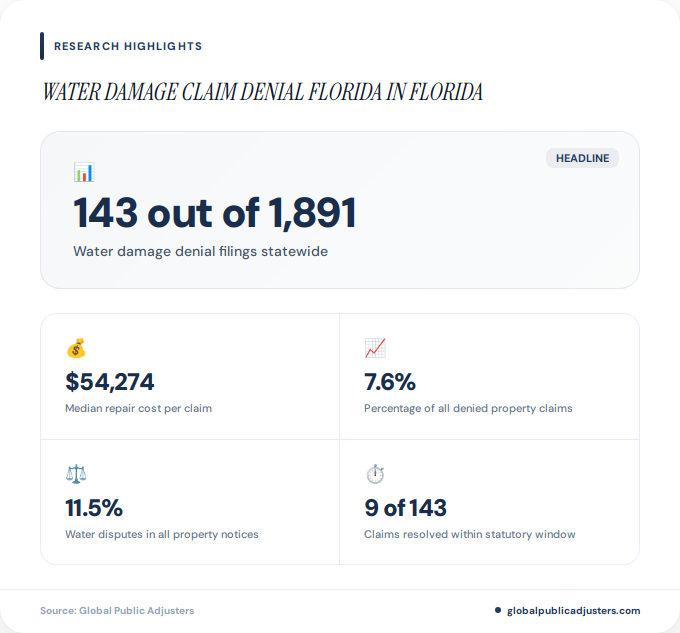
A water damage claim denial in Florida most often happens because insurers classify the loss as gradual seepage, wear and tear, or an excluded source rather than sudden accidental discharge. Recent data shows 143 water-damage denial filings among 1,891 denied property-claim notices statewide, with a median repair figure of $54,274, meaning many homeowners are losing tens of thousands of dollars in disputed coverage. Homeowners can fight back with strong documentation, prompt mitigation, and, when needed, a licensed public adjuster or attorney.
What Does the Data Say About Water Damage Claim Denials in Florida?
If you have received a water damage claim denial Florida homeowners are increasingly familiar with, you are not alone. A recent Florida denial-tracking dataset identified143 water-damage-related denial filingsout of1,891 denied property-claim civil remedy notices, roughly 7.6% of all denied property claims statewide. The median repair figure attached to those water-damage filings was$54,274, a substantial sum for families in Tampa, Orlando, Jacksonville, and Miami-Dade facing sudden repair bills.
Of those 143 filings, only9 were later withdrawn or resolvedwithin the statutory window, meaning the vast majority stayed contested. Zooming out, a broader Florida presuit notice dataset found that denial allegations appeared in43.5% of all property-claim noticesfiled in the state, and water or plumbing disputes accounted for3,414 notices, or 11.5%, of that total, according to the Florida Presuit Notice Intelligence Report. Florida’s own catastrophe reporting data, tracked through theFlorida Office of Insurance Regulation’s catastrophe reporting tools, also shows enormous volumes of residential property claims moving through the system every year, reinforcing how common these disputes have become.
Why Do Insurers Deny Water Damage Claims in Florida?
Insurance carriers in Florida use a recurring set of justifications when denying water losses, and understanding them is the first step toward a successful appeal. Homeowners from Fort Lauderdale to Naples report nearly identical language in their denial letters, which suggests a systemic pattern rather than isolated bad luck.
- Gradual seepage or long-term deterioration:The insurer argues the water entered slowly over weeks or months rather than suddenly, shifting the loss outside standard coverage.
- Excluded water source:Flood, groundwater intrusion, or surface water is often excluded from a standard homeowners policy and requires separate flood coverage.
- Failure to mitigate:If a homeowner does not act quickly to stop the leak or dry out the property, insurers may argue the resulting mold or structural damage was preventable.
- Late reporting or weak documentation:Claims reported weeks after discovery, without photos or repair estimates, are easy targets for denial.
- Wear, tear, or maintenance failure:Corroded pipes, aging roofs, or deferred maintenance are frequently cited as the “real” cause instead of a sudden covered event.
Legal resources such as Florida water damage lawyer guidance and breakdowns of common Florida property claim denial reasons consistently confirm this pattern across the state’s insurance market.
What Is the Sudden vs. Gradual Water Damage Rule in Florida?
Florida homeowners policies generally cover water damage that is “sudden and accidental,” such as a burst pipe or a failed washing machine hose. They typically exclude damage caused by continuous or repeated seepage over a period of weeks, months, or years. This distinction, explained in detail by legal analysis of sudden versus gradual water damage in Florida, is the single biggest driver behind denied claims statewide.
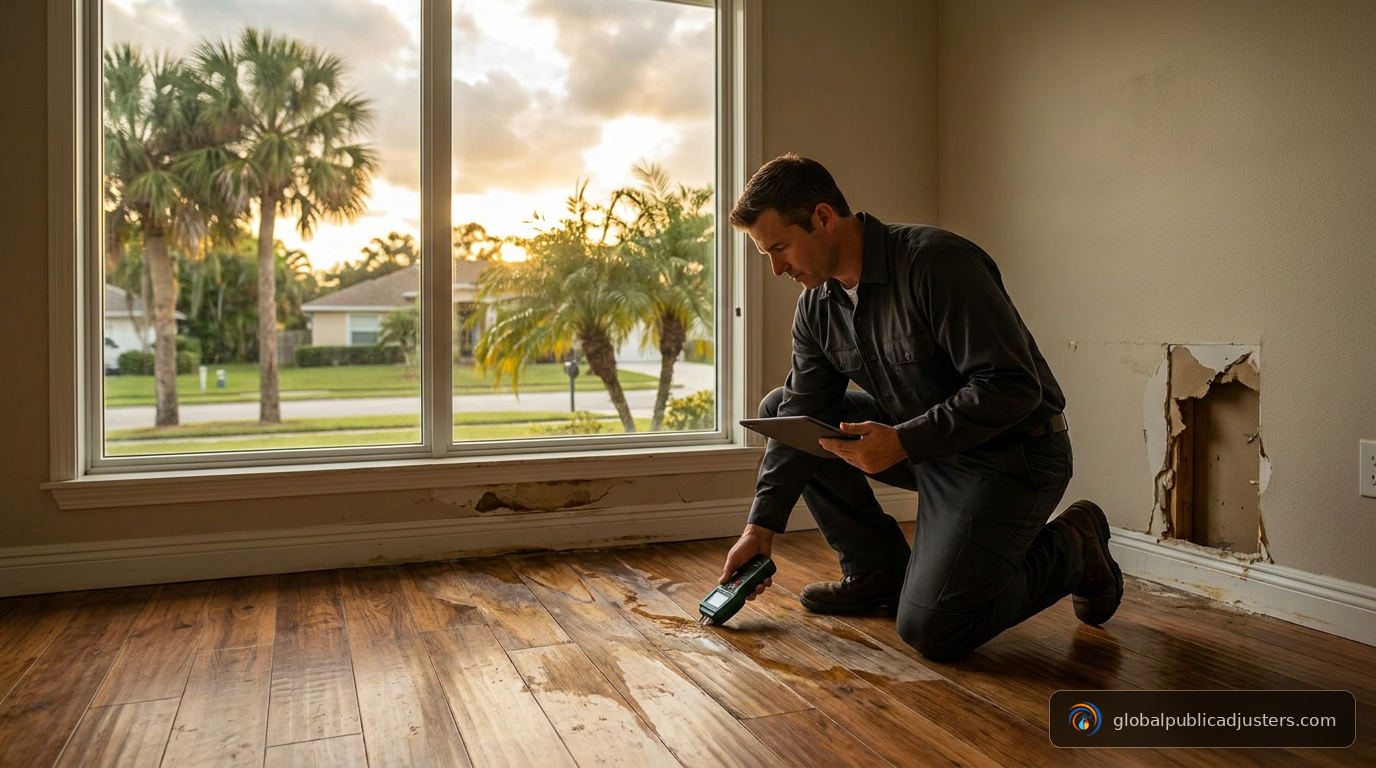
The problem is that water damage does not always announce itself cleanly. A slow leak behind a wall in a Sarasota bungalow or an aging supply line in a Jacksonville condo can cause damage that looks gradual even when the underlying failure was sudden. Insurers often lean on this ambiguity, and homeowners who lack a plumber’s report or moisture readings from the day of discovery are at a real disadvantage.
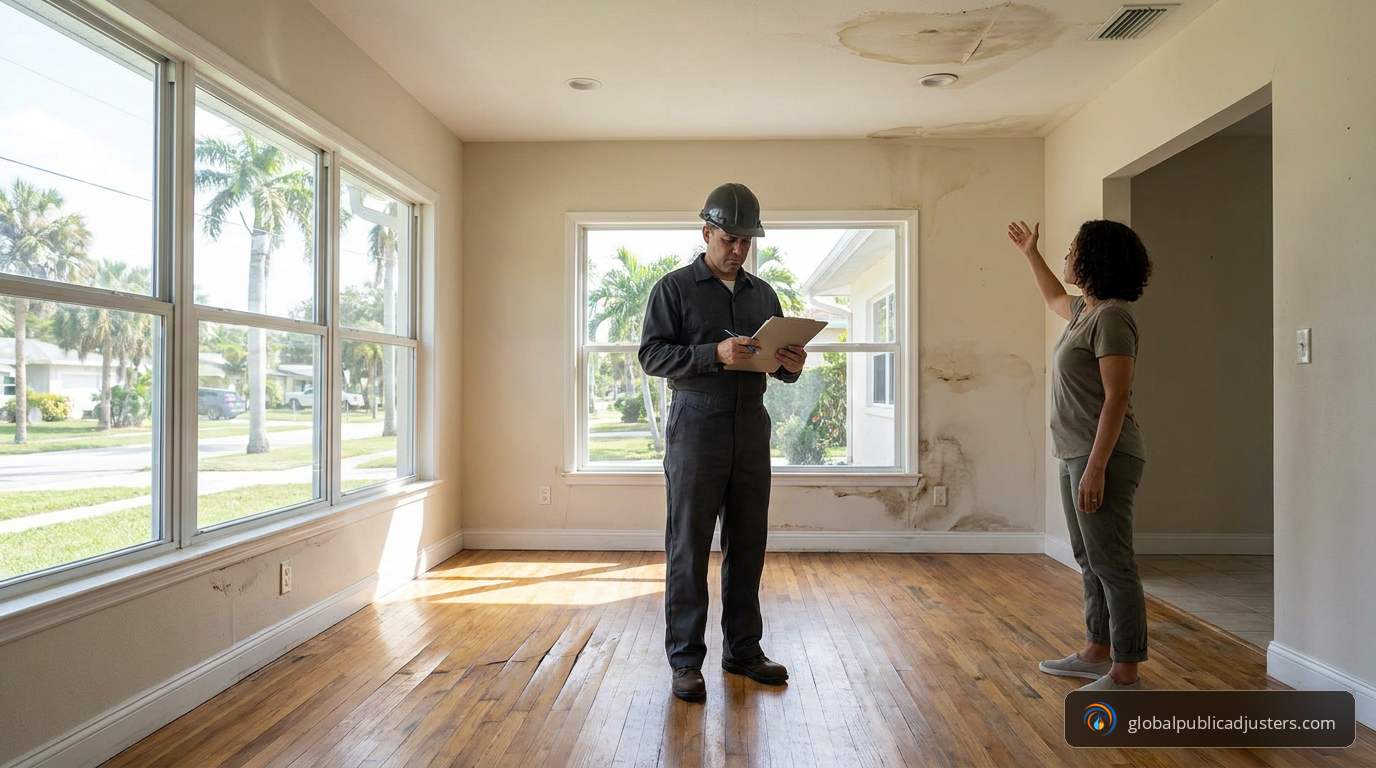
Related coverage disputes also arise around pre-existing damage allegations. If an adjuster claims the water intrusion existed before the policy period began, or that mold visible during inspection proves a long-standing problem, the burden shifts to the homeowner to prove otherwise. For a deeper look at how adjusters evaluate these claims, see our guide on thewater damage insurance adjuster process in Florida.
How Long Does an Insurer Have to Respond to a Florida Water Damage Claim?
Florida law imposes specific deadlines on insurers handling property claims, and missing these deadlines can itself become grounds for a bad faith argument. Practitioners across the state, including resources cited by guidance on what to do after a water damage claim denial, point to these common statutory benchmarks:
- Acknowledge a new claim within14 daysof receiving notice.
- Begin an investigation promptly after acknowledgment.
- Issue a pay, partial-pay, or deny decision within60 daysin many property-claim contexts.
- Provide a written explanation citing the specific policy provision when denying a claim.
When an insurer blows through these deadlines or issues a denial without a clear policy citation, homeowners have grounds to escalate. The step-by-step process for responding to a denied water damage claim typically starts with a formal written request for the denial rationale in full.
How Do Denial Reasons Compare Across Florida Water Claims?
Not all denial reasons carry equal weight or equal odds of being overturned. The table below compares the most common denial categories homeowners across Florida encounter, based on patterns reported statewide.
| Denial Reason | Typical Insurer Argument | Homeowner Counter-Strategy |
|---|---|---|
| Gradual seepage | Damage built up over months, not sudden | Moisture readings, plumber reports, timeline evidence |
| Excluded source | Flood or groundwater, not covered peril | Source verification, flood policy review |
| Failure to mitigate | Owner delayed drying or repairs | Dated photos, mitigation invoices, prompt reporting |
| Wear and tear | Corrosion or deterioration, not a covered peril | Independent inspection, maintenance records |
What Should You Do If Your Water Damage Claim Is Denied?
A denial letter is not the final word. Florida homeowners have real options, and acting quickly and methodically improves the odds of a reversal or a fair settlement through appeal or litigation.
- Request the full denial letter in writing, including the specific policy language cited, as recommended by Florida’s home insurance denial appeal guide.
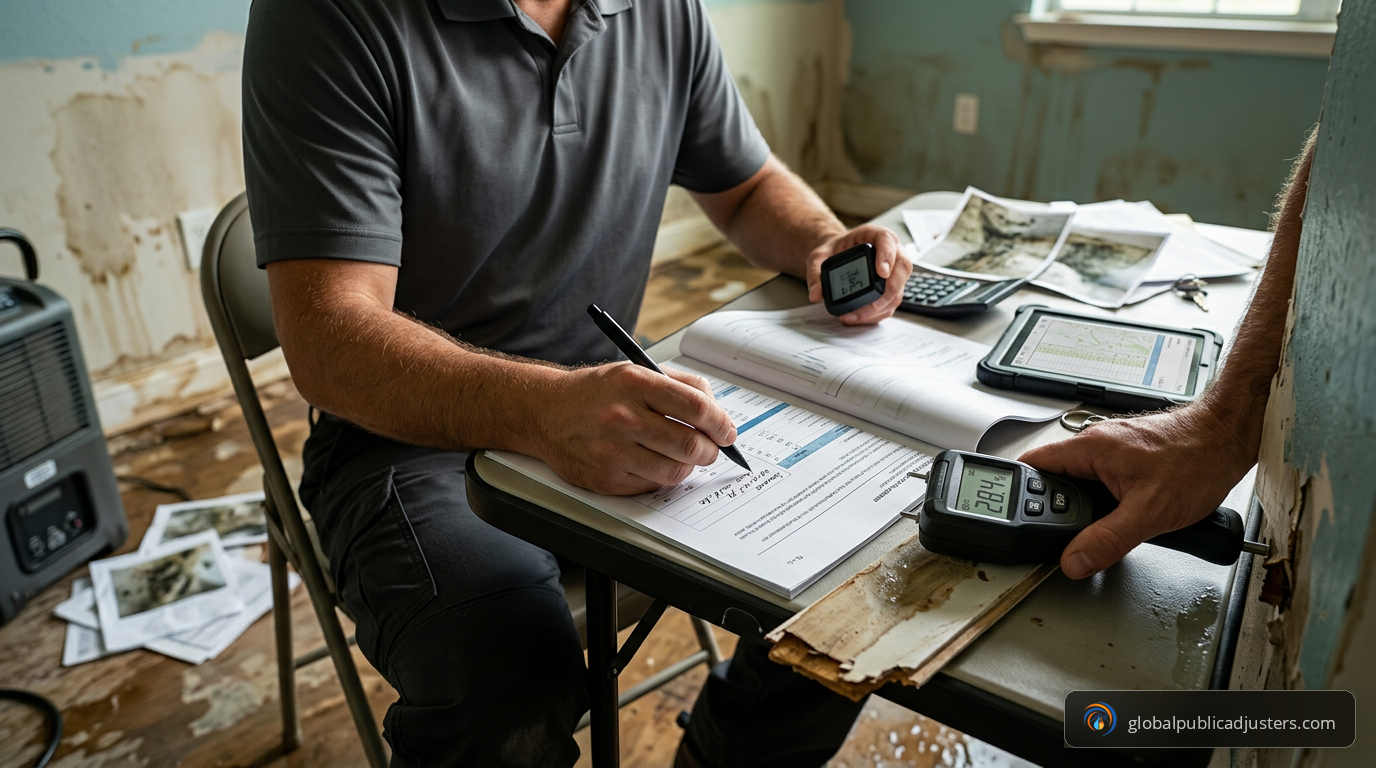
- Gather independent evidence: plumber invoices, moisture meter readings, photos and video from the day of discovery, and mold testing results if applicable.
- Document your mitigation effortswith receipts for water extraction, dehumidifier rental, and any temporary repairs.
- Consider proper documentation from the start, since detailed documentation practices for Florida water damage claims can make the difference between approval and denial.
- File a formal appeal or demand letteroutlining why the denial misapplies your policy language.
- Consult a public adjuster or attorneyif the insurer does not reverse course after your appeal.
Homeowners negotiating settlements after a partial denial may also benefit from reviewing regional strategies, such as our guide onnegotiating insurance settlements in Jacksonvilleornegotiating settlement amounts in Orlando, both of which apply broadly to disputed property claims statewide.
How Can a Public Adjuster Help Overturn a Denial?
A licensed public adjuster works exclusively for the policyholder, not the insurance company, and can reexamine the loss, reinspect the property, and build a documented causation argument that directly challenges the insurer’s denial rationale. This is particularly valuable in cases involving the median $54,274 repair figures common in Florida water claims, where the financial stakes justify professional representation.
Pricing for public adjuster representation and related repair or restoration work varies widely, generally ranging from a few thousand dollars for straightforward reinspections to $10,000 to $50,000 or more for complex, high-value claims involving structural repairs and mold remediation. Pricing varies based on your specific project, the extent of damage, and the complexity of the dispute, so it’s best to contact a licensed professional for a custom quote. To understand the broader scope of support available, reviewour public adjusting servicesor explorethe different claim types we handleacross Florida.
Homeowners dealing with hurricane-related water intrusion in Central Florida may also want to review our resource onhurricane damage claim adjusters in Orlando, since wind-driven rain and storm-related water intrusion often overlap with the same denial tactics discussed here. For homeowners still choosing representation, our overview ofhow to choose the right public adjusting company in Jacksonvilleapplies to any Florida market.
Key Takeaways
- 143 water-damage denial filings were tracked in a recent Florida dataset out of 1,891 total denied property claim notices, roughly 7.6% of the total.
- The median repair figure tied to denied water claims was $54,274, showing significant financial exposure for homeowners.
- Only 9 of those 143 filings were later withdrawn or resolved, meaning most denials remain contested.
- Denial allegations appear in 43.5% of all Florida property claim notices, and water/plumbing disputes make up 11.5% of that broader dataset.
- The sudden-versus-gradual distinction is the most common battleground in Florida water damage denials.
- Florida insurers generally must acknowledge claims within 14 days and issue a decision within 60 days.
- Strong documentation, prompt mitigation, and professional representation significantly improve the odds of overturning a denial.
People Also Ask
Is gradual leak damage covered in Florida?
Generally no. Standard Florida homeowners policies cover sudden and accidental water discharge but exclude damage from gradual, ongoing seepage or long-term leaks. Insurers frequently deny claims by classifying the loss as gradual, even when homeowners dispute that characterization.
What if the insurer says the damage was pre-existing?
You can challenge a pre-existing damage claim with independent inspection reports, prior repair records, and moisture testing that shows the timeline of the actual event. An independent expert or public adjuster can help build evidence contradicting the insurer’s assessment.
How long does an insurer have to respond to a Florida water damage claim?
Florida insurers are generally required to acknowledge a claim within 14 days and issue a coverage decision, whether pay, partial pay, or deny, within 60 days in many property claim contexts. Missing these deadlines can support a bad faith argument against the carrier.
What evidence do I need to overturn a denial?
Strong evidence includes dated photos and video from the moment the leak was discovered, plumber or contractor reports establishing cause, moisture readings, mitigation receipts, and an independent damage estimate. This documentation directly counters common insurer arguments about gradual damage or lack of mitigation.
Frequently Asked Questions
What percentage of Florida water damage claims get denied?+
Recent data shows water-damage denials made up about 7.6% of a tracked set of 1,891 denied property claim notices statewide, totaling 143 filings. Water and plumbing disputes overall accounted for 11.5% of a broader Florida presuit notice dataset, showing these disputes are widespread.
Why was my water damage claim denied in Florida?+
Common reasons include the insurer classifying the loss as gradual seepage instead of sudden and accidental, excluded water sources like flooding, alleged failure to mitigate, late reporting, or disputes over wear and tear versus a covered peril. Reviewing your denial letter’s cited policy language is the first step to understanding your specific situation.
Can I appeal a denied water damage claim in Florida?+
Yes. Homeowners can submit a formal written appeal with supporting evidence, request appraisal or mediation, or escalate through a civil remedy notice and litigation if the denial is not resolved. Many homeowners strengthen their appeal by hiring a public adjuster or attorney familiar with Florida water claim disputes.
What is the median repair cost tied to denied Florida water claims?+
A recent Florida denial-tracking dataset found a median repair figure of $54,274 among water-damage denial filings. This underscores how much money is often at stake when a claim is wrongfully denied.
Do I need a public adjuster for a denied water claim?+
While not legally required, a public adjuster can significantly strengthen your position by independently documenting damage, reviewing policy language, and negotiating directly with the insurer on your behalf. This is especially valuable for high-value claims or complex causation disputes common in Florida.
Does mold from water damage get covered in Florida?+
Mold coverage depends heavily on the cause of the underlying water intrusion and how quickly it was addressed. Insurers often deny mold-related claims by arguing the homeowner failed to mitigate promptly, making early documentation and rapid remediation critical to preserving coverage.
Related:Hurricane Damage Insurance Claim Denied in Florida: What Homeowners Need to Know
Related:Water Damage Claim Denied in Florida? Here’s What to Do Now
Related:How Does Insurance Adjuster Get Paid in Tampa: A Local Guide
Fighting a water damage claim denial Florida wide requires persistence, documentation, and often professional support. If your claim has been denied or underpaid,reach out to our team for a claim reviewor learn moreabout our public adjusting experiencebefore your appeal deadline passes. You can also visitGlobal Public Adjustersto explore how we help Florida homeowners recover the settlements they are owed.
Further reading:How to File a Water Damage Claim in Florida: A Jacksonville Homeowner’s Step-by-Step Guide