Public Adjuster Definition in Orlando: What Florida Law Actually Says
Quick Answer
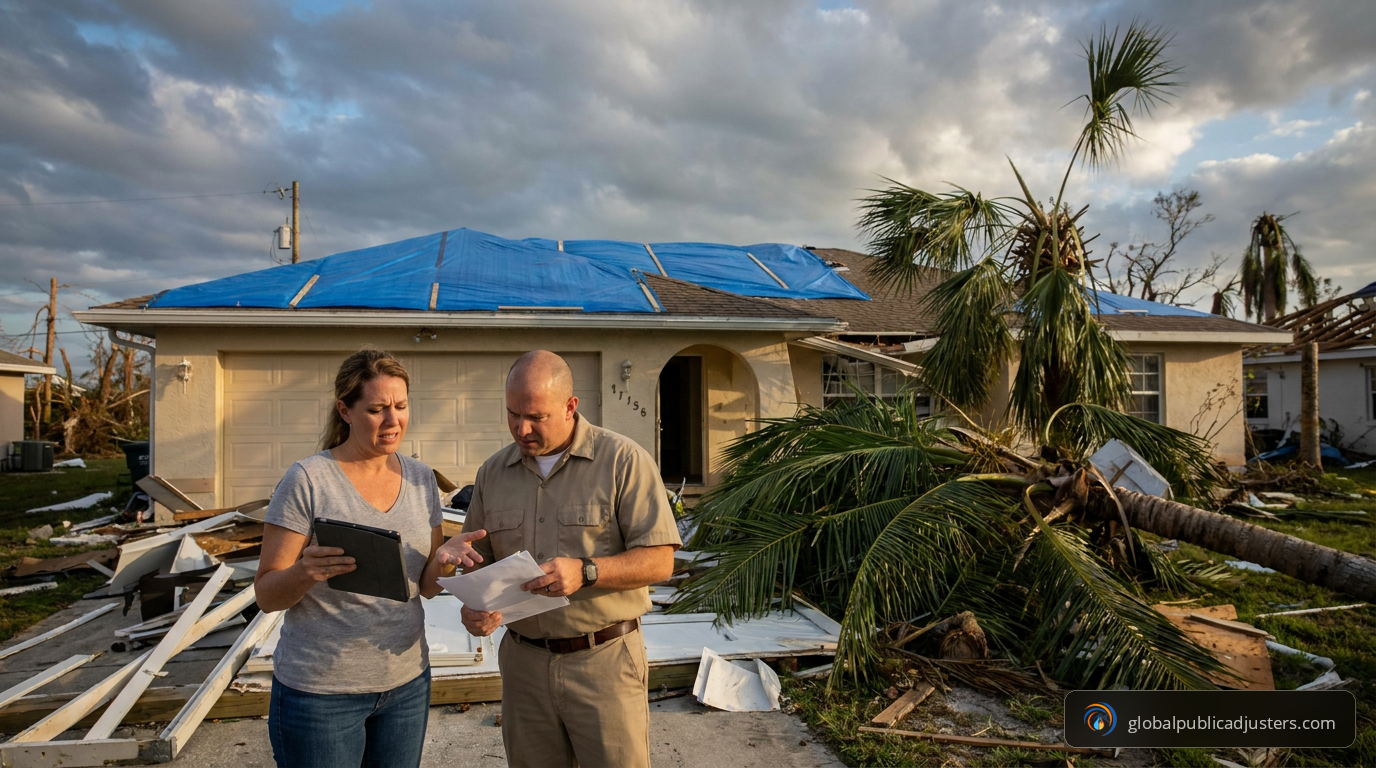
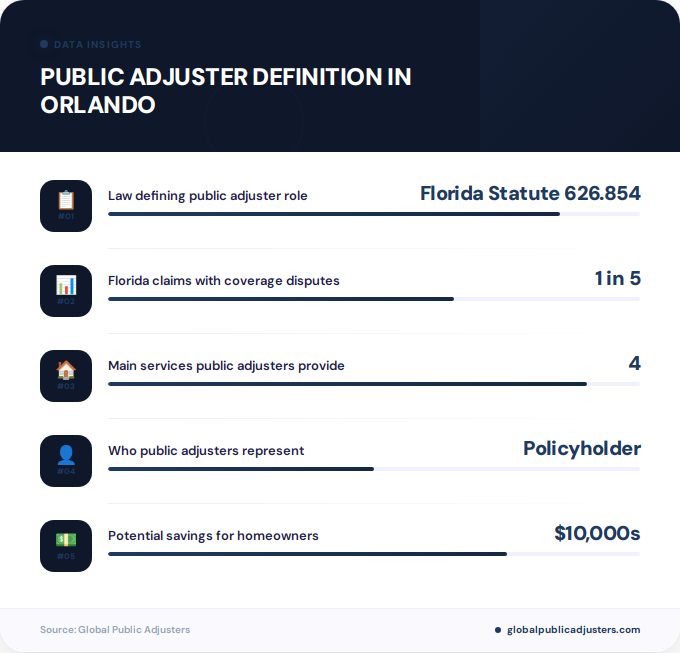
A public adjuster in Orlando is a Florida-licensed professional who, for a fee, prepares, files, negotiates, and settles property insurance claims exclusively on behalf of the policyholder, not the insurance company. Florida Statute 626.854 defines this role broadly to include advertising, soliciting, and investigating claims for compensation, not just negotiating settlements. Orlando homeowners typically hire one after storm, roof, or water damage claims are underpaid, delayed, or denied.
Roughly one in five Florida property claims involves a coverage dispute serious enough that policyholders consider outside help, and Orlando homeowners facing roof, wind, or water damage claims are no exception. Yet most people searching for apublic adjuster definition in Orlandohave never actually read the statute that defines the profession. That gap matters, because Florida law defines “public adjuster” far more broadly than the average homeowner expects, and understanding that definition is the first step to knowing whether you need one.
What Is a Public Adjuster Under Florida Law?
Under Florida law, a public adjuster is any person who, for money or other compensation, prepares or files an insurance claim, negotiates the settlement of a claim, or otherwise helps a policyholder resolve a first-party property claim. This definition comes directly fromFlorida Statute 626.854, which governs adjuster licensing statewide, including in Orange County and throughout the Orlando metro area.
What surprises many people is how broad the statutory language actually is. The definition covers not just the act of negotiating a settlement, but also advertising for adjustment work, soliciting claims, and investigating losses on behalf of an insured or a public adjuster, all for compensation. In other words, Florida regulators treat almost the entire claim-handling process, from the first phone call to the final settlement check, as regulated public adjusting activity.
This matters in Orlando because unlicensed contractors, roofers, and “claims consultants” sometimes offer to “help” with a claim without holding the required license. If you’re vetting someone to represent your interests on a claim, understanding theservicesa licensed public adjuster is legally permitted to perform is the best way to spot the difference between a professional and an unlicensed operator.
Who Do Public Adjusters Represent in Orlando?
This is the single most important distinction in the entire definition. A public adjuster representsthe policyholder, never the insurance company. That is fundamentally different from the adjuster the insurer sends to your home, who works for or on behalf of the carrier, no matter how friendly or fair they seem.
Industry guidance fromthe National Association of Public Insurance Adjustersreinforces that public adjusters exist specifically to level the playing field, since insurers have teams of adjusters, engineers, and estimators working for them, while the average homeowner has none. In Orlando, where hurricane and severe storm claims can involve six-figure roof and structural damage estimates, that imbalance can cost homeowners tens of thousands of dollars if left unaddressed.
“A public adjuster is hired by and represents the insured, not the insurance company, in the preparation, presentation, and settlement of a claim.” This principle, echoed across Florida regulatory and industry guidance, is the foundation of the entire profession and the reason licensing exists in the first place.
What Does a Public Adjuster Actually Do?
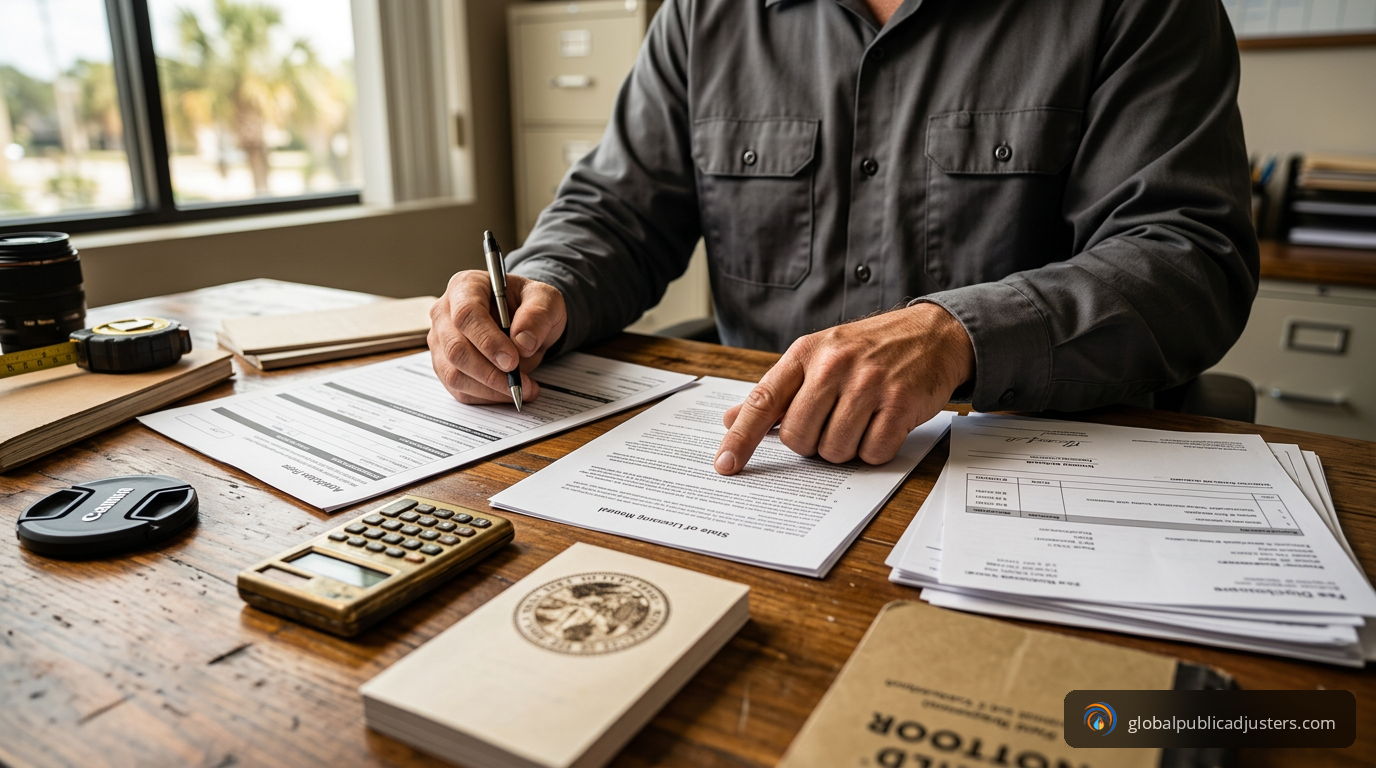
In practice, a public adjuster’s work spans the entire lifecycle of a claim. They typically:
- Review the policyholder’s insurance policy to identify all applicable coverages, sub-limits, and endorsements
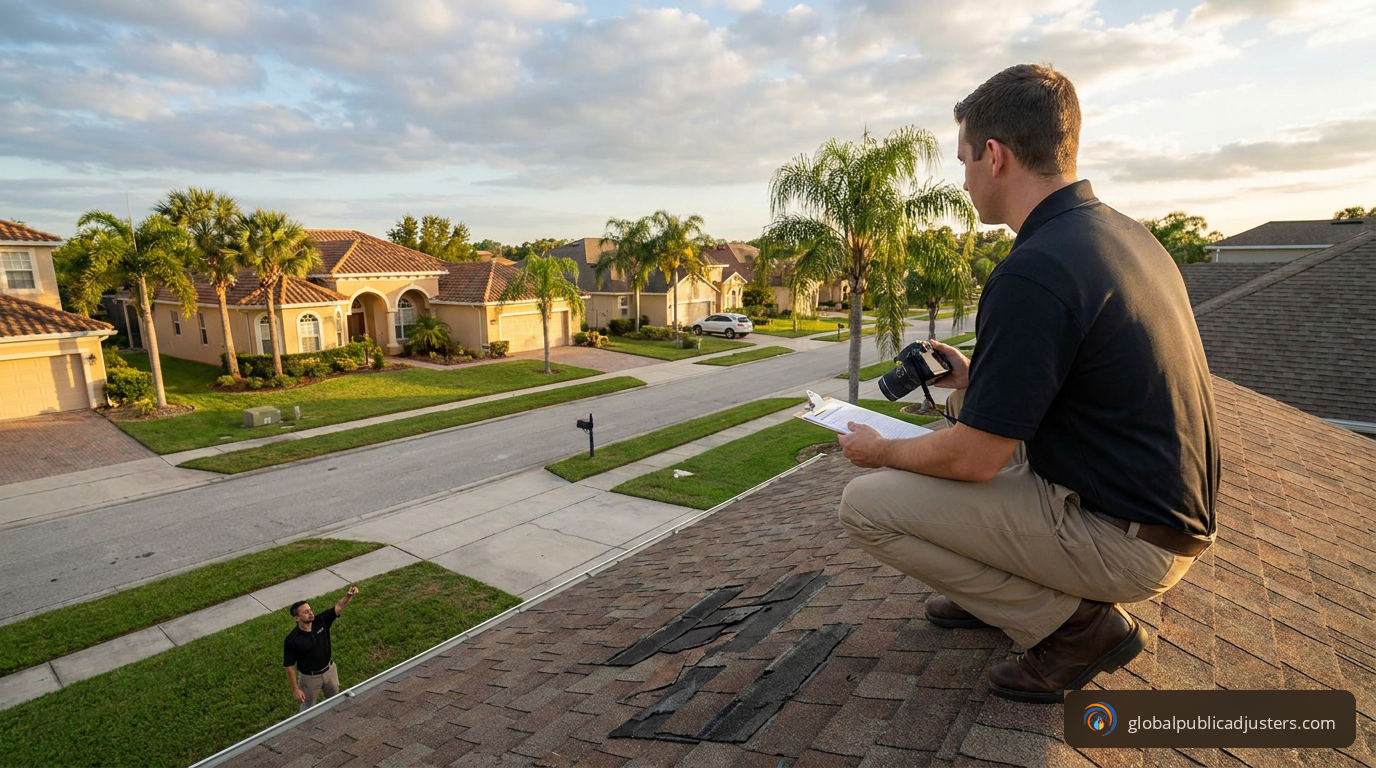
- Inspect and document property damage, often using drones, moisture meters, and detailed photo logs
- Prepare a detailed, line-item damage estimate using industry-standard software
- File the claim or supplement an existing claim with the carrier
- Negotiate scope and pricing disputes directly with the insurance company’s adjuster
- Move the claim into appraisal, mediation, or a Civil Remedy Notice process when negotiations stall
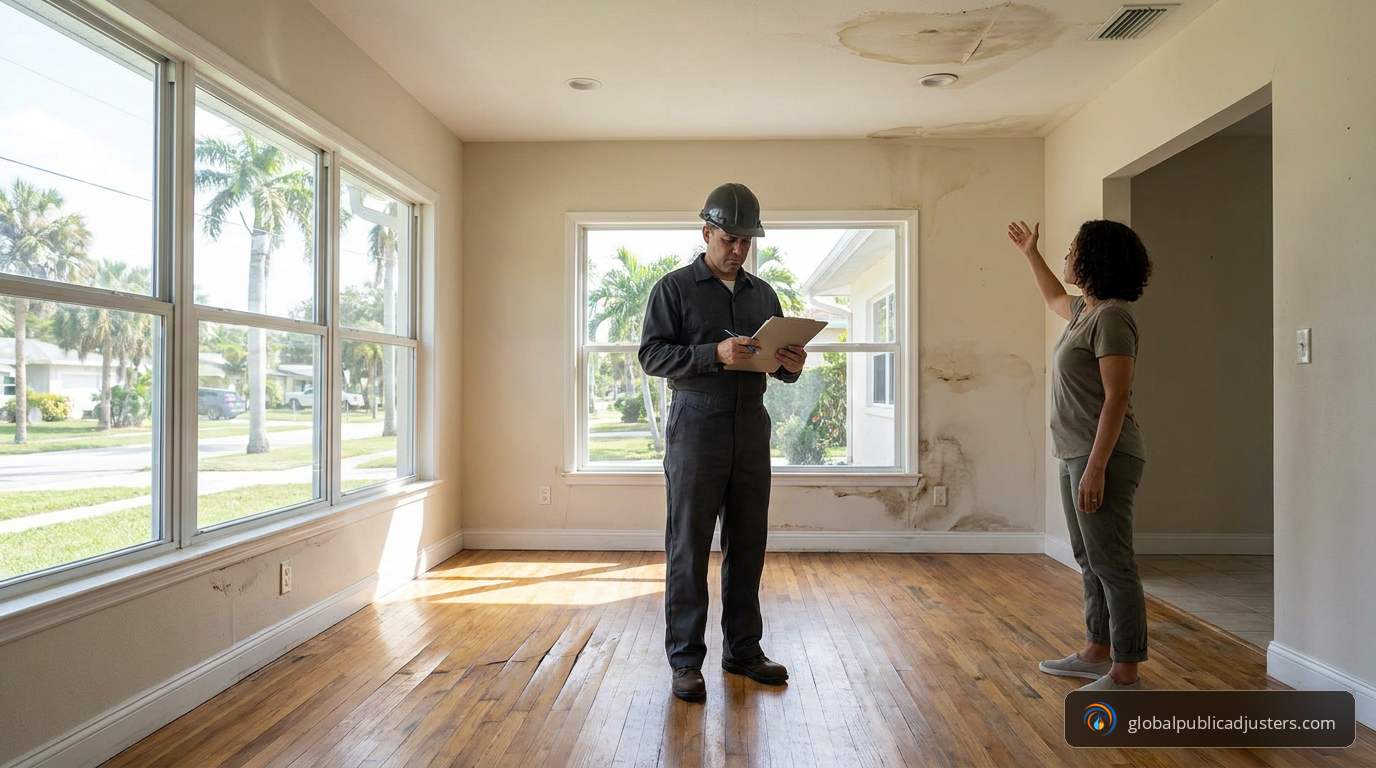
This process is especially relevant for Orlando-area losses involving water intrusion, since Florida’s humid climate and frequent afternoon storms make water damage claims notoriously complex to document and value. Homeowners navigating this exact scenario can review a related breakdown ofhow to appeal a denied water damage claim in Floridafor a deeper look at the appeals process public adjusters often manage.
What Activities Are NOT Considered Public Adjusting?
Florida’s statute also carves out specific exclusions. For example, a person who simply photographs or inventories damaged property, without soliciting, adjusting, investigating, or negotiating the claim, is not considered to be acting as a public adjuster. This distinction matters for contractors and restoration companies that document damage as part of repair work but don’t handle the insurance negotiation itself.
Legal commentary onpublic adjuster policy endorsements and restrictionsalso highlights an emerging trend: some insurers have attempted to include endorsements limiting a policyholder’s right to hire a public adjuster altogether. Orlando homeowners should read their declarations page carefully, since these clauses can affect your options after a loss.
Why Does This Definition Matter So Much in Orlando?
Orlando’s exposure to tropical storms, hurricanes, hail, and sudden heavy rainfall makes first-party property claims a routine part of homeownership here, from Lake Nona to Dr. Phillips to Winter Park. Roof damage, water intrusion, and wind-driven rain claims are the most common reasons Orlando policyholders seek a public adjuster, particularly when an insurer’s initial estimate seems far below what repairs will actually cost.
According toindustry growth data tracking the public adjusting profession from 2018 through 2026, demand for licensed public adjusters has expanded steadily in catastrophe-prone states like Florida, driven largely by increasingly complex claims and rising insurer scrutiny of storm-related damage. That trend is especially visible in Central Florida, where back-to-back hurricane seasons have strained both insurer claims departments and homeowner patience.
Knowing precisely when a claim situation calls for professional representation is its own skill. A detailed resource onwhen to hire a public adjuster in Floridawalks through the specific red flags, such as lowball estimates, unexplained delays, or partial denials, that typically justify bringing in outside help.
How Are Public Adjusters Paid and Licensed?
Public adjusters in Florida are licensed and regulated by the Florida Department of Financial Services, which maintains adjuster compliance records that consumers can check before hiring anyone. TheDepartment of Financial Services adjuster compliance divisionis the authoritative source for verifying an adjuster’s license status in Orlando or anywhere else in the state.
Public adjusters are typically compensated on a contingency basis, meaning they only get paid when the claim settles, and their fee comes out of the settlement rather than as an upfront charge. Florida law caps these fees, and industry guidance from theFlorida Association of Public Insurance Adjustersconfirms the maximum fee is generally 20% of the claim payment, dropping to 10% for claims made within the first year after a declared emergency.
Because actual fee structures, negotiation strategies, and contract terms vary by firm and by the complexity of the claim, pricing should always be treated as a range rather than a fixed number, and it’s worth requesting a custom breakdown before signing anything. A full explanation of typical fee structures is available in this guide topublic adjuster fees in Florida, which outlines how contingency percentages are typically calculated.
Public Adjuster vs. Insurance Company Adjuster
The clearest way to understand the public adjuster definition is to compare it directly against the adjuster the insurance company sends out. The two roles sound similar but serve opposite interests.
| Feature | Public Adjuster | Insurance Company Adjuster |
|---|---|---|
| Who they represent | The policyholder | The insurance carrier |
| How they’re paid | Contingency fee from settlement (typically capped at 20%) | Salary or contract fee from insurer |
| Primary goal | Maximize policyholder’s covered settlement | Manage and control claim payout |
| Licensing authority | Florida DFS license required | Florida DFS license required |
Regulator:Florida DFS
Covers:Prep, filing, negotiation, advertising
Emergency cap (year 1):10%
Payment basis:Contingency
Water intrusion
Hurricane and hail losses
Understanding this comparison is often the deciding factor for Orlando homeowners weighing whether to accept an insurer’s first offer or seek a second opinion. For a broader look at the full range of claim types public adjusters handle, see this overview ofclaims typescommonly managed across Florida.
Key Takeaways
- A public adjuster in Orlando is defined by Florida Statute 626.854 as anyone who, for compensation, prepares, files, negotiates, or advertises for insurance claim work on behalf of a policyholder.
- Public adjusters represent the policyholder exclusively, never the insurance company, which is the core distinction from a company or independent adjuster.
- Their work spans policy review, damage documentation, estimate preparation, claim filing, and negotiation through appraisal or mediation if needed.
- Simply photographing or inventorying damage does not count as public adjusting under Florida law unless it’s paired with soliciting, negotiating, or investigating the claim.
- Fees are typically contingency-based, generally capped at 20% of the settlement, or 10% during the first year after a declared emergency.
- Orlando’s exposure to hurricanes, wind, and water damage makes this profession especially relevant for local homeowners and property owners.
- Always verify license status through Florida’s Department of Financial Services before hiring anyone to represent your claim.
People Also Ask
What is the legal definition of a public adjuster in Florida?
Florida Statute 626.854 defines a public adjuster as anyone who, for compensation, prepares, files, or negotiates an insurance claim on behalf of a policyholder, or advertises, solicits, or investigates claims for pay. This definition applies statewide, including in Orlando and Orange County.
Do public adjusters work for the insurance company?
No. Public adjusters are hired by and represent the policyholder, not the insurer. This is the opposite of a company adjuster, who is employed or contracted by the insurance carrier.
How much do public adjusters charge in Florida?
Fees are generally capped at 20% of the claim settlement, or 10% for claims filed within the first year following a declared state of emergency. Exact terms vary by contract and claim complexity, so it’s best to request a written fee agreement upfront.
Is a public adjuster required to be licensed in Orlando?
Yes. Public adjusters must hold an active license issued by the Florida Department of Financial Services, and consumers can verify license status directly through the state’s compliance database before hiring anyone.
Frequently Asked Questions
What does a public adjuster do in Orlando?+
A public adjuster reviews your policy, documents property damage, prepares a detailed claim estimate, files the claim, and negotiates with your insurance company to reach a fair settlement. In Orlando, this often involves hurricane, wind, roof, or water damage claims.
How is a public adjuster different from an insurance company adjuster?+
A public adjuster represents the policyholder and is paid a contingency fee from the settlement, while a company adjuster is employed by the insurer and works to manage the carrier’s payout. Their incentives point in opposite directions.
When should I hire a public adjuster in Orlando?+
Common triggers include a denied or underpaid claim, unexplained delays, disputed coverage, or complex damage that’s hard to document alone. Many Orlando homeowners bring in a public adjuster after receiving an initial settlement offer that seems too low compared to repair costs.
Are public adjuster fees regulated in Florida?+
Yes. Florida law generally caps public adjuster fees at 20% of the claim settlement, dropping to 10% for claims filed within the first year after a declared emergency such as a hurricane.
Can a public adjuster help with a denied claim in Orlando?+
Yes. Public adjusters can re-examine denied claims, gather additional documentation, and push back on the insurer’s denial through negotiation, appraisal, or a formal dispute process. Many Orlando policyholders hire one specifically after receiving a denial letter they believe is inaccurate.
Is simply taking photos of damage considered public adjusting?+
No. Florida law specifically excludes photographing or inventorying damaged property from the public adjuster definition, as long as that person isn’t also soliciting, negotiating, or investigating the claim for compensation.
How do I verify a public adjuster’s license in Orlando?+
You can check license status through Florida’s Department of Financial Services compliance division, which maintains adjuster records for the entire state, including Orlando and Orange County.
Related:Public Insurance Adjusters in Orlando: Your 2026 Guide to Maximizing Property Insurance Claims
Related:PA Public Adjuster in Tampa: Your Complete 2026 Guide to Hiring the Right Claims Advocate
Related:Los Angeles Public Adjuster in Jacksonville: What Florida Homeowners Need to Know
Understanding the public adjuster definition is only the starting point. If your Orlando property has suffered storm, roof, or water damage and your claim feels stalled or underpaid, the next step is speaking with a licensed professional who can review your policy and explain your options. Learn more about ourexperience and approach, browse our fullservice offerings, orcontact our teamtoday for a no-obligation review of your claim. You can also visitGlobal Public Adjustersto explore how we help Florida policyholders recover the settlements they’re owed.
Further reading:Fire Damage Adjuster in Jacksonville: Your 2026 Guide to Maximizing Fire Claims