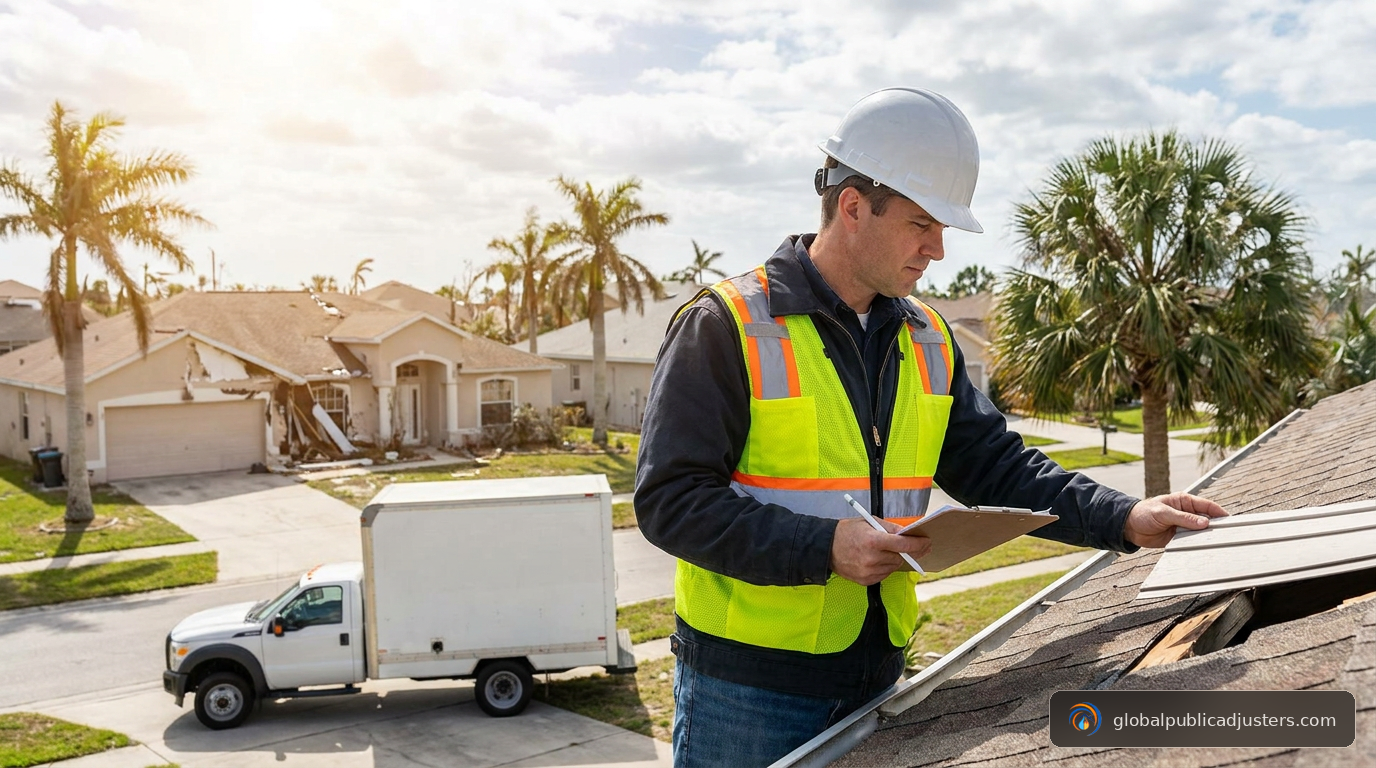
Quick Answer
If yourwater damage claim was denied in Florida, you have the right to request the denial in writing, demand the insurer’s inspection report, and file a formal appeal or civil remedy notice before the statute of limitations expires. Most denials cite “gradual leakage,” “flood exclusion,” or “lack of maintenance,” but many of these determinations can be successfully challenged with proper documentation, independent inspections, and, when needed, a licensed public adjuster or attorney.
Why Are So Many Florida Water Damage Claims Getting Denied?
Thousands of Florida homeowners open a denial letter every month and feel blindsided. Awater damage claim denied in Floridais rarely the end of the road, but it often feels that way when the letter is full of policy jargon and vague references to “wear and tear” or “flood exclusion.” The frustrating truth is that many denials are based on incomplete inspections or overly broad readings of policy language, not on an accurate account of what actually happened to your home.
Florida’s property insurance market remains under intense pressure heading into late 2026. A recent statewide survey on property insurance sentiment found that most Florida homeowners still don’t believe the market is actually recovering, despite rate stabilization efforts. A separate University of North Florida poll found homeowners are now more worried about insurance costs and claim denials than property taxes, a notable shift for a state long defined by tax politics.
Whether you live along the coast in Tampa, inland in Orlando, or in a historic Jacksonville neighborhood near the St. Johns River, the denial playbook tends to look similar. Understanding why claims get denied, and how Florida law gives you the right to push back, is the first step toward a fair resolution.
What Does the Latest Florida Data Show?
Florida regulators track closed property claims every year, and the 2024 figures (the most recent complete dataset) tell a revealing story about how big the water damage category really is.
| Metric | Figure |
|---|---|
| Total closed property claims (2024) | 698,742 |
| Accidental discharge/overflow/steam claims | 82,965 |
| “Other water” claims | 82,066 |
| Litigated claims | 60,261 |
| Non-litigated claims | 621,154 |
Combined, the two water-related categories account for roughly165,031 closed claims, or about23.6% of all closed property claimsreported that year. The average time for a homeowner to report a claim was47 days, though the median was much faster at6 days, and insurers took an average of57 daysto close a claim, with a median of27 days. According to the Florida Office of Insurance Regulation’sJanuary 2026 Insurance Stability Unit report, “other water” claims as a share of total claims jumped from 13.11% to 15.59%, a rise of 2.48 percentage points, year over year.
Citizens Property Insurance reportedly cut multiperil rates by an average of8.8% in 2026, yet underwriters continue to scrutinize water losses more aggressively than almost any other claim type. That scrutiny is exactly why so many homeowners find themselves fighting awater damage claim denied in Floridaafter what seemed like a straightforward pipe burst or appliance failure.
What Are the Most Common Reasons for Denial?
Most Florida homeowners insurance policies cover damage that is “sudden and accidental,” but exclude damage from gradual deterioration. Insurers lean heavily on this distinction, and it’s the single biggest driver of water claim denials statewide.
Gradual Leakage or Long-Term Seepage
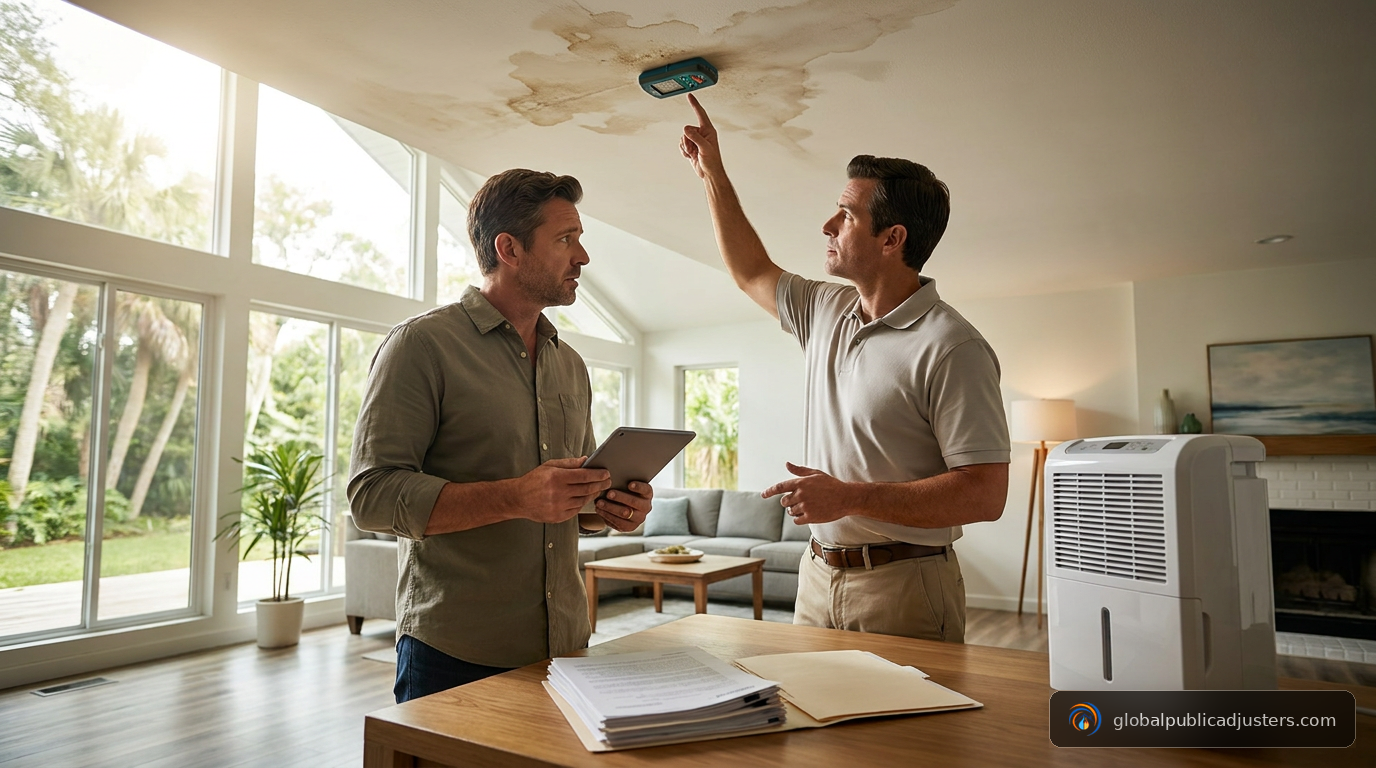
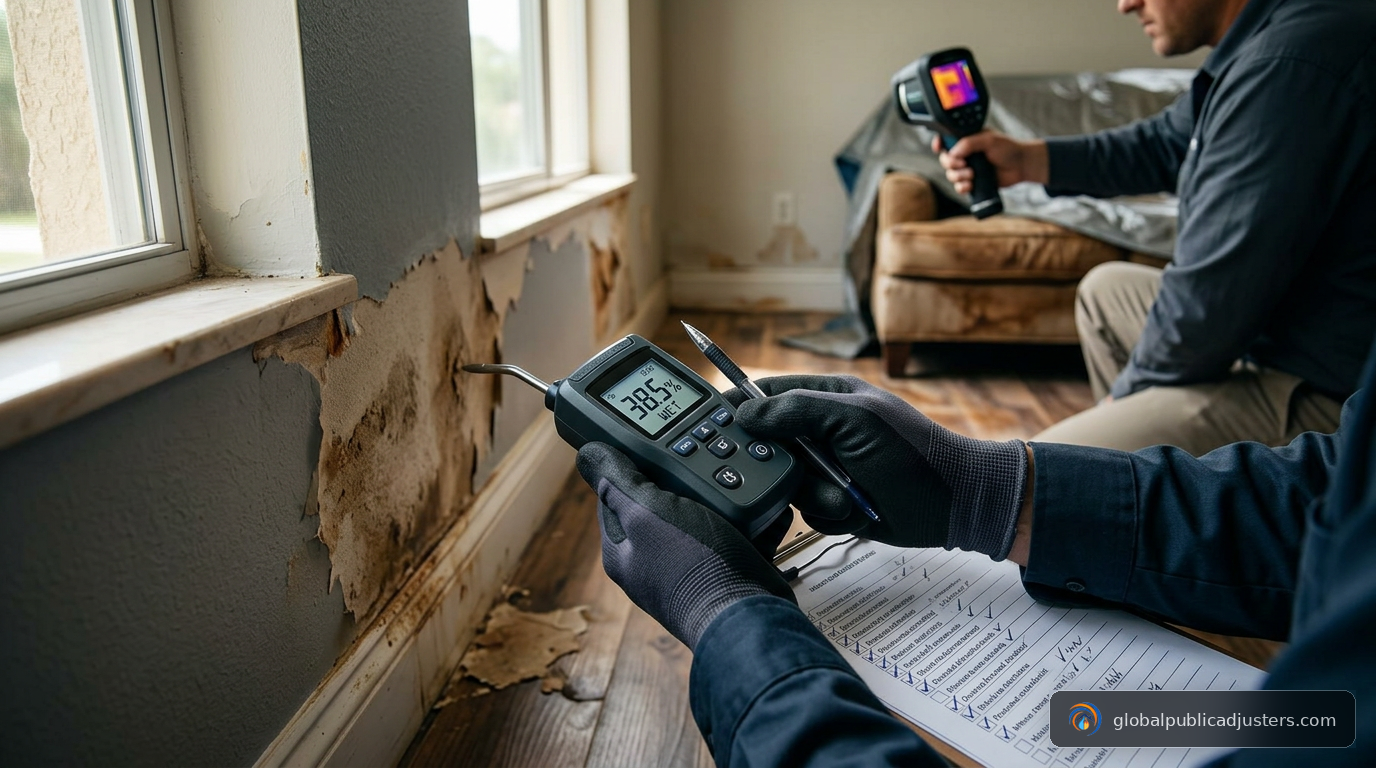
Adjusters frequently argue that staining, warped flooring, or mold growth developed over weeks or months rather than from one sudden event. Even when a pipe genuinely burst, insurers sometimes claim the surrounding damage shows evidence of a “pre-existing” slow leak to reduce or deny the payout.
Flood Classification Instead of Covered Water Loss
Standard homeowners policies generally exclude flood damage, which requires a separate National Flood Insurance Program policy or private flood coverage. Insurers may reclassify water intrusion as flood-related when water enters from storm surge, rising groundwater, heavy rainfall accumulation, or drainage overflow, even when the real cause was a roof breach or a failed supply line. For homeowners in flood-prone areas, understanding this distinction is covered in more detail in our guide onwhy Florida water damage claims get denied and how to fight back.
Alleged Lack of Maintenance
Denials commonly cite corroded pipes, an aging water heater, failed shower pans, a neglected HVAC condensate line, or a prior unrepaired leak. These “maintenance” denials are among the most disputed because they rely heavily on the adjuster’s subjective interpretation of wear patterns.
“We’re seeing more denials today hinge on a single inspection photo or a vague engineering report rather than a full forensic review of how the water actually traveled through the home. Homeowners who push back with their own documentation often get a very different outcome on appeal.”
Legal advocates have also flagged a broader pattern of denials across Florida’s property market. As one analysis of rising Florida claim denials notes, policyholders are increasingly forced to challenge denials that rely on technicalities rather than a genuine coverage gap.
How Do You Appeal a Denied Water Damage Claim?
Florida law gives policyholders specific procedural rights after a denial, and missing deadlines can forfeit them. Here is the general sequence that tends to work.
- Request the denial in writing.Florida Statute 627.7142, the Florida Homeowner Claims Bill of Rights, requires insurers to acknowledge communications and explain claim decisions clearly.
- Obtain the full claim file.This includes the adjuster’s report, photos, and any engineering or moisture-mapping documentation used to justify the denial.
- Get an independent inspection.A licensed public adjuster or restoration expert can document moisture intrusion patterns that an insurer’s inspector may have missed or dismissed.
- File a Civil Remedy Notice (CRN)through the Florida Department of Financial Services if you believe the insurer acted in bad faith.
- Submit a formal appeal letterwith new evidence, photos, invoices, and expert findings directly to the insurer’s appeals unit.
- Consider mediation or litigationif the appeal is also denied, keeping in mind Florida’s statute of limitations for property claims.
Recent legislative activity shows just how dynamic this process can be.Senate Bill 767 from the 2026 sessionaddresses property insurance claims handling procedures, underscoring that the rules around appeals, deadlines, and insurer obligations continue to evolve. Homeowners pursuing an appeal should also understand how this process interacts with hurricane-related claims, since many water losses in Florida follow storm events; our breakdown ofhurricane damage insurance claim denials in Floridacovers that overlap in depth.
What Do Real Appeal Cases Look Like?
Case patterns across the state show how outcomes shift once new documentation enters the record.
Appeal evidence:Plumber invoice, moisture reading, timeline log
Outcome:Partial to full reversal
Appeal evidence:Roof inspection, storm timeline, drone photos
Outcome:Reclassified as covered peril
Appeal evidence:Manufacturer age report, service records
Outcome:Settlement increase after negotiation
These scenarios reflect a common thread documented by Florida claim-process resources: a detailed overview of the Florida water damage claim process emphasizes that documentation quality, not just the facts of the loss, often determines whether an appeal succeeds. Homeowners in Jacksonville, Orlando, and Tampa alike have had denials overturned once an independent adjuster presented a clearer causation narrative than the insurer’s initial report.
For homeowners negotiating a counteroffer after a partial denial, our guides onnegotiating an insurance settlement in Jacksonvilleandnegotiating settlement amounts in Orlandowalk through practical tactics for pushing the number higher.
When Should You Call a Public Adjuster or Attorney?
Not every denial needs a lawsuit, but most benefit from an independent set of eyes before you sign anything or give up. A licensedpublic adjusterworks exclusively for the policyholder, not the insurance company, and can re-inspect the property, rebuild the damage estimate, and compile the evidence needed for a credible appeal.
If the denial involves allegations of bad faith, misrepresentation, or a pattern of delay, it may be time to consult a property damage attorney. Florida-based firms such as those referenced in Dolman Law Group’s overview of Florida property damage claims and The Lopez Law Group’s flood damage dispute resources routinely handle disputes where flood exclusions were applied incorrectly to what was actually a covered water loss.
Pricing for public adjuster and restoration support varies widely, generally ranging from$10,000 to $50,000+in total claim value recovered depending on the scope of damage, property size, materials affected, and complexity of the dispute. Every property and every denial letter is different, so it’s worth requesting a custom evaluation rather than assuming a flat fee or outcome. Learn more about how this process works on ourclaims type overviewor review our fullcompany backgroundbefore reaching out.
Key Takeaways
- Water-related claims made up roughly23.6%of all closed Florida property claims in 2024, totaling over165,000 claims.
- The three most common denial reasons are gradual leakage, flood exclusion misclassification, and alleged lack of maintenance.
- Florida Statute 627.7142 gives homeowners the right to a written explanation of any claim denial.
- Filing a Civil Remedy Notice can preserve your right to pursue a bad-faith claim if the insurer acted unreasonably.
- Independent inspections and detailed documentation are the single biggest factor in overturning a denial on appeal.
- “Other water” claims rose from 13.11% to 15.59% of total claims statewide, showing this issue is intensifying, not fading.
- A licensed public adjuster can rebuild your claim file and negotiate directly with the insurer on your behalf.
People Also Ask
Can you appeal a denied water damage claim in Florida?
Yes. Florida homeowners can request a written explanation, submit additional evidence, file a Civil Remedy Notice, and pursue mediation or litigation if the appeal is also rejected. Many denials are overturned once independent documentation challenges the insurer’s original findings.
Why do insurance companies deny water damage claims so often in Florida?
Insurers frequently deny claims by categorizing the loss as gradual leakage, flood damage, or maintenance neglect, all of which are commonly excluded under standard homeowners policies. Florida’s high volume of water claims, over 165,000 in 2024 alone, has made insurers more aggressive in scrutinizing causation.
How long do you have to dispute a denied claim in Florida?
Florida’s statute of limitations for property insurance claims generally allows a limited window from the date of loss or denial to file suit, so it’s important to act quickly. Consulting a public adjuster or attorney as soon as you receive a denial helps preserve all available options.
Does homeowners insurance cover flood damage in Florida?
No, standard Florida homeowners policies typically exclude flood damage entirely. Separate flood coverage through the National Flood Insurance Program or a private flood policy is required to cover storm surge, rising water, or drainage overflow.
Frequently Asked Questions
What should I do immediately after my water damage claim is denied?+
Request the denial letter and full claim file in writing, document all current damage with photos and video, and avoid making permanent repairs until you’ve consulted an independent adjuster. Acting quickly preserves evidence and your legal options.
What percentage of Florida water damage claims get litigated?+
Of the 698,742 closed property claims reported in Florida for 2024, 60,261 were litigated while 621,154 were resolved without litigation. That means roughly 8.6% of all closed property claims statewide ended up in a legal dispute.
Is it worth hiring a public adjuster for a denied claim?+
For most contested denials, yes. A public adjuster works solely for the homeowner, re-inspects the property, and builds a stronger evidentiary record, which frequently results in a reversed denial or improved settlement compared to handling the appeal alone.
How does Florida define a covered water loss versus an excluded one?+
Most policies cover sudden and accidental water discharge, such as a burst pipe or failed appliance connection, but exclude gradual leakage, seepage, and flood-related intrusion. The exact wording in your policy’s exclusions section ultimately controls how a claim is classified.
Can I still get help if my denial happened months ago?+
In many cases, yes, as long as you’re still within Florida’s statute of limitations for property claims. Contact a public adjuster or attorney promptly to determine how much time remains to file a supplemental claim or appeal.
Does flood versus plumbing water damage matter for coverage?+
Yes, significantly. Flood damage requires a separate flood insurance policy, while internal plumbing failures, appliance discharges, and sudden pipe bursts are typically covered under a standard homeowners policy, assuming no maintenance exclusion applies.
Related:Public Adjuster for Roof Claim in Tampa: A Buyer’s Guide to Fair Payouts
If yourwater damage claim was denied in Florida, whether you’re in Jacksonville, Orlando, Tampa, or anywhere in between, you don’t have to accept the insurer’s first answer as final. Reach out throughour contact pageor exploreGlobal Public Adjustersto get a professional review of your denial letter and a clear path toward appeal.