Quick Answer
If your Florida hurricane damage claim was denied in Jacksonville, don’t sign anything or start repairs until you get the denial letter’s exact policy basis in writing, preserve all damage evidence, and request your complete claim file. Most denials can be appealed through reinspection, documented rebuttal, or formal dispute resolution, and a licensed public adjuster or insurance attorney can often identify coverage the insurer overlooked or misapplied.
Nearly half of Florida homeowners who filed a claim in the past five years say it was denied, at least initially. That’s not a fringe statistic, it’s the finding of a 2026 University of North Florida poll of1,511 Florida homeowners, in which45% of the 261 respondents who had filed a claim reported an initial denial, and half of those denials involved a hurricane or tropical storm event according to the UNF survey covered by News4Jax. If you’re a Jacksonville homeowner holding a denial letter right now, you are not alone, and you are not necessarily out of options.
This guide walks through exactly what to do when aflorida hurricane damage claim denied what now in Jacksonvillesituation lands on your kitchen table. We’ll cover why denials happen, what evidence to preserve, how appeals and reinspections work, and when bringing in a public adjuster or attorney changes the outcome.
How Common Are Hurricane Claim Denials in Jacksonville?
Denials are far more common across Florida than most homeowners expect. A separate statewide poll found that25% of homeowners had been dropped by an insurerin the prior five years, and more than half had switched carriers entirely per Insurance Business America’s coverage of the Triple-I survey. These numbers are statewide rather than Duval County-specific, but Jacksonville homeowners face the same underwriting pressures: coastal wind exposure near the Beaches communities, aging roof stock in neighborhoods like Riverside and Arlington, and insurers scrutinizing every hurricane claim more closely after years of litigation costs and market withdrawals.
Federal disaster data adds more context. FEMA’s ongoing disaster declaration records for Florida, includingdisaster 4675 covering recent storm damage, confirm that wind, rain, and flood events continue to trigger large volumes of claims statewide, straining insurer claims departments and increasing the odds of initial denials or lowball estimates.
Why Was My Jacksonville Hurricane Claim Denied?
Insurers deny claims for specific, stated reasons, and identifying the exact reason is the first step toward fixing it. The most common denial grounds include:
- No covered peril occurred, meaning the insurer disputes that wind, rain, or storm damage actually caused the loss.
- Flood or storm surge attribution, shifting responsibility to a separate flood policy rather than the homeowners policy.
- Wear and tear or deterioration, arguing the roof or structure was already failing before the storm.
- Late notice of loss, claiming you didn’t report the damage quickly enough.
- Insufficient proof of damage, often from thin initial documentation.
- Hurricane deductible thresholds, where the damage amount falls below your percentage-based deductible.
Jacksonville’s mix of older bungalow-style homes, newer construction near Nocatee and Mandarin, and coastal properties in Atlantic Beach and Ponte Vedra means causation disputes are especially common. Wind-driven rain intrusion through a compromised roof can look identical to long-term leak damage on paper, which is exactly the kind of dispute an independent inspection can resolve.
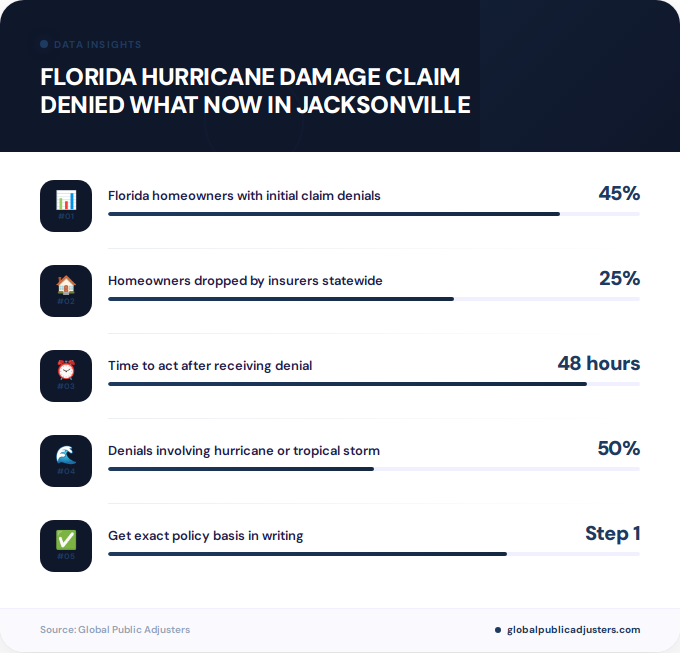
What Should I Do in the First 48 Hours After a Denial?
Your actions immediately after receiving a denial letter can determine whether an appeal succeeds. Follow this sequence before making any repairs or signing any settlement release:
- Read the denial letter line by line.Identify the specific policy provision cited and whether the stated reason matches what actually happened to your home.
- Request your complete claim file in writing.Ask for the policy and endorsements in effect on the date of loss, the adjuster’s estimate and photos, any engineer or meteorologist reports, recorded statements, and the exact policy language the insurer relied on.
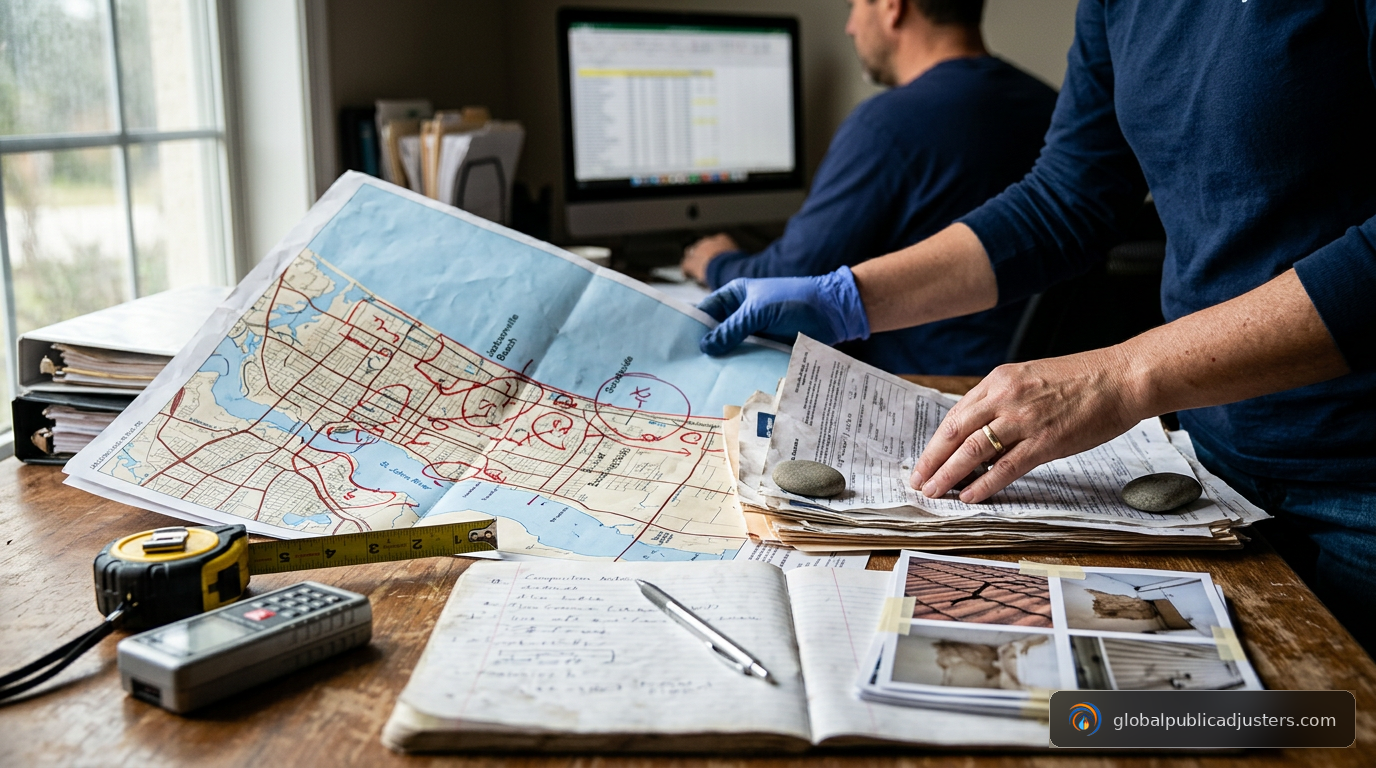
- Preserve every piece of evidence.Photograph and video all affected areas: roof coverings, flashing, windows, siding, ceilings, drywall, flooring, and damaged belongings. Keep storm-date records, contractor invoices, and any emergency lodging receipts.
- Don’t discard damaged materialsuntil the insurer has had a fair chance to inspect them, even if you’ve already done emergency tarping to prevent further damage.
- Get an independent inspectionfrom a licensed roofer, engineer, or building consultant who can distinguish hurricane-created damage from pre-existing wear.
This documentation process mirrors the steps outlined in our9 tips for filing a hurricane damage claim in Florida, which apply equally to initial filings and post-denial appeals.
What Are My Options for Appealing a Denied Claim?
Florida homeowners generally have several paths after a denial, and they aren’t mutually exclusive. Understanding the trade-offs helps you choose the right sequence.
| Option | Best For | Trade-Off |
|---|---|---|
| Request reinspection | Clear documentation gaps or missed damage | Insurer controls the process; may repeat same result |
| Public adjuster intervention | Complex causation or undervalued damage | Fee based on settlement, but often recovers far more |
| State mediation/DFS complaint | Communication breakdowns or delay tactics | Free or low-cost but non-binding in some cases |
| Appraisal clause | Disputes over the amount of loss, not coverage itself | Binding, and doesn’t resolve coverage denials |
| Litigation | Outright denials or suspected bad faith | Slowest and most expensive, but highest leverage |
The Florida Department of Financial Services storm resources page offers free mediation programs and a consumer helpline that can be a useful first stop, particularly for communication issues rather than complex coverage disputes. For deeper strategy on overturning a denial, see our detailed breakdown ofwhy hurricane claims get rejected and how to appeal them.
How Can a Public Adjuster Help After a Denial?
A licensed public adjuster works exclusively for you, not the insurance company, and re-examines the claim from the ground up. For a Jacksonville homeowner facing a denial, that typically means:
- Conducting an independent, detailed inspection documenting every area of damage the insurer’s adjuster may have missed or minimized.
- Reviewing your policy language against the stated denial reason to identify coverage gaps in the insurer’s reasoning.
- Preparing a detailed, itemized estimate using the same or comparable software insurers use internally.
- Submitting a formal reconsideration package with photos, measurements, and expert reports attached.
- Negotiating directly with the insurer’s examiners on your behalf through to resolution.
This is especially valuable in causation disputes, which are common throughoutwater damage claimswhere insurers argue flood or long-term leaks rather than wind-driven rain. Our guide onhow adjusters maximize hurricane claim settlementscovers the documentation strategies that tend to move insurers off an initial denial.
What Does It Cost to Fight a Denied Claim?
Costs vary significantly depending on the complexity of your claim, the extent of damage, and which path you choose. Public adjusters in Florida typically work on a contingency basis, meaning they’re paid a percentage of the settlement they recover, not an upfront fee, which keeps the arrangement accessible regardless of your current cash flow after a storm.
Independent engineering reports, when needed for complex causation disputes, can range from a few hundred dollars to several thousand depending on the scope of analysis required. Attorney fees for litigated claims vary widely based on case complexity, and many Florida insurance attorneys also work on contingency. Becausepricing varies based on your specific project, the scope of damage, and the complexity of the dispute, it’s best to request a custom evaluation rather than assume a flat cost. Ourpublic adjuster cost guidebreaks down fee structures in more detail.
Time:Weeks to months
Success rate:Varies widely
Time:Weeks
Success rate:Generally higher recovery
Time:Months to years
Success rate:Highest leverage, slowest
What Red Flags Suggest a Bad-Faith Denial?
Not every denial is improper, but certain patterns warrant extra scrutiny and possibly legal review. Watch for:
- A denial letter that cites vague or generic language without referencing specific policy sections.
- An adjuster inspection that lasted only minutes or missed entire damaged areas.
- Repeated requests for the same documents you’ve already submitted.
- Pressure to accept a quick, low settlement before you’ve had time to get an independent estimate.
- Significant discrepancies between your contractor’s estimate and the insurer’s estimate for identical damage.
- Unexplained delays beyond Florida’s statutory claims-handling deadlines.
Florida’s market has seen rising scrutiny tied to insurer withdrawals and premium increases, a trend documented across multiple national outlets covering rising Florida homeowners insurance premiums and shrinking carrier availability. That pressure can sometimes translate into more aggressive claims scrutiny, making careful documentation even more important for Jacksonville homeowners.
How Do I Choose the Right Help: Public Adjuster, Attorney, or Both?
The right choice depends on what’s actually in dispute. If the fight is primarily about theamountof damage, a public adjuster’s detailed estimate and negotiation skills are often enough to resolve it. If the dispute is aboutcoverage itself, such as the insurer flatly denying any obligation to pay, an attorney may need to get involved, sometimes working alongside the public adjuster rather than instead of one.
Before hiring anyone, ask these questions:
- Are you licensed in Florida, and can you provide your license number?
- How many hurricane claim denials have you successfully appealed in the Jacksonville area?
- What is your fee structure, and is it contingency-based?
- Will you handle direct communication with the insurer, or do I still need to respond to them?
- Can you provide references from similar claims?
For homeowners who also need help with water intrusion documentation alongside wind claims, ourstep-by-step water damage claim guide for Jacksonville homeownerscovers overlapping evidence requirements. You can also review our fullrange of claims servicesor browseclaims by typeto see which category matches your situation.
Key Takeaways
- 45% of Florida homeownerswho filed a claim in the past five years reported an initial denial, with half involving hurricane or tropical storm damage.
- Always request the denial’s exact policy basis in writing before taking any further action.
- Preserve all photo, video, and physical evidence before starting repairs or discarding damaged materials.
- Reinspection requests, mediation, appraisal, and litigation are distinct tools, each suited to different types of disputes.
- Public adjusters typically work on contingency, making professional help accessible without upfront cost.
- Watch for red flags like vague denial language, rushed inspections, or pressure to settle quickly.
- Jacksonville’s mix of coastal and inland properties means causation disputes over wind versus flood damage are especially common.
People Also Ask
Can I still appeal if my hurricane claim was denied months ago?
Yes, in many cases. Florida has specific deadlines for filing suit or invoking certain policy provisions, so it’s important to check your policy and any applicable statute of limitations as soon as possible rather than waiting further.
What is the deadline to file a hurricane claim in Florida?
Florida law sets specific notice deadlines for hurricane and windstorm claims, and missing them can itself become a denial reason. Review your policy’s notice provisions and consult the Florida hurricane claim filing deadline guide for current statutory timeframes.
Does flood damage get covered under a standard homeowners policy?
Generally no. Standard homeowners policies typically exclude flood and storm surge damage, which requires separate flood insurance, so insurers often deny claims by attributing damage to flooding rather than wind.
How many Florida hurricane claims get denied each year?
Reports indicate tens of thousands of hurricane claims are denied statewide following major storms, with surveys showing nearly half of all homeowners claims facing an initial denial. Exact Jacksonville-specific figures aren’t separately published, but the trend applies broadly across Florida.
Frequently Asked Questions
What should I do first after my Jacksonville hurricane claim is denied?+
Request the denial letter’s exact policy basis in writing and request your complete claim file, including the adjuster’s photos and estimate. Don’t sign any release or start permanent repairs until you’ve reviewed this documentation and preserved your own evidence.
Is it worth hiring a public adjuster for a denied claim?+
For many homeowners, yes, particularly when the denial involves disputed causation or an undervalued estimate. Public adjusters typically work on contingency, so there’s no upfront cost, and their independent inspection often uncovers damage or coverage the insurer’s adjuster missed.
Can I request a second inspection after a denial?+
Yes, most insurers allow a reinspection request, especially if you provide new documentation such as an independent contractor or engineer report. This is often the fastest path to reversing a denial based on incomplete initial inspection.
What is the appraisal clause and when should I use it?+
Appraisal is a binding dispute-resolution process used when you and the insurer agree coverage exists but disagree on the dollar amount of damage. It doesn’t resolve outright coverage denials, which typically require appeal, mediation, or litigation instead.
How long does it take to resolve a denied hurricane claim in Florida?+
Timelines vary widely: a reinspection or reconsideration can resolve in weeks, mediation typically takes a few months, and litigation can extend a year or longer depending on case complexity. Acting quickly on documentation generally shortens the overall timeline.
Where can Jacksonville homeowners file a complaint against an insurer?+
The Florida Department of Financial Services offers a consumer helpline and mediation program through its storm resources division, which can assist with communication breakdowns and procedural disputes alongside private representation.
A denied claim doesn’t have to be the end of the road. Whether your Jacksonville home sits near the St. Johns River, in a historic Riverside bungalow, or closer to the coast in Atlantic Beach, understanding your denial reason and documenting your damage thoroughly puts you in a far stronger position to appeal. If you’re ready for a professional evaluation of your denied hurricane claim,reach out to our team for a consultation, or learn more about our approach on ourabout us page. You can also start with a broader look atGlobal Public Adjusters’ full claims support servicesbefore deciding your next step.