Filing a Smoke Damage Claim: Essential Steps for Policyholders
Why Filing a Smoke Damage Claim Requires Immediate Action
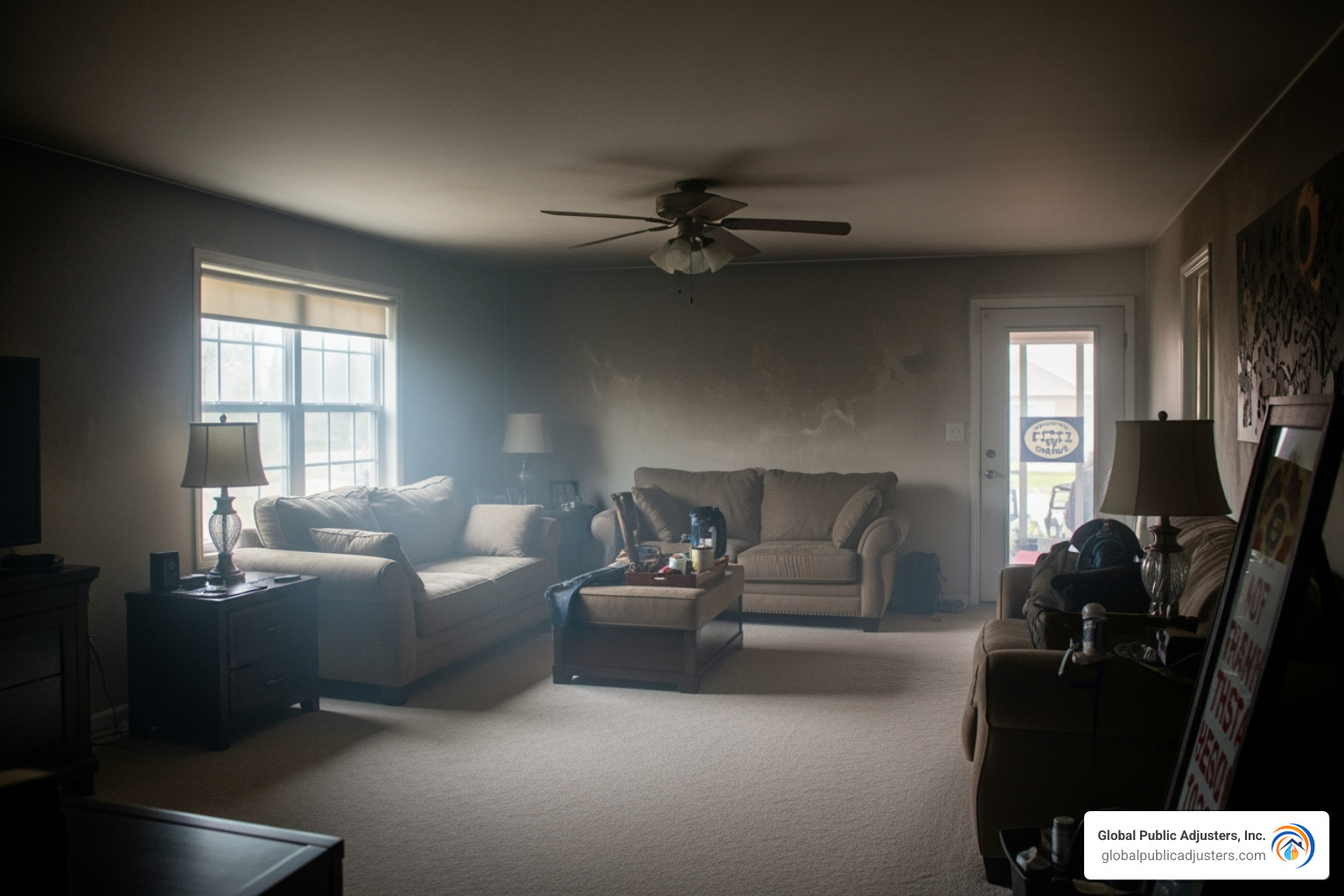
A smoke damage claimis a request for insurance coverage to repair or replace property affected by soot, ash, and toxic residue from fires. Whether caused by a wildfire, structure fire, or neighboring property incident, smoke infiltration can contaminate walls, furniture, HVAC systems, and even hidden spaces like wall cavities—often causing damage that’s invisible to the naked eye.
Quick Answer: How to File a Smoke Damage Claim
- Contact your insurance company immediatelyonce it’s safe to do so
- Document all visible and hidden damagewith photos, videos, and the alcohol wipe test for soot
- Make only temporary repairsto prevent further damage (save all receipts)
- Hire a Certified Industrial Hygienistfor professional testing ($2,000-$4,000)
- Work with a public adjusterto maximize your settlement and navigate disputes
- Keep detailed recordsof additional living expenses if displaced from your home
When a fire starts, it can wreak havoc on your property. But what about the smoke associated with it? Smoke particles embed into porous materials like rugs, upholstery, and drywall, while discoloring non-porous surfaces like tile and marble. Even homes that don’t burn can suffer severe contamination—the Department of Insurance is currently investigatinghundreds of consumer complaintsrelated to smoke damage claims following the Los Angeles wildfires.
Many homeowners face delays, denials, or lowball offers because insurance companies dispute theseverityof smoke damage. They may argue that cleaning is sufficient when full replacement is necessary, or claim there’s no “direct physical loss” despite toxic residue coating your home. The cost difference between inadequate cleaning and proper remediation can range from hundreds tosix figures.
This guide walks you through every step of filing a successful smoke damage claim—from initial documentation and professional testing to disputing denials and understanding new legislation like California’sSmoke Damage Recovery Act (AB 1795). You’ll learn how to protect your health, secure fair compensation, and avoid common pitfalls that leave families stuck in unsafe homes.

Smoke damage claimvocab explained:
Understanding Smoke Damage and Insurance Coverage
When we talk about fire recovery, everyone pictures the flames. But as experts in the field, we know thatwhere there’s smoke, there’s damage. Smoke is a complex mixture of gases and particulate matter that doesn’t just “sit” on surfaces; it’s pressurized by the heat of the fire, driving it into every nook and cranny of your home.
In most standard homeowners insurance policies, smoke is considered a “covered peril.” This means if a fire occurs (even if it’s at your neighbor’s house or a nearby brush fire), the resulting damage to your structure and belongings should be covered. However, “covered” doesn’t always mean “easily paid.” Insurance companies often look for ways to minimize the payout by categorizing the damage as mere “dust” or “soot” that can be wiped away with a damp cloth.
We categorize smoke damage into three main physical markers:
- Soot: Fine, black particles resulting from incomplete combustion. It is often oily and can permanently stain surfaces if handled incorrectly.
- Ash: The powdery residue left after a fire. While it looks harmless, it can be highly alkaline and corrosive to metals and electronics.
- Char: The physical remains of burnt organic material, which carries the strongest odors.

Wildfire vs. Structure Fire Contamination
The source of the smoke matters significantly for yoursmoke damage claim. In a structure fire—like a kitchen fire—the smoke often contains synthetic chemicals from burning plastics, foams, and electronics.
Wildfire smoke, however, is a different beast entirely. According to theFEMA Marshall Fire Guide, wildfire smoke carries toxic residues including aldehydes, heavy metals, and even asbestos if older structures were consumed in the blaze. Because wildfires burn at such intense temperatures, the smoke can travel miles and infiltrate “standing” homes that were never touched by flames. This creates a hidden health crisis where families return to homes that look clean but are actually coated in microscopic, toxic particulates.
Partial Loss vs. Total Loss in a Smoke Damage Claim
One of the biggest hurdles we face as public adjusters is the debate between partial and total loss.
- Partial Loss: This typically involves salvageable property where the structure is sound, but the interior environment is compromised. The insurer will likely push for “cleaning and deodorizing.”
- Total Loss: This occurs when the smoke contamination is so pervasive that the cost to remediate exceeds the value of the property, or when structural hazards make the building unsafe.
Don’t let an insurance adjuster convince you that a “partial loss” is just a minor inconvenience. If your air quality is compromised and your HVAC system is blowing soot, that is a significant loss that requires professional intervention.
Immediate Steps to File a Successful Smoke Damage Claim
The clock starts ticking the moment you discover the damage. We always tell our clients in Orlando and Pensacola that the first 48 hours are critical for the success of yoursmoke damage claim.
- Report the Loss Immediately: Call your agent or insurance company. Waiting can cause the insurer to argue that the damage worsened due to your neglect.
- Mitigate Further Damage: You have a policy obligation to prevent further loss. This might mean covering broken windows or shutting down the HVAC system to stop soot from circulating.Save every receiptfor materials used in these temporary repairs.
- Do Not Start a Deep Clean: It’s tempting to grab a vacuum, but you might actually drive soot deeper into the carpet or upholstery. Wait for a professional assessment.
For more detailed guidance, check out our guide onHow to File a Homeowners Insurance Claim After a Fire.
Documenting Damage with the Alcohol Wipe Test
If you can’t see the smoke, how do you prove it’s there? We use theAlcohol Wipe Test. This is a simple but effective way to provide visual proof to an adjuster who claims your home is “fine.”
Take a white cloth or a specialized alcohol-soaked sponge and wipe a horizontal surface—like the top of a door frame, a ceiling fan blade, or inside a kitchen cabinet. If the wipe comes away gray or black, you have evidence of soot.
- Take room-by-room photos: Document the “before” state of every room.
- Create an inventory list: Note every item that smells like smoke or has a visible film.
- Video walkthrough: Narrate as you go, pointing out odors and visible residue.
Following these5 Steps to Successfully File a Fire Damage Claimwill put you in a much stronger negotiating position.
Managing Additional Living Expenses (ALE)
If the smoke odor is so strong that you can’t sleep or breathe comfortably in your home, you may be eligible for Additional Living Expenses (ALE), also known as “Loss of Use.”
This coverage pays for the increase in your living costs while you are displaced. This includes hotel stays, restaurant meals (since you can’t cook in a contaminated kitchen), and even extra mileage for your commute. We’ve seen many adjusters try to rush people back into smoky homes. Remember: if it’s not safe, don’t go back. Keep all receipts and logs of your spending. For more on this, read aboutUnderstanding How to Deal with an Insurance Adjuster After a House Fire.
Professional Testing and Restoration Protocols
When it comes to smoke, “cleaning” isn’t just about Windex and a vacuum. It requires a science-based approach. We strongly recommend hiring anIndustrial Hygienistto perform testing before any work begins.
The Role of a Public Adjuster in a Smoke Damage Claim
You might be wondering, “Why do I need a public adjuster?” The answer is simple: the insurance company’s adjuster works forthem. We work foryou.
Our role is to be your advocate. We conduct our own walkthroughs, checking “cold” surfaces where soot naturally settles. We help value the damage accurately, ensuring that the settlement covers the actual cost of restoration, not just a “quick scrub.” There are manyBenefits of a Public Adjuster for Fire Damage, but the biggest one is peace of mind knowing someone is fighting for your best interest.
Testing for Invisible Contaminants
Professional testing generally costs between$2,000 and $4,000. While that might seem steep, it provides the “smoking gun” (pun intended) for your claim.
- Swab Samples: These test for soot, char, and ash on surfaces.
- Air Canisters: These capture Volatile Organic Compounds (VOCs) and aldehydes that linger in the air.
- Micro-vac Testing: This pulls particulates from deep within carpets and upholstery.
TheCertified air cleaner guidancesuggests that while HEPA filters help, they aren’t a substitute for removing the source of the contamination. If you’re in Central Florida, our team can help you coordinate these tests for yourSmoke Damage Claims Orlando.
| Item Category | Professional Cleaning Method | Replacement Criteria |
|---|---|---|
| Electronics | Specialized air-wash/de-corrosion | If soot has etched internal circuits |
| Soft Goods | Professional textile restoration | If odor persists after 2-3 cleanings |
| HVAC System | Full duct cleaning & coil scrub | If soot is found inside the air handler |
| Drywall | HEPA vac & damp wipe | If smoke has penetrated the wall cavity |
Navigating Denials and the Smoke Damage Claim Appraisal Process
It is a frustrating reality: insurance companies often denysmoke damage claimsby arguing there is no “direct physical loss.” They might say that because the house didn’t burn, and you can’t see the smoke with a naked eye, no damage exists.
Common Reasons for Claim Denials
- Lack of Evidence: If you haven’t done professional testing, the insurer may claim the “dust” is just normal household dirt.
- Policy Violations: Failing to report the claim promptly or failing to mitigate damage.
- Valuation Disputes: The insurer offers $5,000 for cleaning when the actual restoration cost is $50,000.
KnowingWhy Hire a Public Adjuster for Fire Damagebecomes clear here; we have the expertise to counter these arguments with hard data and expert testimony.
Disputing a Settlement via Appraisal
If you and your insurer hit a stalemate, you can invoke theAppraisal Clausefound in most policies. In this process, both you and the insurance company hire an independent appraiser. These two then select an “umpire.” A decision by any two of the three is binding.
This is oftenThe Best Way to Deal with an Insurance Adjuster After a House Firewhen the dispute is purely about the dollar amount of the damage.
Legal Impacts: From Gharibian to the Smoke Damage Recovery Act
The landscape ofsmoke damage claimsis changing rapidly due to recent court cases and new legislation. Even if you are in Florida, these national trends often dictate how major insurance carriers handle claims across state lines.
The Gharibian v. Wawanesa Precedent
A recent case,Gharibian v. Wawanesa, initially caused concern when a claim for wildfire debris was denied because there was no “demonstrable physical alteration.” However, theCalifornia DOI Bulletin on Smoke Claims(Bulletin 2025-7) clarified that this ruling shouldnotbe used as a blanket excuse to deny all smoke claims. If the smoke impairs the function of the property or makes it unsafe, it is still a physical loss.
Enforceable Standards for Wildfire Smoke
TheSmoke Damage Recovery Act (AB 1795)is a landmark piece of legislation in California that is setting the stage for the rest of the country. It aims to establish science-based standards for testing and remediation. This is a huge win for policyholders because it moves the decision-making away from the insurer’s “best guess” and toward objective, healthy standards.
For more on proper restoration techniques, theSmoke Restoration Guideprovides excellent frameworks for what a “clean” home should actually look like.
Frequently Asked Questions about Smoke Damage
Is smoke damage covered under standard homeowners insurance?
Yes, smoke is typically a “covered peril” under the dwelling and personal property sections of your policy. However, you must review your “declarations page” to ensure there are no specific exclusions for wildfires or “pollution,” which some insurers try to use to avoid smoke payouts.
How much does it cost to test a home for smoke damage?
A comprehensive testing package—including surface swabs, air canisters, lab analysis, and a written remediation protocol—usually ranges from$2,000 to $4,000. While this is often an out-of-pocket expense initially, we frequently successfully argue for the insurance company to reimburse these costs as part of the claim investigation.
What should I do if my smoke damage claim is undervalued?
If the offer feels low, do not cash the check if it says “full and final settlement.” Instead, hire a public adjuster to provide an independent estimate. We often find thatThe Essential Role of Public Adjusters in Fire Damage Recoveryinvolves identifying 30-50% more damage than the insurance company’s initial “quick look.”
Conclusion
Filing asmoke damage claimis a marathon, not a sprint. It requires meticulous documentation, scientific proof, and a thick skin for negotiating with insurance companies that would rather pay for a bottle of Febreze than a full HVAC remediation.
AtGlobal Public Adjusters, Inc., we bring over 50 years of experience to the table. We’ve seen every trick in the book, and we know exactly how to counter them. Whether you are dealing with the aftermath of a local structure fire in Pensacola or smoke infiltration from a nearby brush fire in Orlando, our team is ready to advocate for you.
Don’t settle for a home that “looks” clean but smells like a campfire and triggers your allergies. You pay your premiums for protection; we make sure you get it. If you’re struggling with a claim, reach out to us for expert help withProperty Damage Claims Orlando. We’re here to help you clear the air and get your life back to normal.