Don’t Drown in Paperwork: Get Help with Your Flood and Water Damage Claim
Why Flood Damage Claims Are Different—And Harder—Than You Think
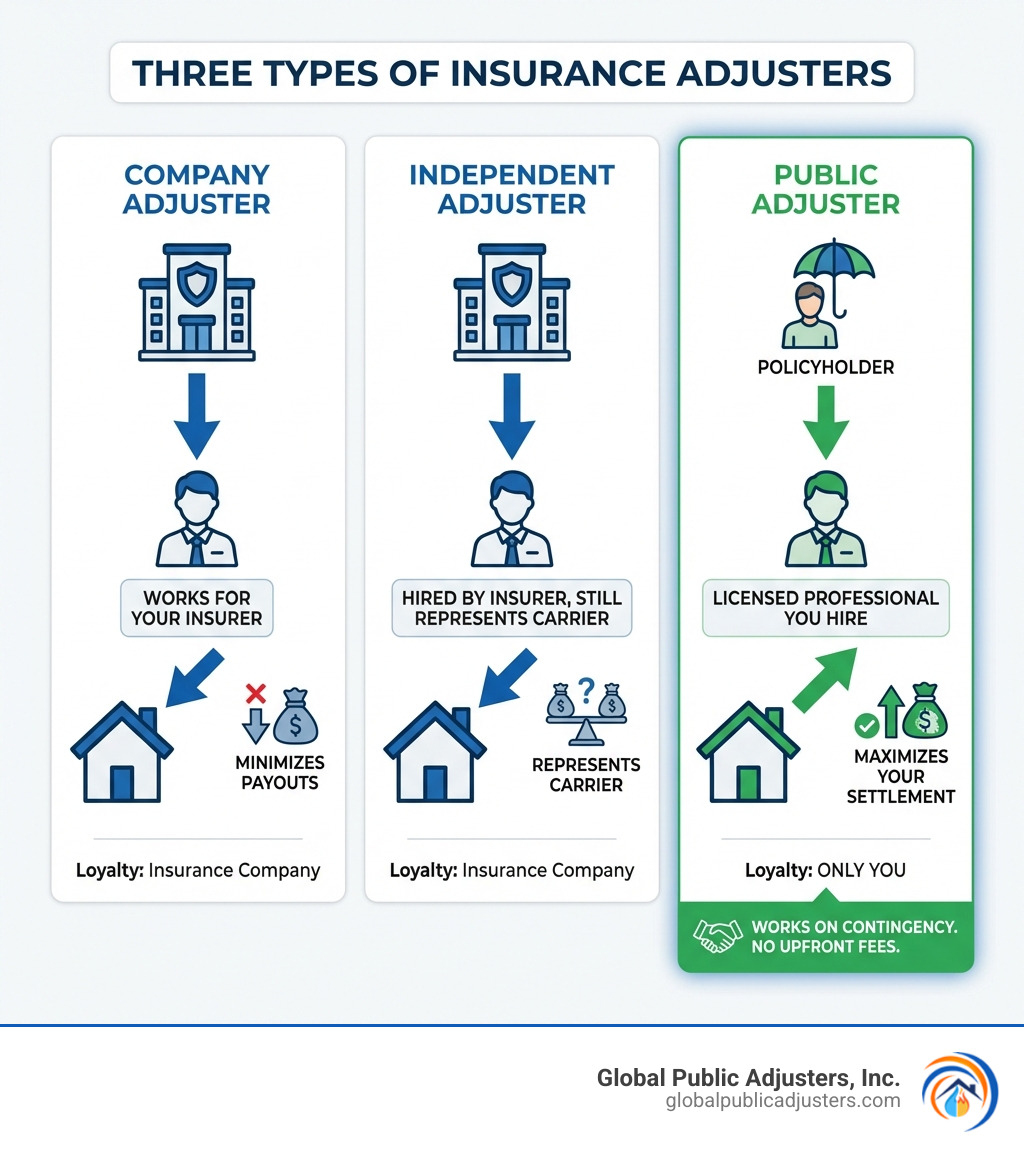
Aflood damage public adjusteris a licensed professional who represents you—not your insurance company—in filing and negotiating your flood damage insurance claim. They work to maximize your settlement by thoroughly documenting damages, interpreting complex policy language, and negotiating directly with your insurer on your behalf.
What a Flood Damage Public Adjuster Does:
- Assesses all flood damage, including hidden structural issues and mold risks
- Interprets your NFIP policyto identify all covered losses
- Prepares and submits your Proof of Losswithin strict 60-day deadlines
- Negotiates with the insurance companyto counter lowball settlement offers
- Works on contingency, meaning no upfront fees—they only get paid if you do
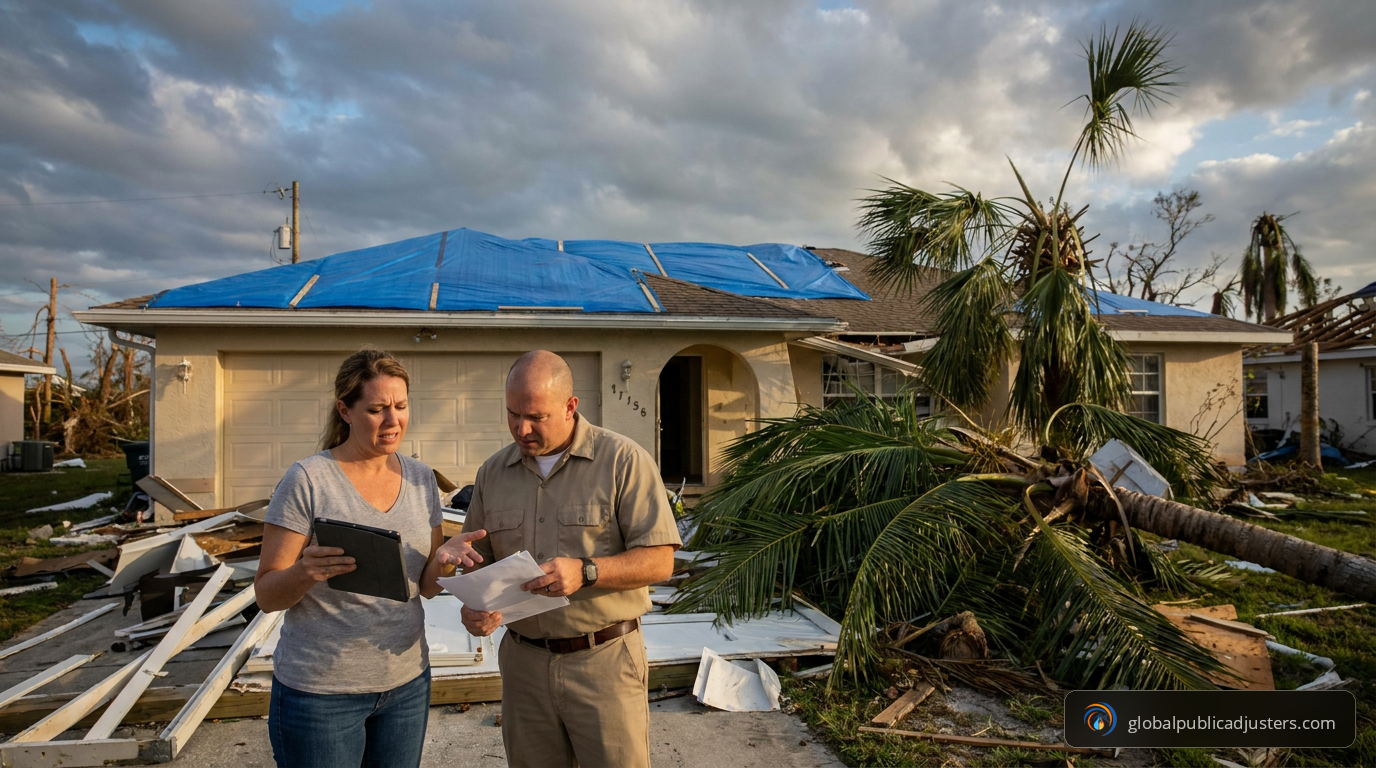
When your home or business floods, the aftermath is overwhelming. You’re dealing with destroyed property, disrupted operations, and mounting repair costs.Then comes the insurance claim.
Flood damage claims are uniquely complex. Unlike standard water damage from a burst pipe, flood claims typically fall under theNational Flood Insurance Program (NFIP)—a federal program with strict definitions, coverage limits, and deadlines. Insurance companies have teams of adjusters working to minimize what they pay you. The terminology you use when reporting your claim can literally determine whether you receive coverage at all.
This is where aflood damage public adjusterbecomes essential. They level the playing field. While your insurance company’s adjuster works to protect the insurer’s bottom line, a public adjuster works exclusively for you. Studies show that policyholders who hire public adjusters receive significantly higher payouts than those who go it alone.
The difference can be tens of thousands of dollars—or the difference between rebuilding your life and drowning in denied claims and legal battles.
Understanding Your Peril: Flood Damage vs. Water Damage
Imagine this: a sudden downpour turns your street into a river, and water seeps into your home. Then, a few weeks later, a pipe bursts in your bathroom, flooding the floor. Both involve water, right? So, both are “water damage”? Not in the eyes of your insurance company! This critical distinction is the first hurdle many policyholders face, and it’s why understanding your peril is paramount.
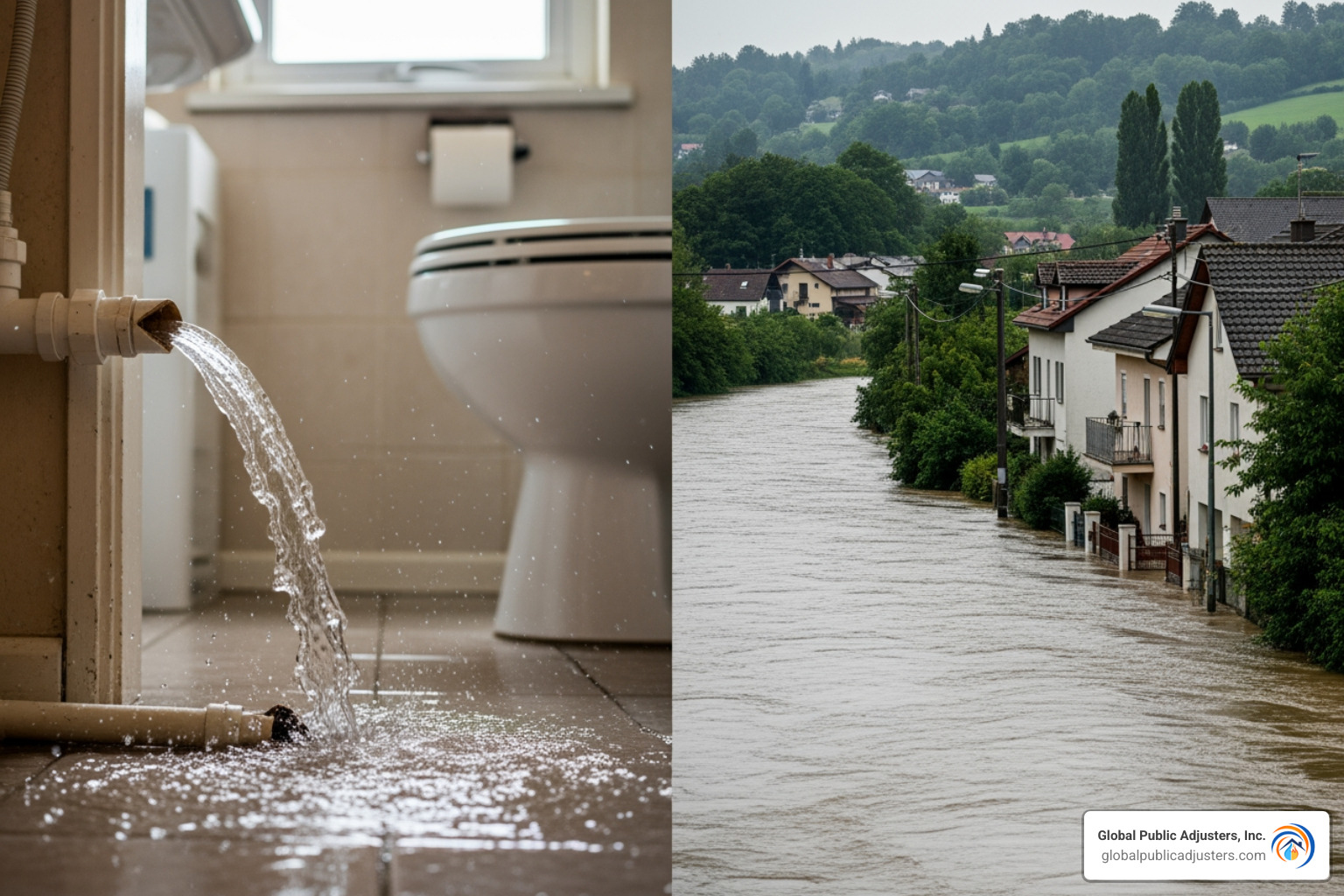
Standard homeowner’s insurance policies typically cover sudden and accidental water damage from internal sources, like a burst pipe or an overflowing washing machine. However, they almost universally exclude damage caused by flooding. For that, you need a separate flood insurance policy, most commonly obtained throughThe National Flood Insurance Program (NFIP).
The NFIP has specific coverage limits that are important to know. For homeowners, the coverage is limited to $250,000 for the building and $100,000 for contents. For commercial properties in Florida, these limits are higher, typically $500,000 for the building and $500,000 for contents. These limits highlight the importance of having adequate coverage and understanding what is and isn’t included. For more general information on different types of water damage, you can also exploreSome Different Types of Water Damage.
The Critical Difference for Your Claim
The terms “flood damage” and “water damage” are often used interchangeably in everyday conversation, but in the insurance world, they are worlds apart. The difference can mean the difference between a covered claim and a denied one.
A “flood” under the NFIP definition is very specific. It refers to “a general and temporary condition of partial or complete inundation of two or more areas of normally dry land area or of two or more properties… from an overflow of inland or tidal waters; unusual and rapid accumulation or run-off of surface waters from any source; mud flow.” This means if water comes fromoutsideyour home and covers normally dry land, it’s a flood. This could be due to heavy rains, overflowing rivers, storm surges (common in Florida!), or even thawing snow.
On the other hand, “water damage” typically refers to damage from internal sources. Think of a burst pipe, a leaky roof (if the leak is sudden and accidental, not due to wear and tear), an overflowing toilet, or an appliance malfunction. These are generally covered under your standard homeowner’s policy. However, even within water damage, there are nuances. For instance, if water seeps through the exterior walls of your home and floods the inside, it may not be considered a flood loss unless it meets the strict NFIP definition. Furthermore, claims involving plumbing defects or wear and tear can also be tricky. You can learn more about how homeowner’s insurance handles such issues by readingDoes Homeowners Insurance Cover Water Damage and Plumbing Defects?.
The terminology you use when you first call your insurance company after a water event is crucial. Calling a burst pipe a “flood” could lead to your claim being miscategorized and potentially denied, even if it should have been covered under your standard policy. This is just one example of the complex landscape aflood damage public adjustercan help you steer.
What is the National Flood Insurance Program (NFIP)?
The peril of flood has traditionally been uninsurable in the private insurance market due to the extreme risk and exposure flooding can cause. Recognizing this gap, in 1968, the federal government enacted a law that set up the National Flood Insurance Program (NFIP) to provide assistance to residents and commercial property owners in flood-prone areas.
The NFIP is administered by the Federal Emergency Management Agency (FEMA). While it’s a federal program, most flood insurance policies are sold and serviced by private insurance carriers through what’s known as the “Write Your Own” (WYO) program. These private insurers handle the claims, but the policies and coverage are ultimately backed by the U.S. Government. This means that while you might be dealing with a private company, the rules and regulations are dictated by the NFIP.
As mentioned, NFIP policies have specific coverage limits. For residential properties, the maximum coverage is $250,000 for the building structure and $100,000 for personal contents. For commercial properties, these limits are $500,000 for the building and $500,000 for contents. These are separate coverages, often with separate deductibles.
When it comes to valuing flood damages, the NFIP uses two main types of valuations: Replacement Cost Value (RCV) and Actual Cash Value (ACV). RCV is the cost to replace damaged property without depreciation. To qualify for RCV for a building, it must typically be a single-family dwelling, your principal residence, and have building coverage at least 80% of its replacement cost. ACV, on the other hand, is RCV less depreciation. Personal property is always valued at ACV under NFIP policies, and some building items like carpeting are also typically ACV. Understanding these valuation methods can significantly impact your final settlement, and a knowledgeableflood damage public adjustercan ensure you receive the maximum possible under your policy.
The Essential Role of a Flood Damage Public Adjuster
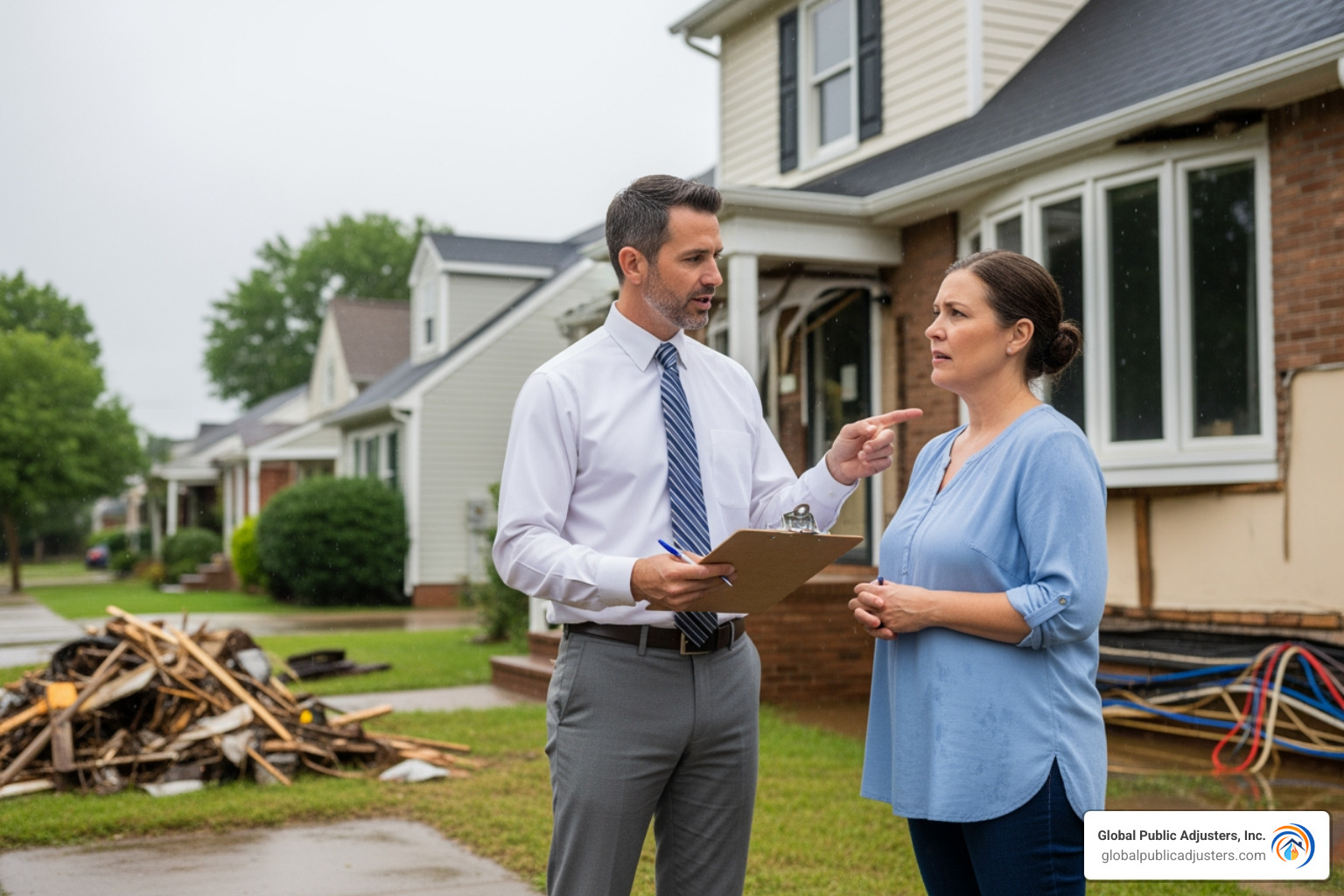
When floodwaters recede, they often leave behind not just physical destruction, but also a tidal wave of confusion and stress. This is precisely when aflood damage public adjustersteps in. They are your dedicated policyholder advocate, a licensed professional whose sole purpose is to representyourinterests, not the insurance company’s. Unlike the adjusters sent by your insurer—who are paid to protect the company’s bottom line—your public adjuster works exclusively for you, aiming to maximize your settlement and alleviate your burden. It’s about leveling the playing field, ensuring you have an expert on your side.
Why You Need an Advocate for Flood Claims
Dealing with flood damage is already a harrowing experience. Adding the complexities of an insurance claim, especially one governed by the NFIP, can feel like trying to solve a Rubik’s Cube blindfolded. Flood claims are notoriously intricate due to specific NFIP regulations, strict deadlines, and the sheer volume of paperwork required.
One of the most critical aspects is the Proof of Loss document, a sworn statement of the amount you are claiming. For NFIP claims, this typically must be filed within a strict 60-day deadline from the date of loss. Missing this deadline can lead to claim denial, regardless of the extent of your damage.
Furthermore, insurance companies are known to employ tactics that can lead to underpayment or even lowball settlement offers. They have teams of experts to scrutinize every detail, often interpreting policy language in their favor. Without an equally skilled advocate, you might inadvertently accept a settlement far below what you’re truly entitled to. This is not just anecdotal; studies show that policyholders who hire public adjusters receive significantly higher payouts than those who don’t. We believe it’s only fair that you have your own advocate to ensure you get what you deserve. For a deeper dive into why having an expert on your side is crucial, exploreFour Advantages of Using a Public Adjuster to Battle Your Insurance Company.
How a Flood Damage Public Adjuster Maximizes Your Settlement
Our mission as yourflood damage public adjusteris to ensure you receive the highest possible settlement, allowing you to fully recover and rebuild. We achieve this through a meticulous and comprehensive approach:
- Thorough Damage Assessment:We don’t just look at the obvious. Floodwaters often leave behind hidden damage—structural issues, moisture trapped behind walls, and conditions ripe for mold growth. We use advanced tools like moisture meters and thermal imaging cameras to detect these unseen perils, ensuring every single aspect of your loss is identified and documented.
- Detailed Cost Estimates:We prepare comprehensive, accurate estimates for repairs and replacement. This includes not only the cost of materials and labor but also potential code upgrades, debris removal, and other often-overlooked expenses. Our estimates are carefully prepared to stand up to the insurance company’s scrutiny.
- Policy Interpretation:Flood insurance policies, especially those under the NFIP, are dense with technical jargon and specific clauses. We are experts in interpreting these policies to ensure all applicable coverages, including special provisions like Increased Cost of Compliance (ICC) coverage (which can provide up to $30,000 for mitigation efforts like elevating your home if it’s substantially damaged), are fully leveraged.
- Expert Negotiation:Armed with thorough documentation and a deep understanding of your policy, we negotiate directly with your insurance company. We know how to counter lowball offers, challenge unjustified denials, and present a compelling case for your full claim. We have experience negotiating with insurance companies and know how to counteract lowball offers. We can also help you appeal a denied claim if you believe it was unjustified. This expertise is critical, particularly when you feel your claim has been undervalued. If you’ve been underpaid, it’s definitely time to consider whether you need professional help. Read more about it here:Should I Hire a Public Adjuster If I Have Been Underpaid?.
By taking on these intricate tasks, we save you time and reduce stress, allowing you to focus on restoring your life or business operations.
The Claims Process with a Public Adjuster on Your Side
Navigating a flood damage claim can feel like trying to paddle a canoe upstream without a paddle. The process is laden with paperwork, deadlines, and often, frustrating back-and-forth with your insurance company. When you bring aflood damage public adjusteronto your team, we streamline this process, providing step-by-step guidance and handling the heavy lifting for you. Our goal is to save you time and reduce your stress, allowing you to focus on what truly matters: your recovery. TheFEMA Claims Manualitself is a testament to the complexity involved, and we’re here to translate it for you.
Step 1: Initial Consultation and Damage Assessment
Our journey together begins with a free, no-obligation consultation. During this initial meeting, we’ll review your flood insurance policy to understand your coverage and limitations. This is crucial for setting realistic expectations and identifying potential areas of contention.
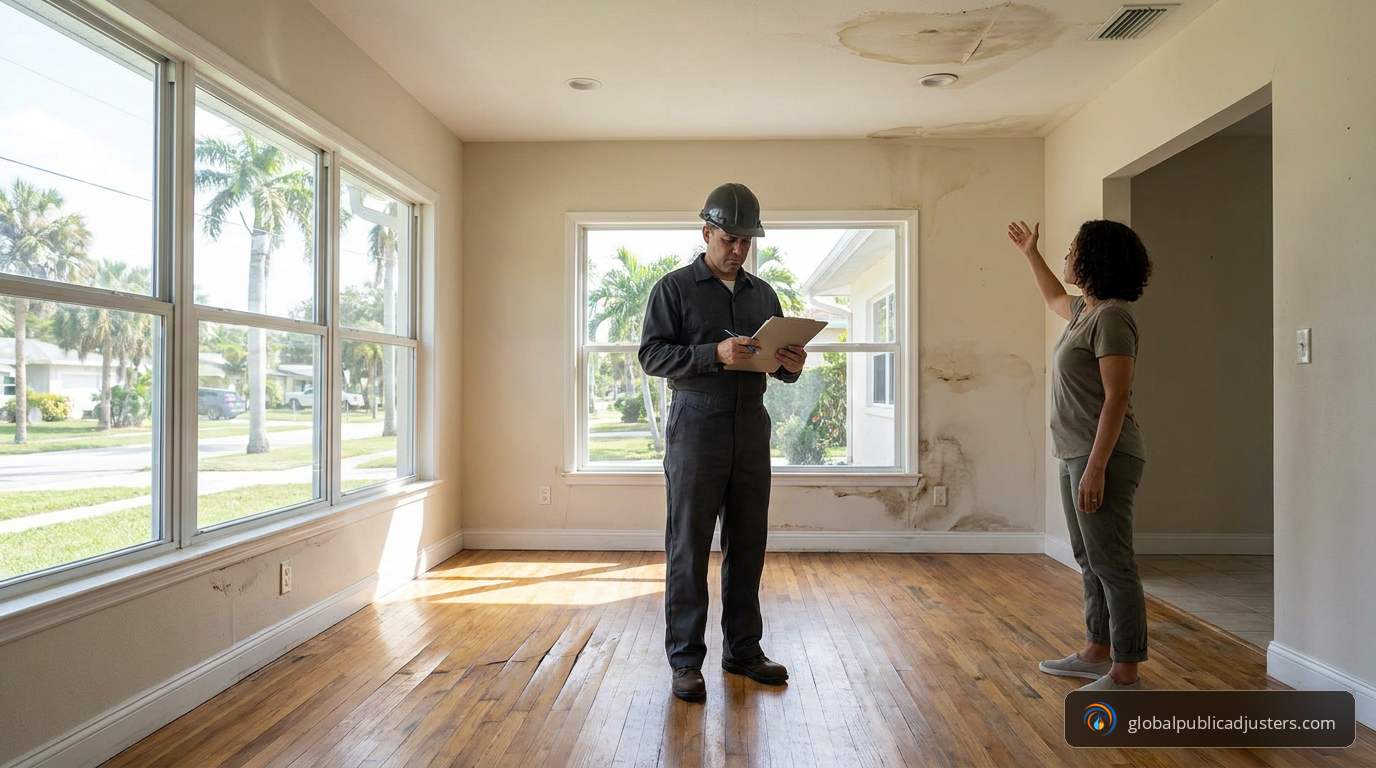
Next, we conduct a thorough on-site inspection of your property. We carefully document all losses, both obvious and hidden, using detailed photos and videos. This documentation is your strongest ally. We create an exhaustive inventory of all damaged contents, noting make, model, serial numbers, and approximate age. For structural damage, we leverage advanced tools like moisture meters and thermal imaging cameras to detect moisture behind walls, under floors, and in other hidden areas that might otherwise be missed, preventing future issues like mold.
Step 2: Claim Preparation and Submission
Once we have a complete picture of your damages, we move into the rigorous phase of claim preparation. This involves compiling a comprehensive claim package that leaves no stone unturned. The cornerstone of this package, particularly for NFIP claims, is the Proof of Loss. This is a sworn statement detailing the amount you are claiming, supported by all the documentation we’ve gathered—photos, videos, inventory lists, repair estimates, and any other relevant evidence.
We ensure that this critical document is accurately prepared and submitted within the strict NFIP 60-day deadline, a common pitfall for many policyholders. We also include detailed reports from contractors, drying companies, and other experts as needed. Our aim is to present an irrefutable case to your insurance company. For tips on how to steer the broader property damage claims process smoothly, you might find value in readingNavigating Property Damage Claims: Tips for a Smoother Process.
Step 3: Negotiation and Settlement
With a robust claim package submitted, the negotiation phase begins. We act as your direct liaison with the insurance company’s adjuster. We present our findings, justify our estimates, and tirelessly advocate for the full value of your claim. Insurance companies often start with lower settlement offers, but we’re prepared to counter these. We leverage our expertise and the compelling evidence we’ve compiled to challenge their assessments and ensure that their offer truly reflects the extent of your losses.
Our goal is to fight for fair compensation that allows you to fully repair or replace your damaged property and contents. Once a settlement is reached, we review it with you to ensure every detail is correct before finalization. Our fee, typically a percentage of the final settlement, is only paid when you get paid, aligning our success directly with yours.
When and How to Hire Your Flood Damage Public Adjuster
The aftermath of a flood is chaotic, and knowing when to call for help can be tricky. But here’s the golden rule: it’s almost never too early to consult aflood damage public adjuster. While you can hire us at any stage of the claim process, even if your claim has been denied, the sooner we’re involved, the better we can protect your interests and guide you.
Consider bringing in a public adjuster if:
- Your claim is large or complex:Extensive structural damage, significant contents loss, or business interruption due to flooding often overwhelms policyholders.
- The insurance company’s offer is low:If you feel their initial settlement offer doesn’t cover your actual losses, it’s a clear sign you need an advocate.
- Your claim is denied or delayed:Unjustified denials or prolonged delays can be frustrating and costly. We can review your case and help appeal.
- You feel overwhelmed or stressed:The claims process is demanding. We handle the paperwork and negotiations, freeing you to focus on rebuilding your life.
- You simply want peace of mind:Knowing an expert is fighting for your best interests is invaluable.
For more insights into when to engage a public adjuster, especially for those in Florida, you might find our articleWhen to Hire a Public Adjuster Orlando, FLhelpful.
What to Have Ready Before You Call
To make your initial consultation as productive as possible, it’s helpful to have a few pieces of information ready. Don’t worry if you don’t have everything; we can still get started!
- Your insurance policy number:This helps us quickly access your policy details.
- Photos and videos of the damage:Any documentation you’ve already taken can be incredibly useful.
- Any correspondence from the insurer:This includes emails, letters, or initial reports from their adjuster.
- A list of your initial questions:Don’t hesitate to ask us anything that’s on your mind.
Understanding Public Adjuster Fees
One of the most appealing aspects of working with aflood damage public adjusteris our fee structure: we typically work on a contingency basis. This means there are no upfront costs to you. We only get paid if you get paid, and our fee is a small percentage of the final settlement we secure for you. This aligns our interests directly with yours—we’re motivated to maximize your payout.
In Florida, public adjuster fees are regulated to protect policyholders. For claims caused by a disaster declared a state of emergency (which often includes major flood events), fees are limited to 10% of the claim payment for one year after the declaration. After that initial year, the limit is 20%. This ensures transparency and fairness, especially during times of crisis.
Frequently Asked Questions about Flood Claims
We understand you likely have many questions when facing flood damage. Here are some of the most common ones we encounter:
What if my flood claim has already been denied?
A denied claim is disheartening, but it’s not necessarily the end of the road. If your flood claim has been denied, aflood damage public adjustercan step in to review the denial letter, identify any errors or misinterpretations of your policy, and help you file a supplemental claim or appeal the decision. We have the expertise to challenge the insurance company’s reasoning and present a strong case for reconsideration. In many cases, denials can be overturned with proper advocacy and documentation. For insights into this process, readHow to Reverse a Denied Property Claim by Working With a Public Adjuster in Miami. (While this article mentions Miami, the principles and our services apply across Florida, including Orlando and Pensacola.)
What are the most common challenges policyholders face?
Policyholders often face several significant challenges when dealing with flood damage claims:
- Misunderstanding Policy Coverage:The intricate difference between “water damage” and “flood damage” is a huge hurdle. Many assume their standard homeowner’s policy covers everything, only to find out flood damage is excluded.
- Inadequate Documentation:In the chaos of a flood, it’s easy to overlook thorough documentation. Without detailed photos, videos, and inventories, proving the full extent of losses can be difficult.
- Underestimation of Damages:Insurance company adjusters may underestimate the true cost of repairs, especially hidden damages or long-term issues like mold.
- Strict NFIP Deadlines and Procedures:The 60-day Proof of Loss deadline for NFIP claims is a common pitfall. The specific rules for FEMA and NFIP payments for restoration companies can also lead to unexpected bills if not understood.
- Dealing with Lowball Offers:Insurance companies are businesses, and their goal is to minimize payouts. Policyholders often receive initial offers far below what they are rightfully owed.
Do I have to prevent further damage after a flood?
Yes, absolutely. As a policyholder, you have a “duty to mitigate” damages. This means you are required to take reasonable steps to prevent further damage to your property after a flood. This includes things like removing standing water, drying out affected areas, and taking measures to prevent the growth and spread of mold.
The NFIP flood insurance policies will not cover mold damage if a policyholder fails to take action to prevent its growth and spread. However, there are exceptions: mold damage might be covered if access to the property was banned or if floodwaters remained, physically impeding your ability to clean up. It’s a fine line, and proper, timely mitigation is crucial not only for your property’s health but also for your claim’s success. We can guide you on the best practices for mitigation while ensuring your actions don’t inadvertently jeopardize your claim.
Conclusion
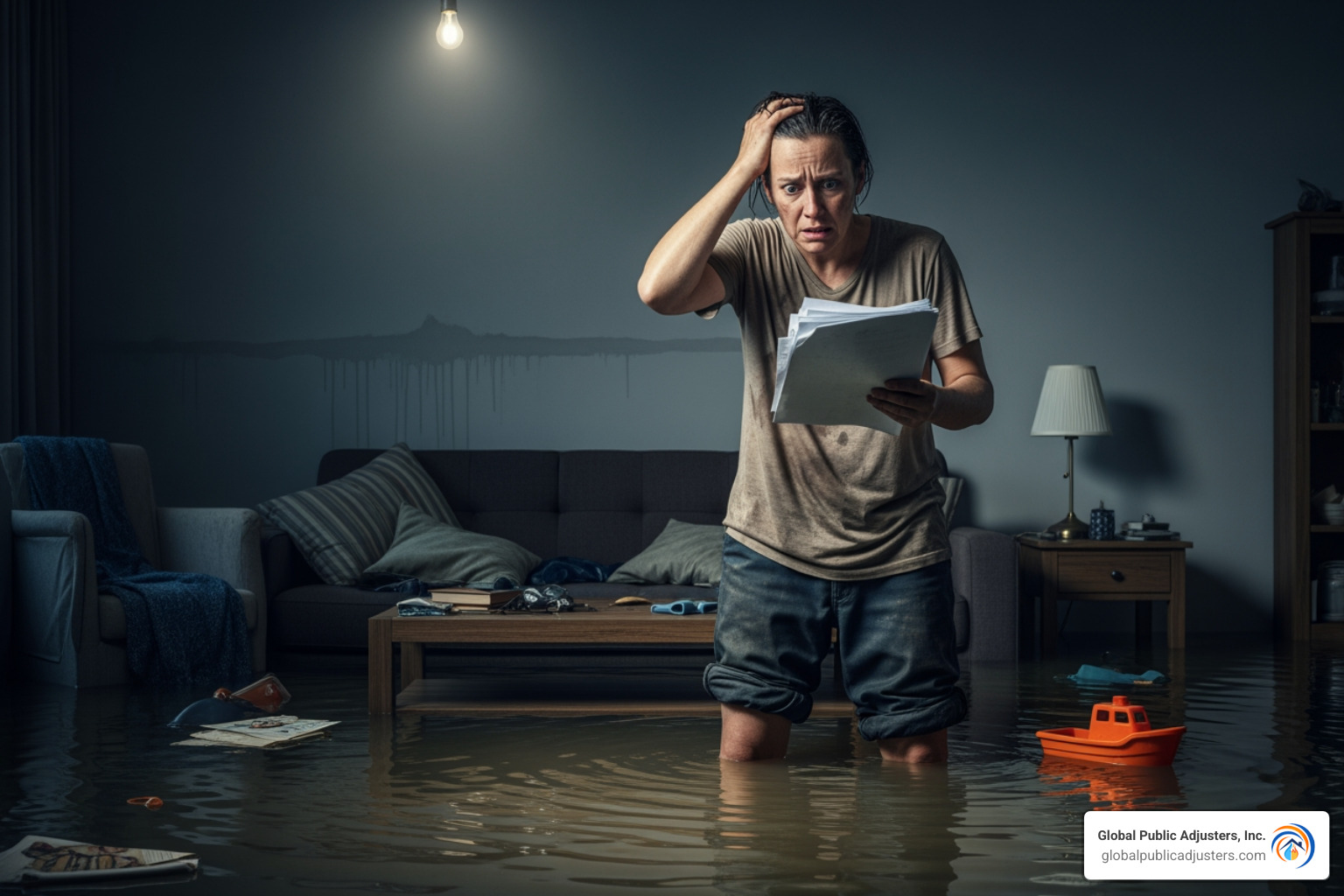
Facing flood damage can feel like you’re drowning in a sea of paperwork, complex policy language, and stressful negotiations. But you don’t have to steer these turbulent waters alone. A dedicatedflood damage public adjusteris your expert lifeline, ensuring you have a knowledgeable advocate fighting for your best interests.
At Global Public Adjusters, Inc., we bring over 50 years of combined experience to the table, specializing in helping homeowners and business owners across Florida, including Orlando and Pensacola, secure the maximum settlement they deserve. We understand the nuances of NFIP policies, the tactics insurance companies employ, and the critical steps needed to build an undeniable claim.
Don’t let the complexities of flood insurance claims add to your post-flood trauma. Focus on rebuilding your life, not fighting your insurer. Let us handle the intricate details, the documentation, and the negotiations. With our expertise, you can have peace of mind knowing that you have a powerful advocate on your side, committed to ensuring you receive a fair and just settlement.
Get professional help with your Flood Damage Claims in Orlandotoday.