Water damage adjuster: Master Your Claim 2025
Why Understanding Your Water Damage Adjuster Matters
When your property suffers water damage, awater damage adjusteris key to your recovery. They evaluate your loss and determine your insurance payout—but not all adjusters work for you.
Quick Answer: What You Need to Know About Water Damage Adjusters
- Insurance Company Adjusterswork for your insurer and aim to minimize payouts
- Public Adjusterswork for you and fight to maximize your settlement
- They assess damage using tools like moisture meters, thermal imaging, and specialized software
- Public adjusters typically charge 10-20% of your final settlement (no upfront cost)
- You should consider hiring one for large claims, denials, or low settlement offers
“Having never been through a major property claim, I was unprepared to stand up to the insurance company and their consultants,”one homeowner shared after receiving over $3.5 million when originally offered less than $500,000 with the help of a public adjuster.
The stakes are high. Research shows public adjusters can increase settlements by over 3,830% in some cases. The difference often comes down to understanding who your adjuster represents and how to manage the meeting effectively.
Whether you’re facing burst pipes or flood damage, knowing how to work with your adjuster can mean thousands more in your pocket. This guide will show you how to master the adjuster meeting and protect your property investment.

Understanding the Players: Company Adjuster vs. Public Adjuster
After water invades your property, an adjuster from your insurance company will arrive to assess the damage. What many homeowners don’t realize is that this person may not be working in your best interest.
Relying on your insurance company’s adjuster is like trusting the other side’s lawyer in court. They are paid by the insurer, and their job is to protect the company’s bottom line, not maximize your settlement.
For water damage claims in Florida, you must understand the two key players: the insurance company’s adjuster and the public adjuster. Knowing the difference, as detailed in the7 types of claims adjusters and their duties, can mean thousands of dollars for your claim.
| Feature | Insurance Company’s Adjuster | Public Adjuster |
|---|---|---|
| Who They Work For | The insurance company | The policyholder (you!) |
| Primary Goal | Settle claims efficiently while minimizing payouts | Maximize your settlement and advocate for your interests |
| How They Are Paid | Salary or contract from the insurance company | Contingency fee (percentage of your settlement) |
| Fiduciary Duty | To the insurance company | To you, the policyholder |
| Role | Evaluates claims to protect company interests | Licensed advocate who fights for your full recovery |
What is an Insurance Company Adjuster?
Theinsurance company adjuster(either a staff or independent adjuster) works for your insurer. Their job is to investigate your claim, assess the damage, and determine what’s covered. However, their loyalty is to their employer, not you. They are evaluated on closing claims efficiently and saving the company money, which creates a conflict of interest. While not villains, their goal is to minimize the payout. This can lead to missed damage, underestimated costs, and policy interpretations that favor the insurer.
What is a Public Adjuster?
In contrast, apublic adjusteris a licensed professional who works exclusively for you, the policyholder.Public insurance adjustershandle the entire claim process, from assessment to final negotiation, fighting to get you every dollar you deserve. They find hidden damage, understand complex policies, and know when estimates are too low.
At Global Public Adjusters, Inc., we use our 50+ years of experience to counter insurer tactics and interpret policy fine print. We work on a contingency fee (10-20% of the settlement), so our interests are aligned with yours: we don’t get paid unless you do, and we earn more when we recover more for you. This iswhy you should hire a public adjuster. A public adjuster levels the playing field, giving you an expert advocate to face the insurance company’s professionals.
The Assessment Process: How a Water Damage Adjuster Evaluates Your Loss
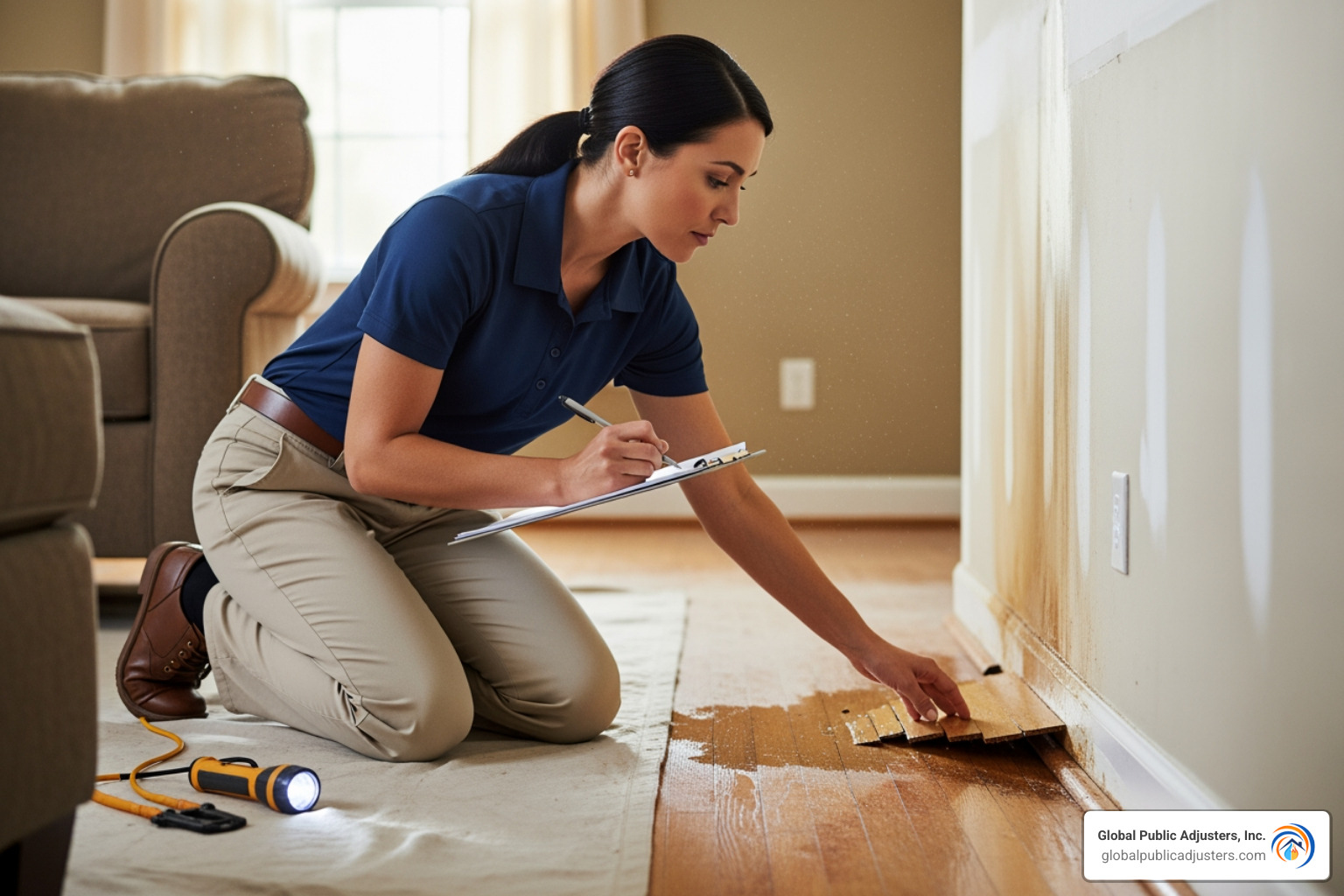
Awater damage adjuster‘s job is to uncover the full extent of damage, which often goes beyond what’s visible. Water creeps behind walls and under floors, leading to mold, structural issues, and costly repairs. A superficial evaluation can result in a settlement that doesn’t cover your true losses. There aresome different types of water damage, and we’ve seen how extensivelywater can damage your home.
Key Assessment Steps and Tools
A skilledwater damage adjusteruses a multi-step process to build a complete picture of your loss.
- Initial Documentation:The process starts by documenting visible damage like water stains and warped floors. You should also take your own photos and videos before any cleanup.
- Finding the Source:The adjuster will identify the water’s origin, such as a burst pipe or aleaking roof. The source is key to determining coverage, as policies typically cover sudden events, not gradual neglect.
- Using Specialized Tools:To find hidden moisture, adjusters use tools likemoisture metersto detect water in drywall and wood, andthermal imaging camerasto see temperature differences that indicate water behind surfaces. Aborescope(a small camera on a flexible tube) may be used to inspect inside walls with minimal damage.
- Creating the Scope of Loss:Using software likeXactimate, the adjuster creates a detailed repair estimate. However, this software may not reflect current costs, especially whenbuilding material prices are skyrocketing. A public adjuster’s market knowledge is vital here.
- Assessing Hidden Damage:A thorough adjuster looks beyond the obvious for issues like mold growth and compromised structural integrity. These hidden problems can be the most expensive to fix.

Common Mistakes to Avoid When Communicating with an Adjuster
Communicating with the insurance company’swater damage adjusteris a delicate process. Avoid these common mistakes:
- Don’t speculate on causes:Stick to the facts you observed. Guessing about the cause could point to something your policy doesn’t cover.
- Don’t downplay the damage:Phrases like “it’s not that bad” can hurt your claim. Describe all damage specifically.
- Be factual, not emotional:Stay calm and present facts logically. Emotional outbursts can make you seem unreasonable.
- Avoid unrecorded statements:Politely request that conversations be documented in writing or that your public adjuster be present.
- Have documentation ready:Be organized with photos, receipts, and other documents before the meeting.
- Be honest:Exaggerating or lying can invalidate your entire claim.
The goal is to provide clear, factual information. For more tips, see our guide onnavigating property damage claims for a smoother process.
Why You Need a Public Water Damage Adjuster on Your Side
Dealing with a water damage claim is overwhelming. You’re facing an insurance company with teams of professionals dedicated to minimizing payouts. A publicwater damage adjusterlevels that playing field by working exclusively for you. Our job is to document all damage, interpret your policy, and negotiate for the maximum settlement.
The results are clear: policyholders who hire public adjusters often receive significantly higher settlements. One homeowner went from an initial offer of under $500,000 to a final settlement of over $3.5 million with our help. Beyond the financial benefits, hiring an expert provides peace of mind, allowing you to focus on recovery while we handle the complexities of the claim. There are manyreasons to hire a public adjuster for property damageand clearadvantages of using a public adjuster to battle your insurance company.

When Should You Hire a Public Water Damage Adjuster?
While most can benefit, hiring a public adjuster is critical in these situations:
- Large or complex claims:If damage affects multiple rooms, structural elements, or involves potential mold, you need an expert to document the full scope and cost.
- Claim denial:A denial isn’t final. A public adjuster can find evidence and policy language to challenge the decision and reopen your claim.
- Low settlement offers:Insurers often start with low offers. If an offer seems too low to cover repairs, it probably is. We provide an independent assessment and negotiate for a fair amount.
- Lack of time or expertise:The claims process is time-consuming. If you’re busy or unfamiliar with insurance, hiring a professional makes practical sense.
- Feeling overwhelmed:The stress of a claim is a valid reason to seek help. An advocate can lift that burden. Learn thesigns you need public adjuster Orlando.
How to Hire the Right Adjuster
Choosing the right public adjuster is crucial. Here’s what to look for:
- Licensing and Credentials:Ensure they are licensed in Florida. A reputablewater damage adjusterwill provide their license number without hesitation.
- References:Ask for references from past clients with similar water damage claims.
- Contract Review:Read the contract carefully. Understand the services, terms, and fee structure (typically 10-20% contingency) before signing.
- Specific Experience:Hire an adjuster with proven experience in water damage claims, including mold, structural issues, and current material costs.
- Caseload:Ask about their current caseload to ensure they have enough time to dedicate to your claim.
At Global Public Adjusters, Inc., our 50+ years of experience means we know how to counter insurer tactics. Use thesequestions to ask your public adjusterto help you choose the right advocate.
Overcoming Common Problems in Your Water Damage Claim
Filing a water damage claim in Florida often involves significant challenges. Insurers aim to protect their bottom line, which can lead to reduced payouts. Common problems include unexpected policy exclusions, disputes over the cause of damage, and claims of gradual damage not being covered. Adjusters may overlook hidden mold or structural issues, and you might face delays or outright denial. It’s important to understand thereasons why your property insurance claim can be deniedandwhat to do when your home insurance claim is denied.
How a Public Water Damage Adjuster Fights Low Settlements and Denials
A publicwater damage adjusterfights back against low settlements and denials. We don’t accept the insurer’s first offer as final. Instead, we:
- Re-open denied claims:An initial “no” is often just a starting point. We build a stronger case with new evidence to challenge the denial.
- Gather detailed evidence:Using tools like moisture meters and thermal imaging, we create a comprehensive evidence file that is hard to dispute.
- Negotiate expertly:With over 50 years of experience, we know insurer tactics. We prove why you deserve a higher settlement by citing your policy and presenting clear documentation of all losses.
- Prove the full scope of damage:We account for everything, including hidden mold, temporary housing costs, and required code upgrades, to ensure a complete restoration. Our advocacy has led to settlement increases of over 3,830% in some cases.
Understanding ACV vs. RCV
Understanding the difference betweenActual Cash Value (ACV)andReplacement Cost Value (RCV)is crucial for your settlement.
- Actual Cash Value (ACV):This is the value of your damaged propertywith depreciation. An ACV settlement for a 10-year-old floor pays for a 10-year-old floor, which rarely covers the cost of a new one.
- Replacement Cost Value (RCV):This covers the cost to replace your property with new items of similar quality, without deducting for depreciation. Typically, you receive the ACV first, and the rest is paid after you complete repairs and submit receipts.
A publicwater damage adjusterensures you get the full amount you’re owed based on your policy. We also challenge outdated repair cost estimates from insurance software. These programs often fail to account for real-world factors like inflation or theskyrocketing prices of building materials. We fight for a settlement that reflects today’s actual costs in Florida, so you don’t have to pay out-of-pocket.
Frequently Asked Questions about Water Damage Adjusters
We know you have questions—lots of them. Dealing with water damage and insurance claims isn’t something most people face every day, and the process can feel overwhelming. Here are the questions we hear most often, answered in plain English.
What are the qualifications to become a claims adjuster?
To become a claims adjuster, including awater damage adjuster, individuals must meet specific standards. In Florida, this includes passing a comprehensive licensing exam on insurance principles and state regulations. You can findinformation on state licensing board requirementsonline.
While some adjusters have college degrees, the most critical qualification is the state license, followed by on-the-job training. Top adjusters possess strong analytical, communication, and negotiation skills. The U.S. Bureau of Labor Statistics provides more information onclaims adjusters, appraisers, examiners, and investigators. Due to Florida’s unique risks like hurricanes, the demand for qualified adjusters in the state is projected to grow.
How much does a public adjuster cost?
Hiring a publicwater damage adjusterrequires no upfront cost. We work on acontingency fee model, meaning our fee is a percentage (typically 10-20% in Florida) of your final settlement. We only get paid if you get paid.
This aligns our interests with yours—we are motivated to maximize your settlement because our success is tied directly to yours. For example, if we increase your settlement from $50,000 to $150,000, our fee is taken from the higher amount, leaving you with significantly more than you would have received alone. It’s a risk-free way to get an expert on your side.
Are flood damage claims handled differently?
Yes, flood damage claims are handled very differently, a crucial fact for Floridians. Standard homeowners’ policiesdo not cover flood damagefrom events like storm surges or overflowing rivers. For that, you need a separate policy, usually from theNational Flood Insurance Program (NFIP), managed by FEMA.
NFIP claims follow strict federal regulations, with different forms, procedures, and deadlines than standard claims. They also require specializedNFIP Adjusterscertified by FEMA through programs like theFlood Adjuster Capacity Program (FACP). Distinguishing between covered water damage (e.g., from a burst pipe) and flood damage (e.g., from rising groundwater) is key. If you’re facingflood damage claims in Orlando, working with an adjuster who understands NFIP rules is essential to ensure your claim is filed correctly and you receive the maximum benefit.
Conclusion
Navigating a water damage claim is challenging, but you don’t have to do it alone. The most important step is understanding the difference between the insurer’s adjuster and a publicwater damage adjusterwho works only for you. A public adjuster is your expert advocate, one who understands policies, repair costs, and insurer tactics. We level the playing field, document all damage, and negotiate to maximize your settlement, giving you control and peace of mind.

At Global Public Adjusters, Inc., our 50+ years of Florida-based experience are dedicated to getting homeowners and businesses the best possible outcome. If you’re dealing with water damage in Orlando, Pensacola, or anywhere in Florida,contact us for your property damage claims in Orlandoand let us champion your claim.