Quick Answer
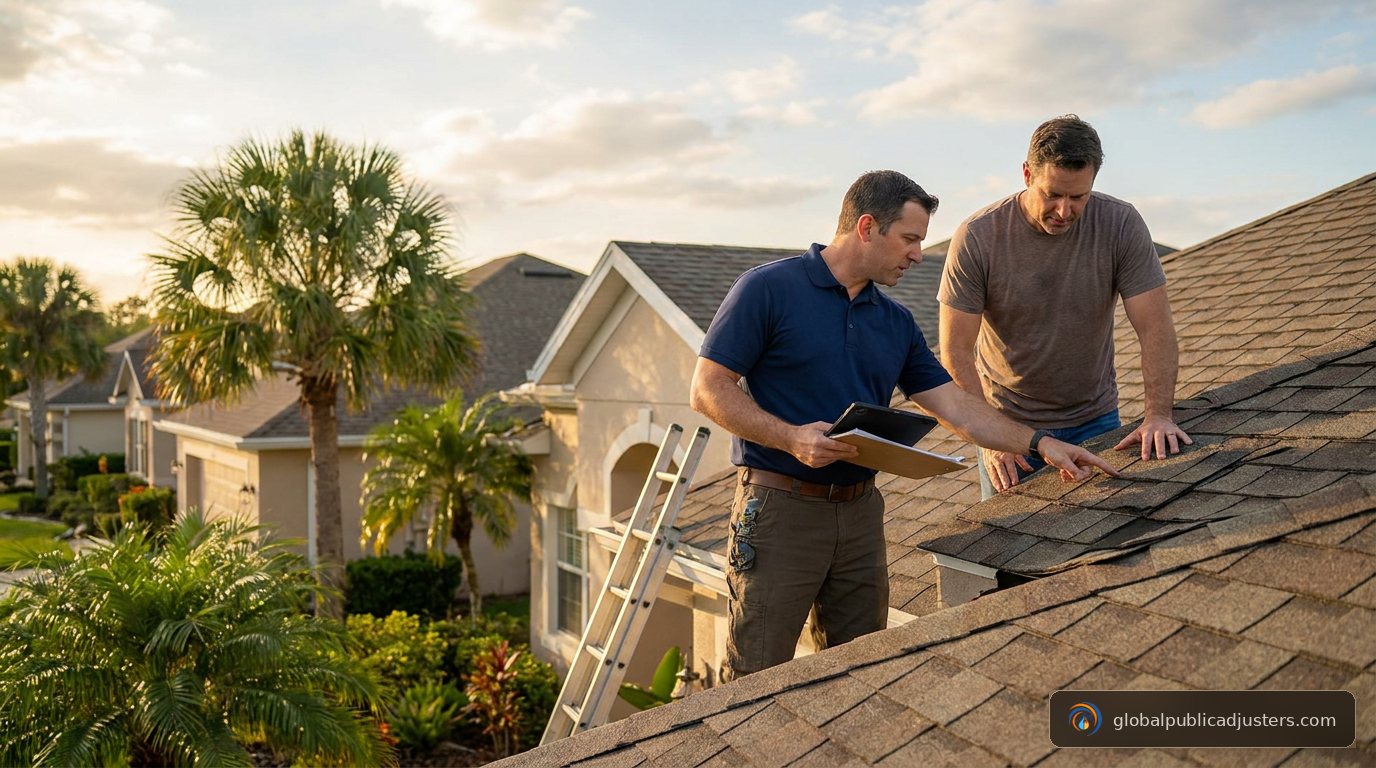
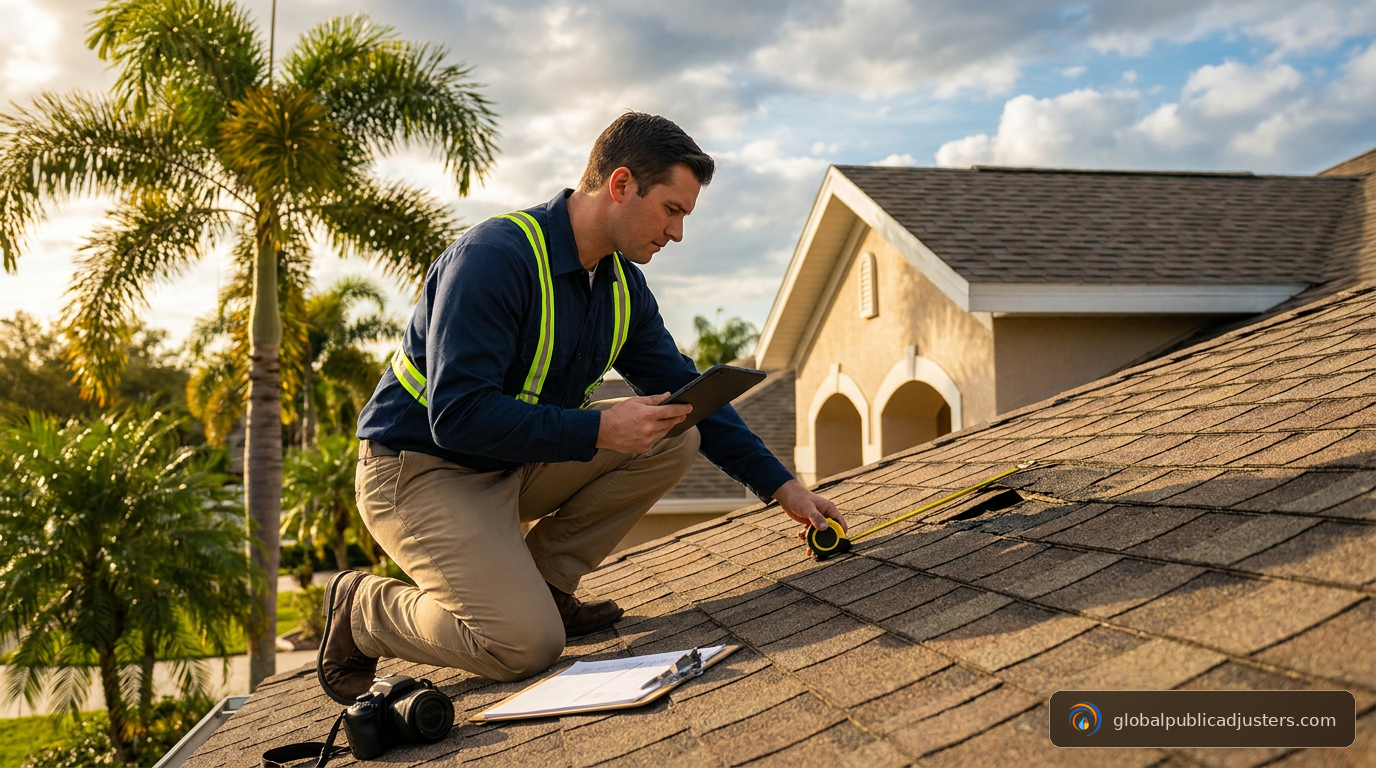
When searching “independent adjuster near me” in Tampa, homeowners usually want a public adjuster who represents them, not the insurance company. Florida-licensed public adjusters in Hillsborough, Pinellas, Pasco, and Polk counties can inspect damage, build the claim file, and negotiate directly with carriers, often moving disputed or delayed claims forward faster than waiting on an insurer-assigned adjuster alone. Always confirm active licensing before hiring anyone.
Why October Is a Critical Month for Tampa Property Claims
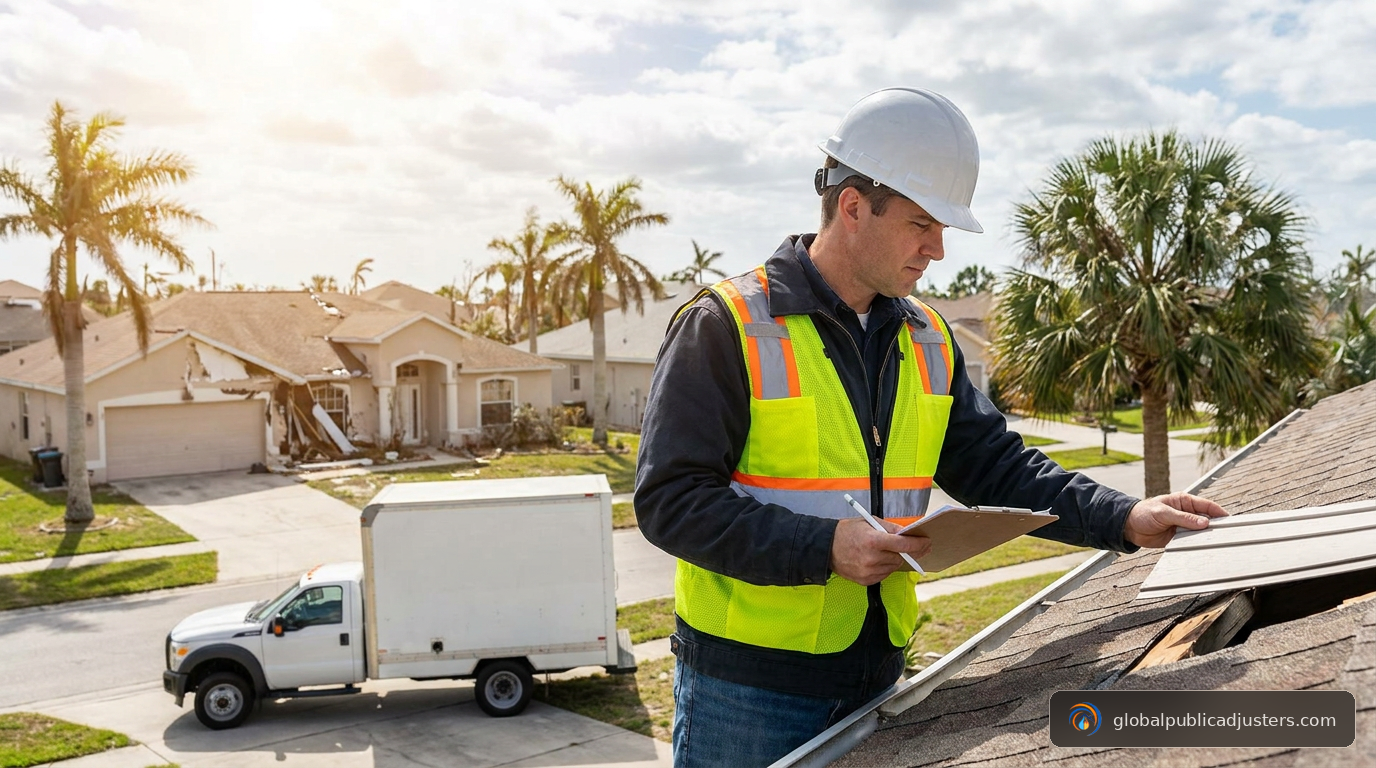
Hurricane season doesn’t officially close until November 30, which means Tampa homeowners are still squarely inside the window for wind, rain, and flood damage claims as of this October. After a season of tropical activity across the Gulf, many roofs, fences, and pool enclosures around Tampa Bay are carrying hidden damage that won’t show up until the next heavy rain. Searching for anindependent adjuster near me in Tamparight now is one of the smartest moves a property owner can make before the late-season storm risk fully fades.
Insurance carriers also tend to get backed up this time of year, juggling claims from multiple storm events across Florida simultaneously. That backlog is exactly why so many Tampa residents start searching for local, licensed help instead of waiting weeks for a callback.
If you already have a denied or delayed claim, it helps to understand your options now rather than in the middle of the next storm. Our guide onwhat to do when a hurricane damage claim is denied in Floridawalks through the next steps in detail.
What Is an Independent Adjuster, and Who Do They Really Work For?
This is the single most misunderstood part of the claims process. A carrier-sideindependent adjusteris hired by an insurance company, third-party administrator, or self-insured business to investigate and evaluate a claim on the insurer’s behalf. Apublic adjuster, by contrast, is licensed to represent the policyholder, meaning they work for you, not the insurance company.
Both roles require an active Florida license and appointment. Florida’s Department of Financial Services is explicit that holding a license alone is not enough; the adjuster must also maintain at least one valid appointment on file to legally handle claims in the state.
Under Florida Statute 626.866, acting or advertising as an adjuster without the appropriate license and appointment is a violation of state law, which is why verifying credentials matters more than picking the first name in a search result. You can cross-reference licensing requirements directly through Florida’s official insurance adjuster statute.
Why “Near Me” Matters: Tampa’s Local Claim Landscape
Tampa-area adjusting firms typically coverHillsborough, Pinellas, Pasco, and Polk counties, reaching communities such as Tampa, St. Petersburg, Clearwater, Brandon, Riverview, Wesley Chapel, Lakeland, and Plant City. That regional footprint matters because Gulf Coast exposure creates ongoing demand for wind, roof, water, flood, and hurricane claim expertise that a generic national call center simply can’t match with local boots-on-the-ground knowledge.
Local adjusters understand which Tampa Bay neighborhoods have aging tile roofs prone to wind uplift, which Pinellas County zip codes sit in high flood-risk zones, and how Polk County’s inland storm patterns differ from coastal wind events. That local nuance shapes how a claim is documented and argued.
It’s also worth noting that the industry itself is leaning harder into localized, tech-assisted inspection. Drone-based claims documentation has become increasingly common for catastrophe response, a trend covered in depth by Insurance Business Magazine’s reporting on parametric insurance and drone adoption. A local Tampa adjuster is more likely to already have that equipment and local flight familiarity than an out-of-state contractor.
How Do Public Adjusters Settle Claims Faster Than Carrier Adjusters?
Speed is often the biggest complaint homeowners have with the traditional claims process. Carrier-assigned independent adjusters frequently manage dozens of files at once, especially after a regional weather event, which can stretch inspection and settlement timelines to weeks or months. Public adjusters, working for a single client at a time on a given loss, can typically move faster because their only priority is your file.
The 2026 claims industry reporting backs this up at a structural level. According to Claims Journal’s national coverage of adjuster workload trends, catastrophe-driven claim surges continue to strain carrier response times across the Southeast. Separately, Sedgwick’s 2026 Loss Adjusting Insights Report highlights how claim complexity and documentation gaps are the leading causes of settlement delay, both areas where a dedicated public adjuster adds immediate value by front-loading thorough documentation.
Here’s a simplified comparison of how the two paths typically differ in practice:
| Factor | Carrier-Assigned Independent Adjuster | Public Adjuster |
|---|---|---|
| Who they represent | The insurance carrier | The property owner |
| Typical caseload | Many files simultaneously, especially post-storm | Focused attention per active claim |
| Documentation depth | Standardized carrier estimate | Detailed, owner-focused estimate and negotiation |
| Licensing requirement | Florida adjuster license and appointment | Florida license, $50,000 surety bond, continuing education |
If your claim has already stalled or been denied, it’s worth reading our breakdown ofwhy Florida insurers deny water damage claims and how to fight back, which covers many of the same documentation gaps referenced in current industry reporting.
What Services Do Tampa Independent and Public Adjusters Provide?
Whether working for a carrier or for a homeowner, licensed adjusters in the Tampa area typically handle a wide range of property and casualty work. Common services include:
- Residential property inspections, including roof, siding, window, and exterior damage evaluation
- Water-loss investigation and cause-of-loss analysis
- Wind and hurricane damage assessment
- Commercial building and business-interruption claims
- Contents and inventory valuation
- Construction-cost estimating
- Large-loss and catastrophe deployment
- Liability and auto claims, depending on license line
- Reinspection, supplemental estimates, and documentation review
- Appraisal or umpire services when permitted and appropriately qualified, similar to the process outlined by industry guidance on the insurance appraisal process
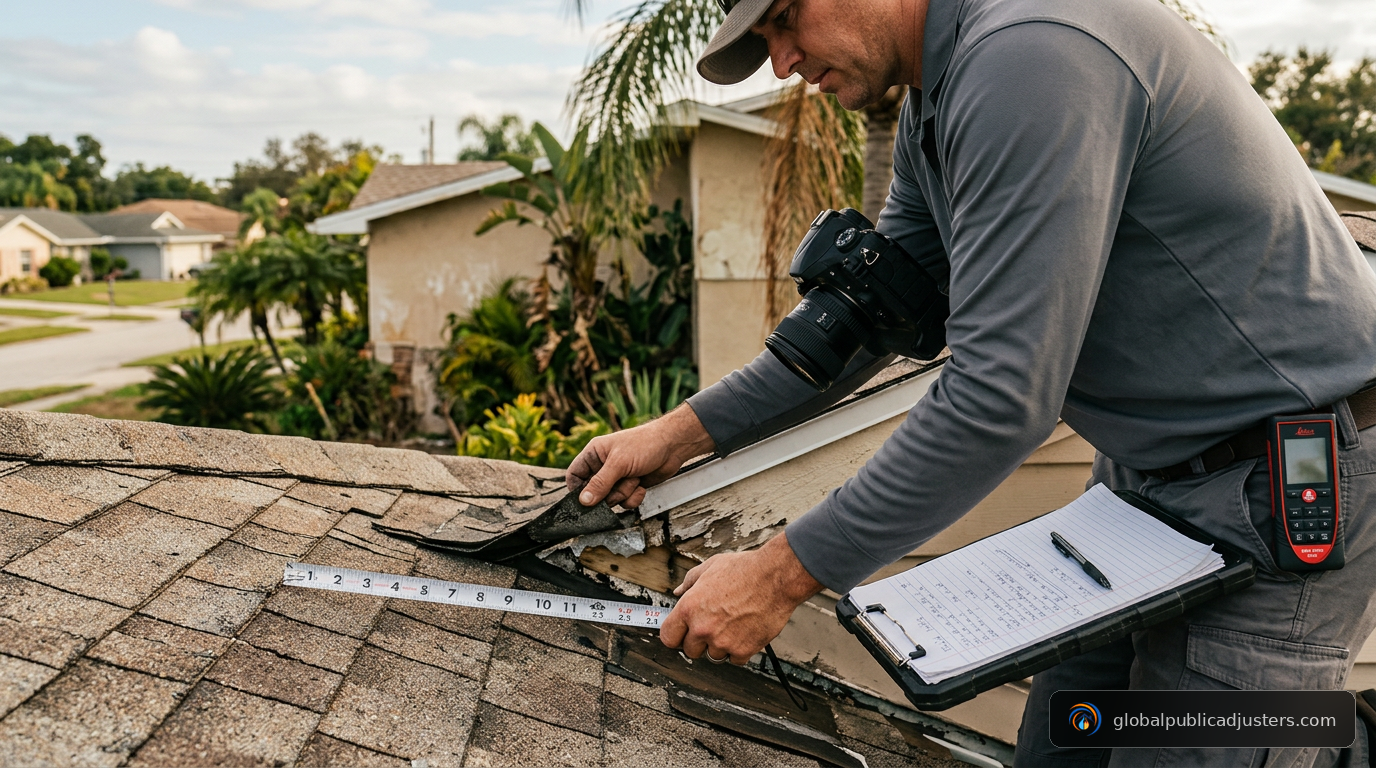
For a carrier, the work typically includes field inspection, witness interviews, damage documentation, estimate preparation, coverage evaluation, and report submission. A public adjuster performs similar fieldwork but builds the file specifically to maximize a fair and accurate settlement for the property owner. If your loss involves a roof specifically, our dedicated resource onhiring a public adjuster for a roof claim in Tampacovers payout expectations in more detail.
What Licensing Rules Should Tampa Homeowners Know About?
Florida takes adjuster licensing seriously, and homeowners should too before letting anyone inspect their roof or negotiate on their behalf. Under the state’s all-lines adjuster framework, applicants must be at least 18 years old, authorized to work in the United States, demonstrate trustworthiness, complete adequate training, and pass the required examination or qualify for an applicable exemption.
A business location used for licensed adjusting activity generally must also be licensed as an adjusting firm, not just the individual adjuster. This two-tier requirement, firm and individual, is a detail many homeowners overlook when vetting a company found through a quick online search. You can confirm licensing status directly through Florida’s official agents and adjusters licensing portal before signing anything.
One timely detail for this time of year: emergency adjuster appointments issued during a prior hurricane season are not automatically valid for the current season. Florida’s emergency licenses are typically valid for 180 days and generally do not renew, meaning some adjusters who worked storms in previous years may not be currently authorized. Public adjusters carry additional obligations too, including the $50,000 surety bond, fingerprinting, a Florida-specific exam, and 24 hours of continuing education every two years, all requirements the state outlines under Florida Statute 626.866 governing adjuster conduct.
Business licensing at the municipal level is also worth checking; Tampa-based firms operating a physical office should maintain appropriate local business licensing through theCity of Tampa’s licenses and permits division, in addition to state-level insurance credentials.
How Do You Choose the Right Adjuster Near You?
Start by confirming whether you need a carrier-side adjuster (you generally don’t hire these directly) or a public adjuster who works exclusively for you. Most homeowners searching “independent adjuster near me” after storm damage or a denied claim actually want the latter.
Next, verify the license and appointment status of any firm you’re considering, ask how many similar Tampa-area claims they’ve handled, and request references from recent clients in Hillsborough or Pinellas County. Pricing for public adjuster representation varies based on your specific claim’s size, complexity, and documentation needs; reputable firms will walk you through fee structures transparently rather than quoting a flat number up front. For a clearer picture of how adjuster compensation typically works in Florida, see our guide onhow insurance adjusters get paid in Tampa.
Finally, look for a firm with experience across claim types, not just one specialty. You can browse the full breadth ofclaim types handled by experienced Florida adjustersor reviewavailable adjusting and claims servicesbefore reaching out.
- “Independent adjuster near me”searches in Tampa usually point homeowners toward public adjusters, who legally represent the policyholder, not the insurer.
- Tampa-area firms commonly serve Hillsborough, Pinellas, Pasco, and Polk counties, reaching Tampa, St. Petersburg, Clearwater, Brandon, Riverview, Wesley Chapel, Lakeland, and Plant City.
- All Florida adjusters need an active license and a valid appointment; a license alone is not sufficient to legally handle claims.
- Public adjusters carry extra requirements, including a $50,000 surety bond and 24 hours of continuing education every two years.
- Emergency hurricane-season appointments typically expire after 180 days and do not automatically carry over to the next season.
- Public adjusters can often move claims faster than carrier adjusters because they focus on fewer, higher-priority files per client.
- Always verify licensing through Florida’s official portal before hiring anyone to inspect or negotiate your claim.
People Also Ask
What is the difference between an independent adjuster and a public adjuster?
An independent adjuster is hired by an insurance company or third-party administrator to evaluate claims on the insurer’s behalf. A public adjuster is licensed specifically to represent the policyholder and advocate for the homeowner’s interests during the claim.
Can I hire my own adjuster in Florida?
Yes. Florida law allows homeowners to hire a licensed public adjuster to represent them throughout the claims process, from inspection through negotiation and settlement.
How much does a public adjuster cost in Tampa?
Costs vary widely depending on claim size, complexity, and scope of damage, so pricing should always be discussed directly with the firm for a custom quote rather than assumed from a flat rate.
Do independent adjusters work for me or the insurance company?
Carrier-side independent adjusters work for the insurance company, not the homeowner. If you want representation on your side, you need a licensed public adjuster instead.
How do I verify an adjuster’s license in Florida?
You can search license and appointment status directly through Florida’s Department of Financial Services licensing portal before hiring anyone to handle your claim.
Frequently Asked Questions
Why are Tampa homeowners searching for independent adjusters this fall?+
With hurricane season still active through November and storm-related roof and water damage often surfacing weeks after an event, many Tampa homeowners are discovering unresolved damage now and want local help before carrier backlogs grow worse.
What counties do Tampa independent adjusters typically cover?+
Most Tampa-area firms serve Hillsborough, Pinellas, Pasco, and Polk counties, including Tampa, St. Petersburg, Clearwater, Brandon, Riverview, Wesley Chapel, Lakeland, and Plant City.
Is an adjuster’s license enough to legally handle my claim?+
No. Florida requires an adjuster to hold both an active license and a valid appointment; a license alone is not sufficient under state regulations.
Why do public adjusters often settle claims faster?+
Public adjusters generally manage a smaller, more focused caseload per client and front-load thorough documentation, which reduces the back-and-forth that commonly delays carrier-driven settlements.
What services can a Tampa public adjuster provide beyond hurricane claims?+
Services extend to water-loss investigation, commercial property and business-interruption claims, contents valuation, construction-cost estimating, and appraisal or umpire work when appropriately licensed.
Does an emergency hurricane license carry over from last season?+
No. Emergency adjuster appointments are typically valid for only 180 days and generally do not automatically renew for the following hurricane season.
If you suspect storm or water damage on your Tampa property this fall, don’t wait for the next rain event to confirm it.Contact a licensed Tampa public adjuster todayfor an inspection, or learn more about our team on theAbout Us page. You can also explore our fullrange of claims advocacy servicesor start atGlobal Public Adjusters’ homepageto see how local expertise can move your claim forward faster.