How to find a specialist for repairing water-damaged drywall: 2025 Crucial
Why Acting Fast on Water-Damaged Drywall Matters
How to find a specialist for repairing water-damaged drywallstarts with understanding what kind of help you need. Here’s a quick roadmap:
- Identify the damage: Look for stains, peeling paint, sagging sections, or musty smells
- Find the water source: Call a plumber for pipe leaks, a roofer for roof issues, or a leak detection company if the source is unclear
- Choose the right specialist:
- Water damage restoration company– For severe damage, mold concerns, or comprehensive cleanup and repair
- Drywall contractor– For replacing and refinishing damaged drywall once the area is dry
- Handyman– For minor cosmetic repairs after you’ve fixed the leak yourself
- Vet your choice: Check licenses, insurance, reviews, and ask for references and a written estimate
Picture this: you’ve just come back from work or a long-overdue vacation, only to find a discolored patch spreading across your ceiling. It’s not just unsightly—it’s a warning sign. Water-damaged drywall isn’t a cosmetic problem you can ignore or paint over. It’s a ticking clock.
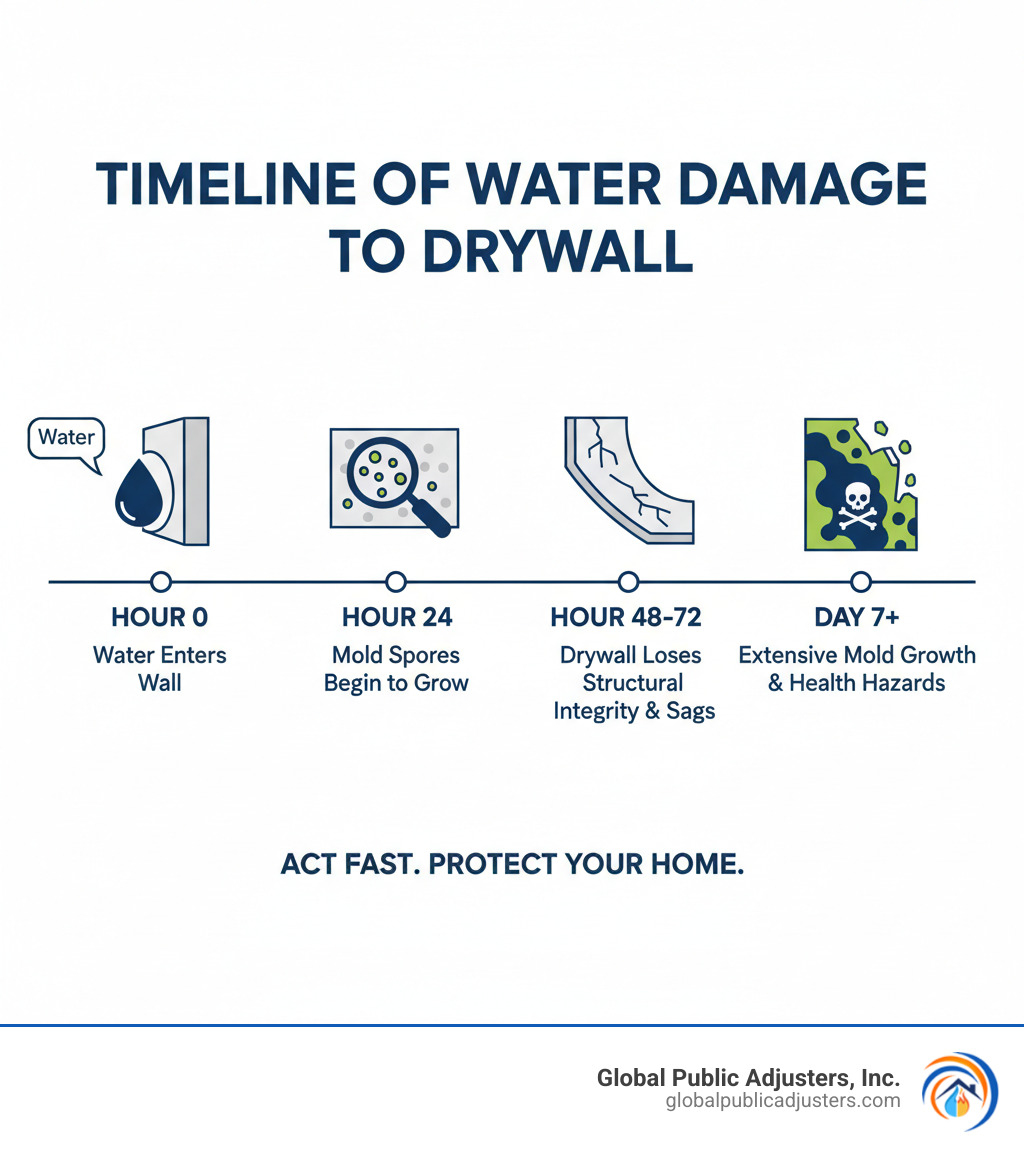
Drywall is porous.When water seeps in, it spreads fast. The gypsum core loses its structural integrity, causing the material to sag, crumble, or even fall off the wall. Worse, mold can start growing within24 to 48 hoursof the initial water exposure, creating health hazards and making repairs far more expensive.
The good news? If you act quickly and hire the right specialist, you can stop the damage in its tracks, protect your home’s value, and restore your peace of mind. This guide will walk you through identifying the problem, understanding which type of professional to call, and vetting them to ensure you get quality work—and a fair insurance settlement if you need one.
First Steps: Identifying the Damage and Its Source
Before you can fix a problem, you need to understand it. When it comes tohow to find a specialist for repairing water-damaged drywall, the first step is to assess the damage and find its source. Any repair is just a temporary fix if the underlying leak isn’t stopped.
Common Signs of Water-Damaged Drywall
Water damage often starts subtly. Recognizing these early signs can save you significant money and stress.
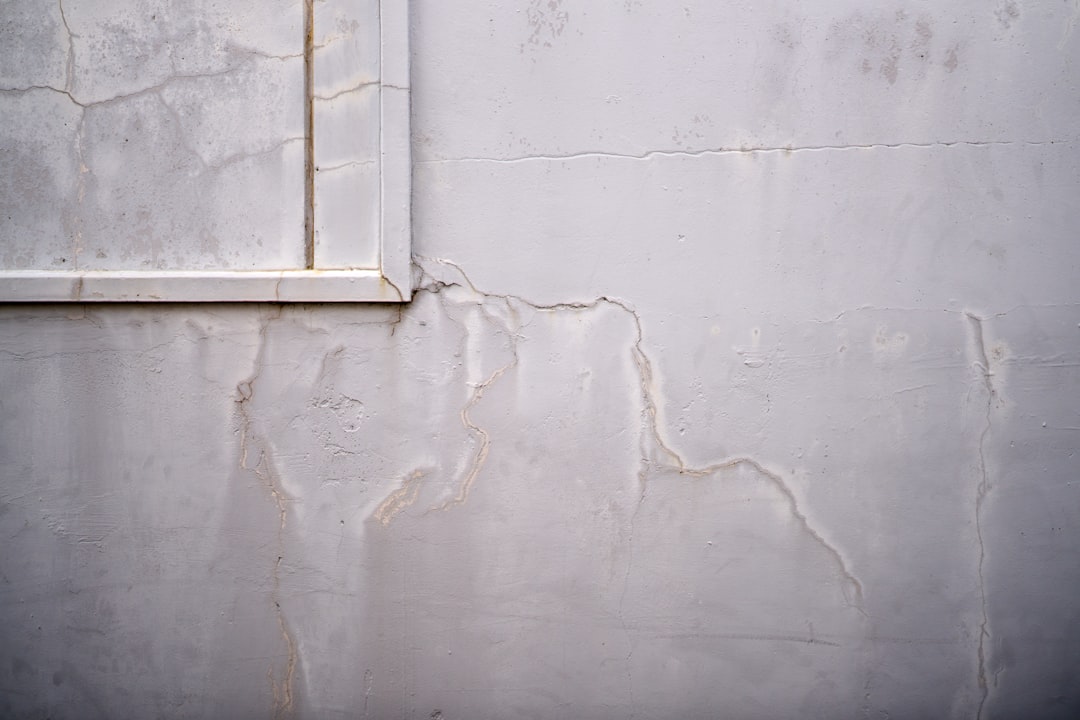
- Discoloration: Look for yellow, rust-colored, or dark brown stains on walls or ceilings, often appearing as rings or blotches.
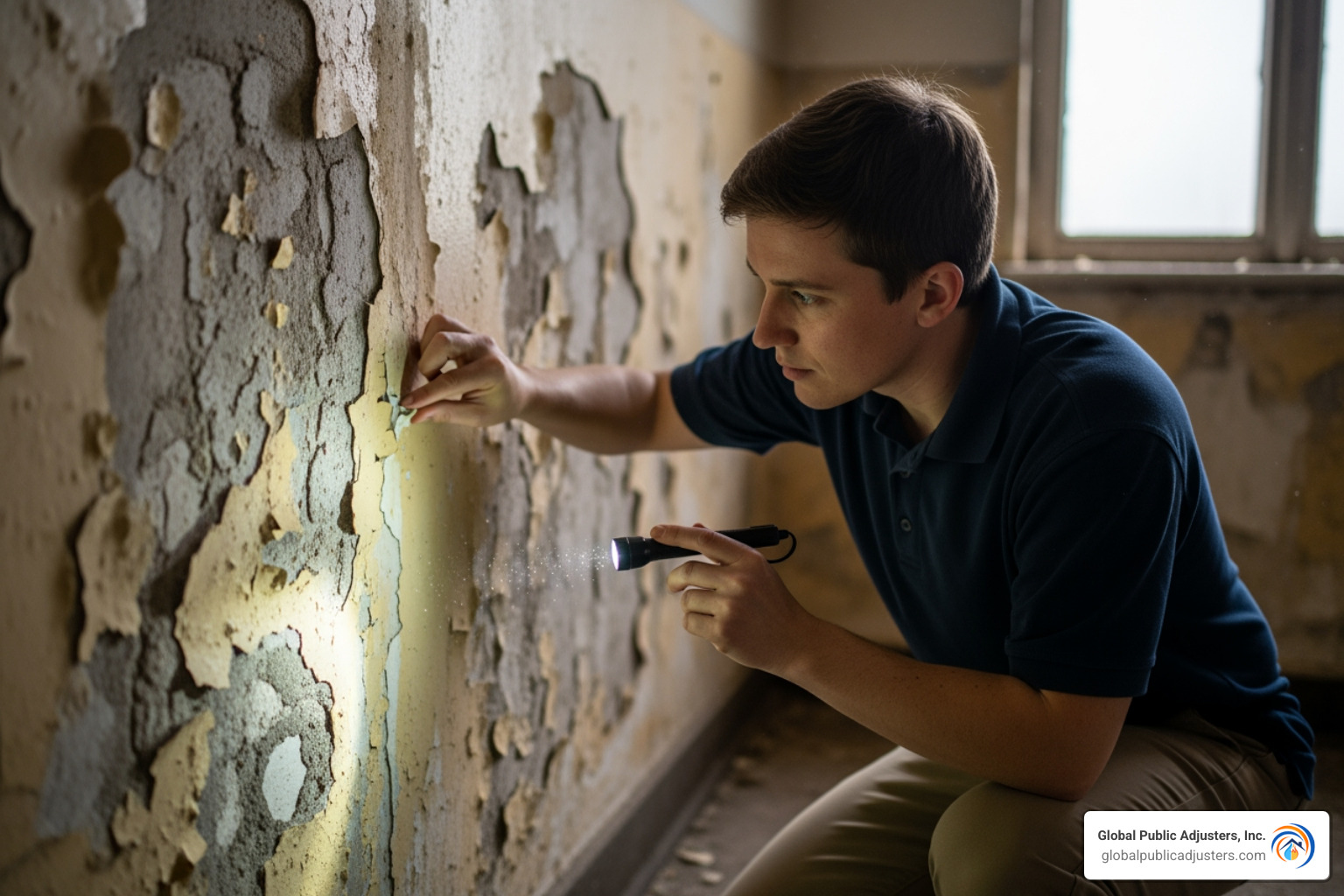
- Peeling or Bubbling Paint: Moisture pushing against paint or wallpaper causes it to bubble, flake, or peel.
- Sagging or Soft Spots: When saturated, drywall loses its strength and may bulge or feel soft to the touch. This indicates a serious structural problem.
- Musty Odor: A persistent, earthy smell often points to hidden moisture and potential mold growth behind walls.
- Visible Mold Growth: Black, green, or white fuzzy patches are a clear sign that water has been present for too long. For more details, seesome signs that you have water damage in your home.
Uncovering the Cause of the Water Damage
Finding the damage is only half the battle; you must also find the source. Fixing drywall without stopping the leak is pointless.
- Leaking Pipes: A common culprit, slow drips inside walls can go unnoticed for months. A burst pipe can cause immediate, extensive damage. Our guide onhow to tell if a pipe has burst in your homecan help.
- Roof Leaks: Especially common in Florida, a compromised roof allows water into the attic and down through ceilings and walls. If damage is on an upper floor, your roof may be the problem. Learn more abouthow can I tell if my roof is leaking?.
- Clogged Gutters: When gutters overflow, water runs down exterior walls and can seep inside.
- Faulty Appliances: Water heaters, washing machines, and dishwashers have connections that can fail. A water heater leak can be particularly destructive. Read more aboutwhat causes a water heater leak in your home.
- Malfunctioning Fire Sprinklers: Though rare, a faulty sprinkler can cause extensive water damage. Regular inspections are key to prevention; theNational Fire Protection Association offers more information on sprinkler inspection.
Water doesn’t always travel in a straight line. The visible damage might be far from the actual leak, which is why a thorough investigation is essential.
DIY Repair vs. Calling a Professional: When to Make the Call
Deciding between a DIY project and hiring an expert is critical for water-damaged drywall. Getting this right can prevent bigger headaches, costs, and health risks down the road.
Can I Repair Minor Water-Damaged Drywall Myself?
You might be able to handle a minor repair if you meet these conditions:
- The damage is asmall, isolated stain.
- The drywall underneath feelsfirm and structurally sound.
- Theleak source is confirmed and fixed(this is non-negotiable).
- There isno sign of moldor musty odors.
If all these are true, the DIY process involves cutting out the damaged section, ensuring the area is completely dry (using fans and dehumidifiers for 48-72 hours), patching with new drywall, sanding, priming, and painting. Always use safety goggles and a mask.
When You Absolutely Need a Professional
Put down the tools and call a professional in these situations:
- Large Area: The damage covers more than a few square feet or multiple wall sections.
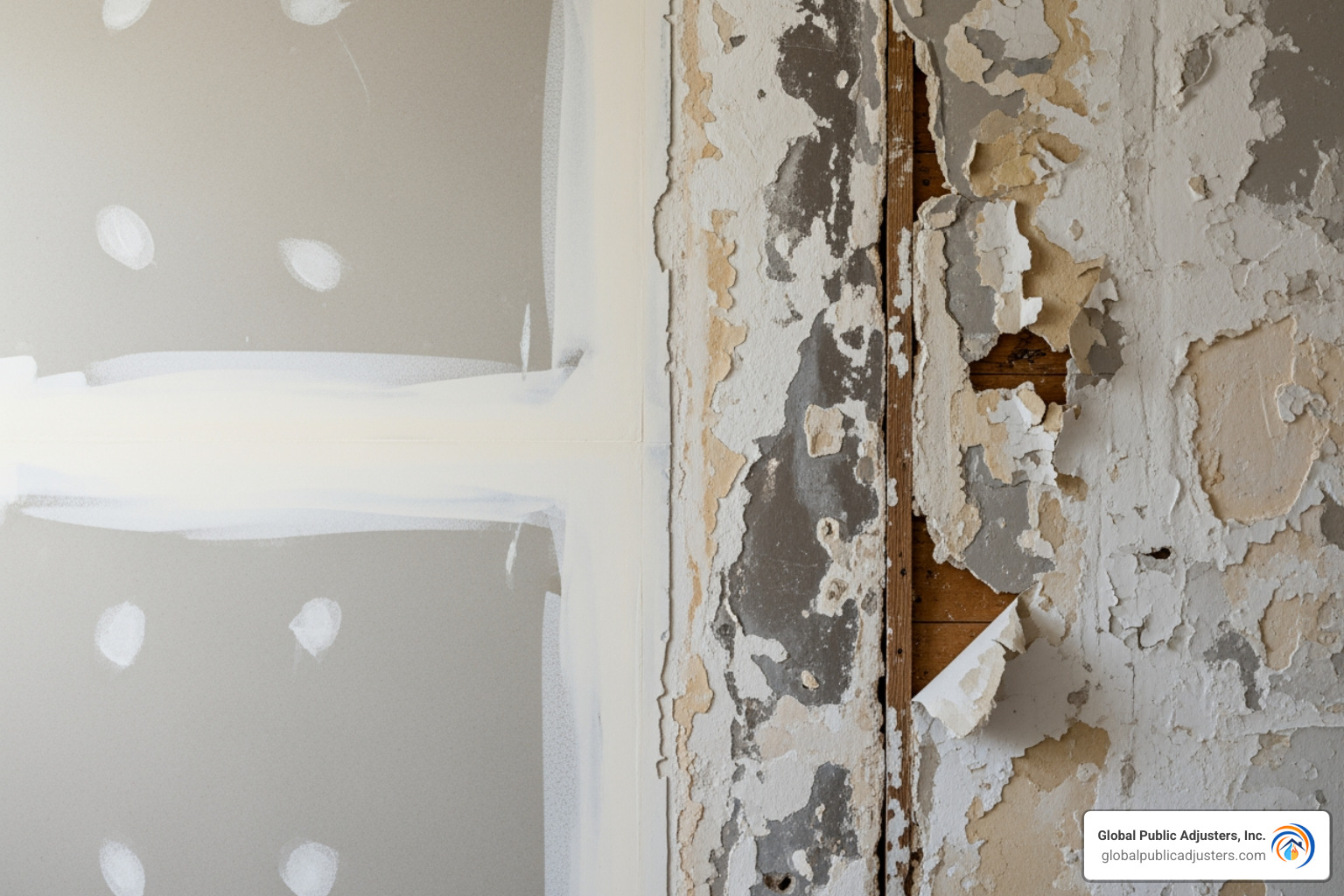
- Sagging or Crumbling: Any drywall that is bulging, soft, or falling apart has lost its structural integrity and requires professional replacement.
- Mold: If you see or suspect mold, you need a certified mold remediation specialist. DIY removal can spread spores and create health hazards. Our guide onHow to tell if you have mold damage in your homecan help.
- Nearby Electrical Wiring: Water near outlets or switches is a serious safety risk. An electrician must inspect the area first.
- Unknown Leak Source: If you can’t find the leak, a leak detection company can pinpoint it with specialized tools.
- Contaminated Water: Water is categorized by contamination level.Clean water(from a supply line) is one thing.Gray water(from showers or washing machines) andblack water(from sewage or floods) are hazardous and require professional handling and decontamination.
How to Find a Specialist for Repairing Water-Damaged Drywall: The Professionals You Need
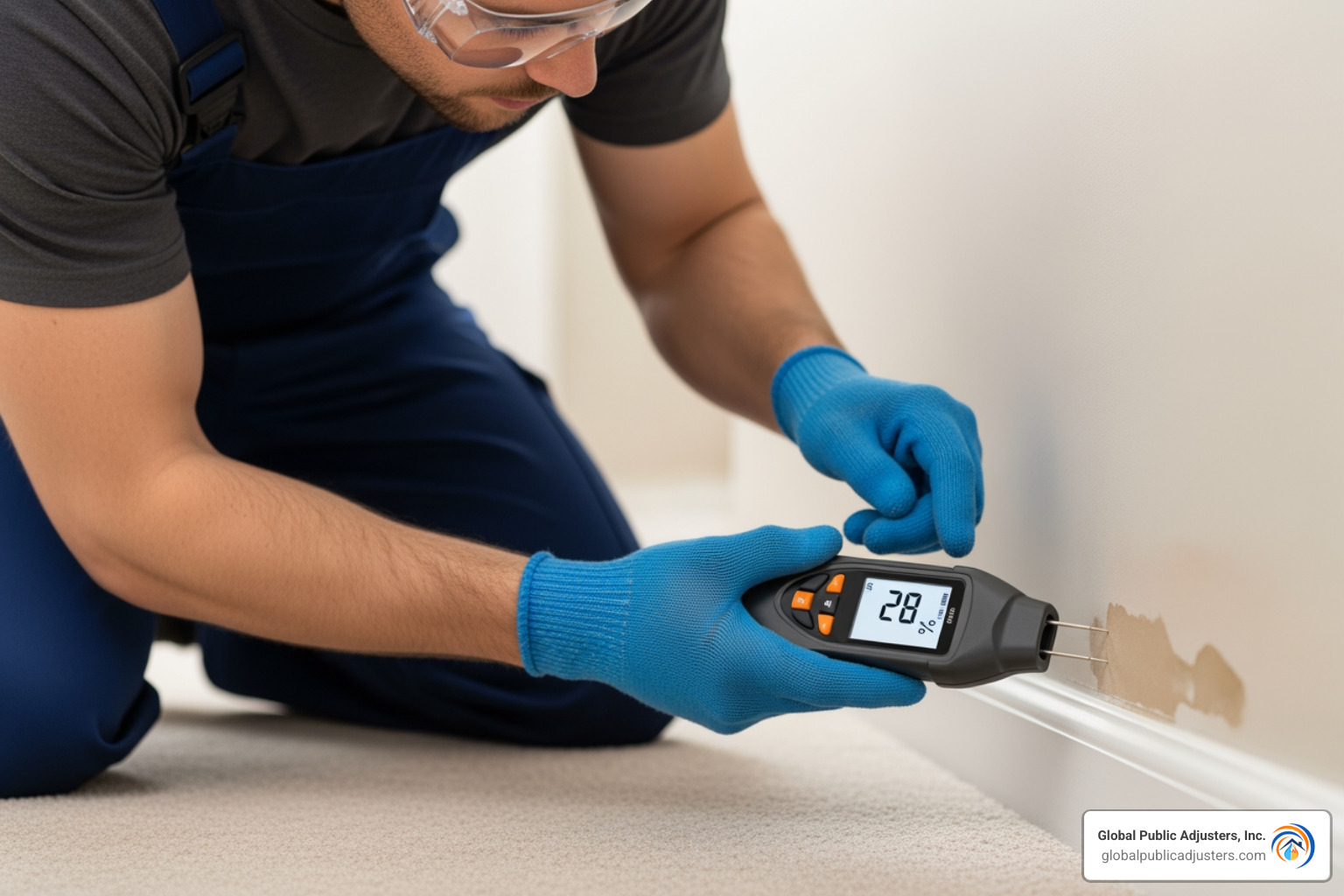
When water damages your drywall, knowing who to call is the first step. Understanding the roles of different professionals helps you find the right specialist for your specific situation.
Understanding the Different Types of Specialists
Depending on the severity and source of the damage, you may need one or more of these experts:
- Plumbers: Your first call for a leaking or burst pipe. They stop the leak and fix the plumbing but typically do not repair drywall. Expect to pay$45 to $200 per hour.
- Leak Detection Companies: Essential when the source of a leak is hidden. They use advanced tools like thermal imaging to pinpoint leaks without demolition. They find leaks but don’t perform repairs. Services can cost$100 to $700.
- Water Damage Restoration Companies: The comprehensive solution for significant damage. They handle everything from water extraction and drying to mold remediation and full reconstruction. They are equipped to manage all water types (clean, gray, and black).
- Drywall Contractors: Once the area is dry and mold-free, these specialists repair, replace, and finish drywall to make your walls look new again. A typical repair costs around$600, with hourly rates near$90 per hour.
- Handyman: An option for very minor, cosmetic repairsafterthe leak is fixed and the area is completely dry. They are not equipped for significant water damage, structural issues, or mold.
What Do Water Damage Restoration Companies Offer?
For significant water damage, a restoration company provides the most complete service. Their expertise is invaluable for homeowners in Florida’s climate.
Their services typically include:
- 24/7 Emergency Service: Immediate response to minimize damage.
- Water Extraction: Using powerful pumps and vacuums to remove standing water.
- Structural Drying: Employing industrial air movers and dehumidifiers to dry hidden moisture in walls and floors.
- Dehumidification: Removing excess moisture from the air to prevent secondary damage and mold.
- Damaged Material Removal: Safely disposing of unsalvageable materials like soaked drywall and insulation.
- Mold Remediation: Certified teams to contain, remove, and treat mold infestations. We offer specializedMold damage services in Orlandoto address these concerns.
- Sanitizing and Deodorizing: Cleaning and treating the area to prevent bacterial growth and eliminate odors.
- Complete Reconstruction Services: Rebuilding damaged areas, from drywall and flooring to structural elements, to restore your property to its pre-loss condition.
These companies manage the entire process, making them the ideal choice for complex water damage scenarios.
Vetting and Hiring Your Drywall Repair Specialist

Once you’ve assessed the damage and decided to hire a professional, the next step is finding the right one. This is about ensuring quality work, safety, and peace of mind.
How to find a specialist for repairing water-damaged drywall
To find a qualified specialist in Orlando, Pensacola, or anywhere in Florida, use a multi-pronged approach:
- Ask for Referrals: Start with trusted sources like friends, family, or neighbors. A personal recommendation provides valuable insight into a contractor’s reliability and quality of work.
- Check Online Reviews: Use sites like Google, Yelp, and Angi to look for patterns of positive feedback regarding professionalism, timeliness, and repair quality.
- Verify Licenses and Insurance: This is non-negotiable. Ensure any contractor is licensed in Florida and carries both liability and worker’s compensation insurance. Ask for proof to protect yourself from financial liability.
- Confirm Local Experience: Local specialists are familiar with regional building codes and weather challenges. They also have a local reputation to maintain, which often leads to better service.
Key Questions to Ask Before You Hire
Before making a decision, interview your shortlisted candidates. Their answers will reveal their expertise and professionalism.
- How much experience do you have with water damage repair, specifically for drywall?
- Can you provide references from recent, similar projects?
- Do you offer a warranty on your work? What does it cover and for how long?
- What is your process for containing dust and potential mold during the repair?
- Will you provide a detailed, written contract outlining the scope, timeline, materials, and total cost?
- What is your estimated timeframe for completion?
- How do you handle unforeseen issues, like hidden mold or additional damage?
- Are you licensed and insured in Florida? Can I see proof?
- How do you ensure the area is completely dry before starting repairs?
How to find a specialist for repairing water-damaged drywall and understand the costs
Understanding the financial aspect is a huge part of the process. Costs vary based on the extent of damage, the type of water, and your location.
On average, a basic drywall repair costs around$600, but extensive damage can exceed$1,000. Many contractors charge an hourly rate, often around$90 per hourin Florida.
For more comprehensive restoration, companies often price per square foot based on the water type:
- Clear Water(e.g., clean pipe burst):$3 to $4 per square foot.
- Gray Water(e.g., washing machine overflow):$4 to $7 per square foot.
- Black Water(e.g., sewage backup):$7 to $8 per square foot, reflecting the need for extensive decontamination.
Key factors affecting the final cost include theseverity of damage,water type,accessibilityof the repair area, and whethermold remediationis required. Cosmetic details like matching paint and textures can also add to the cost.
Homeowners insuranceoften covers damage from sudden and accidental events (like a burst pipe) but typically excludes gradual leaks, maintenance issues, or flooding. Always review your policy and document the damage thoroughly before making a claim.
Frequently Asked Questions about Water-Damaged Drywall Repair
Navigating water damage can be confusing. Here are answers to the most common questions we hear from homeowners.
How long does it take for drywall to dry after water damage?
Properly drying water-damaged drywall takes48 to 72 hoursusing professional equipment like high-volume air movers and commercial-grade dehumidifiers. The goal is to remove all moisture from within the drywall and the wall cavity. Rushing this process will trap moisture, leading to mold growth and structural decay. A complete drying phase is essential for a lasting repair.
Does homeowners insurance cover water-damaged drywall?
The answer is:it dependson the cause of the damage.
Generally, policieswill coverdamage from asudden and accidentalsource, like a burst pipe or a malfunctioning appliance. However, they typicallywill not coverdamage fromgradual leaks, poor maintenance, or external flooding (which requires a separate flood insurance policy).
Always review your policy and document all damage with photos and videos before cleanup begins. The insurance claim process can be complex, and initial settlement offers are often too low. A public adjuster can advocate on your behalf to ensure you receive a fair settlement.
Can you just paint over water-damaged drywall?
No, absolutely not.Painting over water-damaged drywall is a temporary cosmetic fix that traps moisture inside the wall. This creates a perfect environment for mold to grow and causes the drywall to continue to rot and lose its structural integrity. The paint will eventually bubble and peel, and the underlying problem will be much worse. The only correct solution is to fix the leak, dry the area, remove the damaged material, and replace it with new drywall before priming and painting.
Conclusion: Restoring Your Home and Your Peace of Mind
Finding a water stain on your ceiling or wall can feel like the beginning of a nightmare. But here’s the truth: with the right information and the right help, we can turn this around. We’ve walked through the essential steps together—assessing the damage, understanding which professional to call, andhow to find a specialist for repairing water-damaged drywallwho’s truly qualified for the job.
The key takeaway?Act fast.Every hour counts when it comes to water damage. The quicker we address the source, dry out the area, and bring in qualified professionals, the better our chances of preventing mold, protecting our home’s structural integrity, and keeping repair costs manageable.
Proper repair isn’t just about fixing what we can see.It’s about protecting our home’s long-term value and, more importantly, our family’s health. Mold spores, hidden moisture, and weakened structures are real threats that paint alone can’t fix. When we choose the right specialist and insist on thorough, professional work, we’re investing in our home’s future and our peace of mind.
But let’s be honest—even after we’ve hired the best contractor and completed the repairs, there’s still one more hurdle:dealing with the insurance company.The insurance claim process can be complex, frustrating, and downright overwhelming. Insurance companies have their own adjusters working to protect their bottom line, not ours. Policy language is confusing, and it’s easy to miss out on coverage we’re entitled to or accept a settlement that doesn’t fully cover our losses.
This is where a public adjuster can make all the difference. AtGlobal Public Adjusters, Inc., we’ve spent over 50 years standing up for homeowners and business owners across Orlando, Pensacola, and all of Florida. We work foryou, not the insurance company. Our job is to document every bit of damage, interpret your policy in your favor, and fight for the maximum settlement you deserve. We handle the paperwork, the negotiations, and the headaches, so you can focus on getting your home back to normal.
If you’re facing water damage and wondering how to steer your insurance claim, we’re here to help.Learn more about handling water damage claims in Orlandoand let us be your advocate during this challenging time. You’ve already taken the first step by educating yourself—now let us help you take the next one.