Quick Answer
A licensed public insurance adjuster, whether trained under Colorado’s hail and wind damage claim standards or Florida’s statutes, must carry a state license, an insurance bond, and follow a documented inspection and negotiation process. Tampa homeowners benefit when adjusters apply those same disciplined, ethical standards used in Colorado’s catastrophic storm markets to local hurricane, wind, and water claims. Verifying licensing and process before hiring protects your settlement and your home.
Every year, thousands of homeowners discover the hard way that not all insurance adjusters play by the same rules. In Colorado, which sees more hail events than almost any other state, regulators built a strict licensing and bonding framework specifically to curb predatory claims practices after major storms. Apublic insurance adjuster Colorado in Tampacontext matters more than it sounds: the same licensing discipline, bonding requirements, and documented claims process that protect Colorado homeowners from hail damage fraud are the exact standards Tampa homeowners should expect from any adjuster they hire after a hurricane or wind event.
This article breaks down what those standards actually require, why they exist, and how ethical adjusters apply them whether they are working a hailstorm in Denver or a wind damage claim inSouth Tampa, Westshore, or Brandon. The goal here is not to sell you anything. It is to help you understand what separates a trustworthy professional from someone who shouldn’t be inside your attic.
What Is a Public Insurance Adjuster?
A public adjuster is a licensed professional who represents the policyholder, not the insurance company, when a property damage claim is filed. Unlike a company adjuster or independent adjuster hired by the insurer, a public adjuster’s only job is to document damage accurately and negotiate the largest fair settlement on behalf of the homeowner.
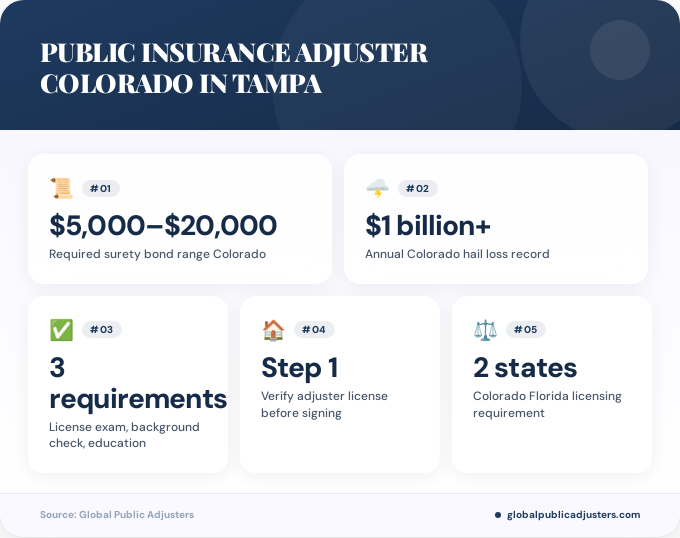
Both Colorado and Florida require a state-issued license to perform this work legally.Verifying an adjuster’s licensebefore signing anything is one of the simplest ways to protect yourself from fraud.
What Are Colorado’s Licensing and Bonding Requirements?
Colorado’s Division of Insurance requires public adjusters to pass a state licensing exam, complete background checks, and maintain continuing education credits to keep their license active. On top of that, Colorado mandates asurety bond, which protects consumers if an adjuster mishandles funds or breaches their fiduciary duty. Call for details on current bonding requirements.
This bonding requirement exists because Colorado experiences some of the highest hail-related property losses in the country, with insured hail losses regularly reaching substantial levels in a single severe weather season across the Front Range. That volume of claims activity attracted bad actors, which is precisely why regulators tightened licensing rules over the past decade.
| Requirement | Colorado Standard | Florida Standard |
|---|---|---|
| State License Required | Yes | Yes |
| Surety Bond | Required, varies based on license type | Required under state statute |
| Continuing Education | Mandatory renewal credits | Mandatory renewal credits |
| Background Check | Required | Required |
Why Do Colorado’s Hail Claim Standards Matter for Tampa Homeowners?
Colorado’s regulatory approach became a model for other catastrophe-prone states because hail and wind claims share a common vulnerability: damage can be subtle, roofs can look fine from the ground, and unscrupulous operators can exploit confusion after a storm. Tampa faces the same dynamic every hurricane season, just with wind-driven rain and tropical systems instead of hail.
The lesson Colorado learned applies directly here. When licensing and bonding are enforced strictly, homeowners file fewer disputed claims and see faster, fairer payouts. Florida has adopted similarly rigorous statutes, and firms that understandmulti-state licensing standardsoften bring sharper documentation habits to every claim they handle, regardless of the state.
“The states that got hit hardest by storm-chasing fraud, Colorado included, ended up writing the strictest rules. Those rules are now the gold standard every ethical adjuster should want to follow, no matter where the claim is filed.”
What Process Do Ethical Adjusters Follow?
A professional adjuster’s process looks remarkably similar whether the damage was caused by Colorado hail or a Tampa Bay tropical storm. The steps below reflect the documented, repeatable workflow that licensed, bonded adjusters are trained to use.
- Verify the policy first.Before anything else, the adjuster reviews your policy declarations, endorsements, and exclusions to understand what is actually covered.
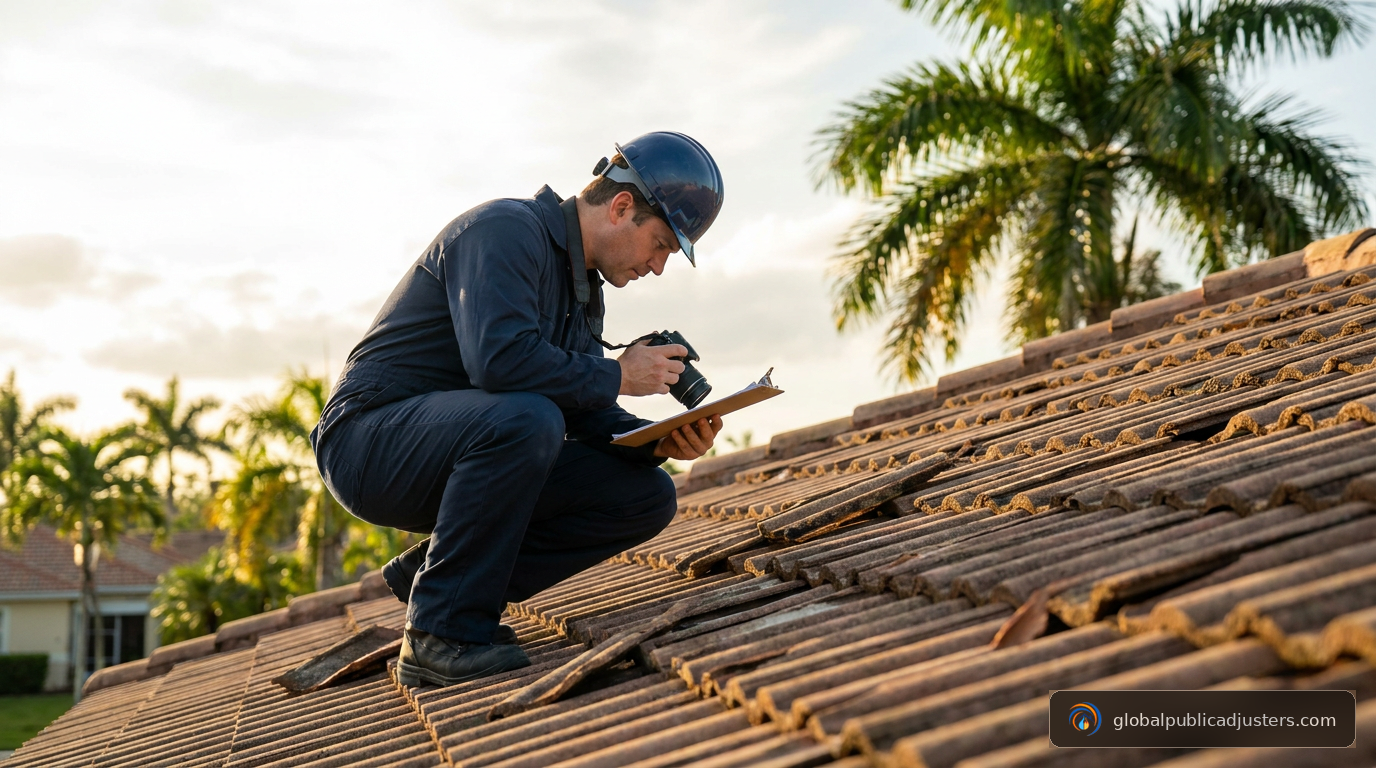
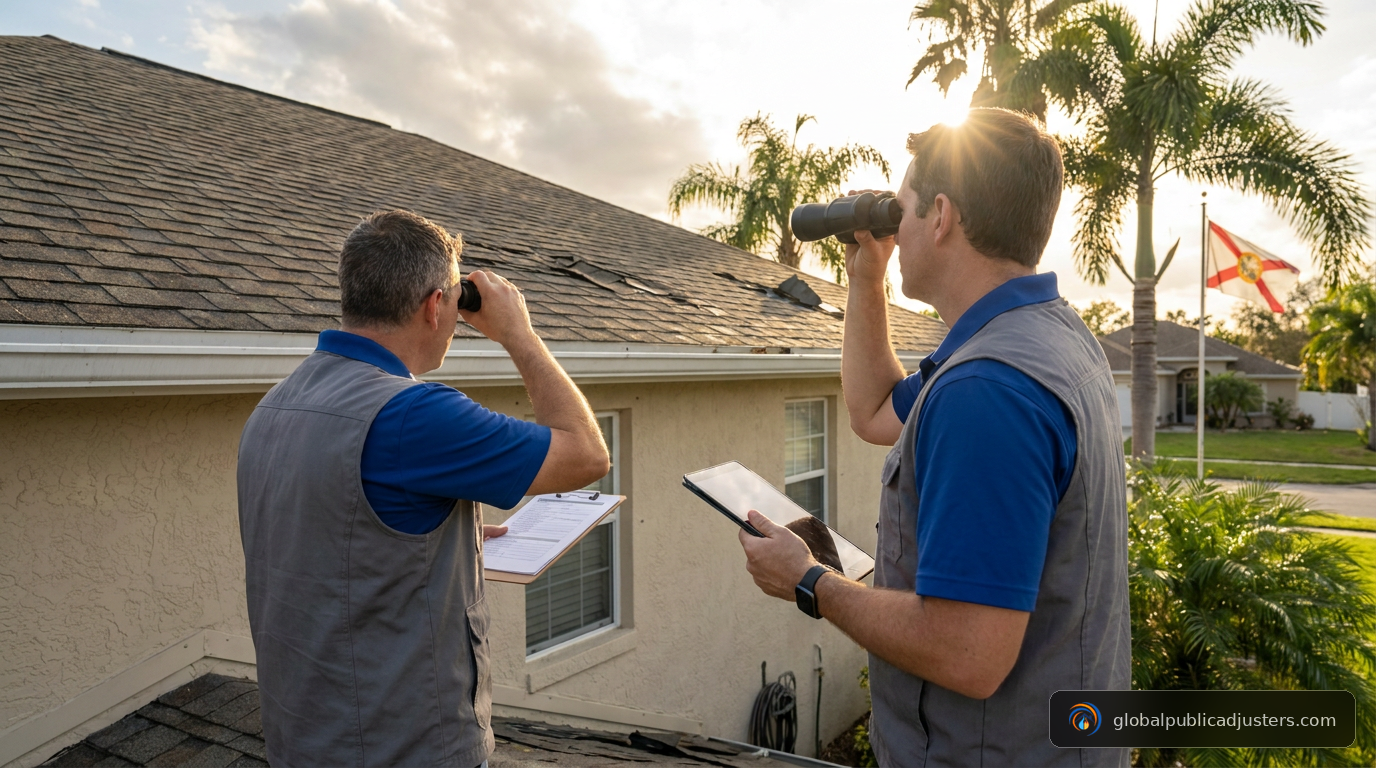
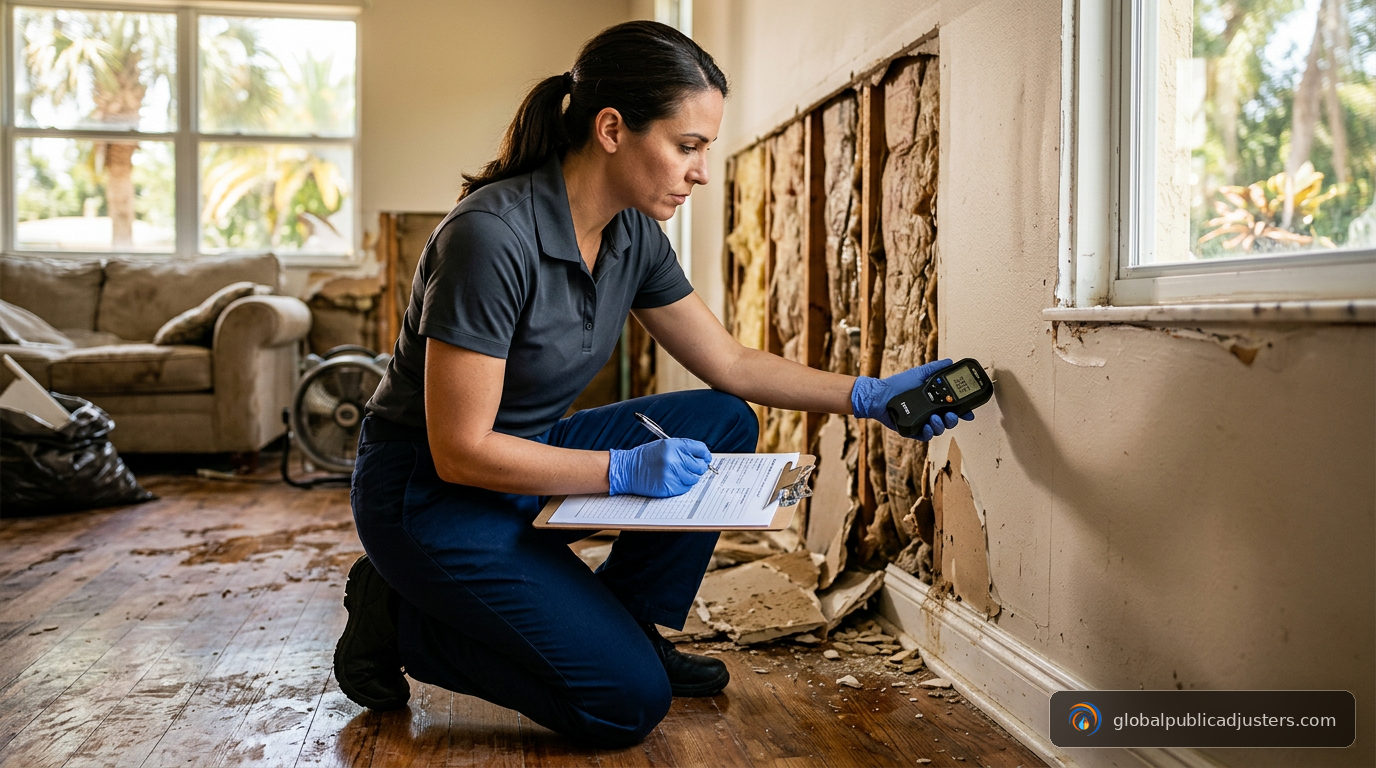
- Conduct a full physical inspection.This includes roof, attic, exterior, and interior documentation using photos, moisture readings, and measurements, not a drive-by glance.
- Cross-reference weather data.Ethical adjusters pull historical storm data, including wind speed and hail size reports, to corroborate the damage timeline.
- Prepare a detailed damage estimate.Using industry-standard estimating software, the adjuster itemizes repair costs line by line.
- Submit the claim with full documentation.No vague summaries, just itemized evidence that supports every dollar requested.
- Negotiate directly with the insurance carrier.This is where a public adjuster earns their value, pushing back on lowball offers with evidence.
- Review the settlement with the homeowner before closing.A trustworthy adjuster explains the final number and never pressures a quick signature.
This same structured approach is detailed in our breakdown ofdocumentation standards for water damage claims, which apply the identical discipline to a different peril.
How Can You Spot an Unqualified or Unethical Adjuster?
Storm chasers, whether in Colorado after a hail event or in Florida after a hurricane, tend to share recognizable red flags. Knowing these patterns protects your settlement and your home.
Refuses to show bond documentation
Out-of-state license with no reciprocity filed
No photo or moisture documentation
Vague, non-itemized estimate
Pressure tactics or fear-based language
Unwillingness to answer fee questions directly
If you are unsure what questions to ask before committing, our guide onquestions to ask before you signis a useful starting point, and it applies just as well to Tampa homeowners as it does in Orlando.
How Does This Apply to Tampa’s Storm Season?
Tampa’s exposure to tropical storms, hurricanes, and straight-line wind events means local homeowners face many of the same claim complexities that Colorado homeowners face with hail. Roof damage from wind uplift can be just as hard to spot from the ground as hail bruising on shingles, and insurers sometimes dispute causation in both scenarios.
Neighborhoods throughout Hillsborough County, from Davis Islands to Carrollwood, see a steady stream of wind and water claims every hurricane season, which typically runs June through November. A licensed adjuster who understands Florida’s statutory timelines and Colorado-style documentation rigor is better equipped to build a claim that withstands insurer scrutiny. You can review our fullclaims services overviewto see how this process is applied locally.
For homeowners comparing adjuster fee structures between states, it’s worth reading howcontingency fees work in Floridaand howadjuster pay structurescompare across markets, since fee transparency is itself a marker of professionalism.
Key Takeaways
- Colorado requires public adjusters to hold a state license, maintain a surety bond, and complete continuing education, a model other catastrophe-prone states have followed.
- Bonding exists to protect homeowners financially if an adjuster mishandles claim funds or breaches their duty.
- Ethical adjusters follow a documented seven-step process from policy review through final settlement review, regardless of state.
- Tampa’s hurricane and wind claims share key similarities with Colorado hail claims, including hidden damage and disputed causation.
- Red flags like rushed signatures, vague estimates, and door-to-door solicitation apply equally in Denver and Tampa.
- Always verify license and bond status before signing a contract with any public adjuster.
- Fee transparency is a strong indicator of a trustworthy, professional adjuster relationship.
People Also Ask
Is a public adjuster license from Colorado valid in Florida?
Generally no. Each state issues its own public adjuster license, though some states offer reciprocity agreements. An adjuster working in Tampa must hold a valid Florida license in addition to any Colorado credential.
Why does Colorado have such strict public adjuster bonding rules?
Colorado experiences some of the highest volumes of hail damage claims in the United States, which historically attracted unlicensed storm chasers. The state responded with mandatory surety bonds and strict licensing to protect consumers.
What is a surety bond and why does it matter?
A surety bond is a financial guarantee that protects consumers if an adjuster acts negligently or mishandles claim funds. It gives homeowners a path to recover losses if an adjuster breaches their professional duties.
How do I verify a public adjuster’s license before hiring one?
Most states, including Florida and Colorado, offer online license lookup tools through their Department of Insurance website. You can also ask the adjuster directly for their license number and confirm it matches state records.
Do Tampa homeowners need a public adjuster for hurricane claims?
It is not legally required, but many homeowners find that a licensed public adjuster helps document damage more thoroughly and negotiate more effectively than handling a claim alone. This is especially true for complex wind and water damage claims.
Frequently Asked Questions
What qualifications should a public adjuster have before working on my Tampa claim?+
They should hold an active Florida public adjuster license, carry required bonding, and be able to provide references and documentation of past claims work. Always ask to see proof before signing a contract.
How long does a wind or hurricane damage claim typically take?+
Timelines vary based on damage complexity, documentation quality, and insurer responsiveness, ranging from a few weeks for straightforward claims to several months for disputed or large-loss claims. A thorough initial inspection tends to shorten the overall timeline.
What does it cost to hire a public adjuster in Tampa?+
Public adjuster fees are typically structured as a percentage of the settlement and vary based on claim complexity, size, and state regulations. Call for a free written quote that explains the fee structure for your specific situation.
Can an unlicensed person legally help me with my insurance claim?+
No. Negotiating a claim on behalf of a homeowner for compensation without a public adjuster license is illegal in both Colorado and Florida. Always confirm licensing before allowing anyone to represent your claim.
What should I do immediately after storm damage in Tampa?+
Document the damage with photos and video, make temporary repairs to prevent further loss, and avoid signing any contracts under pressure. Contact a licensed professional for a full inspection before filing your claim.
How is a public adjuster different from the insurance company’s adjuster?+
The insurance company’s adjuster works for the insurer and evaluates the claim in the carrier’s interest. A public adjuster works exclusively for the policyholder, documenting damage and negotiating on the homeowner’s behalf.
Understanding licensing, bonding, and process is the foundation of trust in this profession. If you want to see how these standards translate into real claims support, visit ourabout us pageto learn more about our team, or reach out through ourcontact pagefor a no-pressure conversation about your situation. You can also exploreGlobal Public Adjustersto see our full range of claims advocacy services across Florida.