Insurance Claim Water Leak: 5 Stress-Free Steps
Why Water Damage Claims Are More Complicated Than You Think
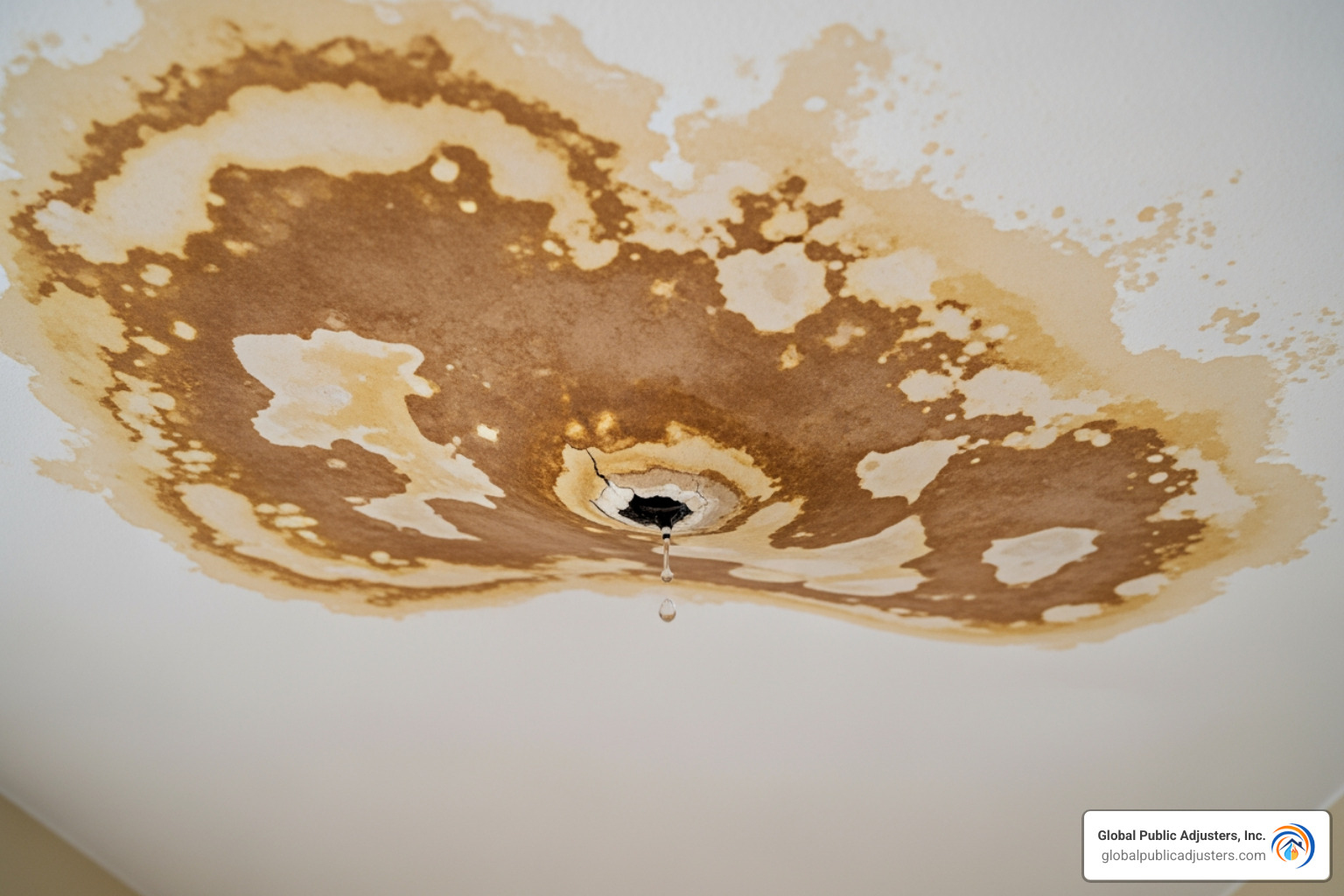
Aninsurance claim water leakcan be one of the most stressful experiences for any property owner. You find water pooling on your floor, staining your ceiling, or seeping through your walls, and suddenly you are facing thousands of dollars in potential damage. The good news is that you likely have homeowners insurance. The challenging part is actually getting your claim approved and paid fairly.
According to industry data, water damage is a leading cause of homeowners insurance claims, right alongside wind and hail. Roughly one in 60 insured homes submits a claim related to water damage or freezing every year. Yet many of these claims are denied or underpaid when insurers argue the problem was gradual, due to wear and tear, or caused by a maintenance issue rather than a sudden, covered event.
The difference between a paid claim and a denial often comes down to how well you understand your policy, how quickly you act, and how thoroughly you document the damage. Insurance policies are written in complex legal language, and remember that adjusters work for the insurance company, not for you.
This guide walks you through the entire process of filing a water leak insurance claim, from the moment you find the damage to negotiating a fair settlement. You will learn which types of water damage are typically covered, what documentation you need, when it makes sense to file a claim versus paying out-of-pocket, and when to bring in professional help.
Quick Answer: Filing an Insurance Claim for a Water Leak
- Stop the water source immediately(shut off valves, call a plumber if needed)
- Document everythingwith photos and videos before major cleanup
- Review your policyto confirm the damage type is covered
- Contact your insurance companywithin 24-48 hours to report the claim
- Mitigate further damage(remove standing water, dry affected areas)
- Meet with the insurance adjusterand provide all documentation
- Get independent repair estimatesfrom licensed contractors
- Negotiate the settlement, or seek help from a public adjuster if needed

First Steps: What to Do Immediately After Finding a Water Leak
Finding water damage can feel like a punch to the gut, but swift action can significantly reduce the severity of the damage and strengthen your futureinsurance claim water leak. Time is truly of the essence here!
Safety First: Stop the Source
Your absolute first priority is to stop the flow of water if it’s safe to do so. This might mean:
- Shutting off an individual water supply valve:Many appliances like dishwashers, toilets, washing machines, or ice makers have individual shut-off valves (stops). Find and turn these off if the leak is localized.
- Turning off your home’s main water valve:If the leak is widespread, difficult to locate, or from a main pipe, you’ll need to shut off the main water supply to your entire home. This often requires a wrench. If you’re unsure how, or it’s not safe, call a plumber immediately. You can find more detailed instructions onhow to shut off water supply valves.
Mitigate Further Damage
Once the water flow is stopped, focus on preventing the damage from spreading or worsening. This is a critical step that insurers expect you to take; failing to mitigate can lead to claim denial.
- Remove Standing Water:Mop, use buckets, or a wet/dry vacuum to extract as much standing water as possible. For severe flooding, professional water restoration services are often necessary. In Orlando, our team can assist withWater Restoration Services Orlando.
- Protect Belongings:Move furniture, electronics, and other valuables to a dry area. Elevating items off the floor can make a huge difference.
- Increase Air Circulation:Open windows, run fans, and use dehumidifiers to help dry out affected areas. This is crucial because mold and mildew can begin to develop just24 to 48 hours after water exposure.
Document Everything
Before you clean up too much, grab your phone or camera and document the scene thoroughly. This evidence is invaluable for yourinsurance claim water leak.
- Photos and Videos:Take clear, well-lit photos and videos of the source of the leak, the extent of the water damage, and any damaged belongings. Don’t just focus on the obvious; capture hidden damage, too. The more detailed, the better.
- Keep Damaged Items:Do not discard damaged items until your insurance adjuster has had a chance to inspect them. If you absolutely must remove something for safety or health reasons, document it extensively first.
- Log Communications:Keep a detailed record of everyone you speak with—insurance agents, adjusters, contractors—including dates, times, and a summary of the conversation.
Understanding Your Homeowners Insurance Coverage for Water Damage
Navigating the nuances of your homeowners insurance policy can feel like deciphering ancient hieroglyphs. When it comes to water damage, understanding your coverage is paramount for a successfulinsurance claim water leak.
Most standard homeowners insurance policies (like an HO-3 policy) cover water damage that is “sudden and accidental” and originates from within your home. However, there are significant exclusions and limitations you need to be aware of. We recommend a thorough policy review to understand your specific covered perils and exclusions. Different types of water damage can have different coverage implications; you can learn more aboutSome Different Types of Water Damageon our site.
Here’s a quick comparison of what’s typically covered versus what’s often excluded:
| Sudden/Accidental Damage (Typically Covered) | Gradual Damage (Typically Not Covered) |
|---|---|
| Burst pipes (e.g., frozen pipes in a heated home) | Slow, continuous leaks from plumbing, roofs, or appliances |
| Water overflow from appliances (e.g., washing machine, dishwasher) | Damage from deteriorating plumbing or old, worn-out materials |
| Accidental discharge from plumbing, heating, or AC systems | Seepage through your home’s foundation or cracks in walls |
| Water damage from fire suppression (e.g., sprinklers) | Damage resulting from neglect or lack of maintenance |
| Wind-driven rain, snow, or ice if it enters through a damaged roof/window | Water damage that is obvious and could have been prevented |
Sudden vs. Gradual Leaks: The Key Coverage Difference
This distinction is often the make-or-break point for aninsurance claim water leak.
Sudden and Accidental Leaks:These are the “oops” moments that homeowners insurance is designed for. Think of a burst pipe flooding your basement, a dishwasher hose suddenly detaching and overflowing, or a hot water heater suddenly rupturing. These events are generally covered because they are unforeseen and happen quickly. For instance, if you’re wonderingHow to Tell If a Pipe Has Burst in Your Home, that’s exactly the kind of sudden event your policy aims to protect against.
Gradual Damage:This is where insurance companies often draw the line. Policies usuallydon’t cover damage that occurs graduallyover time. This includes damage from slow leaks under a sink that go unnoticed for months, deteriorating plumbing, or water seepage through your home’s foundation. These issues are considered the result of normal wear and tear or a lack of maintenance, and the cost of repairs typically falls on the homeowner. The logic? You, as the homeowner, are expected to maintain your property and address minor issues before they become major problems.
Does Insurance Cover Mold, Flooding, or Sewer Backup?
This is another area ripe for confusion and potential claim denial.
Mold Coverage:Standard homeowners insurance generally doesn’t cover mold, fungi, rust, or rot unless it directly stems from a covered water damage event. For example, if a sudden burst pipe (a covered peril) causes water damage and then mold develops as a direct result, the mold damage might be covered, often with specific sub-limits. However, mold that develops from a long-term, unaddressed leak or high humidity (which could be considered a maintenance issue) is usually not covered. Given Florida’s climate, mold is a significant concern, and understanding your specific mold coverage is crucial. We specialize inMold Damage Claims Orlandoand can help you steer these complex situations. Mold can develop within24 to 48 hours after water exposure, so quick action is vital.
Flood Damage:This is a big one. While water damage caused by burst pipes or heavy rain entering through a damaged roof might be covered, damage from flooding due to natural disasters is typically excluded from standard homeowners’ policies. This includes water that rises from the ground, overflowing rivers, or storm surges. For protection against such events, you need separate flood insurance. In Florida, with its susceptibility to hurricanes and heavy rainfall, flood insurance is often a wise investment. We assist homeowners withFlood Damage Claims Orlandowhen the right policies are in place.
Sewer Backup:Standard policies generally exclude damage from sewer or drain backups. This means if sewage or water backs up through your drains or a sump pump fails, your policy might not cover the resulting damage. However, you can often purchase a specific endorsement (rider) called “water backup and sump pump overflow coverage” to add this protection to your policy. This is highly recommended, especially if you have a basement or live in an area prone to heavy rainfall.
Home Warranty vs. Home Insurance for Leaks
It’s easy to confuse the roles of a home warranty and homeowners insurance, especially when an appliance is involved in a water leak.
- Homeowners Insurance:Your homeowners insurance policy covers thedamage caused bya sudden and accidental water leak from an appliance, not the appliance itself. For instance, if your washing machine hose bursts and floods your laundry room, your homeowners insurance would likely cover the cost to repair the damaged flooring, walls, and subflooring.
- Home Warranty:A home warranty, on the other hand, is a service contract that typically covers the repair or replacement of major home systems and appliances that break down due to normal wear and tear. So, if your washing machine stops working or your water heater springs a leak due to age, a home warranty might cover the repair or replacement of the appliance itself. Our expertise also extends to issues likeWater Heater Leaks How to Handle Them, and we can help clarify what part of the damage might fall under which type of coverage.
Homeowners insurance covers theconsequencesof a covered event, while a home warranty covers themechanical failureof specific items.
Navigating the Insurance Claim Water Leak Process
Once you’ve taken immediate steps to mitigate damage and understand your policy, it’s time to officially initiate yourinsurance claim water leak. This process requires careful attention to detail and persistent follow-up.

Contacting Your Insurer
Report the damage to your insurance company as soon as possible. Most carriers maintain 24/7 hotlines for claims. Prompt reporting is crucial, not just for preventing further damage, but because delays can sometimes be used by insurers to question the claim’s validity.
Providing Details:Be prepared to provide:
- Your policy number.
- The date and time you found the water damage.
- A detailed description of the leak’s source (if known) and the extent of the damage.
- Details of any immediate actions you took to stop the leak and mitigate damage.
- Any photos or videos you’ve already taken.
Your insurance company will open a claim file and assign a claims adjuster. You can find general guidance on navigating residential claims through resources likeResidential Property Claims Information Guides.
Insurance Adjuster Role:The adjuster’s job is to investigate your claim on behalf of the insurance company. They will:
- Inspect the damaged areas of your home and your belongings.
- Assess the extent and cause of the damage.
- Estimate the cost of repairs or replacement.
- Review your policy to determine what is covered and what isn’t.
The adjuster works for the insurance company, and their primary goal is to protect the insurer’s interests.
Essential Documentation for Your Insurance Claim Water Leak
The more evidence you have, the stronger yourinsurance claim water leakwill be. Think of yourself as a detective, gathering every piece of information that supports your case.
- Photo and Video Evidence:As mentioned, this is paramount. Take wide shots showing the overall damage and close-ups of specific damaged items or areas, including the source of the leak. Capture before and after shots if possible, especially if you had to move items or perform temporary repairs. Our site explainsSome Signs of Water Damage in Your Homethat you should capture.
- Damaged Items List (Home Inventory):Create a comprehensive list of all damaged personal property. For each item, include:
- Description (e.g., “living room rug,” “laptop,” “sofa”)
- Brand and model (if applicable)
- Date of purchase
- Estimated value or original purchase price
- Receipts or proof of ownership if available
- Photograph of the damaged item
- Repair Receipts:Keep all receipts for any temporary repairs you made (e.g., tarps, fans, dehumidifier rentals, plumber’s emergency call-out fee). Your policy might cover these mitigation costs.
- Contractor Estimates:Obtain detailed, written estimates from reputable, licensed contractors for the necessary repairs. These estimates should be line-by-line, itemizing materials and labor. This helps ensure you have an independent assessment of the repair costs, which you can compare against the adjuster’s estimate.
- Communication Log:Maintain a meticulous log of every interaction related to your claim. Include:
- Date and time of call/email/meeting
- Name and title of the person you spoke with
- A brief summary of the discussion and any agreed-upon next steps
- Confirmation of emails sent and received
Understanding Your Settlement: Deductibles, Limits, and Payouts
When your claim is approved, the insurance company will issue a settlement. However, this isn’t always a straightforward process, and several factors influence the final payout.
Deductible Explained:Before your insurance company pays out anything, you’re responsible for paying your deductible. This is the portion of the loss that you pay out of pocket. For example, if you have a $1,000 deductible and the approved repair costs are $10,000, the insurance company will pay $9,000.
Policy Limits:Your policy also has limits, which are the maximum amounts the insurance company will pay for specific categories of damage.
- Dwelling Coverage (Coverage A):This covers the structure of your home, including walls, roof, floors, and built-in appliances.
- Personal Property Coverage (Coverage C):This covers your belongings, such as furniture, electronics, clothing, and other movable items.
Actual Cash Value (ACV) vs. Replacement Cost Value (RCV):This is a crucial distinction that heavily impacts your payout.
- Actual Cash Value (ACV):If your policy pays out based on ACV, you’ll receive the cost to replace the damaged propertyminus depreciation. This means the payout reflects what your property is worth today, not what you paid for it or what it costs to buy new. For example, if a 10-year-old sofa is damaged, you’d get the value of a 10-year-old sofa. Our article onACV versus replacement costdigs deeper into this.
- Replacement Cost Value (RCV):With RCV coverage, the insurance company pays the amount needed to replace the damaged item with a new one of similar kind and quality,without deducting for depreciation. This is generally more favorable to the homeowner, as it allows you to replace old items with new ones. Often, RCV claims are paid in two stages: an initial ACV payment, followed by the depreciation holdback once repairs are completed and new items purchased.
Understanding these terms is vital to evaluate if a settlement offer is fair, as anactual cash valuesettlement can seem low compared to thereplacement cost value.
To File or Not to File? Deciding When to Pay Out-of-Pocket
This is a common dilemma for homeowners facing minor water damage. While insurance is there for major catastrophes, sometimes filing aninsurance claim water leakfor smaller issues can have unintended consequences.

Cost-Benefit Analysis:Before filing, weigh the repair cost against your deductible and the potential impact on your insurance premiums.
Minor Damage:If the cost to repair the water damage is only slightly above your deductible, or even less, it might be more advantageous to pay for repairs out-of-pocket. For example, if you have a $1,000 deductible and the damage is $1,200, filing a claim would only get you $200 from the insurer, while potentially triggering a premium increase.
Claim History:Insurance companies track your claims history. Multiple claims within a short period can flag you as a high-risk policyholder, potentially leading to higher premiums or even non-renewal of your policy.
Potential Premium Increase:Filing a claim, even if it’s approved, can lead to an increase in your insurance premiums at renewal time. This means that over the long term, the money you save on a small claim might be offset by increased costs.
Maintaining Coverage:For homeowners in Florida, where insurance markets can be volatile, maintaining a clean claims history can be crucial for retaining affordable coverage.
When to Avoid an Insurance Claim Water Leak
Here are specific scenarios where paying out-of-pocket might be the smarter financial move:
- Repair Cost is Less Than or Close to Your Deductible:If the damage is minor and the repair bill is, say, $800, and your deductible is $1,000, your insurance company won’t pay anything. You’d be out the $800, and you’d have a claim on your record for no benefit.
- Fear of Non-Renewal:If you’ve had multiple claims recently, or if you live in an area prone to claims (like coastal Florida), you might want to save your “claim card” for a larger, unavoidable event. Insurers use complex formulas to determine risk, and sometimes a claim, regardless of size, can push you into a higher-risk category.
- Multiple Prior Claims:If you have a history of claims, even small ones, another claim—even for water damage—could be the straw that breaks the camel’s back, leading to a policy non-renewal or significant premium hike.
- Preserving a Claim-Free Discount:Many insurers offer discounts for policyholders who haven’t filed a claim for a certain number of years. Filing a small claim could cause you to lose this valuable discount.
When to Call for Backup: The Role of a Public Adjuster
While homeowners insurance is designed to protect you, the process of filing a claim can be overwhelming, especially when dealing with the aftermath of water damage. This is where a public adjuster like us, Global Public Adjusters, Inc., comes in. We are independent insurance claim experts who work exclusively for the policyholder, not the insurance company.
You might consider consulting with a public adjuster or insurance advisor in several key situations:
- Complex Claims:Water damage can often be more intricate than it appears. Hidden damage behind walls, under floors, or potential mold growth can complicate the assessment.
- Large-Scale Damage:If your home has suffered significant damage that will require extensive repairs or reconstruction, a public adjuster can ensure every detail is accounted for.
- Claim Denial:If yourinsurance claim water leakis denied, we can review the denial letter, your policy, and the circumstances to challenge the insurer’s decision.
- Inadequate Settlement Offers:If you believe the settlement your insurance company offers is insufficient to cover the cost of repairs, we can help build a case and negotiate a more favorable settlement. Insurance companies sometimes offer a low initial settlement, hoping you’ll accept it without question.
- Suspected Bad Faith:If you suspect yourinsurance company is acting in bad faith—such as delaying payment, not conducting a proper investigation, or misrepresenting your policy terms—a public adjuster can help hold the company accountable and seek a fair resolution.
We have over 50 years of experience assisting homeowners and business owners in Orlando, Pensacola, and across Florida with their property insurance claims. We understand the local regulations, common issues likeWater Damage Claims Orlando, and how to effectively deal with insurance companies. We’re experts inDealing With Property Damage Claims in Orlando With Global Public Adjusters Inc, ensuring you get the maximum settlement you deserve.
How a Public Adjuster Can Maximize Your Claim
Hiring a public adjuster can be one of the smartest decisions you make when facing a complex or disputedinsurance claim water leak. Here’s how we can help maximize your settlement:
- Policy Expertise:We thoroughly review your insurance policy, understanding every nuance, clause, and endorsement that applies to your water damage. This ensures no covered aspect of your claim is overlooked.
- Damage Assessment:We conduct our own independent, meticulous assessment of the damage, often uncovering hidden issues that the insurance company’s adjuster might miss or downplay. We use specialized tools and our extensive experience to document the full extent of your loss.
- Claim Documentation:We assist in compiling all necessary documentation, including detailed lists of damaged items, repair estimates, and mitigation expenses, presenting a comprehensive package to your insurer.
- Negotiation with Insurer:We handle all communications and negotiations with your insurance company, acting as your advocate. This frees you from the stressful back-and-forth and ensures your interests are always prioritized.
- Maximizing Settlement:Our goal is to ensure you receive the maximum possible settlement under the terms of your policy. We challenge lowball offers and fight for fair compensation for all your losses. We’ve helped many homeowners maximize their claims, even for complex situations like those outlined in6 Reasons to Partner with a Public Adjuster in Your Flood Insurance Claim.
A public adjuster levels the playing field between you and your insurance company, ensuring you’re not at a disadvantage during a vulnerable time.
Conclusion: Take Control of Your Water Damage Claim
Finding a water leak in your home is undoubtedly a stressful event, but by understanding your policy and taking proactive steps, you can steer theinsurance claim water leakprocess with confidence.
Remember these key takeaways:
- Act Fast:Immediately stop the water source and mitigate further damage. This is non-negotiable and expected by your insurer.
- Document Thoroughly:Photos, videos, detailed lists, and receipts are your best friends. The more evidence you have, the stronger your claim.
- Understand Your Policy:Know the difference between sudden and gradual damage, and what your policy covers regarding mold, flood, and sewer backup.
- Don’t Accept a Lowball Offer:If the initial settlement seems inadequate, remember you have the right to negotiate.
For complex claims, denials, or when you feel overwhelmed, don’t go it alone. Our team at Global Public Adjusters, Inc. is here to represent your best interests. With over 50 years of experience, we specialize in maximizing settlements for homeowners and business owners across Florida. FromClaims Assistance for Broken Cast Iron Leaksto comprehensive water damage claims, we are your trusted advocate.
Contact us today for a free consultation and let us help you take control of yourinsurance claim water leak. We’re dedicated to ensuring you receive the fair and full compensation you deserve to restore your home and your peace of mind.