Hurricane Claim Adjuster: 5 Essential Steps for Success
Navigating Your Hurricane Claim: The Adjuster’s Role
When a hurricane strikes, ahurricane claim adjusteris one of the first people you’ll interact with about your damaged property. They play a pivotal role in determining your financial recovery.
Here’s a quick overview of what a hurricane claim adjuster does:
- Assess Damage:They inspect your property to document the extent of hurricane-related damage.
- Review Policy:They examine your insurance policy to confirm coverage specifics.
- Estimate Costs:They estimate the cost of repairs or replacement, often using specialized software.
- Propose Settlement:Based on their findings and your policy, they propose a settlement amount to the insurance company.
- Liaise:They act as a key contact between you and your insurer.
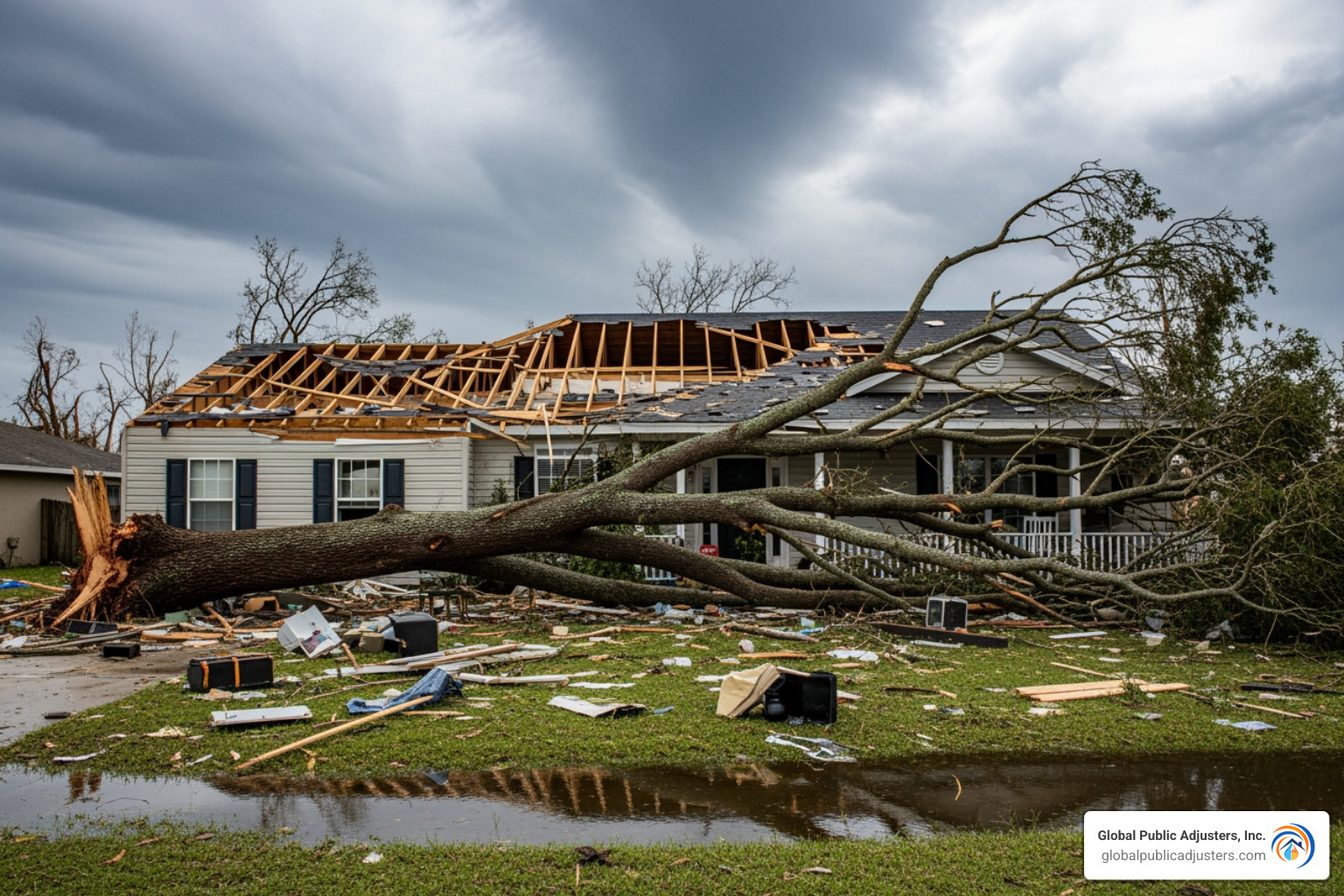
The aftermath of a hurricane is devastating. Recent storms like Helene and Milton caused an estimated $55 billion in insured losses. After the winds die down, navigating complex insurance claims can be overwhelming as you try to get your life back to normal.
This guide covers everything you need to know about hurricane claim adjusters, from their role in damage assessment to what you can do to ensure a fair settlement. Understanding this process is key to protecting your interests.

The Role of an Insurance Adjuster After a Hurricane
After a hurricane damages your home, you’ll meet the insurance adjuster. As the insurance company’s representative, their main job is to inspect the damage and determine how much the insurer should pay for repairs.

This process involves adamage assessment, where they document everything affected. Next is apolicy reviewto understand your coverage, leading to acoverage determinationon what the policy will pay for. Finally, they assist with thesettlement calculation. This information is compiled in a report for the insurance company’s decision on your claim.
What to Expect from the Insurance Company’s Hurricane Claim Adjuster
When the insurer’shurricane claim adjusterarrives, expect a thorough, detailed inspection to document all damage.
After aninitial contactto introduce themselves, they’ll conduct anon-site inspectionof your property, inside and out. They will bedocumenting damageby taking photos, notes, andmeasuring affected areas. They often use software likeXactimateto create a precise estimate of repair costs by calculating material and labor costs. All findings are compiled into a detaileddamage reportfor your claim.
How the Settlement Amount is Determined
The final settlement amount isn’t a random guess; it’s calculated based on your insurance policy and the damage.
One key factor is whether your policy paysActual Cash Value (ACV)orReplacement Cost Value (RCV).ACVis the value of the damaged itemafterdepreciation (e.g., the value of a 10-year-old roof).RCVpays the full cost to repair or replace the property with new materials, without deducting for age, up to your policy limits.
Then there aredeductibles. In Florida, hurricane deductibles are common. Instead of a set dollar amount, it’s often a percentage of your home’s insured value (e.g., a 2% deductible on a $300,000 home means you cover the first $6,000 of damage). Your overallpolicy limitsalso set the maximum amount your insurer will pay.
It’s also crucial to understand the difference between wind and flood damage. Standard homeowner policies typically cover wind damage, but damage from rising water (storm surge) requires a separate flood insurance policy. This distinction can be tricky. To help clarify, see our guide onunderstanding the difference between wind and flood damage.
Preparing for the Adjuster’s Visit
The time before thehurricane claim adjuster’svisit is critical for building a strong foundation for your claim by gathering evidence.

Once your property is safe to enter, your priority is preventing further damage. Board up windows, tarp the roof, and dry wet areas to prevent mold. Your policy typically covers these temporary repairs as they mitigate further loss.
Keep every receipt and take photos of everything you do. This documentation proves you took reasonable steps to protect your home, which your insurer expects.
Crucial Documentation to Gather
The quality of your documentation can make or break your claim. The adjuster relies on your evidence, so being organized is essential.
- Your insurance policy:Read it to understand your coverage limits, deductible (especially a percentage-based hurricane deductible), and exclusions.
- Before and after photos and videos:Pre-hurricane photos are invaluable. After the storm, document everything with wide shots and close-ups.
- Detailed inventory of damaged items:For each item, note the brand, model, purchase date, and replacement cost. This ensures nothing is overlooked.
- Receipts for temporary repairs:Your policy likely covers mitigation costs, but you need proof of what you spent.
- Contractor estimates:Written bids from licensed, reputable professionals show the true cost of repairs and provide a realistic benchmark.
For a deeper dive, check our guide withtips for filing a claim in Florida.
Steps to Take Before the Adjuster Arrives
With your documentation gathered, prepare your property and yourself for the visit.
- Inspect your property thoroughly.Check everything from the roof to the floors and make a detailed list of all damage. Even minor issues can indicate bigger, hidden problems.
- Don’t throw anything away.Unless it’s a health risk, keep all damaged items. They are physical evidence of your loss.
- Keep a communication log.Note the date, time, person, and topic of every conversation with your insurer or adjuster. This log is your proof if disputes arise.
- Understand mitigation coverage.Yourinsurance policy will coverreasonable expenses to prevent further damage. Save receipts and document these measures with photos.
By taking these steps, you show the adjuster you are organized, thorough, and serious about your claim, setting yourself up for a fair settlement.
Navigating Common Challenges in the Claims Process
Even with perfect preparation, the hurricane claims process can be challenging. We’ve seen it all with homeowners in Florida, Orlando, and Pensacola: claim delays, low settlement offers, and confusing denials.

Disagreements over the scope of damage are common. This can be due to interpretation (e.g., wind-driven rain vs. storm surge) or what thehurricane claim adjustersaw versus what you experience daily.
A frustrating issue is when an insurer’s pricing software doesn’t reflect current costs. After disasters, material and labor costs can skyrocket. For example, the lumber industrymisread demand during COVID, causing prices to soar. When you factor in supply chain issues and labor shortages, the adjuster’s software estimate can be woefully inadequate. The claims timeline can also feel endless, requiring both patience and persistence.
What to Do if You Disagree with the Assessment
Disagreeing with thehurricane claim adjuster’sassessment isn’t the end. As a policyholder, you have rights and options.
Start by reviewing the adjuster’s report and comparing it to your own documentation. Identify any discrepancies, such as missed rooms or undervalued damage. Provide your evidence to the insurer, being specific about what was missed. A detailed contractor’s estimate can often prompt a re-evaluation.
If a significant gap remains, request a second inspection, perhaps with a different adjuster or a supervisor. Your policy also likely includes an appraisal clause, where both you and the insurer hire appraisers to value the damage, with a neutral umpire making the final call if they disagree. Mediation is another option to resolve disputes without going to court.
Most importantly, know your rights under Florida law. If your claim is denied or the offer seems unfair, you can formally appeal. Understanding what yourinsurance policy will covergives you the confidence to push back.
Dealing with Underpaid Claims and External Factors
Underpaid claims are common, often due to outdated pricing in the adjuster’s software. Estimates may not reflect the current market where contractors and materials are scarce. Theskyrocketing pricesof materials can dramatically change rebuilding costs, and if the insurer’s numbers don’t reflect that, you’re left with a shortfall.
Another major concern is hidden damage, especially from water, which can be far more extensive than what’s visible. Proving this often requires specialists who can demonstrate the full extent of the problem.
If your settlement falls short, consider alternative aid.FEMAprovides disaster assistance grants, and the Small Business Administration offers low-interest loans to homeowners and renters. These resources can fill critical gaps.
Company Adjuster vs. Public Adjuster: Who is on Your Side?
When dealing with hurricane damage, knowing who works for you is critical. The distinction between adjuster types can mean thousands of dollars in your settlement.
Thehurricane claim adjustersent by your insurer works for the insurance company, not you. This is about understanding the system. Whether they are staff employees or independent contractors, they are paid by the insurer to assess damage and determine what the company owes based on your policy.
Here’s a straightforward comparison:
| Feature | Company/Independent Adjuster | Public Adjuster |
|---|---|---|
| Who They Work For | The insurance company | The policyholder |
| Who Pays Them | The insurance company (salary or per-claim fee) | The policyholder (a percentage of the final settlement) |
| Primary Goal | To assess damage and determine the insurance company’s liability | To advocate for the policyholder and maximize their settlement |
| Who They Represent | The insurance company’s financial interests | The policyholder’s financial interests |
The Insurance Company’s Adjuster
The insurer’s adjuster can be astaff adjuster(full-time employee) or anindependent adjuster(a contractor hired during claim surges). Both work for the insurance company. Their goal is to process claims efficiently and determine the insurer’s liability. While required to act in good faith, their assessment directly impacts the insurance company’s payout, creating apotential conflict of interest.
When to Hire a Public Hurricane Claim Adjuster
Public adjusters like us are different. We work exclusively for you, the policyholder. Paid a percentage of your final settlement, our motivation is to maximize the amount you’re entitled to under your policy.
Consider hiring a publichurricane claim adjusterif:
- You’re facing a complex or large-value claim.Major hurricane damage often involves structural issues and high repair costs. We ensure no detail is overlooked.
- You’re feeling overwhelmed.We handle the paperwork, phone calls, and negotiations so you can focus on your family and recovery.
- You disagree with the insurer’s offer.If the settlement is too low or denied, we provide an independent assessment and negotiate aggressively on your behalf.
- You lack the time or expertise.We have specialized knowledge of insurance policies and construction costs to steer the process for you.
In Florida, licensed public adjusters represent only you, with no ties to insurance companies. This allows us to accurately estimate damage, review coverage, and negotiate with only your best interests in mind. Learn more about thefour advantages of using a public adjuster. Having an expert on your side can transform your claims experience.
How to Ensure a Fair Hurricane Damage Settlement
After a hurricane, you deserve a fair settlement. This is your right as a policyholder, but achieving it requires a strategic approach, attention to detail, and an advocate in your corner.

A hurricane claim is a negotiation. The insurer’shurricane claim adjusterprotects the company’s bottom line, while you need an advocate committed to your interests. Effective advocacy starts with being informed, organized, and persistent.
Best Practices for a Smooth Claims Process
The path to a fair settlement requires discipline. Based on our experience, here’s what works:
- Stay organized.Keep a dedicated folder for all claim-related documents: your policy, photos, estimates, receipts, and conversation notes.
- Put everything in writing.After phone calls, send a follow-up email to confirm what was discussed. This creates an invaluable paper trail.
- Be persistent, but professional.Claims can be slow and frustrating. Check in regularly (weekly is reasonable) with specific questions, always maintaining a courteous tone to encourage cooperation.
- Document every expense.Keep receipts for temporary repairs, hotel stays, and other costs. Many are recoverable if you can prove them.
- Know your policy.Understanding your coverage, deductible, and responsibilities gives you confidence when talking to adjusters.
For more guidance, check out ourtips to speed up the claims process.
The Value of a Public Hurricane Claim Adjuster
Insurance companies have teams of professionals protecting their interests. Shouldn’t you? A publichurricane claim adjusteradvocates for you and can make a dramatic difference in your settlement.
- We speak the language.Insurance policies are complex. Our expertise helps us find coverage you might not know you have.
- We find what others miss.Our thorough inspections identify hidden issues like water intrusion and structural problems. We use current material and labor costs, not outdated software estimates.
- We’re skilled negotiators.We know how to counter lowball offers by building a strong case for what you deserve, backed by detailed documentation.
- We maximize your settlement.Our only goal is to get you every dollar you’re entitled to for your recovery. We handle all types of hurricane damage claims.
- We take the burden off you.Dealing with a claim is exhausting. We handle the paperwork, calls, and negotiations, so you can focus on your family and recovery.
At Global Public Adjusters, Inc., we have over 50 years of experience representing thousands of policyholders across Florida. We’ve made it our mission to help people like you get back on their feet. If you want tolearn how licensed public adjusters can help you navigate your claim, we’re here to fight for your recovery.
Conclusion
Recovering from a hurricane and handling an insurance claim is a major challenge. We’ve covered the role of thehurricane claim adjuster, the importance of preparation, and common problems you might face. Your best tools are good records, policy knowledge, and being ready for the adjuster’s visit.
But if your claim gets tricky, the settlement offer is too low, or you disagree with the insurer, you aren’t alone. The company’s adjuster works for them, protecting their bottom line. A public adjuster is your personal advocate, working only for you.
At Global Public Adjusters, Inc., we help people across Florida, from Orlando to Pensacola, take control of their recovery. Our experience ensures your claim is fully documented, correctly valued, and skillfully negotiated to get you the fair settlement you deserve.
Don’t leave your financial future to chance after a hurricane. Let us help you.Learn how licensed public adjusters can help you navigate your claim. We’ll provide the support you need to rebuild and move forward.