How to File an Insurance Claim in Florida: Jacksonville Homeowners and Auto Policy Holders Guide
Quick Answer
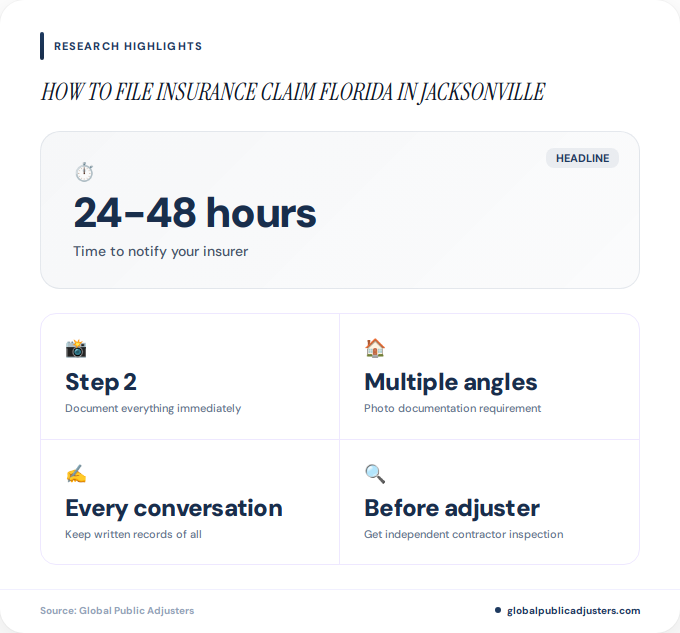
To file an insurance claim in Jacksonville, Florida, document all damage with photos and video immediately, notify your insurer within 24 to 48 hours with your policy number and loss details, and keep written records of every conversation, estimate, and receipt. For property claims, photograph damage before any repairs and consider getting an independent contractor inspection before the adjuster arrives, especially for roof damage.
Filing an insurance claim can feel overwhelming, especially when you’re dealing with property damage or injury in the aftermath of a storm, accident, or disaster. In Jacksonville, Florida, homeowners and drivers face unique challenges due to the region’s weather patterns, coastal location, and specific state insurance regulations. Understanding exactlyhow to file an insurance claim in Florida, particularly in Jacksonville, can mean the difference between a smooth settlement and months of frustration.
The most critical fact to remember is this:documentation begins before you even contact your insurer. In Jacksonville, where hurricane damage, roof deterioration from salt air, and heavy storm seasons are common, the quality and completeness of your initial evidence often determines the entire trajectory of your claim.
Why Jacksonville Claims Require Special Attention
Jacksonville’s location on Florida’s northeast coast creates specific insurance claim scenarios that differ from inland cities. The area experiences frequent tropical storms, high humidity that accelerates roof degradation, and heavy rainfall that can lead to water intrusion and mold.
According toFlorida’s Department of Financial Services consumer assistance portal, property damage claims in coastal regions like Jacksonville often involve complex assessments of wind versus water damage, which impacts coverage. Understanding whether your damage falls under your homeowners policy or requires separate flood insurance is essential before filing.
Jacksonville neighborhoods from Riverside to Atlantic Beach face distinct risks: older homes in historic districts may have aging roofs more susceptible to wind damage, while beachfront properties in Jacksonville Beach and Neptune Beach deal with salt air corrosion and heightened storm exposure.
What Is the Step-by-Step Process for Filing an Insurance Claim in Florida?
The claim filing process in Florida follows a structured sequence, and missing any step can delay your settlement or reduce your payout. Here’s the complete process forhow to file an insurance claim in Florida, whether you’re in Jacksonville or elsewhere in the state:
Step 1: Ensure Safety First
Never enter a damaged structure if there’s any risk of collapse, electrical hazards, or structural instability. TheFlorida Office of Insurance Regulation consumer guidanceemphasizes that personal safety takes precedence over documentation. In Jacksonville, post-storm conditions can include downed power lines, weakened trees, and flooding, all requiring professional assessment before entry.
Step 2: Document Everything Immediately
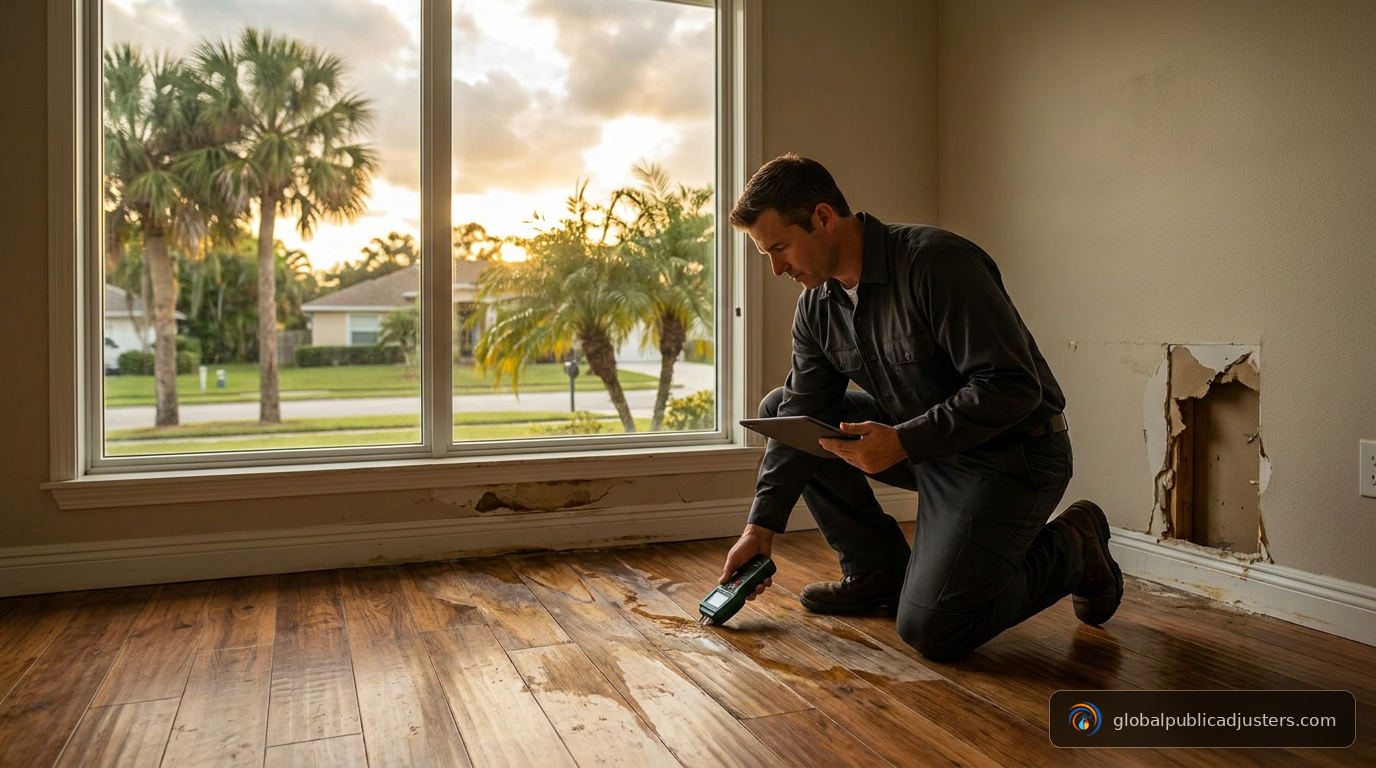
Take comprehensive photos and video of all visible damage from multiple angles. This includes exterior walls, roof damage visible from the ground, interior water stains, broken windows, damaged belongings, and any debris. Time-stamp your documentation if possible.
Create a written inventory of damaged or destroyed items, including approximate purchase dates and values. This initial documentation establishes the baseline condition of your property before any emergency repairs or cleanup.
Step 3: Review Your Insurance Policy
Before contacting your insurer, locate your policy and review the declarations page, deductible amount, coverage limits, and exclusions. Pay special attention to whether you havereplacement cost value (RCV)oractual cash value (ACV)coverage, as this significantly impacts your settlement amount.
For roof claims in Jacksonville, check if your policy includes a hurricane deductible, which may be a percentage of your dwelling coverage rather than a flat dollar amount, typically ranging from 2% to 10% of the insured value.
Step 4: Notify Your Insurer Promptly
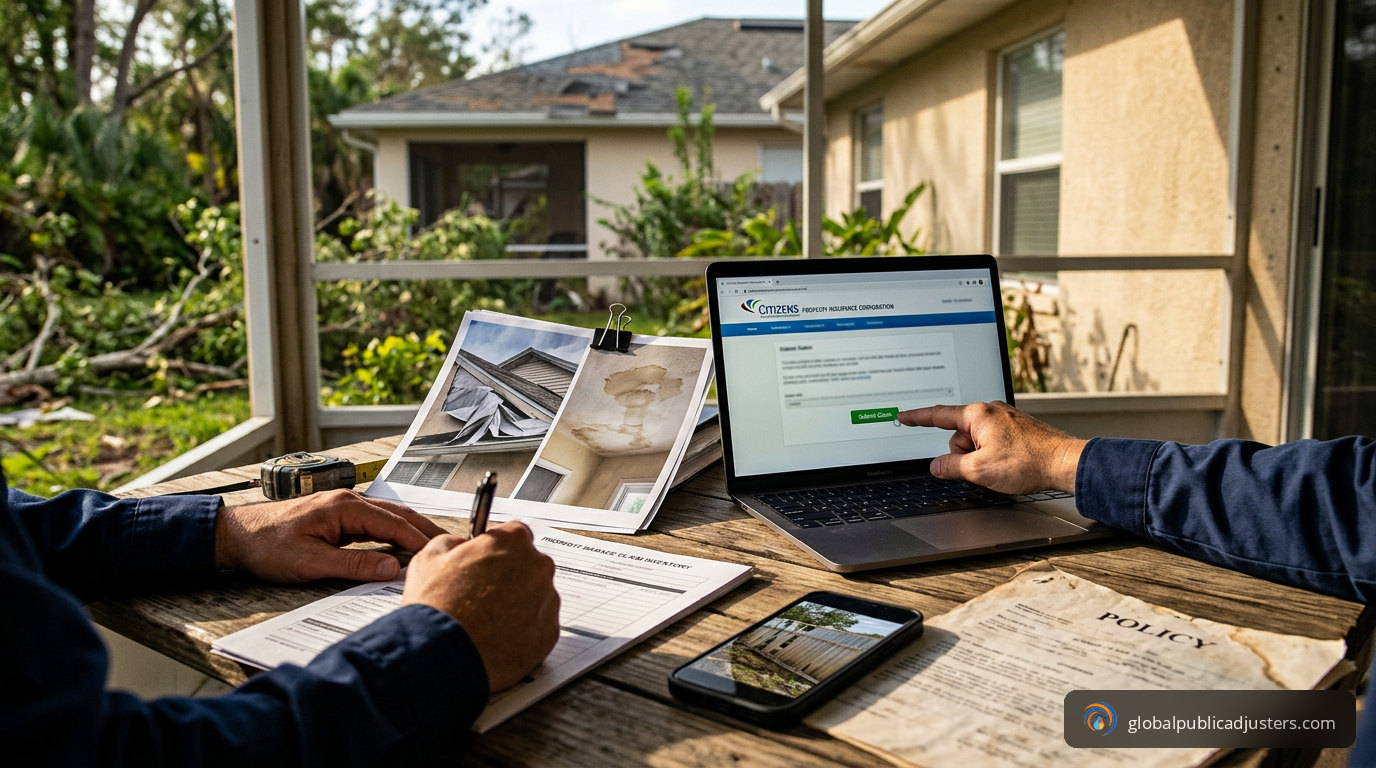
Contact your insurance company or agent within 24 to 48 hours of discovering the damage. Have your policy number, the date and time of loss, location of the property, and a brief description of the damage ready. Many insurers offer 24/7 claim reporting through phone hotlines, mobile apps, or online portals.
Request a claim number immediately and record the name and contact information of every representative you speak with. This claim number will be your reference for all future communications.
Step 5: Make Temporary Repairs to Prevent Further Damage
Your policy requires you to mitigate further loss. This means tarping a damaged roof, boarding broken windows, or shutting off water to prevent additional flooding. Document these temporary repairs with photos and save all receipts, as they’re typically reimbursable under your policy.
However, do not make permanent repairs or discard damaged items before your adjuster inspects the property, as this can complicate your claim.
Step 6: Prepare for the Adjuster’s Inspection
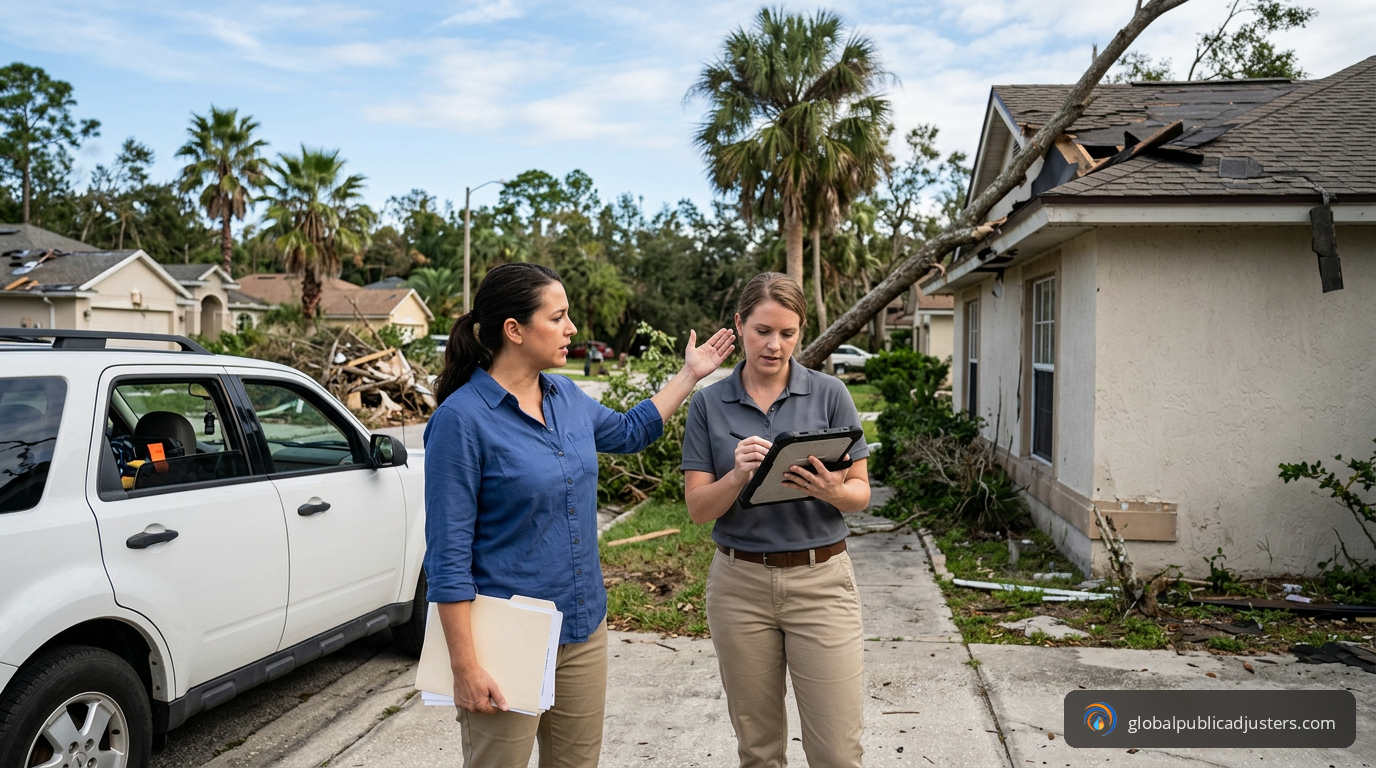
The insurance company will assign an adjuster to inspect your damage and estimate repair costs. Before this visit, consider getting an independent contractor inspection, especially for roof claims, so you have documentation from a licensed professional who specializes in construction rather than claim denial.
Be present during the adjuster’s inspection, point out all damage, and take notes on what they document. If they miss anything, bring it to their attention immediately and ensure it’s noted in the inspection report.
Step 7: Track Your Claim Diligently
Keep a detailed log of every phone call, email, letter, and document related to your claim. Note dates, times, names of representatives, and summaries of what was discussed. Create a dedicated folder, physical or digital, containing copies of your policy, photos, estimates, receipts, and correspondence.
Florida law requires insurers to acknowledge claims within 14 days and investigate within specified timeframes, so tracking helps you identify delays that may constitute bad faith.
How Do You File a Property Insurance Claim in Jacksonville?
Property insurance claims in Jacksonville most commonly involve storm damage, roof deterioration, water intrusion, and occasionally fire or vandalism. The process for these claims follows the general framework above but requires specific attention to local factors.
Jacksonville’s subtropical climate means that even minor roof damage can rapidly escalate due to heavy afternoon thunderstorms during summer months. A small leak discovered after a storm can quickly lead to interior water damage, ceiling staining, and mold growth if not addressed immediately.
| Damage Type | Typical Coverage | Jacksonville Considerations |
|---|---|---|
| Wind/Hurricane Damage | Standard homeowners policy | Hurricane deductible may apply; document wind direction |
| Flood Damage | Separate flood policy required | Critical for properties near St. Johns River and beaches |
| Roof Deterioration | Covered if sudden/accidental | Age of roof affects payout; salt air accelerates aging |
When filing property claims in Jacksonville, pay attention to your policy’s wind versus water damage provisions. Insurers often dispute whether interior damage resulted from wind-driven rain, covered under standard policies, or rising water, which requires separate flood coverage.
Working with alicensed public adjuster in Jacksonvillecan help navigate these technical distinctions and ensure you receive the maximum settlement your policy allows.
How Do You File an Auto Insurance Claim After a Jacksonville Accident?
Auto insurance claims in Jacksonville follow a different protocol than property claims, particularly because Florida operates under a no-fault insurance system for minor injuries. Understanding how to navigate theJacksonville car accident claim processrequires knowledge of both state law and insurer requirements.
Immediate Steps After a Jacksonville Auto Accident
First, call 911 if anyone is injured or if there’s significant property damage. Jacksonville Sheriff’s Office or Florida Highway Patrol will respond and create an official crash report, which becomes critical documentation for your claim.
Exchange insurance information with all involved parties, photograph vehicle damage and the accident scene from multiple angles, and gather contact information from witnesses. If possible, note road conditions, weather, traffic signals, and any contributing factors.
Florida’s 14-Day Rule for Medical Treatment
Florida law requires you to seek medical treatment within14 daysof an accident to qualify for Personal Injury Protection (PIP) benefits. Even if you feel fine immediately after the accident, injuries like whiplash, concussions, and soft tissue damage may not manifest symptoms for hours or days.
Delaying medical care beyond this window can result in denial of your PIP claim, leaving you responsible for medical expenses that would otherwise be covered. Jacksonville has numerous urgent care facilities and emergency rooms where you can be evaluated and establish a medical record within this critical timeframe.
Reporting the Claim to Your Insurer
Contact your auto insurance company as soon as possible after the accident, ideally within 24 hours. Provide your policy number, crash report number if available, date and time of the accident, location, and a description of what happened.
Be factual and concise. Avoid speculation about fault or making statements like “I’m sorry” or “It was my fault,” as these can be used to deny or reduce your claim. Stick to observable facts: what you saw, heard, and experienced.
Keep records of all medical treatment, vehicle repair estimates, rental car expenses, and any lost wages due to injury. These form the basis of your claim settlement.
What Makes Roof Insurance Claims Different in Jacksonville?
Roof claims are the most common and contentious property insurance claims in Jacksonville due to the area’s exposure to tropical systems, aging housing stock, and insurance company scrutiny. Understanding how to document and file a roof claim properly is essential for homeowners throughout Duval County.
Jacksonville’s coastal environment creates unique challenges for roofs. Salt air accelerates shingle deterioration and metal corrosion, while intense summer sun breaks down roofing materials faster than in northern climates. Many homes in neighborhoods like Ortega, Mandarin, and San Marco have roofs approaching or exceeding their rated lifespan.
Pre-Claim Roof Assessment
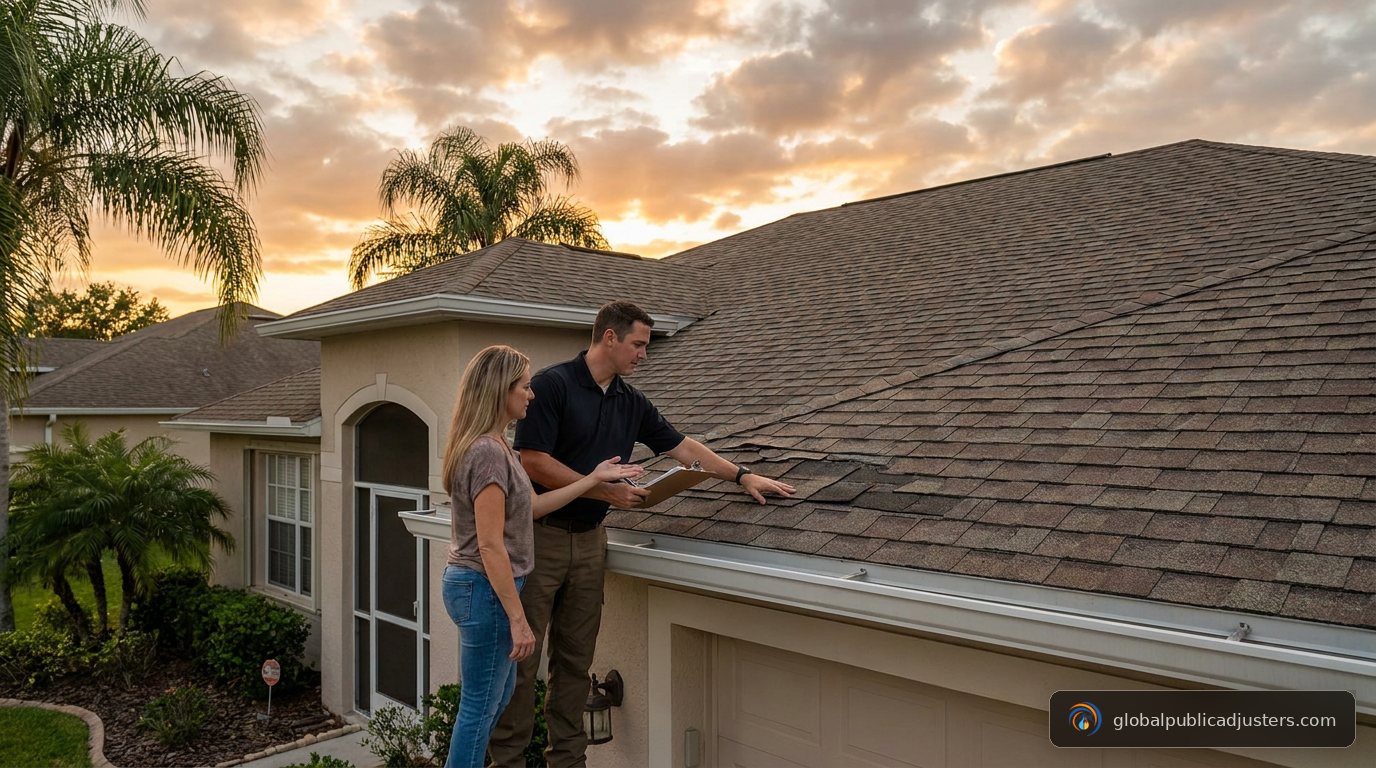
Before filing a roof claim, consider having a licensed roofing contractor conduct an inspection separate from your insurance adjuster. This independent assessment provides professional documentation of damage and can identify issues the adjuster might overlook or minimize.
A contractor can distinguish between storm damage and normal wear, photograph evidence from the roof surface rather than ground level, and provide a detailed estimate based on current material and labor costs in the Jacksonville market.
Understanding Replacement Cost vs. Actual Cash Value
The biggest factor in your roof claim payout is whether your policy provides replacement cost value (RCV) or actual cash value (ACV) coverage. RCV pays to replace your roof with new materials of similar quality, while ACV deducts depreciation based on the roof’s age and condition.
For a 15-year-old roof with a 20-year rated lifespan, ACV coverage might only provide 25% of replacement cost, leaving you responsible for the remaining 75% plus your deductible. This can create situations where the out-of-pocket cost makes replacement financially unfeasible.
Documenting Roof Damage Properly
Photograph your roof from ground level showing any visible damage like missing shingles, lifted edges, or debris impact. If safely accessible, document damage from the roof surface, including cracked, curled, or missing shingles, damaged flashing around vents and chimneys, and any punctures or tears in the underlayment.
Photograph the attic interior showing any water stains, daylight visible through the decking, or moisture on rafters. Interior ceiling stains in upper floors should also be documented, as they indicate water intrusion from roof failure.
Date all photographs and create a written description of when you first noticed damage and what weather event may have caused it. Jacksonville’s frequent afternoon thunderstorms can make pinpointing a specific damage date challenging, but correlating with National Weather Service records of significant wind or hail events strengthens your claim.
What Documentation Do You Need to File a Successful Claim?
Thorough documentation is the foundation of every successful insurance claim, whether for property damage or auto accidents. Insurance companies are more likely to pay claims quickly and fully when presented with organized, comprehensive evidence.
Essential Property Claim Documents
- Insurance policy declarations pageshowing coverage types, limits, and deductibles
- Dated photographs and videoof all damage from multiple angles and perspectives
- Written inventoryof damaged or destroyed items with descriptions, approximate purchase dates, and values
- Purchase receipts, appraisals, or proof of ownershipfor high-value items
- Contractor estimatesfor repairs from licensed, insured professionals
- Receipts for temporary repairsand emergency mitigation work
- Records of additional living expensesif you must temporarily relocate during repairs
- Weather reportsdocumenting the date and severity of storms causing damage
Essential Auto Claim Documents
- Police or crash reportwith case number and investigating officer information
- Insurance informationfor all involved parties
- Photographs of vehicle damageand accident scene
- Medical records and billsfrom all treatments related to injuries
- Vehicle repair estimatesfrom body shops
- Rental car receiptsif your policy includes rental reimbursement
- Lost wage documentationif injuries prevented you from working
- Witness statements and contact information
Consider creating both digital and physical copies of all documentation. Store digital files in cloud storage and keep physical copies in a waterproof container or safe deposit box, especially important in Jacksonville’s flood-prone areas.
How Long Does the Insurance Claims Process Take in Florida?
Florida law establishes specific timeframes that insurers must follow when handling claims, though the actual duration from filing to settlement varies significantly based on claim complexity, damage extent, and whether disputes arise.
Under Florida Statutes, insurers must acknowledge receipt of your claim within14 days. They have90 daysto investigate and either pay or deny the claim, with specific provisions for when additional time is needed for complex investigations.
For straightforward claims with clear liability and minimal disputes, such as a broken window from a fallen tree branch or minor auto collision, settlements may occur within 30 to 60 days. More complex claims involving significant structural damage, roof replacement, or disputed coverage can take 3 to 6 months or longer.
Examples:Minor wind damage, broken windows, small auto accidents
Factors:Clear liability, minimal disputes, straightforward repairs
Examples:Roof replacement, water damage with drying required, multi-vehicle accidents
Factors:Requires multiple estimates, some coverage questions, repair verification
Examples:Hurricane damage, disputed liability, mold remediation, major structural repairs
Factors:Coverage disputes, public adjuster involvement, potential litigation
Examples:Denied claims, appraisal process, litigation
Factors:Bad faith allegations, attorney involvement, court proceedings
The timeline can extend significantly if your claim is denied and you need to pursue appraisal, mediation, or litigation. Working with aqualified public adjusterearly in the process can often prevent disputes that lead to these extended timelines.
What Are the Most Common Mistakes When Filing Claims?
Many Jacksonville homeowners and auto policyholders inadvertently damage their own claims through common errors that could easily be avoided. Understanding these pitfalls helps you navigate the process more effectively.
Filing Before Understanding Coverage
Many people file claims without first reviewing their policy to confirm the damage is covered. This can result in a denial on your record and potentially higher premiums for a claim that was never going to be paid. Always review your policy declarations and exclusions before contacting your insurer.
Inadequate Documentation
Failing to photograph damage comprehensively or throwing away damaged items before the adjuster inspects them weakens your claim. Insurance companies will lowball settlements when faced with incomplete evidence. Document everything thoroughly before any cleanup or repairs.
Accepting the First Offer Without Review
Many insurers issue initial settlement offers that are significantly below the actual cost of repairs. These lowball offers hope you’ll accept without question. Always obtain independent repair estimates and compare them to the insurer’s assessment before accepting any settlement.
Making Permanent Repairs Too Soon
While you must make temporary repairs to prevent further damage, completing permanent repairs before the adjuster inspects can result in claim denial or reduced payment. The insurer needs to verify the damage before paying for its repair.
Missing Florida’s 14-Day Medical Treatment Window
For auto accidents, failing to seek medical treatment within 14 days eliminates your PIP coverage eligibility. Even if you feel fine initially, get evaluated within this window to preserve your benefits.
Poor Communication Records
Not documenting phone calls, saving emails, or tracking correspondence makes it difficult to prove what was said or promised during the claims process. Always maintain detailed records of every interaction with your insurer.
Filing Small Claims That Cost More in Premium Increases
Filing a claim for minor damage that barely exceeds your deductible can result in premium increases that cost far more over time than the settlement received. Calculate whether filing is financially beneficial before reporting small losses.
When Should You Consider Hiring a Public Adjuster?
Public adjusters are licensed professionals who represent policyholders, not insurance companies, in the claims process. They assess damage, document losses, negotiate with insurers, and work to maximize your settlement. Knowing when to engage a public adjuster can significantly impact your claim outcome.
Consider hiring a public adjuster when your claim involves significant property damage, typically exceeding $10,000 to $25,000, where the expertise justifies the fee. Public adjusters typically charge between 5% and 20% of the final settlement, with the percentage decreasing as claim size increases.
For more details on how this works in Florida, review information aboutpublic adjuster costs and fee structures in Florida.
Scenarios Where Public Adjusters Provide Maximum Value
- Complex damage requiring specialized assessment, such as hurricane damage with both wind and water components
- Disputed claimswhere the insurer questions coverage or minimizes damage extent
- Large commercial property claimsinvolving business interruption and inventory losses
- Claims requiring detailed documentationof high-value contents, artwork, or specialized equipment
- Situations where you lack time or expertiseto manage the detailed documentation and negotiation process
- Roof claims involving age depreciation disputesor RCV versus ACV coverage questions
Public adjusters handle the entire claims process on your behalf, from initial documentation through final settlement negotiation. They understand insurance policy language, coverage provisions, and the tactics insurers use to minimize payouts. For Jacksonville residents dealing withcomprehensive property damage, this expertise often results in settlements 40% to 70% higher than policyholders achieve on their own.
Licensing Requirements for Florida Public Adjusters
Florida requires all public adjusters to hold an active license issued by the Department of Financial Services. Verify licensing status before hiring anyone to represent you in a claim. Licensed adjusters must complete continuing education, maintain errors and omissions insurance, and adhere to professional standards.
Learn more aboutFlorida public adjuster licensing requirementsto ensure you work with qualified professionals.
How Do You Escalate a Denied or Delayed Claim?
When your insurance company denies your claim or delays payment beyond reasonable timeframes, Florida law provides several escalation options to protect policyholders.
Internal Insurance Company Appeals
Most insurers have internal appeals processes that allow you to challenge a denial. Request a written explanation of the denial, identifying the specific policy provisions cited. Gather additional documentation or expert opinions that contradict the denial reasons, and submit a formal written appeal with supporting evidence.
Florida Department of Financial Services Complaint
If internal appeals fail or your insurer is unresponsive, file a complaint with theFlorida Department of Financial Services Division of Consumer Services. This state agency investigates consumer complaints against insurers and can facilitate resolution.
Complaints can be filed online through the department’s consumer assistance portal. Provide your policy information, detailed description of the issue, documentation of your attempts to resolve it directly with the insurer, and copies of relevant correspondence.
Appraisal Process
Most Florida insurance policies include an appraisal clause that provides a mechanism to resolve disputes over the amount of loss without litigation. Each party selects an appraiser, those appraisers select an umpire, and the three-person panel evaluates the damage and determines the appropriate settlement.
Appraisal is typically faster and less expensive than litigation, though you may need to pay for your appraiser’s services, usually ranging from $2,500 to $7,500 depending on claim complexity.
Bad Faith Insurance Claims
Florida law prohibits insurers from acting in bad faith by unreasonably denying or delaying valid claims. If your insurer engages in bad faith tactics, you may have grounds for additional legal action beyond the policy limits. Common bad faith behaviors include:
- Failing to conduct a reasonable investigation of your claim
- Denying coverage without a reasonable basis
- Misrepresenting policy provisions to avoid payment
- Failing to respond to communications or meet statutory deadlines
- Refusing to pay a claim without proper investigation
Bad faith claims often require attorney representation and can result in the insurer paying not only the original claim amount but also consequential damages, attorney fees, and in some cases, punitive damages. Jacksonville residents facing potential bad faith situations should consult with attorneys experienced in Florida insurance law.
Timeline Considerations for Escalation
Be aware of Florida’s statute of limitations for insurance disputes, typicallyfive yearsfrom the date of loss for property claims andfour yearsfor breach of contract. However, certain policy provisions may establish shorter timeframes for taking legal action, so review your policy and consult an attorney if approaching any deadlines.
Understandingwhen it’s too late to hire a public adjuster in Floridais important for protecting your rights and maximizing your settlement potential.
Key Takeaways
- Document damage immediately and comprehensivelywith photos, video, and written descriptions before any cleanup or repairs
- Notify your insurer within 24 to 48 hoursand keep detailed records of every communication throughout the claim process
- Understand your policy coverage, including whether you have replacement cost or actual cash value coverage, your deductible, and any special provisions like hurricane deductibles
- Make temporary repairs to prevent further damagebut do not complete permanent repairs before the adjuster inspects
- For Jacksonville auto accidents, seek medical treatment within 14 daysto qualify for PIP benefits under Florida’s no-fault law
- Consider hiring a licensed public adjusterfor complex or high-value claims, particularly those involving roof damage or disputed coverage
- Know your escalation options, including internal appeals, state complaints, appraisal, and bad faith claims if your insurer acts unreasonably
People Also Ask
How long do I have to file an insurance claim in Florida?
While Florida’s statute of limitations for insurance claims is typically five years for property and four years for contracts, your policy likely requires much faster notification, usually within days or weeks of discovering damage. Report claims as soon as possible to avoid potential denial for late reporting.
Will my insurance rates go up if I file a claim in Jacksonville?
Filing a claim can result in premium increases, particularly for at-fault auto accidents or multiple property claims. The increase depends on your claims history, the type and amount of the claim, and your insurer’s rating structure. Consider whether small claims are worth filing given potential long-term premium impacts.
What should I do if my Jacksonville insurance claim is denied?
Request a written explanation of the denial with specific policy provisions cited, then pursue internal appeals with additional documentation. If that fails, file a complaint with the Florida Department of Financial Services or consider engaging a public adjuster or attorney to evaluate whether the denial was justified and what options exist for overturning it.
Do I need a police report for an auto insurance claim in Florida?
While not always legally required, a police report provides official documentation of the accident, which strengthens your claim significantly. Florida law requires reporting accidents involving injury, death, or property damage exceeding $500, and insurers typically require reports for claims involving significant damage or disputes about fault.
How much does a public adjuster cost in Jacksonville?
Public adjusters in Jacksonville typically charge 5% to 20% of the final settlement amount, with percentages varying based on claim size, complexity, and timing. Larger claims generally command lower percentage fees, while emergency claims filed immediately after hurricanes may involve higher rates due to increased demand and urgency.
Can I file a Florida insurance claim for roof damage from normal wear and tear?
No, insurance policies exclude damage from normal wear, deterioration, and aging. Coverage applies only to sudden, accidental damage from covered perils like storms, fire, or falling objects. However, if a storm causes damage to an aging roof, the storm damage portion may be covered even if the roof also shows wear-related deterioration.
Frequently Asked Questions
What is the first thing I should do after discovering property damage in Jacksonville?+
Ensure the property is safe to enter, then immediately document all damage with dated photographs and video from multiple angles before moving or repairing anything. This initial documentation establishes the baseline damage for your insurance claim and prevents disputes about damage extent.
How quickly must I notify my insurance company after damage occurs in Florida?+
While Florida law provides years to file suit, most policies require prompt notification, typically within days or weeks of discovering damage. Contact your insurer within 24 to 48 hours to avoid potential denial for late reporting and to start the claims process when documentation is fresh.
Should I get my own repair estimates before the insurance adjuster visits?+
Yes, obtaining independent contractor estimates before the adjuster’s inspection provides professional documentation of damage and repair costs from construction experts rather than insurance representatives motivated to minimize payouts. This independent assessment strengthens your negotiating position and helps identify any damage the adjuster overlooks.
What is Florida’s 14-day rule for auto insurance claims?+
Florida law requires you to seek medical treatment within 14 days of an auto accident to qualify for Personal Injury Protection benefits. Missing this deadline eliminates your PIP coverage eligibility, leaving you responsible for medical expenses that would otherwise be covered by your policy.
When is hiring a public adjuster worth the cost in Jacksonville?+
Public adjusters provide maximum value for complex claims exceeding $10,000 to $25,000, disputed claims where coverage is questioned, roof claims involving depreciation disputes, and situations where you lack the time or expertise to document and negotiate effectively. Their expertise often results in settlements 40% to 70% higher than self-represented claims.
What documentation should I keep during the insurance claims process?+
Keep copies of your insurance policy, all photographs and videos of damage, written inventories of damaged items, contractor estimates, receipts for temporary repairs and living expenses, medical records and bills for injury claims, and detailed logs of every phone call and email with your insurer including dates, times, representatives’ names, and conversation summaries.
What options do I have if my insurance claim is denied in Jacksonville?+
Related:How to File a Property Damage Claim in Orlando: Complete 2026 Step-by-Step Guide
Related:How to Appeal an Insurance Claim Denial in Orlando: Your Complete 2026 Guide
Related:How Much Does a Public Adjuster Cost in Jacksonville? Complete 2026 Fee Guide
First pursue internal appeals with your insurer by providing additional documentation that contradicts the denial. If that fails, file a complaint with the Florida Department of Financial Services, invoke your policy’s appraisal clause to get an independent damage assessment, or consult an attorney about potential bad faith claims if your insurer acted unreasonably in denying valid coverage.