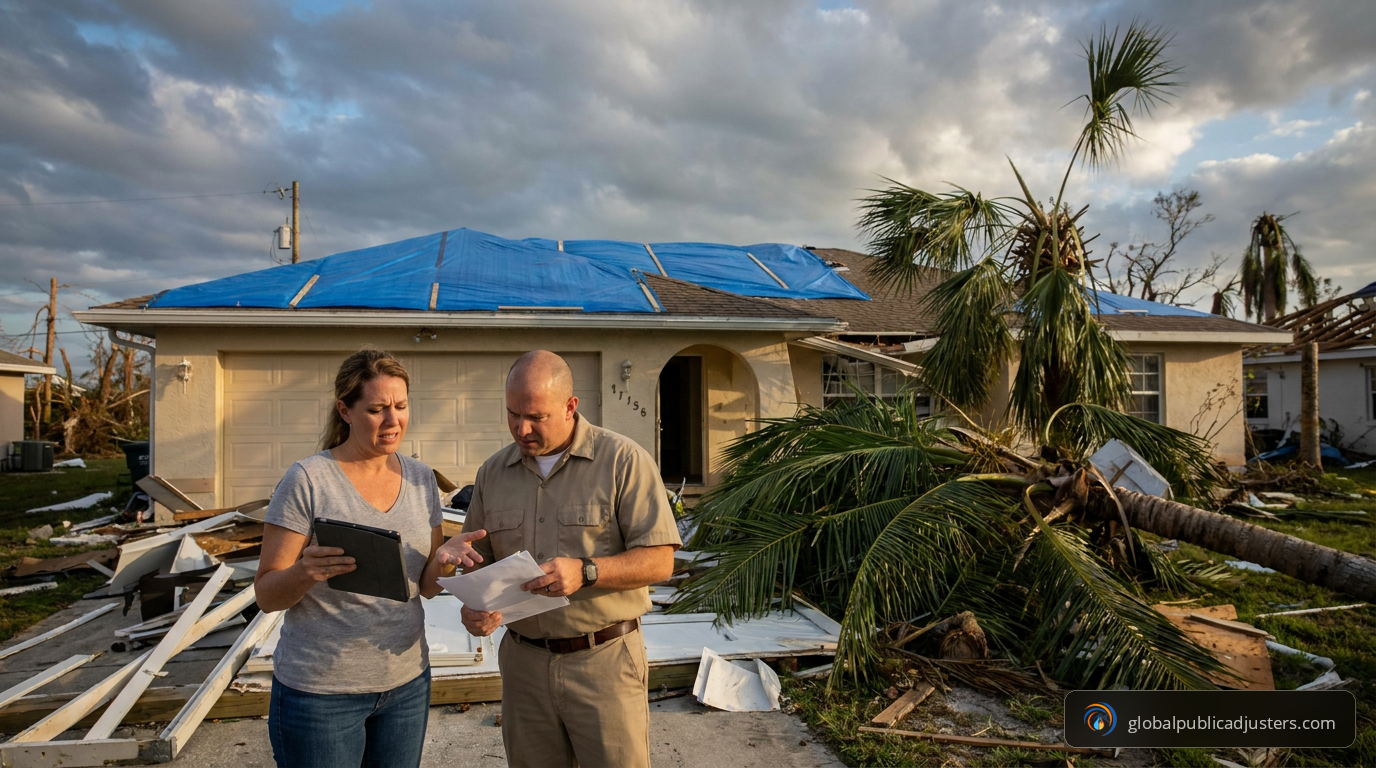
How to File a Hurricane Claim in Florida: A Tampa Homeowner’s Complete Guide
Quick Answer
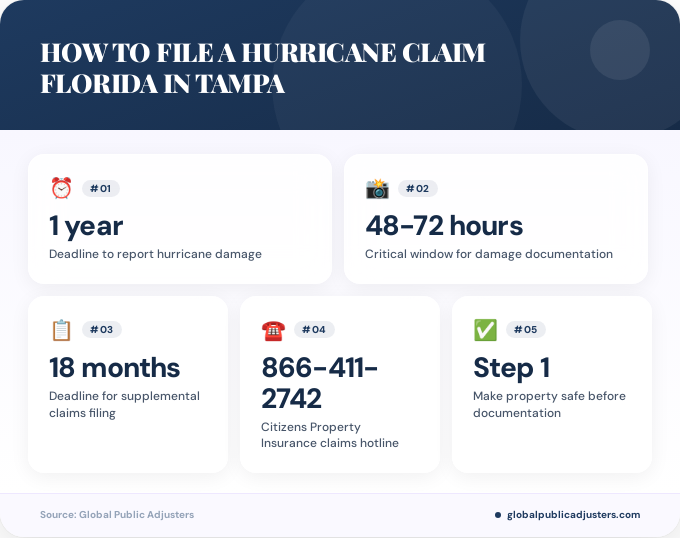
To file a hurricane claim in Florida from Tampa, document all damage with photos before cleanup, contact your insurer’s claims hotline directly to open a First Notice of Loss, and keep every receipt for emergency repairs. Florida law requires you to report windstorm or hurricane damage within1 yearof the date of loss, and supplemental claims must be filed within18 months. Acting fast and documenting thoroughly gives you the strongest position if your insurer underpays or denies your claim.
Nearly1 yearis all Florida law gives you to report a hurricane or windstorm claim, yet many Tampa homeowners lose thousands of dollars simply because they wait too long to document damage or don’t know where to start. If you’re wonderinghow to file a hurricane claim in Florida in Tampa, the process starts the moment it’s safe to return home, and every hour of delay can weaken your position with the insurance company. This guide breaks down exactly what to do, in what order, and how to protect your payout from Tampa Bay to South Tampa, Westshore, and beyond.
Why Tampa Homeowners Face Unique Hurricane Claim Challenges
Tampa’s geography, low-lying neighborhoods near the bay, older housing stock in areas like Seminole Heights and Hyde Park, and dense coastal development, creates a perfect storm for insurance disputes after a hurricane. Storm surge, wind-driven rain, and prolonged power outages often combine to cause layered damage that’s hard to separate into “wind” versus “flood” categories, which matters enormously since most homeowner policies exclude flood damage entirely.
The City of Tampa’s own emergency management guidance urges residents to contact their insurance agent or companyas soon as it is safe to return homeand to preserve evidence like water lines, receipts, and appliance serial numbers before starting any cleanup, according tothe City of Tampa’s hurricane information page. This local guidance matters because insurers frequently scrutinize claims from flood-prone ZIP codes more closely, making airtight documentation even more critical for Tampa residents.
What Should You Do First After Hurricane Damage in Tampa?
Your first 48 to 72 hours after a storm passes largely determine how smoothly your claim proceeds. Safety and documentation come before any repair work.
- Make the property safe:Tarp the roof, board up broken windows, shut off water if there’s a leak, and move undamaged belongings out of harm’s way.
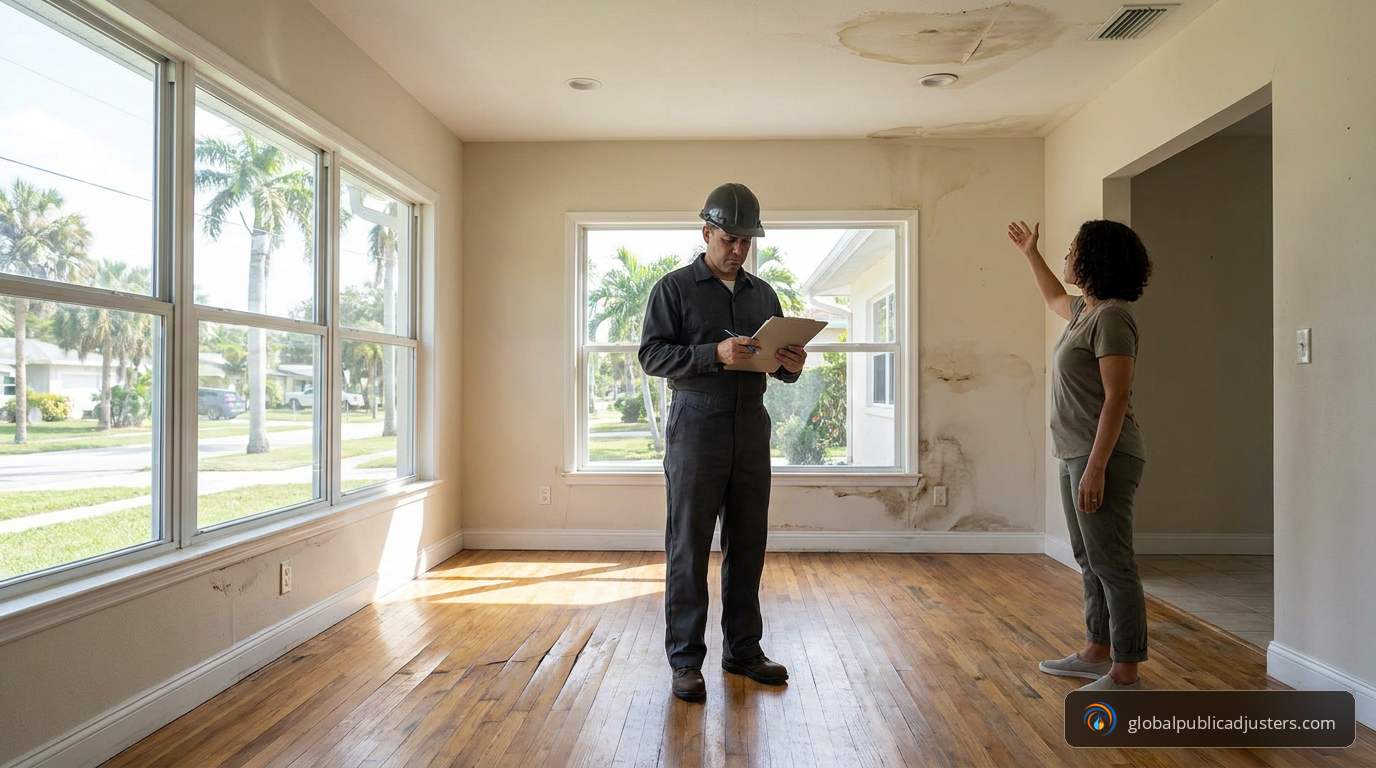
- Photograph everything before cleanup:Wide shots of each room, close-ups of damage, exterior photos, attic images, and visible waterlines. Timestamped photos and videos carry significant weight in claim disputes.
- Save every receipt:Tarps, plywood, generators, drying equipment, and hotel stays during displacement are commonly reimbursable as emergency mitigation costs.
- Open your claim directly with the insurer:Use the hotline or online portal listed on your declarations page and request a written claim number.
- Log every interaction:Track calls, emails, adjuster visit dates, and any payment or denial letters.
Citizens Property Insurance, which covers many Florida homeowners, advises reporting damageas soon as you become aware of or suspect itthrough its24/7 hurricane claims hotline and online portal, reachable at 866-411-2742. Don’t wait for a formal adjuster visit to start your own documentation, since insurer inspections can be scheduled weeks out during major catastrophes.
What Are Florida’s Hurricane Claim Deadlines?
Understanding Florida’s statutory deadlines is non-negotiable. Missing them can bar you from recovering anything at all, regardless of how legitimate your damage is.
| Deadline Type | Timeframe |
|---|---|
| Initial hurricane/windstorm claim notice | 1 yearfrom date of loss |
| Supplemental or reopened claim | 18 monthsfrom date of loss |
| Citizens claims hotline availability | 24/7 |
| Typical insurer acknowledgment (industry guidance) | 7 to 14 days |
| Payment or denial decision (industry guidance) | 30 to 90 days |
These figures align with statutory guidance detailed by theMerlin Law Group’s breakdown of Florida hurricane claim deadlines. Some online resources cite shorter insurer response windows, but these vary by claim stage and specific policy language, so the safest strategy is always to submit a complete claim package immediately and retain proof of submission.
The Florida Office of Insurance Regulation also tracks statewide claim data through itsCatastrophe Reporting tool, which gives homeowners and regulators visibility into how insurers are handling claims after major storms.
How Does the Tampa Hurricane Claim Process Work Step by Step?
Filing a claim isn’t a single action, it’s a sequence. Follow these steps in order for the strongest outcome.
- Check your declarations page.Confirm your hurricane deductible (often a percentage of dwelling value rather than a flat dollar amount), dwelling and personal property limits, and whether your roof is covered at replacement cost or actual cash value.
- File the First Notice of Loss with your insurer directly, not just your agent, and save written confirmation of the date and time submitted.
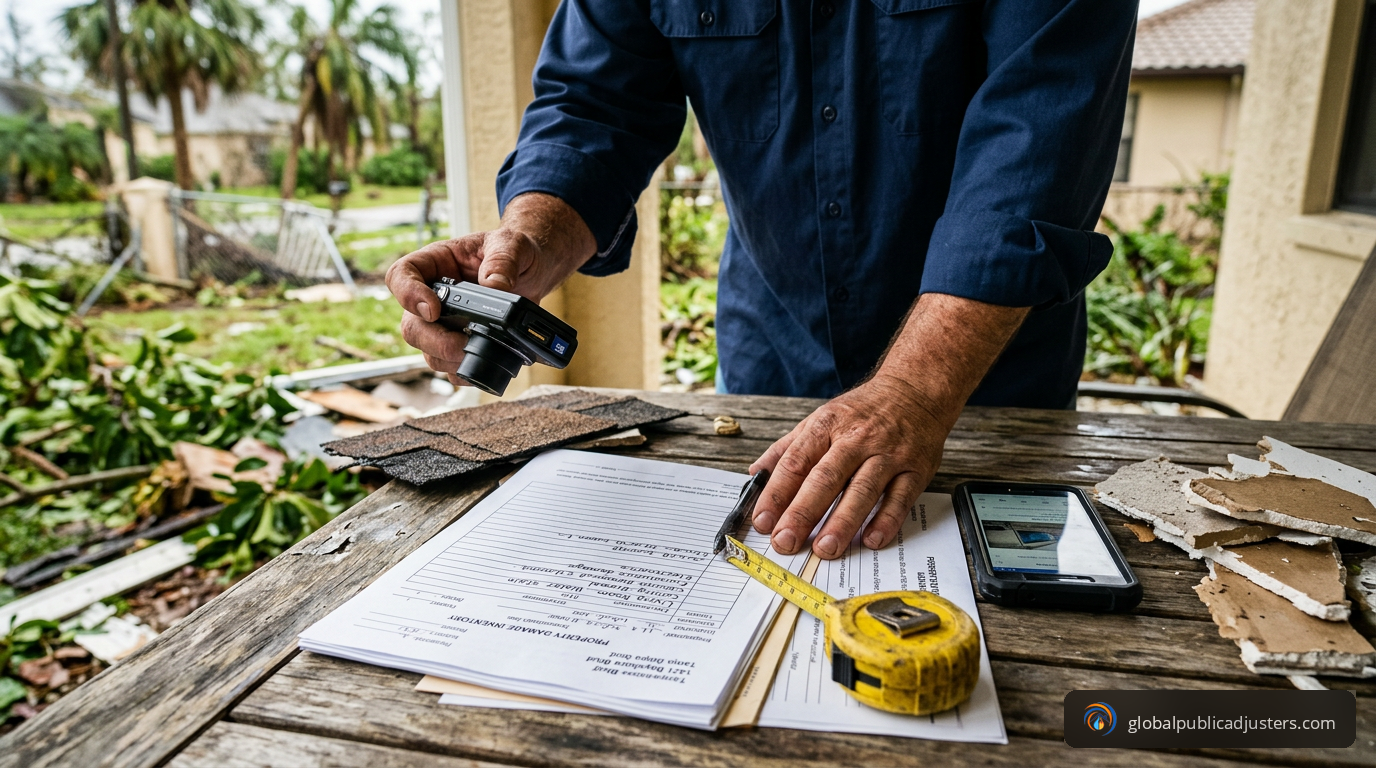
- Prepare a room-by-room inventoryof damaged contents, structural elements, and outdoor property, including estimated replacement values.
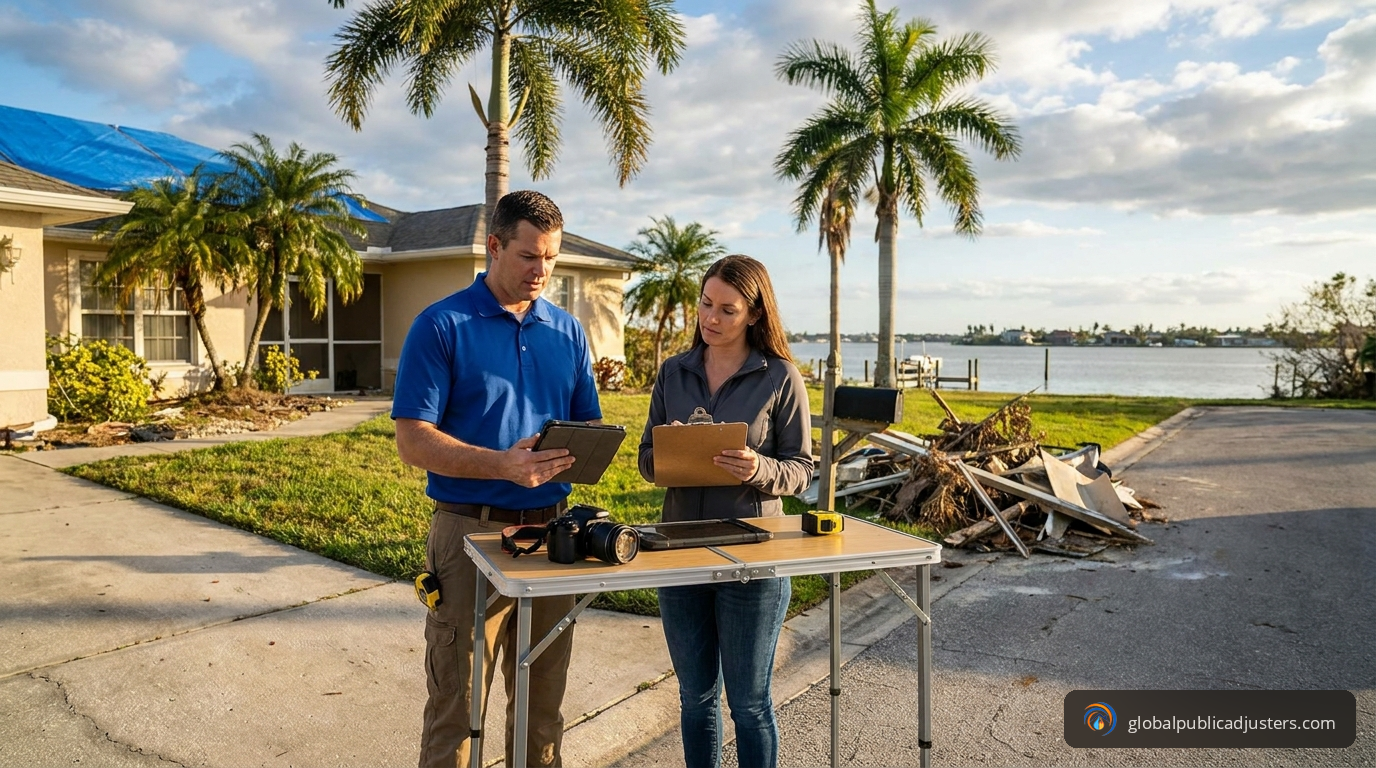
- Meet the insurance adjuster on-siteif possible, and take your own photos during the visit as a record independent of theirs.
- Request the adjuster’s report and estimatein writing, and compare it line-by-line against your own documentation and contractor estimates.
- Track your payout timelineand follow up in writing if you haven’t heard back within a reasonable window.
The Tampa Bay Times has published practical tips for filing hurricane claims that echo this workflow, emphasizing early documentation and persistent follow-up as key factors insuccessful post-hurricane claim outcomes for Tampa Bay residents. Hillsborough County residents affected by 2024 storms may also qualify for additional rebuilding assistance throughHillsborough County’s Rebuilding for Tomorrow program, which is worth exploring alongside your insurance claim.
How Should You Document Damage for Maximum Payout?
Documentation quality often determines whether a claim gets paid fairly or gets disputed line by line. Insurers and their adjusters work from evidence, not assumptions.
Photos:Wide + close-up angles
Include:Attic and crawlspace shots
Timestamp:Before any drying begins
Note:Source of water entry
Format:Room-by-room inventory
Value:Replacement cost estimates
Documentation:Itemized receipts
Include:Temporary lodging if displaced
The Florida Chief Financial Officer’s storm resource center reinforces this approach, providing checklists and guidance throughthe state’s consumer storm resources hubto help homeowners understand what documentation insurers expect. Consider printing a physical checklist before storm season so you’re not scrambling when a hurricane is bearing down on Tampa Bay.
What If Your Hurricane Claim Is Denied or Underpaid?
Denials and lowball offers are unfortunately common after major hurricanes, especially when insurers are processing thousands of claims simultaneously across the Tampa Bay region. If your claim is denied or the settlement seems far below your actual repair costs, you have options.
- Request the full claim filefrom your insurer, including the adjuster’s inspection report and photos.
- Get independent repair estimatesfrom licensed Tampa-area contractors to compare against the insurer’s figures.
- File within the supplemental claim window(18 months) if you discover additional damage after the initial settlement.
- Consider a public adjuster or attorneyif the gap between your estimate and the insurer’s offer is substantial.
Some claims involve damage that surfaces slowly, hidden mold, weakened roof decking, or electrical issues that weren’t obvious in the first week. Firms tracking hurricane litigation, such as those referenced inFarah & Farah’s analysis of Hurricane Debby property damage claims, note that delayed damage discovery is a common trigger for supplemental claims and disputes.
Why Should You Consider a Public Adjuster in Tampa?
A public adjuster works exclusively for you, the policyholder, rather than the insurance company, which changes the entire dynamic of your claim. They inspect the property, document damage using industry-standard methods, and negotiate directly with the insurer’s adjusters on your behalf.
Pricing for public adjuster services varies based on your specific claim size, complexity, and the scope of damage involved, so it’s best to request a custom consultation rather than rely on a flat estimate. For Tampa homeowners navigating a complex claim, especially one involving both wind and water damage, working with an experiencedpublic adjuster in Tampacan mean the difference between a lowball settlement and full policy value.
If your property sits near the bay or in a flood-influenced zone, understanding the nuances of overlapping wind and flood coverage is essential, a topic covered in detail acrossGlobal Public Adjusters’ claims-type resources. For homeowners managing damage across multiple properties or states, comparisons like the one inthis multi-state claims advocacy guidecan also provide useful context.
Key Takeaways
- File your hurricane claim notice within1 yearof the date of loss; supplemental claims must be filed within18 months.
- Document all damage with timestamped photos and videobeforestarting cleanup or repairs.
- Save every receipt for emergency mitigation, tarps, plywood, generators, and temporary lodging.
- Report your claim directly to the insurer’s hotline or portal and always request a written claim number.
- Keep a detailed log of every call, email, inspection, and payment or denial you receive.
- If your settlement seems low, get independent contractor estimates before accepting any offer.
- Consider a public adjuster for complex or high-value claims where negotiating leverage matters most.
People Also Ask
How long do I have to file a hurricane claim in Florida?
Florida law generally requires you to report a hurricane or windstorm claim within 1 year from the date of loss. Supplemental or reopened claims tied to the same event must be filed within 18 months.
Who do I contact first after hurricane damage in Tampa?
Contact your insurance company’s claims hotline directly as soon as it’s safe to return home, rather than waiting for your agent to reach out. If you’re insured through Citizens, their claims line operates 24/7 at 866-411-2742.
Does my Florida homeowners policy cover flood damage from a hurricane?
No, standard homeowners policies exclude flood damage, which requires separate flood insurance, typically through the National Flood Insurance Program. Wind and water damage from a hurricane are treated as separate coverage categories, which often leads to disputes.
Can I still file a claim if I already started cleanup?
Yes, but it’s much harder to prove the extent of damage without pre-cleanup documentation. If you’ve already cleaned up, gather any photos you did take, receipts, and witness statements to support your claim as best as possible.
Frequently Asked Questions
What is the first step to filing a hurricane claim in Tampa?+
The first step is making your property safe, then photographing all damage before any cleanup begins. Once documented, contact your insurer’s claims hotline directly to file your First Notice of Loss and obtain a claim number.
How long does an insurer have to respond to a hurricane claim in Florida?+
Industry guidance commonly cites acknowledgment within 7 to 14 days and a payment or denial decision within 30 to 90 days, though this varies by claim complexity and completeness of submitted documentation. Always submit a complete claim package to avoid unnecessary delays.
What documents do I need to file a hurricane claim in Tampa?+
You’ll need your policy declarations page, timestamped photos and video of all damage, a room-by-room inventory of damaged items, and receipts for any emergency repairs or temporary lodging. Keeping a written log of every insurer communication is also strongly recommended.
Should I hire a public adjuster for my hurricane claim?+
A public adjuster can be especially valuable for large or complex claims where the insurer’s offer seems significantly lower than actual repair costs. Since pricing varies based on your specific claim scope, it’s best to request a custom consultation to understand potential value before deciding.
Can I reopen a hurricane claim after accepting a settlement?+
Yes, Florida allows supplemental or reopened claims within 18 months of the date of loss if additional damage is discovered later. This is common with hidden issues like mold, structural weakening, or roof decking damage that wasn’t visible during the initial inspection.
Is storm surge damage covered by my Tampa homeowners policy?+
Storm surge is a form of flooding and is typically excluded from standard homeowners policies, requiring separate flood insurance for coverage. Wind damage that occurred before flooding, however, may still be covered under your regular policy, which is why detailed documentation of damage timing matters.
Related:Can You Negotiate Insurance Settlement in Jacksonville? A Complete 2026 Guide
Related:Florida Public Adjuster Hurricane Damage Claims in Jacksonville: A Homeowner’s Guide
Filing a hurricane claim in Tampa doesn’t have to feel overwhelming if you act quickly, document thoroughly, and understand Florida’s statutory deadlines. Whether you’re dealing with roof damage in Davis Islands, flooding near the Hillsborough River, or wind damage in New Tampa, the fundamentals stay the same: safety first, documentation second, and a direct line to your insurer third. If your claim has been delayed, underpaid, or denied,reach out to Global Public Adjusters for a free consultationand let an experienced advocate help you pursue the full value of your policy.
Further reading:Hurricane Damage Claim Denied in Florida: What Homeowners Need to Know