Water Damage Specialist: Crucial 2025 Guide
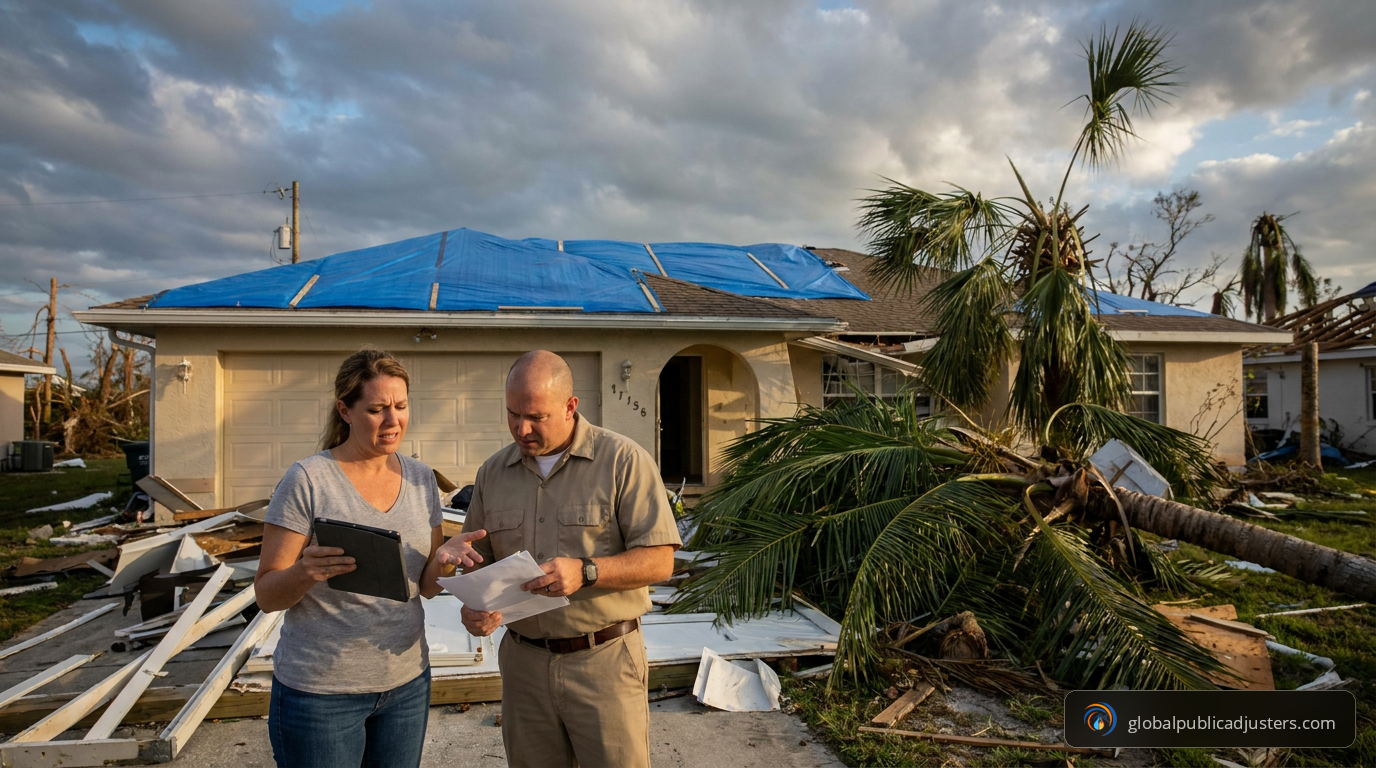
Why Every Property Owner Needs a Water Damage Specialist
Awater damage specialistis a certified professional who handles water emergencies by extracting water, drying structures, preventing mold, and restoring your property. Water is a uniquely destructive substance in a home or business, seeping into walls, floors, and foundations, causing damage that worsens by the hour. The longer it sits, the more destruction occurs, with mold developing in as little as 48 hours.
Property owners often underestimate the problem. A small stain can signify a much larger issue hidden from view, leading to rotted wood, compromised structures, and health hazards. A specialist uses advanced equipment and scientific methods to find hidden moisture and prevent secondary damage that can cost thousands.
Core Services Include:
- Emergency Response:24/7 availability to prevent further damage.
- Water Extraction:Removing standing water with industrial equipment.
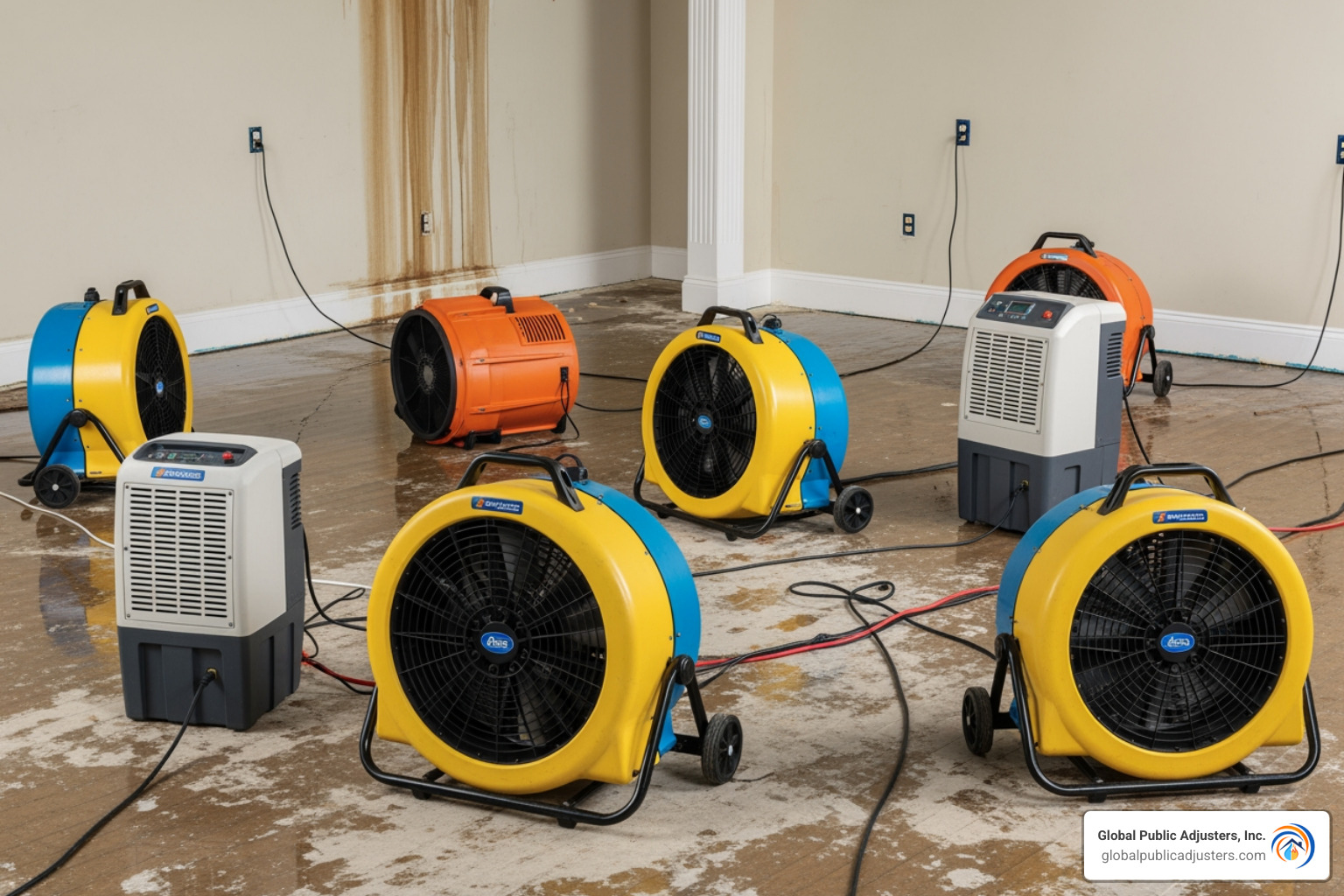
- Structural Drying:Using dehumidifiers and air movers to eliminate all moisture.
- Decontamination:Cleaning and sanitizing affected areas.
- Mold Prevention & Remediation:Stopping mold before it starts and removing existing growth.
- Contents Restoration:Salvaging and restoring damaged belongings.
- Reconstruction:Repairing or rebuilding damaged structures.
For those dealing with insurance, improper restoration can lead to denied claims, making professional help even more critical.
Recognizing the Red Flags: Key Signs and Causes of Water Damage
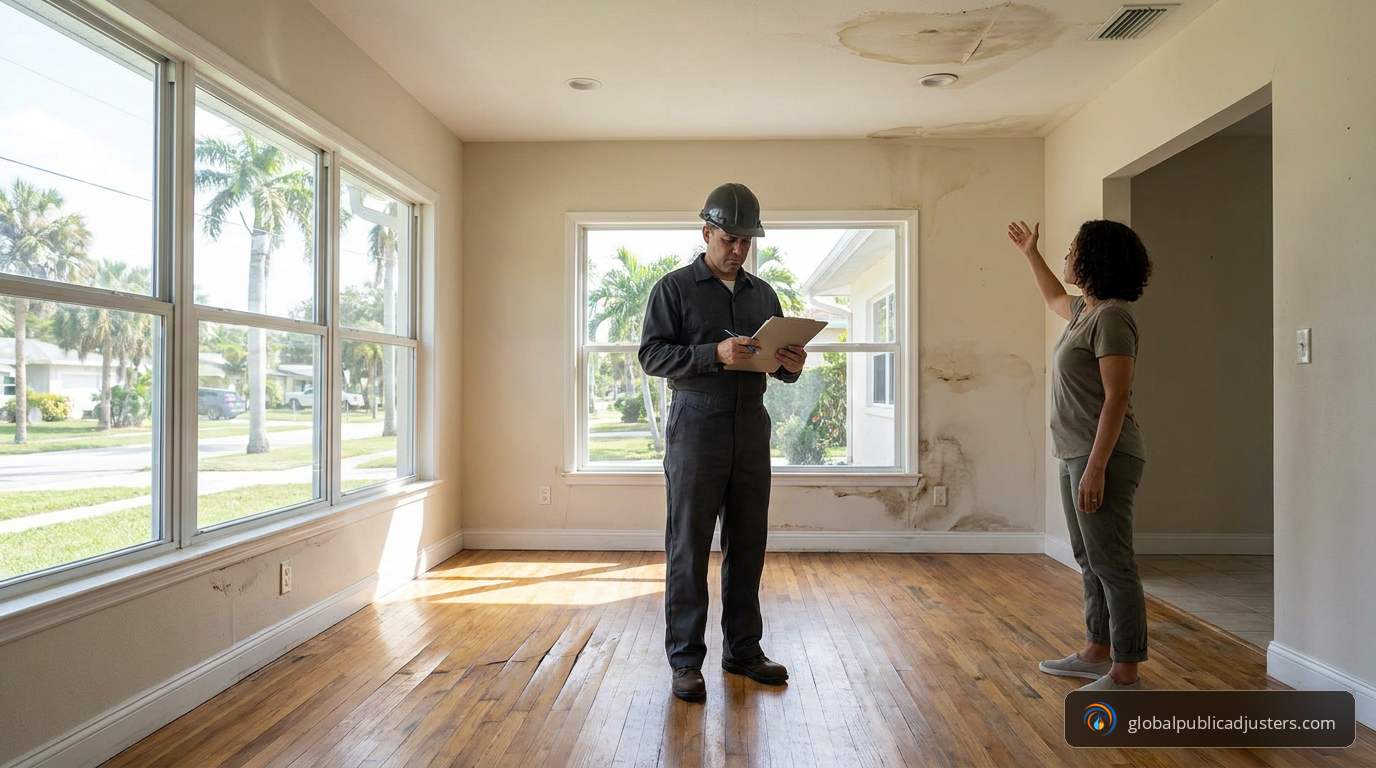
Water damage is often sneaky, working behind walls or beneath floors. By the time you notice it, the problem has likely spread. Knowing the warning signs allows awater damage specialistto intervene early, preventing thousands in additional damage.
Common Signs of Hidden Water Damage
Look for these red flags that indicate water is where it shouldn’t be:
- Peeling or bubbling paint and wallpaper:Moisture breaks the bond between the surface and its coating, causing it to bubble or peel.
- Warped or buckled wood floors:Wood absorbs water, causing it to expand, distort, cup at the edges, or separate.
- Musty, earthy smells:This odor is a sign of microbial growth fueled by hidden moisture, even if you can’t see mold.
- Visible mold growth:Black, green, or white patches on walls or ceilings confirm a moisture problem.
- Stains on ceilings or walls:Telltale water rings or yellowish-brown discoloration are classic signs of a leak, often indicating more significant damage behind the surface.
For a deeper dive, see our guides onSome Signs of Water Damage in Your HomeandSome Signs of Bathroom Water Damage.

Leading Causes in Homes and Businesses
Water intrusion often follows predictable paths. Understanding these helps you stay ahead.
- Plumbing failures:Burst pipes and leaking joints are a top cause. In Florida, older homes often have issues withBroken Cast Iron Pipes Orlando, which corrode and cause slow, hidden leaks.
- Appliance malfunctions:Dishwashers, washing machines, ice makers, and water heaters can fail unexpectedly. In Florida,Air Conditioning Leak Orlandoissues are also common. Learn the warning signs for water heaters inWhat Causes a Water Heater Leak in Your Home?
- Roof leaks:After Florida’s intense storms, a damaged roof can let water travel down through ceilings and walls. See our article onRoof Ceiling Leaksfor what to watch for.
- Storms and flooding:Hurricanes and severe thunderstorms can overwhelm drainage systems and push water into your property.
- Sewage backups:This is the most hazardous intrusion, involving Category 3 “black water” that requires immediate professional attention.
How to Prepare for Potential Water Incidents
You can’t prevent every emergency, but you can reduce your risk.
- Schedule annual roof inspections,especially after storm season, to spot vulnerabilities.
- Know where your water main shutoff is located.Being able to quickly turn off the water can prevent a major disaster.
- Maintain your appliances regularly.Check hoses for cracks or bulges and inspect your water heater for rust or moisture.
- Keep your gutters and downspouts clear.Clogged gutters cause water to back up and seep inside your home.
The Critical Role of a Professional Water Damage Specialist
When water invades your property, the first 48 hours are critical. Acting quickly can mean the difference between a manageable cleanup and a catastrophic loss. This is when a professionalwater damage specialistis your most valuable ally.
What Services Do Specialists Offer?
A qualified specialist brings a systematic, science-based approach to saving your property. They offer 24/7 emergency response to assess the situation and protect your property. Key services include:
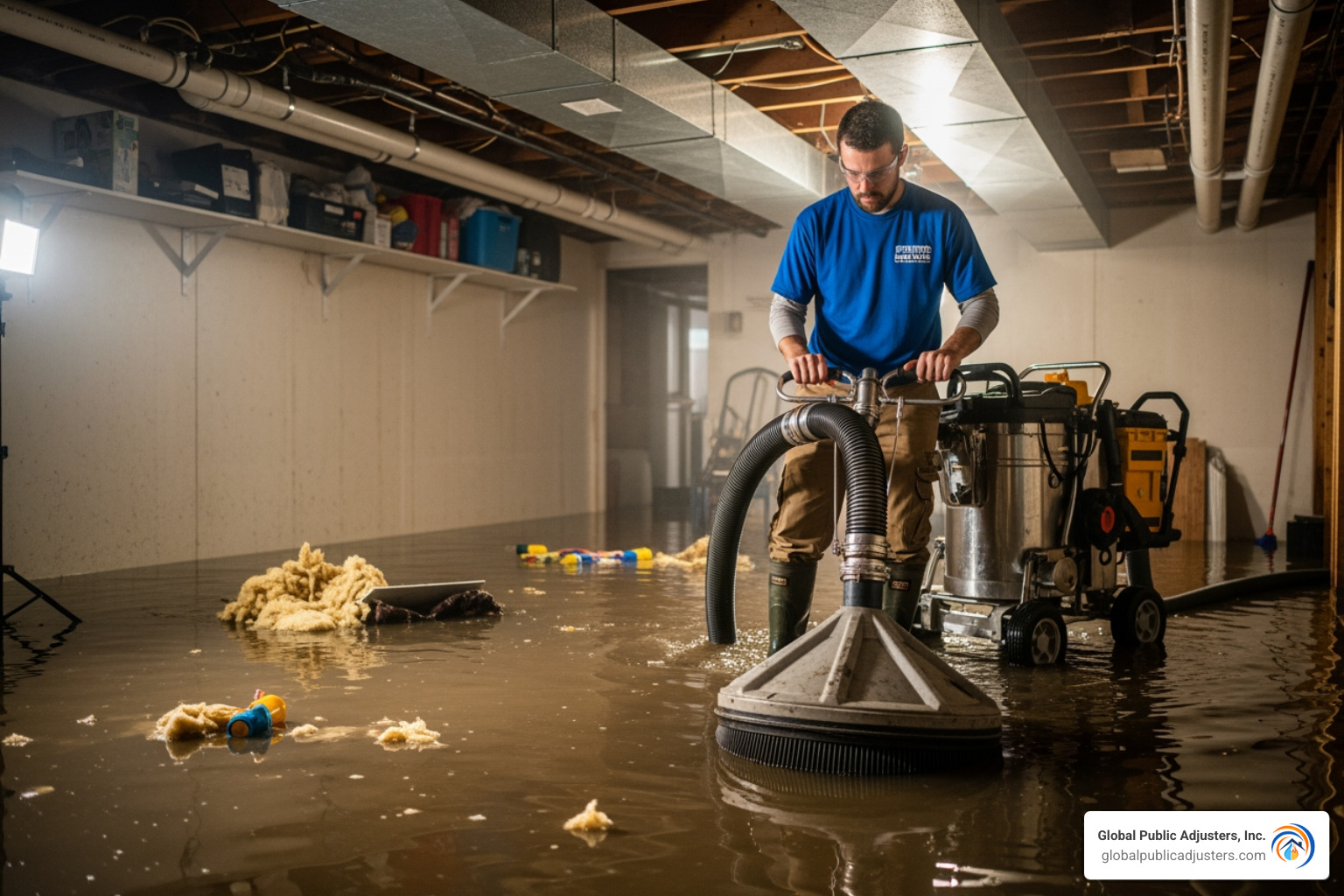
- Water Extraction:Using industrial-grade pumps and vacuums to remove standing water quickly.
- Structural Drying & Dehumidification:Employing industrial air movers and dehumidifiers to pull moisture from materials and the air, based on the science of psychrometrics.
- Decontamination:Using professional-grade disinfectants to eliminate bacteria and viruses, with protocols varying by water category.
- Contents Restoration:Salvaging and restoring items like furniture, documents, and electronics.
- Mold Remediation:Containing affected areas, removing contaminated materials, and treating surfaces to prevent recurrence. Learn more atWater Restoration Services Orlando.
Mitigation vs. Restoration: What’s the Difference?
Understanding these terms is important, especially for insurance claims.
| Feature | Water Mitigation | Water Restoration |
|---|---|---|
| Primary Goal | Prevent further damage, stabilize the environment, stop the problem from worsening. | Repair, rebuild, and return the property to its pre-loss condition. |
| Timing | Immediate, emergency response. | Follows mitigation, once the property is dry and stable. |
| Activities | Water extraction, structural drying, dehumidification, debris removal, tarping. | Repairing damaged walls, flooring, painting, replacing fixtures, reconstruction. |
| Focus | Drying out the structure and contents, preventing mold and secondary damage. | Rebuilding and bringing the property back to its original aesthetic and functional state. |
In short,mitigationis the emergency response to stop the bleeding.Restorationis the rebuilding process to heal the wound. Both are essential for a complete recovery.
Why Rapid Response from a water damage specialist is Crucial
Every hour you wait makes the problem worse and more expensive.
- Mold Growth:Begins within 24-48 hours. A quick response removes moisture before mold can establish itself.
- Structural Damage:Accelerates rapidly as wood warps, drywall crumbles, and flooring buckles. A simple drying job can become a major reconstruction project in days.
- Contamination Spread:Clean water can degrade into contaminated gray or black water, creating a health hazard.
- Reduced Costs:Early intervention prevents damage from spreading, saving materials and reducing overall restoration costs.
The long-term consequences of untreated damage include chronic mold, persistent odors, and compromised structural integrity. As detailed inHow Can Water Damage My Home?, the hidden impacts can last for years. Speed is about protecting your investment and your health.
The Water Damage Restoration Process: A Step-by-Step Guide
Professionalwater damage specialistteams follow a proven, systematic process. While every situation is unique, the core approach ensures a thorough and effective restoration.
Step 1: Emergency Contact & Inspection
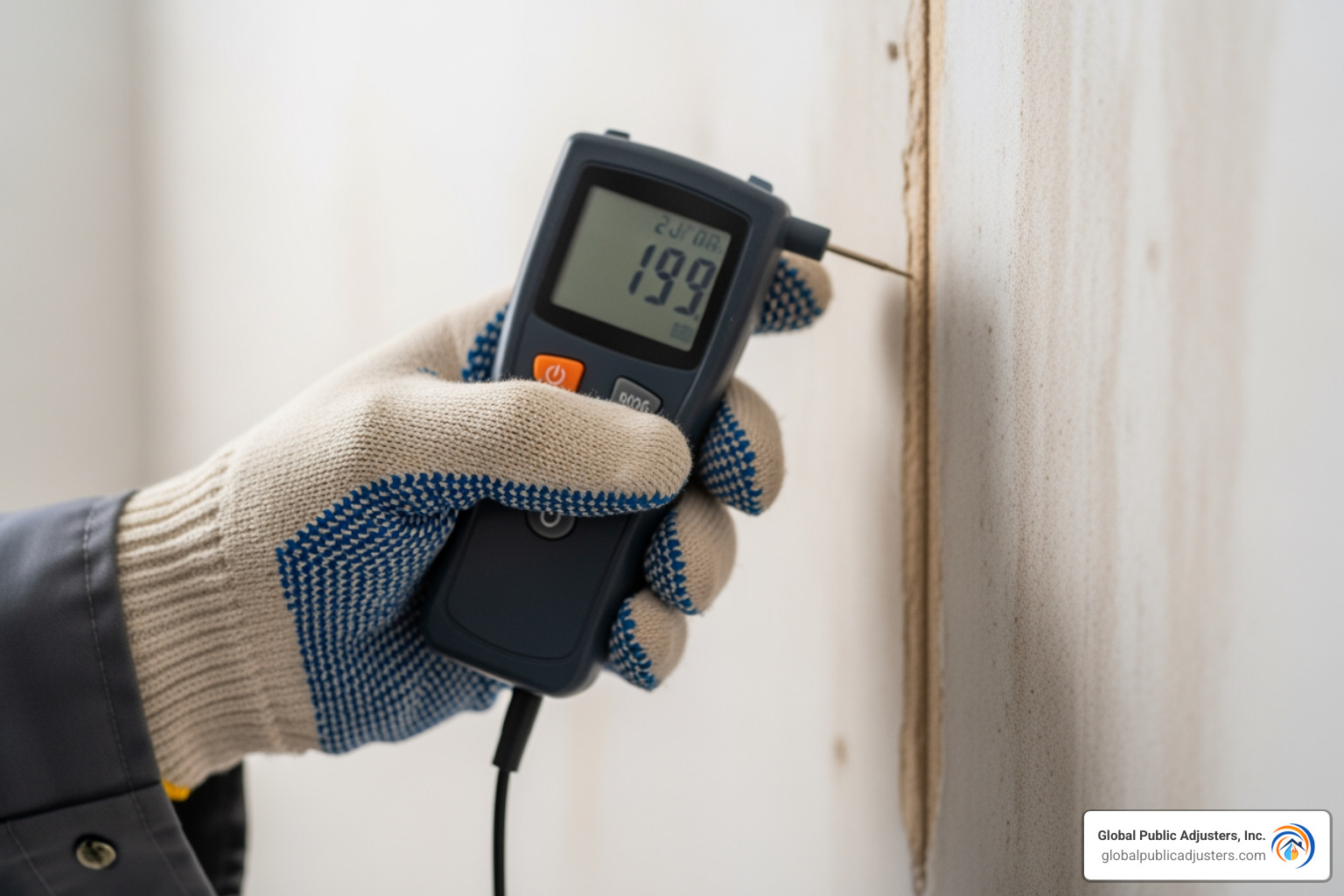
Upon arrival (often within hours), the team performs a thorough inspection. They assess the damage, identify the water source, and determine the water category (clean, gray, or black). Using tools like moisture meters and thermal cameras, they detect hidden moisture to create a detailed action plan.
Step 2: Water Removal & Extraction
Immediate action is taken to remove standing water. Using high-powered pumps and industrial vacuums, technicians extract water from carpets, subfloors, and any pooled areas. The faster water is removed, the less secondary damage occurs.
Step 3: Drying & Dehumidification
After extraction, materials are still saturated. Industrial air movers and commercial-grade dehumidifiers are strategically placed to promote evaporation and pull moisture from the air. Technicians monitor moisture levels with specialized instruments to ensure everything meets industry standards for dryness. This phase can take several days.
Step 4: Cleaning & Sanitizing
Once dry, the team cleans, sanitizes, and deodorizes all affected surfaces and materials. This step is critical for preventing mold and bacterial growth, especially with contaminated water. Salvageable contents are also carefully cleaned and restored.
Step 5: Restoration & Repair
This final phase transforms the property back to its pre-damage condition. It can range from minor repairs, like replacing drywall and painting, to major reconstruction, such as rebuilding walls or installing new flooring. All repairs are done to meet building codes and industry standards.
This structured approach ensures both visible and hidden damage is addressed. For tips on finding hidden damage after a storm, see our articleThree Ways to Detect Water Damage in Your Home After a Storm in Miami.
Vetting Your Pro: Key Qualifications and Advanced Technology
Not all restoration companies are equal. Choosing the wrong one can lead to incomplete drying and future mold problems. Here’s what separates a truewater damage specialistfrom the rest.
Important Qualifications for a water damage specialist
Look for these credentials to ensure you’re hiring a qualified professional:
- IICRC Certification:This is the industry’s gold standard. The Institute of Inspection, Cleaning and RestorationCertificationensures technicians are trained in water damage restoration (WRT) and applied structural drying (ASD).
- HAZWOPER Training:For contaminated water (Category 2 or 3), this OSHAcertificationis crucial for safely handling hazardous materials.
- State Licensing:A licensed contractor meets state requirements for competence and professionalism.
- Insurance and Bonding:Reputable companies carry comprehensive liability and workers’ compensation insurance to protect you.
- Local Experience:A company with years of experience in Florida understands the unique challenges of our climate, including high humidity and rapid mold growth.
Advanced Technologies Used in Restoration
Modern restoration relies on technology for a thorough job.
- Moisture Meters:These devices measure the exact moisture content in materials like wood and drywall, ensuring they are completely dry.
- Thermal Imaging Cameras:Using infrared technology, these cameras detect hidden moisture behind walls and under floors without destructive testing.
- High-Powered Water Extractors:Industrial machines that remove large volumes of water far more effectively than any household vacuum.
- Industrial-Grade Dehumidifiers:Powerful units that pull massive amounts of moisture from the air, which is essential for thorough drying.
- Air Movers:High-volume fans that create airflow across wet surfaces to speed up evaporation.
- HEPA Air Scrubbers:Filtration systems that capture microscopic particles and mold spores, protecting your indoor air quality during the restoration process.
This combination of certified expertise and advanced equipment ensures a complete restoration. For more on this topic, seeState of the Art Water Damage Restoration.
Navigating Water Damage Insurance Claims
After a water disaster, you face two challenges: fixing the damage and getting your insurance company to pay for it. While awater damage specialisthandles the physical restoration, the insurance claim can be just as daunting.
Understanding Your Policy and the Claims Process
Most standard homeowner policies coversudden and accidentalwater damage, like a burst pipe. However, gradual damage from a slow leak is often excluded. Furthermore, flooding from storms requires a separate flood insurance policy—a gap many homeowners find too late.
The claims process begins with documenting all damage with photos and videos. After you file, the insurance company sends its own adjuster to evaluate the loss. This adjuster works for the insurer, and their goal is to protect their employer’s bottom line. They may underestimate the damage, dispute coverage, or offer a low settlement.
We see these challenges daily. Learn more about our approach inDealing with Property Damage Claims in Orlando with Global Public Adjusters Inc.
The Advantage of a Public Adjuster
This is where our role becomes critical. Awater damage specialistrestores your property; a public adjuster restores your financial recovery.
- We work exclusively for you.Unlike the insurance company’s adjuster, our loyalty is to you. We fight to ensure you receive every dollar you’re entitled to under your policy.
- We maximize your settlement.We are fluent in complex policy language and know how to prepare comprehensive claims that document all damage, including hidden issues. Our clients consistently receive far better settlements than they would on their own.
- We handle the entire process.We take the stress of negotiations, paperwork, and disputes off your plate so you can focus on recovery.
- We specialize in complex claims.With over 50 years of experience, we are experts in complicated water, flood, and mold damage claims. Learn more about why you shouldPartner with a Public Adjuster in Your Flood Insurance ClaimorHire a Public Adjuster for Mold Damage.
A public adjuster levels the playing field and ensures you get the fair settlement you deserve.
Frequently Asked Questions about Water Damage
Property owners often have the same questions when facing a water emergency. Here are some clear, concise answers.
How long does the water damage restoration process take?
The timeline depends on several factors. A minor leak might take 3-5 days, while extensive flooding can take weeks or months. Key factors include:
- Severity of Damage:More water and wider spread means a longer process.
- Type of Water:Clean water (Category 1) is fastest. Black water (Category 3) requires extensive decontamination, adding significant time.
- Materials Affected:Porous materials like drywall and carpet padding take longer to dry than tile.
While the initial drying phase typically takes 3-7 days, reconstruction can add weeks to the timeline. A specialist can provide a realistic estimate after their initial inspection.
Can I clean up minor water damage myself?
While it’s tempting to handle small spills with towels and a fan, it’s risky. Water seeps into hidden areas like wall cavities and under flooring. Without professional moisture detection equipment, you can’t be sure everything is truly dry.
This hidden moisture is a breeding ground for mold, which can start growing in 24-48 hours. A small DIY savings can quickly turn into thousands of dollars in mold remediation costs. As we explain inHow to Tell If You Have Mold Damage in Your Home, it’s a serious problem. If it’s more than a small spill you can immediately wipe up, call a professional.
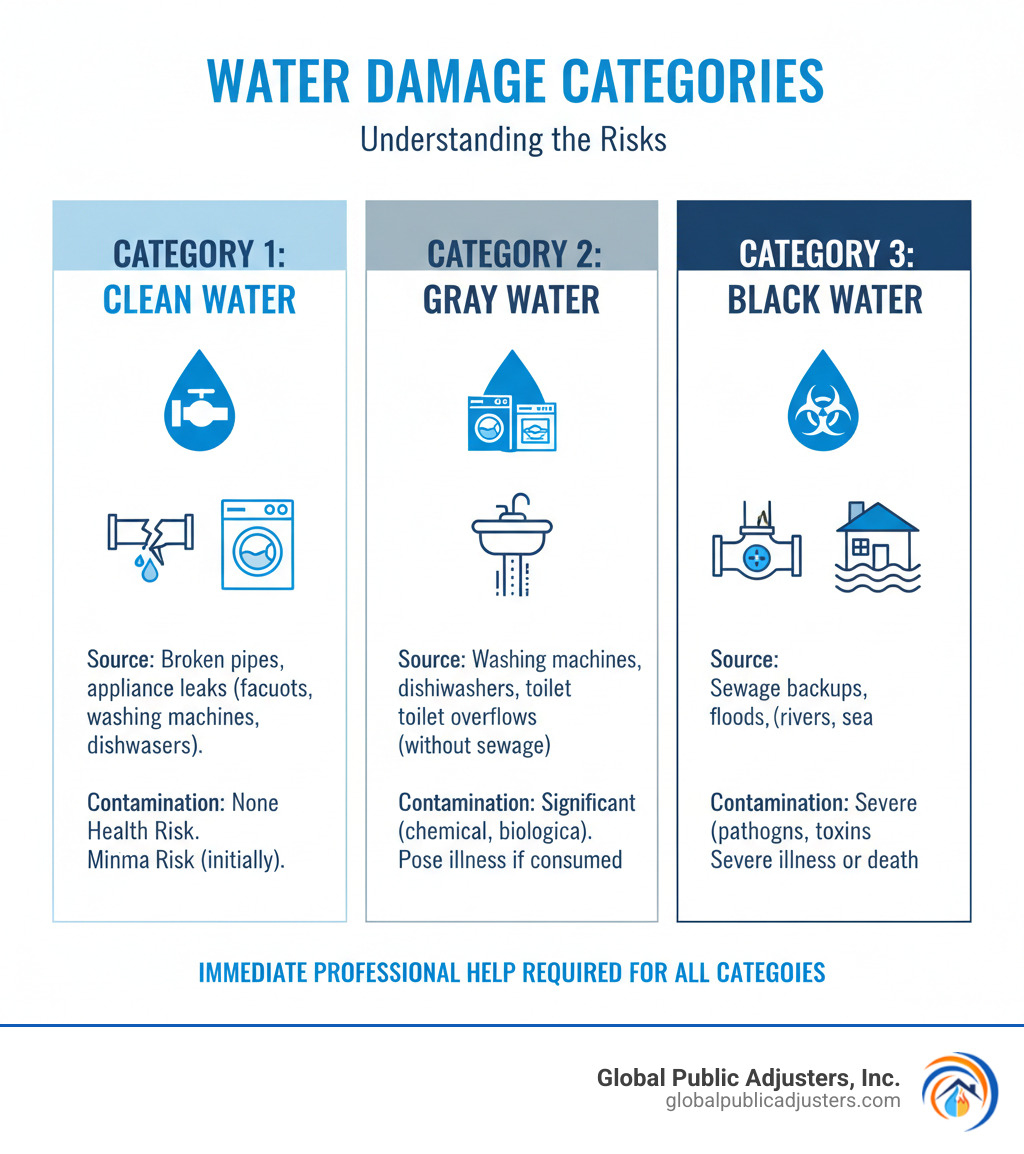
What are the different categories of water damage?
The water category determines the health risk and cleanup protocol. Awater damage specialistidentifies this immediately.
- Category 1: Clean Water:From sanitary sources like broken supply lines. It’s not initially harmful but can become contaminated if left to sit.
- Category 2: Grey Water:Contains some contaminants that could cause illness. Sources include dishwasher or washing machine overflows.
- Category 3: Black Water:Grossly contaminated and poses serious health risks. This includes sewage backups and floodwater from rivers or storms. It requires specialized safety equipment and handling, often by technicians withHAZWOPER training for safety.
Understanding these categories is key to a safe and effective restoration. For more details, seeSome Different Types of Water Damage.
Secure Your Property and Your Claim
When water damage strikes, it feels overwhelming. But with the right professional support, you can steer the crisis and restore your property and finances.
Here are the key takeaways:
- Act Fast:Water damage worsens by the hour. A rapid response from awater damage specialistis the single most important step to minimize damage and cost.
- Hire Certified Professionals:Ensure your restoration company is IICRC certified, licensed, and insured. They should use advanced technology to find and fix all damage, including hidden moisture.
- Document Everything:Take extensive photos and videos of the damage. This evidence is essential for a successful insurance claim.
Restoring your property is only half the battle; securing a fair insurance settlement is the other. This is where a skilledwater damage specialistand a dedicated public adjuster create a powerful team. While the restoration crew rebuilds, a public adjuster ensures you aren’t left paying for covered damages out of pocket.
At Global Public Adjusters, Inc., we have spent over 50 years advocating for property owners across Florida. We handle the paperwork, negotiations, and headaches, fighting for the settlement you deserve.
Water damage is stressful, but you don’t have to face it alone. With the right team in your corner, you can secure both your property and your claim.