Drywall water damage: Top 3 Easy Fixes!
Why Quick Action is Critical When You Find Water Damage
Drywall water damageis a common problem that can quickly turn sturdy walls into a breeding ground for mold and structural issues. Whether from a burst pipe, roof leak, or flood, the key is to act fast.
Here’s what you need to know:
- Mold growth begins in 24-72 hoursin favorable conditions.
- Structural integrity weakensas gypsum breaks down when wet.
- Electrical fire risk increaseswhen moisture reaches wiring.
- Repair costs average $250-$750but can be much higher if damage spreads.
- Insurance coverage variesdepending on the water source.
With quick action, many situations can be handled effectively. Every hour you wait gives mold more time to grow and water more opportunity to spread. Some damage can be repaired with simple patching, while severe cases may require cutting out entire sections of drywall.
This guide will walk you through assessing your situation, taking immediate safety steps, and deciding whether to repair or replace your damaged drywall. We’ll also cover prevention and navigating the insurance claim process.

First, Assess the Damage: What Are You Dealing With?
Before you start cleaning updrywall water damage, take a moment to assess the situation. You need to identify the water source, the extent of the damage, and any potential dangers.
Common sources of water damage include leaky pipes, roof leaks, flooding from appliances or weather, and evencondensationfrom poor ventilation in bathrooms and basements.
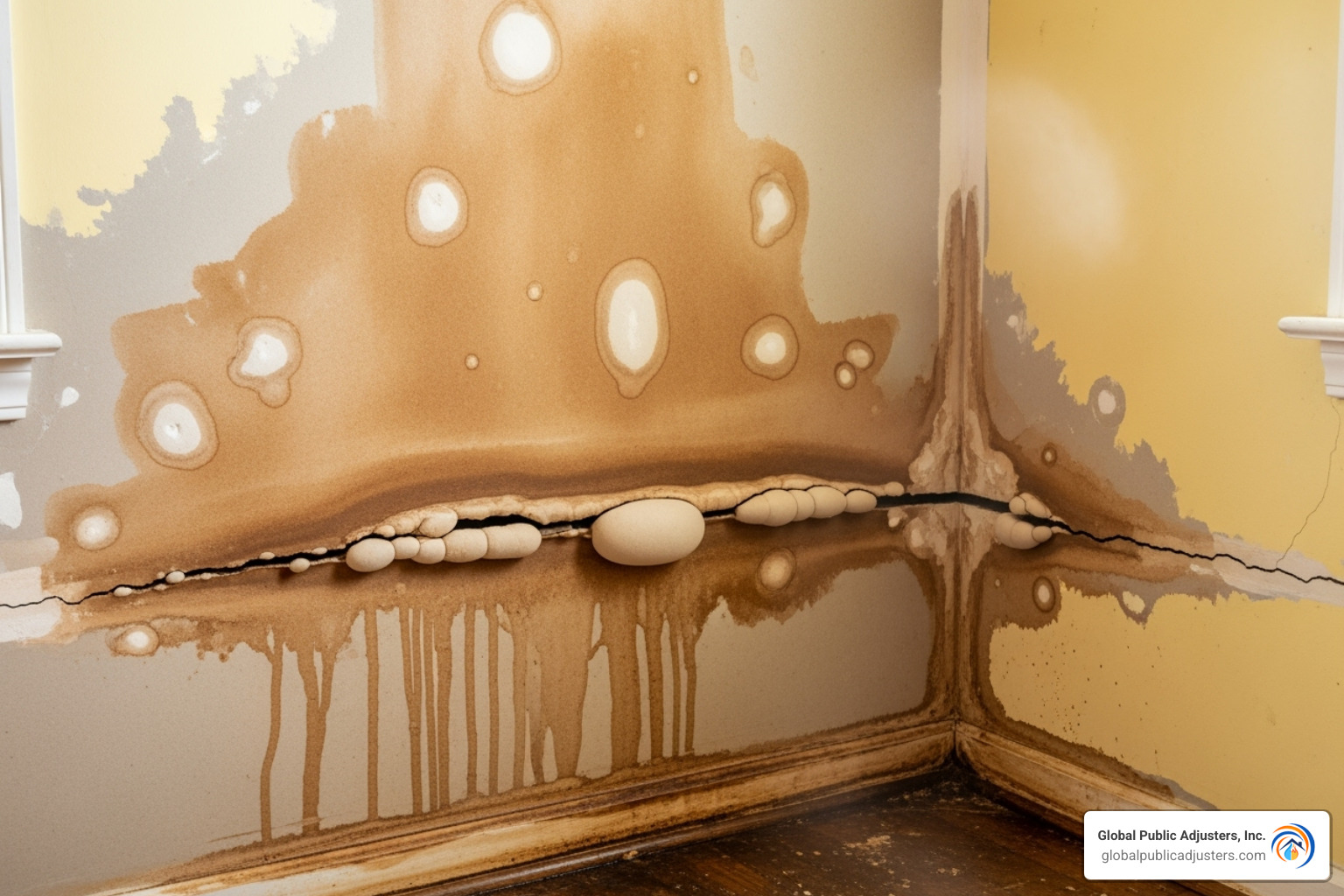
Visual signs are often obvious: yellow, brown, or dark discoloration, bubbling or peeling paint, andswelling, warping,or sagging of the drywall itself. For a comprehensive list of warning signs, seeSome signs of water damage in your home.
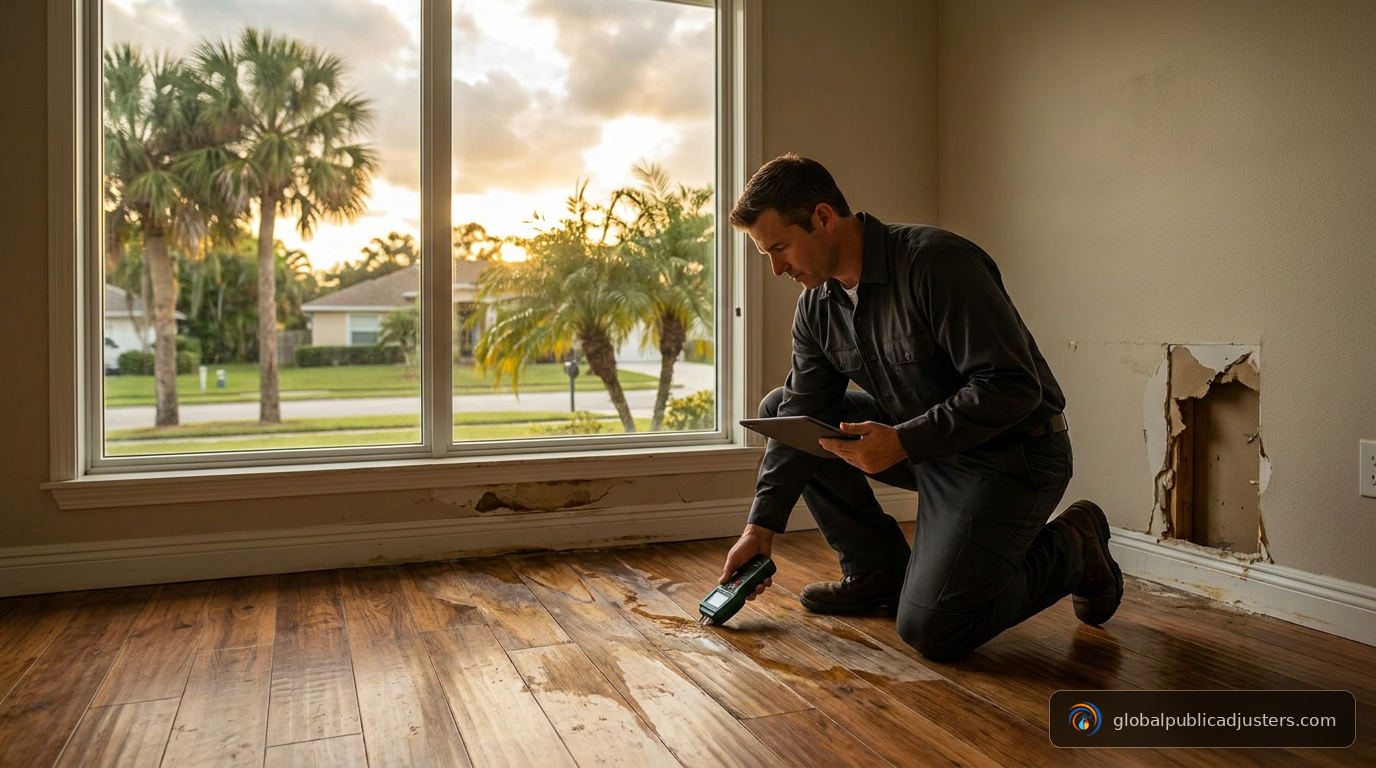
Hidden signs include a persistent musty odor or a sudden jump in your water bill, which can indicate a hidden leak.Moisture metersare excellent tools for detecting moisture behind walls that your eyes might miss.
The Dangers Lurking Behind the Wall
What looks like a cosmetic issue can threaten your home and health. Drywall’s gypsum core breaks down when wet, causingstructural weakening. The paper backing becomes food for mold, which can start growing in 24-48 hours. UnderstandingHow can water damage my home?reveals the full scope of the problem.
The health risks from mold are significant, including allergic reactions and breathing problems, especially for children and the elderly.Mould is a type of fungal growth that can cause health problems, so professional treatment is often the safest route.
Furthermore, sincewater conductivityis high, moisture reaching electrical wiring behind the wall creates a serious risk of short circuits and fire.
Understanding the Severity of Drywall Water Damage
The decision to repair or replace depends on several key factors.
| Criteria | Repair Likely | Replace Likely |
|---|---|---|
| Water Category | Clean water from supply lines or fixtures | Gray water from appliances/toilets or Black water from sewage/flooding |
| Saturation Level | Minor dampness, drywall still firm | Extensive saturation, soft or crumbling material |
| Time Elapsed | Less than 24-48 hours since exposure | More than 48 hours of water exposure |
| Mold Presence | No visible mold or musty smells | Any visible mold growth or strong odors |
| Structural Integrity | Wall remains solid with no warping | Soft, spongy, or visibly sagging drywall |
Clean water (from supply lines) offers the best chance for repair if caught quickly. Gray water (from appliances) is more complex.Black water(from sewage or floods) always requires replacement due to contamination. The longer drywall stays wet (time elapsed) and the more saturated it is (saturation level), the more likely you’ll need to replace it. Anymold presenceor loss ofstructural integrity(soft, spongy walls) also points toward replacement.
Immediate Safety Steps: What to Do in the First Hour
When you finddrywall water damage, the first hour is critical. Follow these safety steps to protect your family and minimize damage.
First,stop the water source. If you can’t find the individual shut-off valve for the problem fixture, go straight to yourmain water shut-off valveand turn it off.

Next,turn off the electricityto the affected area. Go to your electrical panel and flip thecircuit breakersfor any rooms with water damage to prevent the risk of electrocution or an electrical fire.
Once the water and power are off,remove wet itemsfrom the area. Getting furniture, rugs, and other belongings to a dry space quickly gives you the best chance of saving them and helps reduce moisture in the room.
Finally,document everythingwith photos and videos from multiple angles. Capture the water source, damaged walls, and wet belongings. This documentation is essential for your insurance claim.
How to Test for Moisture in Drywall
To understand the true extent of the damage, you need to test for moisture. Amoisture meteris the best tool for this.
Non-penetrating moisture metersscan large areas quickly without causing damage, using electromagnetic waves to find moisture under the surface.

Penetrating moisture metersuse small probes for a more precise reading deep within the material. A reading over12% moisture contentindicates the drywall needs immediate drying or replacement.
If you don’t have a meter, try thescrewdriver test. Gently poke the drywall near the damage; if it feels soft or mushy, it’s saturated. Also, make a small inspection hole tocheck the insulationinside the wall cavity, as it can hold moisture and become a breeding ground for mold.
Repair or Replace? Making the Right Call for Your Drywall Water Damage
The choice between repair and replacement fordrywall water damagedepends on time, water type, and the extent of saturation. If you catch clean water damage within 24-48 hours, you may be able to save the drywall using professional-grade air movers and dehumidifiers. As one expert notes,you may be able to repair or restore your drywallif you act quickly. The goal is to get the moisture level below 12%.
However, if the water was contaminated (gray or black water) or if the drywall has been wet for more than 48 hours, replacement is the safest option.Mold doesn’t negotiate; once it’s established, the drywall becomes a health hazard that can’t be fixed with surface cleaning. For those in storm-prone areas, knowingThree ways to detect water damage in your home after a storm in Miamican help you act faster.
Steps for Minor Drywall Water Damage Repair
For minor damage from clean water with no mold or structural issues, you can often perform the repair yourself.
- Dry the area completelyusing fans and a dehumidifier. Confirm with a moisture meter.
- Clean stainswith a mild bleach solution (1 part bleach to 10 parts water) or a commercial stain remover.
- Sandany rough or peeling areas to create a smooth surface.
- Patchsmall holes with drywall compound, feathering the edges. Sand smooth when dry.
- Primethe entire area with a stain-blocking primer. This is a critical step to prevent stains from reappearing.
- Paintthe repaired section, blending it with the rest of the wall for a seamless finish.
How to Properly Remove and Replace Damaged Sections
When damage is severe or mold is present, replacement is necessary.

- Mark and cutthe drywall several inches above the highest point of moisture damage using a utility knife.
- Remove the damaged sectionand dispose of it. Also, remove any wet insulation behind it, as it loses its insulating properties and harbors mold.
- Dry the wall cavityand framing completely with fans and dehumidifiers for at least 48-72 hours.
- Install a new piece of drywall, measuring carefully and screwing it into the wall studs.
- Tape and mud the seamswith joint compound. This usually requires three coats, with light sanding between each, to create a smooth, invisible transition.
- Prime and paintthe new drywall to match the existing wall.
Preventing Future Headaches: How to Protect Your Walls
Preventingdrywall water damageis far easier than repairing it. A little proactive maintenance goes a long way toward keeping your walls dry.
Think of yourself as a water damage detective, making regular rounds to spot trouble before it starts.
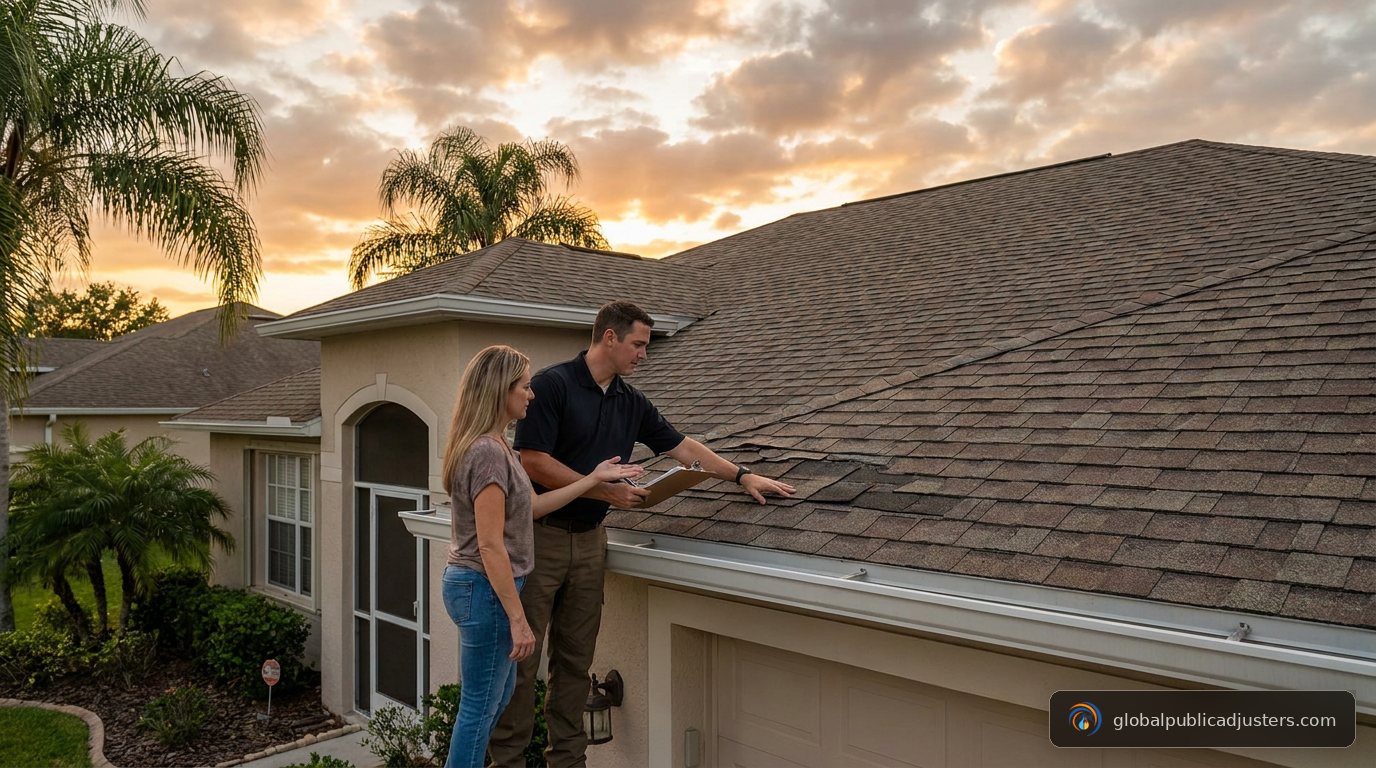
- Inspect your roof and gutters.Every few months, look for missing or damaged shingles and cracked flashing. Clogged gutters are a common culprit, causing water to overflow and seep into walls, so keep them clean.
- Check your plumbing system.Make it a habit to look under sinks, behind toilets, and around your water heater and washing machine for drips or stains. A sudden, unexplained jump in your water bill could signal a hidden leak. KnowingHow to tell if a pipe has burst in your homecan help you act fast.
- Ensure proper ventilation.Your bathroom and kitchen produce significant moisture. Run exhaust fans during and after showers or cooking. In naturally damp areas like basements, consider using a dehumidifier to keep humidity levels below 50%.
- Maintain caulking on windows and doors.The seals around windows and doors degrade over time. Inspect them annually and re-caulk any cracked or shrinking areas to keep water out.
A Saturday afternoon spent on these checks can save you weeks of repair headaches and help ensure your walls stay strong and dry for years to come.
Frequently Asked Questions about Water-Damaged Drywall
When you’re dealing withdrywall water damage, you’ll likely have questions. Here are answers to the most common concerns.
How long does it take for mold to grow on wet drywall?
Mold can begin growing within 24 to 48 hoursin a damp, warm environment. The paper backing on drywall is an ideal food source for mold spores. This short timeline is why immediate action is so critical. The longer drywall remains wet, the higher the chance of a significant mold problem that requires complete replacement.
Can I just paint over water stains on my drywall?
No. While it seems like an easy fix,painting over water stains traps moisture, creating a perfect environment for mold to grow behind the paint. The stains will also likely bleed through the new paint over time. The correct process is to stop the leak, thoroughly dry the area, clean any mold, use a stain-blocking primer, and then paint.
Does homeowners insurance cover drywall water damage?
The answer is,“it depends on what caused the damage.”
Sudden and accidental water damage—like a burst pipe or a washing machine overflow—is typically covered by most homeowners insurance policies.
However,gradual damage or maintenance-related issues, such as a slow leak you haven’t fixed, are usually not covered. Insurance companies expect homeowners to maintain their property. Key factors they consider are how quickly the damage occurred and its original cause.
The insurance claim process can be overwhelming. At Global Public Adjusters, Inc., we have over 50 years of experience helping homeowners steer these complex situations. We understand insurance policies and advocate on your behalf to maximize your settlement. Having an expert on your side can make the difference between a fair settlement and a frustrating denial.
For more information, seeDealing with property damage claims in Orlando with Global Public Adjusters Inc.You don’t have to face the insurance company alone.
Navigating Your Repair and Insurance Claim
We’ve covered the key steps for handlingdrywall water damage: act quickly, assess the situation, prioritize safety, and make a smart choice about repair versus replacement. Proper repair is crucial for protecting your home’s structural integrity and your family’s health from mold.
While minor repairs can be a DIY job, extensive damage, contaminated water, or significant mold growth often requires professional help—and navigating the resulting insurance claim.
When you’re facing significantdrywall water damage, the insurance claim process can be a challenge. Policies are complex, and securing a fair settlement isn’t always straightforward.
This is where we step in. At Global Public Adjusters, Inc., we have been fighting for homeowners and business owners in Orlando, FL, for over 50 years. We specialize in representing policyholders in insurance claims, including those fordrywall water damage.
Think of us as your advocate. We know the insurance industry inside and out, and our only goal is to maximize your settlement so you can properly repair your home. While the insurance company’s adjuster works for them, we work for you.
Don’t try to steer this maze alone. Let us handle the complexities while you focus on getting your home back to normal. When you’re facing significant property damage,Explore your options for handling different claim types.