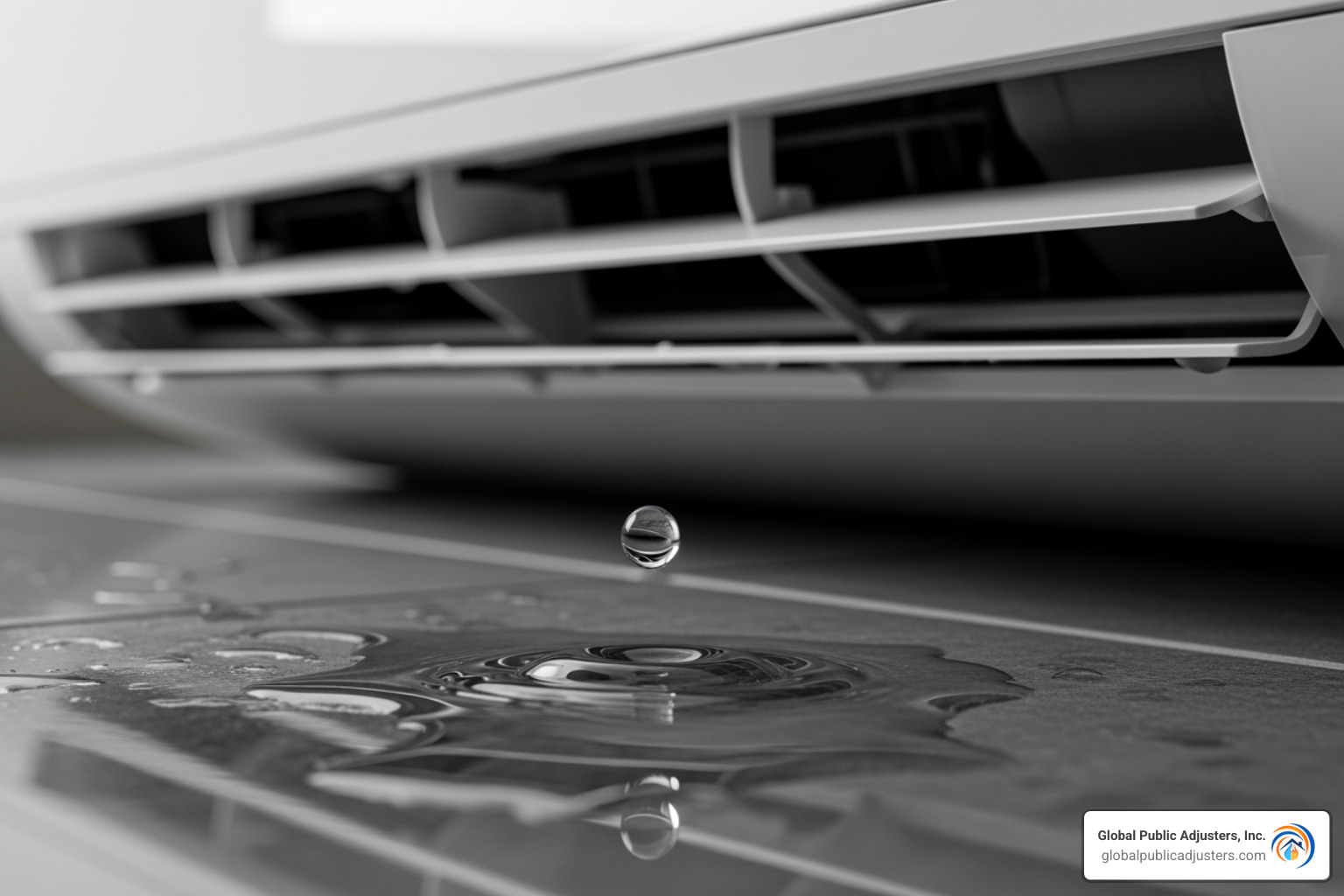
Water leak in aircon: 8 Urgent Fixes!
Introduction: That Drip is More Than Just an Annoyance
If you’ve noticed awater leak in aircon, act quickly. Here are the first steps:
- Turn off your AC unit.For safety, switch off the power at your breaker box.
- Locate the leak.Find if the water is coming from the indoor or outdoor unit.
- Clean up standing water.Use towels or a wet/dry vac to prevent water damage.
- Place a bucketunder the drip to catch further leakage.
A water leak is a common problem, but it’s a sign your air conditioner needs attention. Ignoring it can lead to mold growth, damaged ceilings, and higher electricity bills. Prompt action can save you from costly repairs.
Air conditioners cool your home by removing humidity from the air.

As warm air passes over the cold evaporator coils, moisture condenses into water. This condensation normally collects in a drain pan and flows outside through a drain line. Awater leak in airconhappens when something disrupts this drainage process.
Why Your Air Conditioner is Leaking Water: 8 Common Culprits
Most AC leaks stem from a handful of common issues. Understanding these culprits helps you know what to look for.

Clogged Condensate Drain Line
This is the most common cause. Over time, algae, dirt, and dust can clog the drain line. In Florida’s humid climate, this buildup happens quickly. When the line is blocked, condensation backs up into the drain pan and overflows. You can often clear a minor clog yourself with a wet/dry vacuum at the outdoor exit point or by pouring vinegar down the indoor access point. For detailed steps, see this guide onhow to clean a clogged AC drain line. An ignored clog can lead to serioussigns of water damage in your home.
Frozen Evaporator Coils
If you see ice on your indoor unit’s coils, it’s a problem. When this ice melts, the resulting water can overwhelm the drain pan, causing awater leak in aircon.

Coils freeze when they don’t get enough warm air. This is usually caused by a dirty air filter, blocked vents, or a faulty blower motor. Low refrigerant is another cause. If you see ice, turn off the AC and let it thaw completely before investigating the cause. Do not chip the ice away.
Dirty Air Filter
A clogged air filter restricts airflow to the evaporator coils, causing them to get too cold and freeze. When the ice melts, the drain pan overflows. A dirty filter also forces your system to work harder, increasing energy bills, a major concern with Florida’sskyrocketing electricity costs. Check your filter monthly and replace it if it’s dirty. Learnhow to clean an AC filterif you have a reusable one.
Damaged or Rusted Drain Pan
If your AC unit is over 12-15 years old, the drain pan underneath the evaporator coils may be rusted or cracked. This allows condensation to leak through before it reaches the drain line. While a sealant may be a temporary fix for small cracks, a damaged pan usually needs to be replaced by a professional to prevent seriouswater damage to your home.
Broken Condensate Pump
If your indoor unit is in a basement, it likely uses a condensate pump to move water outside. If this pump breaks due to a clog, electrical issue, or wear, water will back up and overflow the drain pan. A silent or noisy pump is a sign of failure and requires professional repair or replacement.
Improper Installation
An improperly installed AC can cause chronic leaks. If the indoor unit isn’t level, water won’t flow correctly into the drain pan. Likewise, if the drain line doesn’t have the proper downward slope, water will pool and back up. If you’ve had leaks since the unit was new, improper installation may be the cause. See more onhow to tell if your air conditioning is leaking.
Low Refrigerant
Low refrigerant levels cause the evaporator coil to become too cold and freeze, leading to water leaks when the ice melts. Other signs include hissing or gurgling sounds and poor cooling performance.Do not handle refrigerant yourself.It is a hazardous chemical that requires an EPA-certified technician to handle. If you suspect a refrigerant leak, call a professional to find and repair the leak and recharge the system.
Leaks from the Outdoor Unit
A small puddle of water around your outdoor unit can be normal, especially on hot, humid Florida days, as condensation forms on cold pipes. However, a large or continuous leak could signal a clogged drain, a problem with a service valve, or other internal issues. If the leak is excessive or accompanied by poor cooling, it needs to be investigated. Learn aboutsome different types of water damageto understand potential risks.
First Steps: What to Do When You Find a Water Leak in Aircon
When you find awater leak in aircon, your priorities are safety and damage control. Act quickly to prevent a small problem from getting worse.
Immediate Actions to Take
- Cut the Power:Water and electricity are a dangerous mix. Go to your breaker box and turn off the power to your air conditioner. Turning off the thermostat is not enough.
- Contain the Leak:Place buckets or pans under active drips. Use towels or a wet/dry vacuum to soak up any standing water on floors, carpets, or furniture.
- Dry Affected Areas:Quickly dry any water that has reached walls or ceilings to prevent paint damage and mold. For significant flooding, professionalwater restoration services Orlandocan prevent long-term structural damage.
DIY Troubleshooting for a water leak in aircon
With the power off, you can investigate common causes of awater leak in aircon.

- Check the air filter:A dirty filter is a frequent culprit. If it’s clogged with dust, replace it. Learnhow to clean an AC filterif yours is reusable.
- Inspect the drain pan:Look for cracks, rust, or holes in the pan beneath the indoor unit. Also, clear any debris that might block the drain opening.
- Clear the condensate drain line:An overflowing drain pan often points to a clogged drain line. Use a wet/dry vac on the outdoor pipe exit to suction out the blockage. You can also pour a cup of distilled vinegar down the line’s access point to dissolve buildup. For a guide, seehow to clean a clogged AC drain line.
- Thaw frozen coils:If you see ice on the evaporator coils, leave the power off and let it melt naturally. Do not chip it off. Once thawed, check for a dirty filter or blocked vents.
When to Call an HVAC Professional
Some problems require an expert. Call a professional if you encounter these issues:
- The leak persists after you’ve tried the DIY fixes.
- You suspect a refrigerant leak (hissing sounds, poor cooling). Refrigerant is hazardous and requires a certified technician.
- You notice electrical issues (tripped breakers, burning smells) or hear loud mechanical noises like grinding or squealing.
- You suspect improper installation is the cause, as detailed inhow to tell if your air conditioning is leaking.
Understanding the Risks and Repair Costs
A persistentwater leak in airconcan cause serious damage to your property. Water that should be draining outside can seep into walls, floors, and electrical systems. The longer you wait, the more extensive and expensive the damage becomes.
Signs of a Serious AC Leak and Potential Home Damage
Watch for these warning signs that indicate a serious problem:
- Large volumes of water:A constantly overflowing drain pan or significant pooling suggests a major blockage or component failure.
- Discolored walls or ceilings:Water stains, peeling paint, or bulging drywall are clear signs of water intrusion. This damage can be similar toroof ceiling leaksbut originates from your AC.
- Musty odors:A musty smell indicates mold and mildew are growing in hidden, damp spaces, which poses a health risk.
- Warped flooring:Prolonged water exposure will ruin hardwood, laminate, and carpet.
- Electrical issues:If water reaches electrical components, it creates a risk of shock or fire. Treat this as an emergency.
How much does it typically cost to fix an AC leak?
The cost to fix awater leak in aircondepends on the cause. Simple fixes are affordable, but complex problems are more expensive. Here are typical repair costs for Florida homeowners:
- Clogged Drain Line:$75 – $250
- Drain Pan Replacement:$100 – $350
- Condensate Pump Replacement:$100 – $450
- Refrigerant Leak Repair:$200 – $1,500
These prices can vary based on your location and AC model. Addressing the leak early is almost always cheaper than paying for extensive water damage repairs later. If significant property damage has already occurred, you may need to file an insurance claim.
Preventative Maintenance: Stop Leaks Before They Start
Mostwater leak in airconissues are preventable. Proactive care keeps your system running smoothly, saves you from emergency repairs, and lowers electricity bills—a key benefit with Florida’sskyrocketing electricity costs. A well-maintained AC also lasts longer.
Creating a Simple Maintenance Schedule
Consistency is key to preventing leaks. Follow this simple schedule:
- Change filters monthly:During Florida’s hot months, check your air filter every 30 days and replace it if it’s dirty. This prevents restricted airflow, a common cause of frozen coils and leaks.
- Flush your drain line quarterly:Every three months, pour a cup of distilled white vinegar into the condensate drain line access point. Let it sit for 30 minutes, then flush with water to clear algae and buildup.
- Schedule annual professional tune-ups:Have an HVAC technician inspect your system each spring to catch small problems before they become expensive ones.
- Keep your outdoor unit clear:Every few weeks, remove leaves, grass, and other debris from around your outdoor unit, ensuring at least two feet of clearance for proper airflow.
The Importance of Professional Servicing
While DIY tasks help, a professional HVAC technician provides essential services you can’t do yourself. During an annual tune-up, they can:
- Spot potential issues early.
- Check for and correct refrigerant levels.
- Thoroughly clean internal components like coils and the drain pan.
- Inspect electrical connections and test the thermostat.
This comprehensive service ensures system efficiency and can prevent a majorwater leak in airconand the costly water damage that follows. Think of it as a crucial investment in your home’s health.
Frequently Asked Questions about AC Water Leaks
Here are answers to common questions about dealing with awater leak in aircon.
Is it safe to use an air conditioner that is leaking water?
No, you should not continue using a leaking air conditioner.It’s a safety risk and can lead to more severe problems.
- Electrical Hazard:Water can contact electrical components, creating a risk of shock or fire.
- Worsening Damage:Running the unit can turn a simple fix, like a clog, into a major mechanical failure.
- Property Damage:Even a small drip can cause warped floors, stained ceilings, and mold, leading to costlywater damage claims Orlando.
Turn off your AC at the breaker box immediately and diagnose the cause.
How can I tell if my aircon is leaking refrigerant or just water?
This is a critical distinction, as refrigerant leaks require a professional.
- Water Leak:The liquid will be clear, odorless water. The leak is typically near the indoor unit and often caused by a drainage issue.
- Refrigerant Leak:You’ll notice poor cooling performance and may hear a hissing or gurgling sound. The refrigerant itself may have a faint sweet smell or leave an oily residue. Ice on the evaporator coils combined with poor cooling is another strong sign.
If you suspect a refrigerant leak, turn off the system and call an HVAC professional. It is a hazardous material.
Why does my aircon leak more when it’s very humid or raining?
Your AC works harder to remove moisture from the air on humid days. This creates a much higher volume of condensation. If your drainage system has even a minor clog, this increased water flow can overwhelm it, causing a leak. Heavy rain can also expose leaks in seals around your unit or where pipes enter the home. This is why keeping the condensate drain line clear is especially important in Florida’s climate.
Conclusion: Protect Your Home from AC Water Damage
Awater leak in airconis a warning sign that can lead to structural damage, mold, and high utility bills if ignored. Common causes like clogged drains, dirty filters, and frozen coils are often preventable.
Regular maintenance is your best defense.Simple tasks like changing filters, flushing the drain line, and scheduling annual professional tune-ups can stop most leaks before they start and keep your AC running efficiently. When a leak does happen, act fast: turn off the power, clean up the water, and troubleshoot. For complex issues like refrigerant leaks or electrical problems, always call a certified HVAC technician.
But what if the damage is already done? If an AC leak has caused stained ceilings, warped floors, or mold, navigating the insurance claim process can be overwhelming. You don’t have to do it alone.
At Global Public Adjusters, Inc., we have over 50 years of experience representing homeowners and businesses in Orlando and throughout Florida. We advocate on your behalf to maximize your insurance settlement, allowing you to make proper repairs without the stress of fighting the insurance company. We’ve helped countless clients recover from water damage, and we’re ready to help you.
Contact us today if you have an Air Conditioning Leak in Orlandoor the surrounding Florida areas. We’ll ensure you get the fair compensation you deserve.