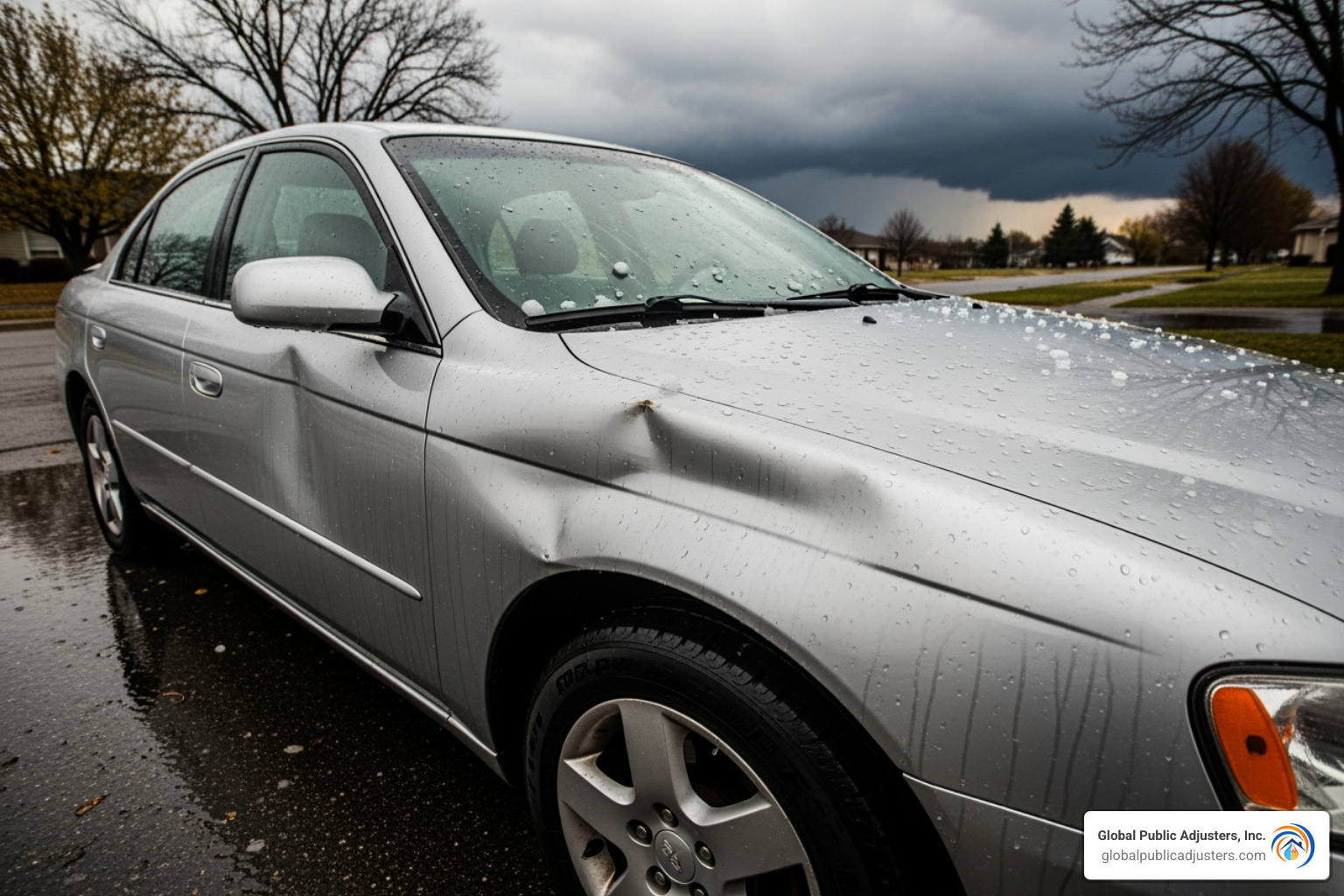
Auto hail damage claim: 5 Winning Steps
When Disaster Strikes: Understanding Your Auto Hail Damage Claim Rights
Anauto hail damage claimis filed when your vehicle sustains damage from a hailstorm, typically covered under comprehensive insurance. Here’s what you need to know:
The Auto Hail Damage Claim Process:
- Contact your insurance companyimmediately after the storm
- Document all damagewith photos and videos
- File a comprehensive claim(not collision) if you have coverage
- Get an adjuster inspectionto assess repair costs
- Choose a repair method– Paintless Dent Removal (PDR) or conventional bodywork
- Pay your deductibleand receive settlement minus non-covered expenses
Most hail storms last only 5-6 minutes, but the damage can be extensive and costly. The average car insurance hail damage claim was$5,000 in 2021, according to State Farm data. In that same year, State Farm alone received 255,000 hail claims totaling $2.5 billion for home and auto claims combined.
Here’s the reality:between 50 to 70% of hail damage claims are not repaired. Many vehicle owners find the claims process confusing or accept settlements that don’t fully cover their damages. Understanding your rights and the proper claim process can mean the difference between a fair settlement and leaving money on the table.
Hail damage is classified as a comprehensive claim– considered an “act of God” or natural disaster. This means it typically won’t raise your insurance rates, unlike an at-fault collision. However, you must have comprehensive coverage (also called “other than collision”) on your policy, as basic liability-only insurance won’t cover weather-related damage to your own vehicle.
The damage itself ranges from minor cosmetic dings to shattered windshields, cracked panels, and even structural issues that can total your car. Even seemingly minor dents can significantly reduce your vehicle’s resale value and may complicate future claims if left unrepaired.
This guide walks you through every step of filing anauto hail damage claimwithout the usual headaches – from that first moment after the storm to receiving your final settlement check.

First Steps After the Storm: Assess and Document
The hailstones have stopped falling, and the sun is peeking through the clouds. Your first instinct might be to rush out and inspect your car, but safety always comes first. Ensure the storm has fully passed and there are no immediate hazards like downed power lines or debris before venturing outside.
Once it’s safe, the next crucial step in yourauto hail damage claimjourney is to thoroughly assess and document the damage. This documentation will be the backbone of your claim, providing your insurer with clear evidence of what happened.

Documenting the Damage:
- Take Photos and Videos:Use your smartphone to capture comprehensive photo and video evidence of all damage. Don’t just focus on the obvious dents; get wide shots of the entire vehicle, then zoom in on individual dents, cracks, or broken glass. Make sure to capture different angles and lighting conditions. For dents, inspecting your car in a shaded area or indoors can sometimes reveal damage that direct sunlight might obscure due to glare.
- Note the Date and Time:Record the exact date and time the hailstorm occurred. This helps establish the incident’s timeline.
- Location:Jot down where your vehicle was parked during the storm.
- Hail Size:If you observed the hail, try to estimate its size (e.g., pea-sized, golf ball-sized, baseball-sized). This can help contextualize the damage.
- Interior Damage:Don’t forget to check the interior if windows were broken or water entered the vehicle. Document any wet upholstery or damaged electronics.
Temporary Protection:
If your car sustained broken windows or a cracked windshield, take immediate steps to prevent further damage from the elements. Cover broken windows with plastic sheeting and strong tape. This protects the interior from rain and potential theft, showing your insurer you took reasonable steps to mitigate further loss.
Essential Information to Record:
- Date and precise time of the hailstorm.
- Location of your vehicle during the storm.
- Photos and videos covering all affected areas (exterior panels, roof, hood, trunk, windshield, windows, mirrors, lights).
- Any interior damage (e.g., water stains, shattered glass inside).
- Estimated size of the hailstones.
- A brief narrative of what happened.
What Type of Car Insurance Covers Hail Damage?
When it comes to anauto hail damage claim, not all insurance policies are created equal. Understanding your coverage is paramount.
- Comprehensive Coverage is Your Best Friend:Hail damage falls under what’s known as “comprehensive coverage,” sometimes called “other-than-collision” coverage. This part of your policy protects your vehicle from non-collision-related incidents, including natural disasters like hailstorms, fire, theft, vandalism, and impacts with animals. If you have comprehensive coverage, you’re generally covered for hail damage, subject to your deductible.
- Liability-Only Insurance Doesn’t Cut It:Basic liability insurance, which is legally required in most states, only covers damages you cause to other vehicles or property, or injuries to other people. Itdoes notcover damage to your own car from events like hail. If you only have liability coverage, any hail damage will be an out-of-pocket expense.
- Specified Perils Coverage:Less common, but some policies might have “specified perils” coverage, which lists the exact events it covers. If hail is listed, you’re covered. However, comprehensive coverage is typically broader.
- Policy Review is Key:We always recommend reviewing your insurance policy documentsbeforea storm hits, if possible. This way, you’ll know exactly what you’re covered for and what your deductible amount is. Your deductible is the amount you’ll pay out of pocket before your insurance coverage kicks in. For example, if you have a $500 comprehensive deductible and your hail damage repairs cost $3,000, your insurer will pay $2,500, and you’ll be responsible for the first $500.
For more information on various types of property damage claims, including those related to your vehicle, we encourage you to visit our page onMore info about property damage claims.
How Hail Damage Affects a Car’s Value
Beyond the immediate cosmetic impact, hail damage can have long-lasting effects on your vehicle’s overall value and future.
- Cosmetic vs. Structural Damage:Hail damage can range from minor “dings” and “dents” that are purely cosmetic to more severe issues like shattered glass, cracked lights, or even structural damage to the body panels if the hailstones were large enough and fell with significant force. Even seemingly minor cosmetic damage can indicate underlying issues or simply detract from the vehicle’s aesthetic appeal.
- Diminished Value:Even after professional repairs, a vehicle that has sustained significant hail damage may suffer from “diminished value.” This means its market value is lower than a comparable vehicle that has never been damaged, simply because it has a damage history. This is especially true if the damage was severe enough to be reported on vehicle history reports like Carfax.
- Resale Impact:When you go to sell or trade in a hail-damaged car, even if repaired, prospective buyers or dealerships will often offer less due to its history. Unrepaired damage will, of course, have an even more drastic negative impact on resale value.
- Unrepaired Damage Consequences:If you choose not to repair the hail damage, you could face several issues. Your insurance company might limit or exclude future coverage for new hail damage on the already damaged areas. Additionally, if you have a loan on your vehicle, your lender will likely require you to repair the damage to protect their asset. Leaving dents can also lead to rust over time if the paint is chipped, causing further deterioration.
- Future Claims:If you’ve previously filed anauto hail damage claimbut didn’t fix the damage, and then your car gets hit by hail again, your insurer will consider the previous unrepaired damage. They won’t pay twice for the same damage, making it complicated to assess and pay for thenewdamage accurately. This is why it’s generally best to address hail damage promptly.
Understanding these impacts can help you make informed decisions about repairing your vehicle and pursuing a fair settlement. For more detailed information on automotive hail damage and repairs, you might find resources likeAutomotive Hail Damage Repair Information — Napdrtuseful.
The Step-by-Step Guide to Your Auto Hail Damage Claim
Navigating theauto hail damage claimprocess can feel like a maze, but we’re here to guide you through each turn. Here’s a clear, step-by-step approach to ensure your claim is handled efficiently and fairly.

- Contacting Your Insurer Promptly:As soon as you’ve safely documented the damage, your first official step is to contact your insurance company. Do this in a timely manner. Most insurers offer multiple ways to file a claim: by phone, through their website client portal, or via a mobile app. Have your policy number, vehicle information (year, make, model, body style), and the date of the incident ready.
- Filing the Claim:During your initial contact, you’ll officially “file” the claim. The representative will ask for details about the storm and the damage. Be honest and accurate in your description.
- The “Proof of Loss” Form:Your insurance company may ask you to complete a “proof of loss” form. This is a crucial document where you list all damaged items and their estimated value or cost of repair. You’ll need to sign and swear to the truthfulness of these statements. It’s typically required to be returned within 30 days. Untrue statements can void your insurance, so accuracy is key.
- Adjuster Inspection:After filing, an insurance adjuster will be assigned to your case. They will contact you to schedule an inspection of your vehicle. During this inspection, the adjuster will assess the extent of the hail damage and estimate the repair costs. Remember our earlier tip: if possible, have your vehicle inspected in a shaded area or indoors. Glare from direct sunlight can make it difficult for even a trained eye to spot all the dents, potentially leading to an “underwritten” estimate.
- Getting Estimates:While your insurer’s adjuster will provide an estimate, you have the right to seek estimates from reputable repair shops in Orlando, Pensacola, or anywhere in Florida. We recommend getting at least two or three estimates. This can help ensure that all damage is identified and that the repair costs are accurately assessed.
- Choosing a Repair Shop:This is a crucial decision. You have the right to choose where your vehicle is repaired, especially if you own it free and clear. While your insurance company might recommend shops from their “preferred provider network,” you are not obligated to use them. Select a shop you trust, with a good reputation for quality hail damage repair and strong warranties on their work. Notify your insurance company of the body shop you’ve chosen.
What Happens After Filing an Auto Hail Damage Claim?
Once you’ve formally filed yourauto hail damage claim, you might wonder what happens behind the scenes and what to expect next.
- Claim Number and Adjuster Assignment:Immediately after filing, you’ll receive a unique claim number. Keep this number handy for all future correspondence. An insurance adjuster will then be assigned to your case. This individual is responsible for evaluating your claim, assessing the damage, and determining the appropriate payout based on your policy.
- Inspection Scheduling:The adjuster will contact you to schedule a time and place for your vehicle’s inspection. As we mentioned, if you can arrange for the inspection to happen indoors or in a shaded area, it can lead to a more accurate assessment of the damage.
- Mobile Estimating Units:In the aftermath of a major hailstorm, especially in areas like Florida that can be prone to severe weather, some insurance companies like Nationwide may deploy “Automated Mobile Hail Estimating units.” These units use high-definition cameras and specialized software for rapid and accurate damage assessment. If available in your area, this can be a quick way to get an initial estimate.
- Communication Records:It’s a best practice to keep a detailed record of all communications with your insurance company and the assigned adjuster. Note down dates, times, names of people you spoke with, and a summary of the conversation. This can be invaluable if any discrepancies or disputes arise later.
The adjuster’s role is to confirm the damage, its cause, and the cost of repairs. They will then present an estimate. This istheirestimate, and you have the right to compare it with estimates from independent repair shops. For a comprehensive overview of the entire hail claim process, you can refer to resources likeThe Hail Claim Process.
How Are Hail Damage Repairs Handled?
Repairing hail damage isn’t a one-size-fits-all solution. The method chosen depends largely on the severity and type of damage. Here’s a breakdown of the primary repair techniques:
| Repair Method | Description “`