Become a Florida Insurance Adjuster: 5 Expert Steps
Why Florida Is a Hotspot for Insurance Adjusters
If you’re looking tobecome a Florida insurance adjuster, here’s what you need to do:
- Meet basic requirements: Be at least 18 years old, a Florida resident (or apply as non-resident), and a U.S. citizen or legal alien with work authorization.
- Choose your license type: 6-20 (Resident), 7-20 (Non-Resident), or 70-20 (Designated Home State).
- Complete education: Take a 40-hour pre-licensing course approved by the Florida Department of Financial Services.
- Pass the exam: Either pass the state exam or earn a Certified Adjuster designation that exempts you from testing.
- Apply and get fingerprinted: Submit your application through MyProfile, pay fees ($57.45 for application, $50.75 for fingerprints), and complete the background check.
- Maintain your license: Complete 24 hours of continuing education every two years, including 5 hours of Law and Ethics updates.
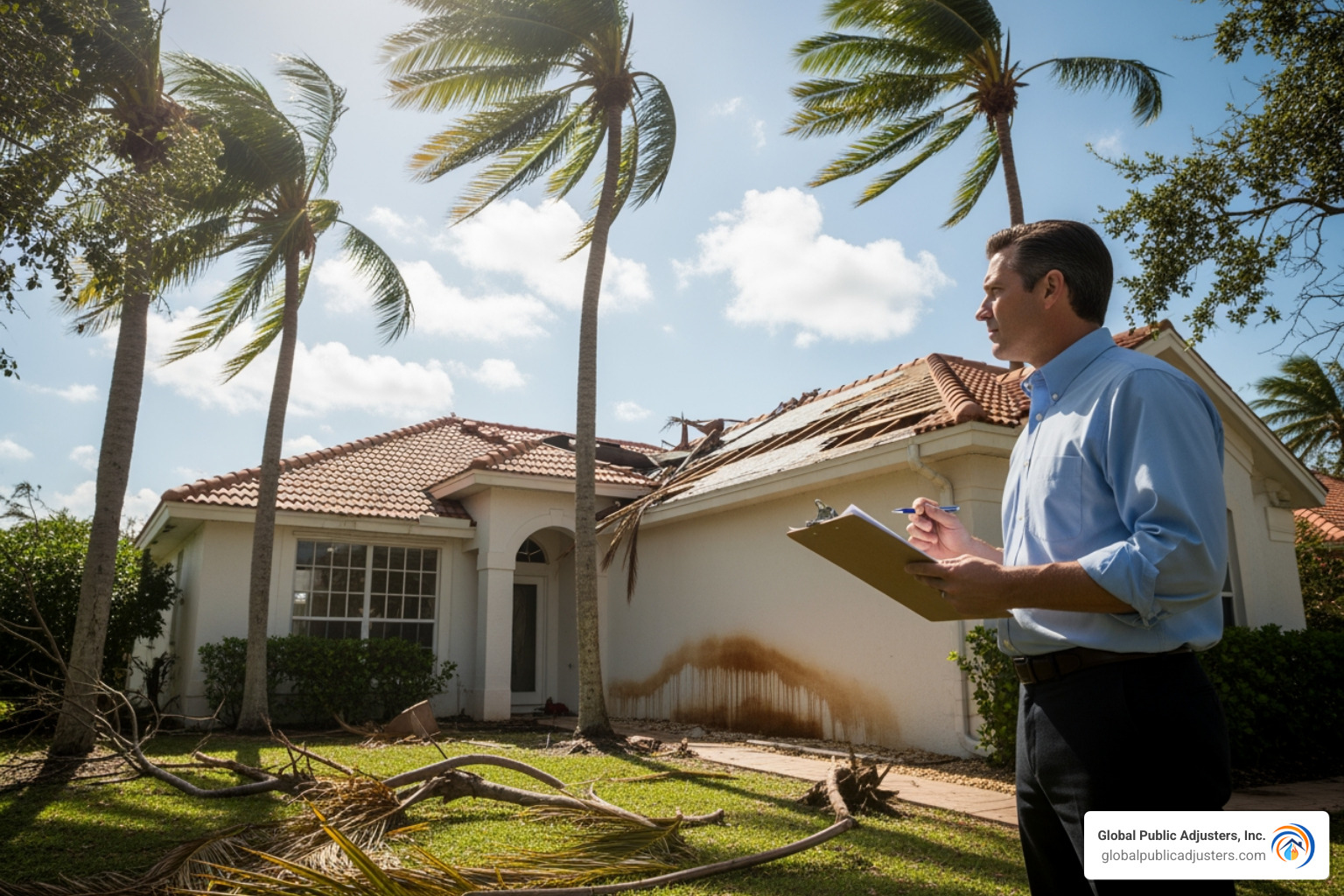
Florida is one of the most disaster-prone states in the nation. When Hurricane Irma hit in 2017, it generated more than 1 million claims totaling over $11.08 billion in damages. That’s justonestorm.
This constant exposure to hurricanes, tropical storms, and weather-related damage creates steady demand for skilled insurance adjusters. The Sunshine State needs professionals who can assess property damage, interview witnesses, and determine fair claim values. Whether you want to work as an independent contractor, join an insurance company, or eventually become a public adjuster, Florida offers a clear path to licensure.
This guide walks you through every step of the process, from meeting basic requirements to maintaining your license. You’ll learn about the different license types, education requirements, exam options, and costs involved. By the end, you’ll have a complete roadmap to launch your career as a Florida insurance adjuster.

Understanding the Florida Adjuster Landscape

The role of an insurance adjuster is critical in the aftermath of unforeseen events, from minor accidents to major natural disasters. As adjusters, we are the eyes and ears on the ground, tasked with investigating claims, assessing damages, interviewing witnesses, and ultimately determining the true, fair value of a claim for all parties involved. It’s a challenging yet rewarding profession that requires a keen eye for detail, strong communication skills, and a solid understanding of insurance policies.
Why is Florida such a prime location for this career? Well, as we mentioned, Florida’s unique geography makes it highly susceptible to hurricane and weather damage. Our beautiful coastline, while a draw for tourists and residents, also puts us directly in the path of tropical storms and hurricanes. This constant threat means there’s a perpetual need for skilled adjusters to handle the influx of claims. The sheer volume of claims, like the over 1 million filed after Hurricane Irma in 2017 amounting to more than $11.08 billion, underscores the consistent demand for our expertise. Whether you’re in Orlando, Pensacola, or anywhere else across the state, the opportunities tobecome a Florida insurance adjusterare abundant.
Before we dive into the nitty-gritty of licensing, it’s helpful to understand the different types of adjusters you might encounter or become:
- Independent Adjusters: These adjusters work for multiple insurance carriers on a contract basis. They are not directly employed by an insurance company but are hired to handle claims as needed, often during peak times or catastrophic events. They ascertain and determine the amount of a claim or loss payable under an insurance contract on behalf of an insurer.
- Company Employee Adjusters (Staff Adjusters): These adjusters are direct employees of a specific insurance company. They handle claims exclusively for their employer and are typically salaried.
- Public Adjusters: This is where we come in! Unlike independent or staff adjusters who represent the insurance company, public adjusters work solely for the policyholder. Our mission is to advocate for homeowners and business owners, ensuring they receive the maximum settlement they are entitled to under their policy. This can involve meticulous damage assessment, policy interpretation, and negotiation with the insurance company. Becoming a public adjuster often requires an initial resident all-lines adjuster license (6-20) as a stepping stone.
For a deeper dive into the specific roles and responsibilities of these and other claims professionals, you can exploreMore info on the different types of adjusters. The career path of an adjuster can be incredibly dynamic, offering opportunities to specialize, travel, and continuously learn. Now, let’s get down to the essential steps to get your foot in the door.
Your Step-by-Step Guide to Become a Florida Insurance Adjuster
Step 1: Meet the Basic Requirements to Become a Florida Insurance Adjuster
Before you can even think about tackling exams or paperwork, you need to ensure you meet the foundational requirements set by the Florida Department of Financial Services (DFS). These are pretty straightforward, but crucial:
- Age Requirement: You must be at least 18 years old. No exceptions here, folks!
- Residency: To obtain a resident Florida adjuster license (the 6-20 type), you must be a bona fide resident of Florida. If you’re not a Florida resident, don’t fret! We’ll cover non-resident and Designated Home State (DHS) licenses shortly.
- Citizenship or Work Authorization: You must be a U.S. citizen or a legal alien with valid work authorization in the United States. If you’re a non-citizen, you’ll need to submit documentation proving your work authorization. The state requires applicants to have a Social Security Number (SSN) with U.S. work authorization. If you have an Individual Taxpayer Identification Number (ITIN) that begins with the number 9, you might need to contact the DFS directly for guidance. For more detailed information, check theOfficial citizenship requirements.
- No Other Resident Licenses: If you’re applying for a resident Florida license, you generally cannot hold an active resident adjuster license in any other state. Florida wants you to call us your home base!
Meeting these initial criteria is your first victory on the journey tobecome a Florida insurance adjuster.
Step 2: Choose Your License Type
This is a critical decision, as the type of license you pursue will depend on your residency and career goals. Florida offers a few different flavors of adjuster licenses:
| License Type | Description | Who It’s For | Key Features |
|---|---|---|---|
| 6-20 Resident All-Lines Adjuster | The most common license for Florida residents. Allows you to handle all types of property and casualty claims. | Florida residents | Required for residents, often a prerequisite for a 3-20 Public Adjuster license. |
| 7-20 Non-Resident All-Lines Adjuster | For individuals who are residents of another state and hold an active resident adjuster license in that state. | Non-Florida residents with a home state license | Grants reciprocity based on your home state license. |
| 70-20 Designated Home State (DHS) Adjuster | For individuals who are residents of a state thatdoes notlicense adjusters. Florida acts as their “home state” for licensing purposes. | Non-Florida residents from non-licensing states | Provides a “home state” license for reciprocity with other states. |
Let’s break them down a bit more:
- 6-20 Resident All-Lines Adjuster: If you live in Florida, this is likely your starting point. It’s an “all-lines” license, meaning you can handle various types of property and casualty claims, from auto accidents to hurricane damage. For those aspiring to represent policyholders against insurance companies, obtaining a 6-20 license is often the required first step toward becoming a Florida Public Adjuster (3-20 license). If you’re curious about the exciting world of advocating for policyholders, you canLearn about becoming a public adjuster.
- 7-20 Non-Resident All-Lines Adjuster: For our colleagues residing outside the Sunshine State, if your home state already licenses adjusters, you can typically apply for a 7-20 non-resident license in Florida. This is often granted based on reciprocity with your existing home state license.
- 70-20 Designated Home State (DHS) Adjuster: This license is a fantastic option for individuals living in states that don’t offer their own adjuster licenses. In this scenario, Florida essentially becomes your “home state” for licensing. This license provides excellent reciprocity, allowing you to work in many other states that recognize Florida’s DHS license. It’s a popular choice for adjusters seeking broad work opportunities without a home state license.
Choosing the right license type is crucial, so take a moment to consider your current residency and future career aspirations.
Step 3: Complete Pre-Licensing Education & Exam
Now that you know which license you’re aiming for, it’s time to hit the books! Florida has specific requirements for pre-licensing education.
The 40-Hour Pre-Licensing Course: The Florida Department of Financial Services (DFS) requires all prospective licensees to complete a 40-hour pre-licensing course. This course covers a comprehensive range of topics essential for an all-lines adjuster, preparing you for the complexities of the job. These courses are typically offered online and are self-paced, allowing you to study at your convenience.
To find an approved provider, you can use the DFS’s education database:Find an approved pre-licensing course. When searching, make sure to select the “Prelicensing” radio button.State Exam Exemption via Certified Adjuster Designation: Here’s a neat trick! Florida Statute 626.221(j) allows for an exemption from the state licensing exam if you complete an approved Certified Adjuster Designation course. Providers like Kaplan and AdjusterPro offer these 40-hour courses, which include their own final exam. If you pass their course exam, you’re exempt from taking the separate state exam. This can be a more streamlined path for many. Upon successful completion of such a course and its included exam, you can apply for your license without additional testing.
Taking the State Exam (if not exempt): If you opt not to pursue an exam-exempt designation, or if you’re taking a course that doesn’t offer the exemption, you’ll need to schedule and pass the Florida All Lines Adjuster state examination. This exam is typically administered by Pearson VUE. It’s a multiple-choice test, usually consisting of 100 questions, and you’ll need to score 70% or better to pass.
You can find more information about the state exam, including scheduling and locations, here:Information on the state exam.
Regardless of whether you choose the exam-exempt path or the traditional state exam route, thorough preparation is key. Many providers offer additional exam prep materials, practice tests, and study tools to help reinforce your understanding of insurance concepts and regulations. We’ve heard that some even include a few corny jokes to keep things light!
Step 4: The Application Process to Become a Florida Insurance Adjuster
You’ve met the requirements, chosen your license type, and conquered your education. Now it’s time for the official paperwork!

Submitting Your Application Online: The entire application process for your Florida adjuster license is handled electronically through the Florida Department of Financial Services’ MyProfile portal. This is your one-stop shop for submitting your application, paying fees, and monitoring your application’s status. When you apply, make sure you select the correct Florida license type (e.g., 6-20 for residents, 7-20 for non-residents).
You can start your application journey here:Apply for your license via MyProfile. After submission, it’s a good idea to set up your MyProfile account if you haven’t already, so you can track your progress and receive important notifications.Fingerprinting Requirements: As part of the background check, all Florida applicants must be fingerprinted. This process is handled by IdentoGO by Idemia (formerly MorphoTrust USA). The fee for fingerprinting is $50.75.
You’ll need to register and pay for your fingerprinting appointment online. You can schedule your appointment and find additional information here:Schedule your fingerprinting appointment.
A quick note on this: you might be exempt from re-fingerprinting if you’ve already submitted them to Florida within a certain timeframe. Specifically, if you submitted fingerprints to Florida in the last 12 months, you generally don’t need to resubmit. If you currently hold a valid Florida license and submitted fingerprints within the last 48 months, you’re also likely exempt.Background Checks and Criminal History: Your fingerprints are used to conduct a thorough background check. If you have any concerns about past criminal history, it is crucial to fully disclose this information on your application. The DFS reviews such cases on an individual basis. It’s always best to be transparent. The Florida Department of Financial Services provides specific guidance for applicants with a criminal history:Guidance for applicants with a criminal history.
Proof of Citizenship: If required, you will also need to submit proof of citizenship documentation. This typically applies to non-citizens who need to provide work authorization documents.
Once all these steps are complete, you’ll be able to check the status of your application through your MyProfile account. The DFS will send notifications regarding any deficiencies or when your license has been issued. Patience is a virtue during this waiting period, but logging into MyProfile will keep you in the loop!
Costs, Appointments, and Maintaining Your License
Congratulations, future Florida adjuster! You’re nearing the finish line. But before you start envisioning yourself on claims sites, let’s talk about the practicalities: the costs involved, how to get “appointed,” and what it takes to keep your hard-earned license active.
Breakdown of Fees
Obtaining your Florida adjuster license involves several fees. It’s wise to budget for these upfront:
- Initial Licensing and Application Fee: This is the fee to submit your application to the state. It totals$57.45. This breaks down into a $50 application fee, a $5 license ID fee, and a $2.45 credit card convenience fee. That all Florida application fees are non-refundable, so double-check everything before you click submit!
- Fingerprint Fee: As mentioned earlier, the fee for your fingerprinting and background check is$50.75.
- State Exam Fee (if applicable): If you’re taking the state exam through Pearson VUE (and not using an exam exemption), the exam fee is typically$44.
- Independent Adjuster Appointment Fee: For independent adjusters, once your license is issued, you’ll need to “self-appoint” it. This comes with a$60 fee, plus a credit card company convenience fee (which is usually around 3.3% of the transaction).
- Reinstatement Fee: If your license ever expires and you need to reinstate it, there’s a $50 reinstatement fee.
For comprehensive and up-to-date information on all fees and licensing details, always refer to the official source:Official fee and licensing information from the FLDFS.
Self-Appointment for Independent Adjusters
This is a unique and important step for those looking to work as independent adjusters in Florida. Unlike staff adjusters who are appointed by their employing insurance company, independent adjusters must self-appoint their license.
Here’s how it works: Once your license number is issued and you receive confirmation, you’ll need to:
- Log into your MyProfile account.
- Select the “Access eAppoint” button.
- If it’s your first time using eAppoint, you’ll need to register as an appointing entity.
- Follow the on-screen instructions to create a “New Appointment” for yourself.
- Pay the$60 appointment fee(plus the convenience fee).
Your license isn’t fully “active” for independent work until it’s appointed.
License Expiration Rules
A Florida adjuster license needs to be appointed to remain active. A crucial rule to remember:an adjuster license can only hold one appointment at a time.More importantly,this license will expire if unappointed for 48 months.That’s four years. So, if you get your license but don’t immediately start working or get appointed, make sure to keep an eye on that 48-month clock!
Continuing Education (CE) and Reciprocity
Maintaining your license is just as important as obtaining it. Florida ensures its adjusters stay current with industry changes and regulations through continuing education.
Continuing Education (CE) Requirements: All licensed Florida adjusters are required to complete24 hours of continuing education every two years. A significant portion of this,5 hours, must be dedicated to a “Law and Ethics Update” course specific to your license type. Your CE hours are due by the end of your birth month, bi-annually. So, if you were born in June, your CE would be due every other June. It’s a good idea to track your CE hours and complete them well before the deadline to avoid any last-minute stress or license inactivation.
License Reciprocity with Other States: One of the great advantages of holding a Florida adjuster license, especially the 70-20 DHS license, is its strong reciprocity with other states. Florida grants reciprocal licenses to adjusters who are licensed in a state that has a reciprocal agreement with Florida. This means your Florida license can open doors to work in many other states without having to go through their full licensing process. This is particularly valuable for adjusters who want to travel for catastrophe (CAT) deployments.
However, it’s important to note that not all states have reciprocity with Florida. The following statesdo nothave reciprocal agreements with Florida:
- Arizona (AZ)
- California (CA)
- Hawaii (HI)
- New Mexico (NM)
- New York (NY)
Always check the latest reciprocity agreements before planning to work in a new state. You can view all the details regarding reciprocity for Florida adjusters on the DFS website:View Florida’s reciprocating states.
Frequently Asked Questions about Becoming a Florida Insurance Adjuster
We get a lot of questions about the path tobecome a Florida insurance adjuster. Here are some of the most common ones we hear, along with our answers:
How long does it take to become a licensed adjuster in Florida?
The timeline can vary depending on how quickly you move through each step, but here’s a general estimate:
- Pre-Licensing Course: The required 40-hour course can be completed at your own pace. Some dedicated individuals might finish it in a week or two, while others might spread it out over a month.
- Exam: If you’re taking a state exam, scheduling depends on Pearson VUE availability. If you’re doing an exam-exempt designation course, you take the exam as part of the course.
- Application Processing: Once you submit your application and fingerprints, the state’s processing time can vary, but it typically takes a few weeks. It’s always a good idea to monitor your MyProfile account for updates.
- Total Estimated Timeline: From start to finish, most people can realistically expect the entire process to take anywhere from3 to 8 weeks. This includes study time, waiting for fingerprint results, and state processing.
Can I get a Florida adjuster license if I live in another state?
Absolutely! Florida is quite friendly to out-of-state adjusters, which is great news for those looking for broader opportunities.
- If you are a resident of another state and already hold an active resident adjuster license there, you can apply for a7-20 Non-Resident All-Lines Adjuster licensein Florida. This is generally granted based on reciprocity.
- If you live in a state that does not license adjusters, you can pursue a70-20 Designated Home State (DHS) All-Lines Adjuster licensethrough Florida. This license effectively makes Florida your “home state” for licensing purposes, allowing you to work in many other states that recognize Florida’s DHS license. The Florida 70-20 Nonresident DHS license is highly recommended for its excellent reciprocity.
What if I have a criminal history?
Having a criminal history doesn’t automatically disqualify you from becoming a Florida insurance adjuster, but it does require careful attention.
- The Florida Department of Financial Services (DFS) reviews each case individually. They will conduct a background check based on your fingerprints and the information you provide.
- The most important thing isfull and honest disclosureon your application. Attempting to hide information can lead to immediate disqualification or even legal repercussions.
- If you have concerns about your criminal history, we recommend reviewing the guidance provided by the FLCFO (Florida Chief Financial Officer) on their criminal history page:Guidance for applicants with a criminal history. This resource offers valuable insights into how criminal histories are evaluated and what steps you might need to take.
Conclusion: Launching Your Adjuster Career in Florida
Starting on the journey tobecome a Florida insurance adjusteris a smart move, especially in a state with such consistent demand for skilled professionals. As we’ve seen, Florida’s unique position as a hub for weather-related claims creates a dynamic and rewarding career path. From the initial requirements and choosing your license type to completing your education, navigating the application process, and understanding ongoing maintenance, we’ve laid out the roadmap for you.
The insurance industry, particularly in claims, relies heavily on ethical, knowledgeable, and diligent adjusters. These professionals are the backbone of recovery for countless individuals and businesses after disaster strikes. We believe that a well-informed and well-prepared adjuster can make all the difference in people’s lives.
It’s also important to remember that while many adjusters work for insurance companies, there’s another side of the coin: public adjusters. We, at Global Public Adjusters, Inc., specialize in representing homeowners and business owners, ensuring they get the maximum settlement for their claims. Understanding the different roles within the adjusting world is key to finding your niche. For a deeper understanding of the profession from the policyholder’s perspective, readWhat the public should know about adjusters.
If you’re ready to dive into a career that offers both challenge and significant impact, Florida is waiting. For policyholders in Orlando, Pensacola, and across Florida who find themselves facing complex insurance claims and needing expert guidance, firms like Global Public Adjusters, Inc. offer the advocacy and expertise to maximize their settlements.Learn more about how public adjusters can help you.