Clogged AC drain line: 3 Easy Fixes
Why a Clogged AC Drain Line Demands Your Immediate Attention
Aclogged AC drain linecan shut down your cooling system and cause thousands of dollars in water damage. Here’s what you need to know:
Quick Fix for a Clogged AC Drain Line:
- Turn off powerto your AC at the thermostat and breaker.
- Use a wet/dry vacuumon the outdoor drain pipe for 2-3 minutes.
- Pour 1 cup of distilled white vinegarinto the indoor drain line access port.
- Let it sit for 30 minutes, then flush with water.
- Restore powerand test your system.
If water damage is visible or the clog persists, call a professional immediately.
Your air conditioner removes humidity by creating condensation on its cold evaporator coil. This water drips into a drain pan and flows through a PVC pipe—the condensate drain line—safely outside your home.
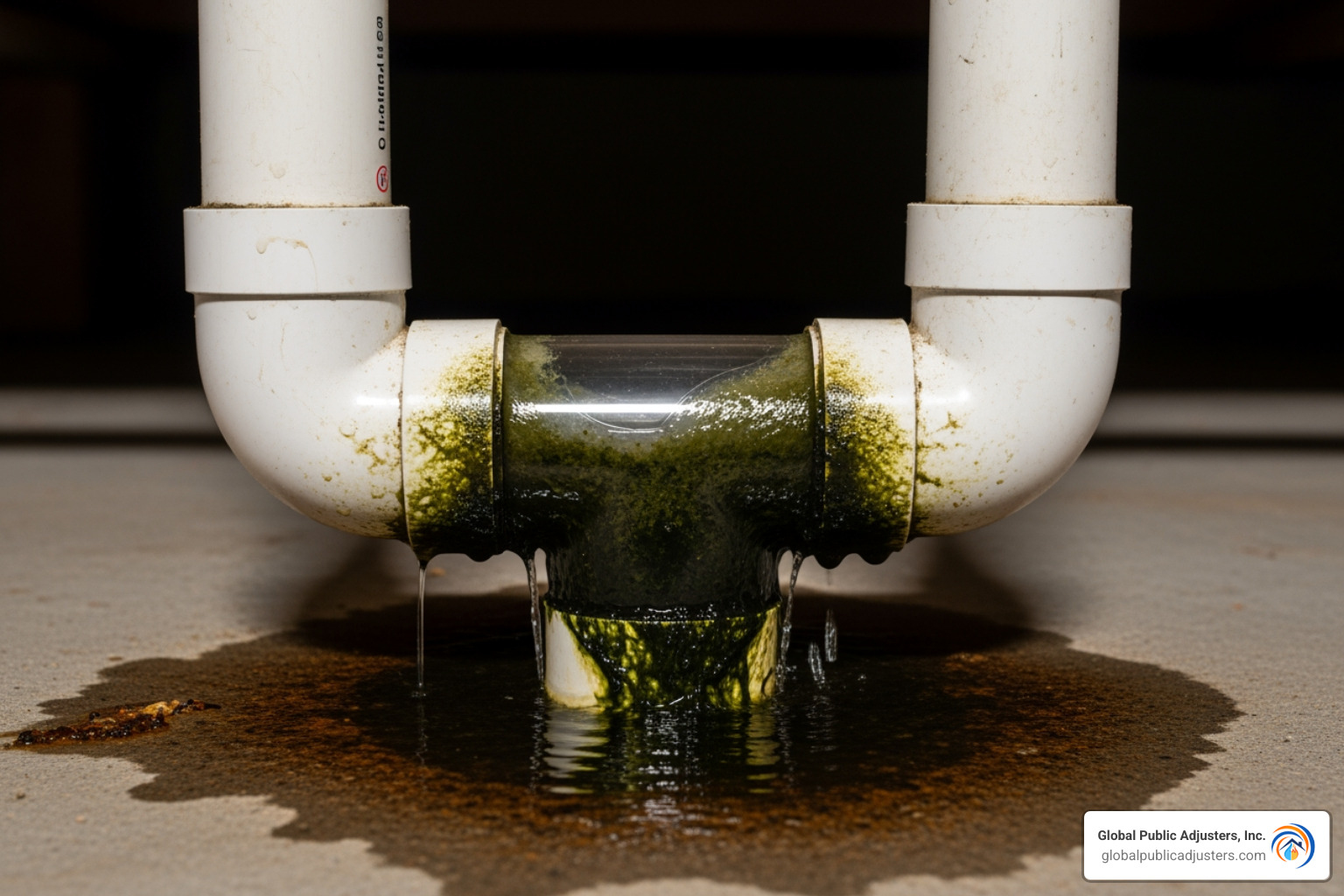
The problem is that this dark, damp drain line is a perfect breeding ground for algae, mold, and slime. When mixed with dust and debris, this gunk forms a stubborn clog, causing water to back up into your home.
The consequences are severe: water damage to floors, walls, and ceilings, and mold growth that harms your air quality and health. In humid areas like Florida, these issues account for up to 40% of HVAC service calls.
Fortunately, most clogs are preventable with simple maintenance. This guide will show you how to clear your drain line and protect your home from water damage.
Your AC is Leaking? Understanding the Condensate Drain Line
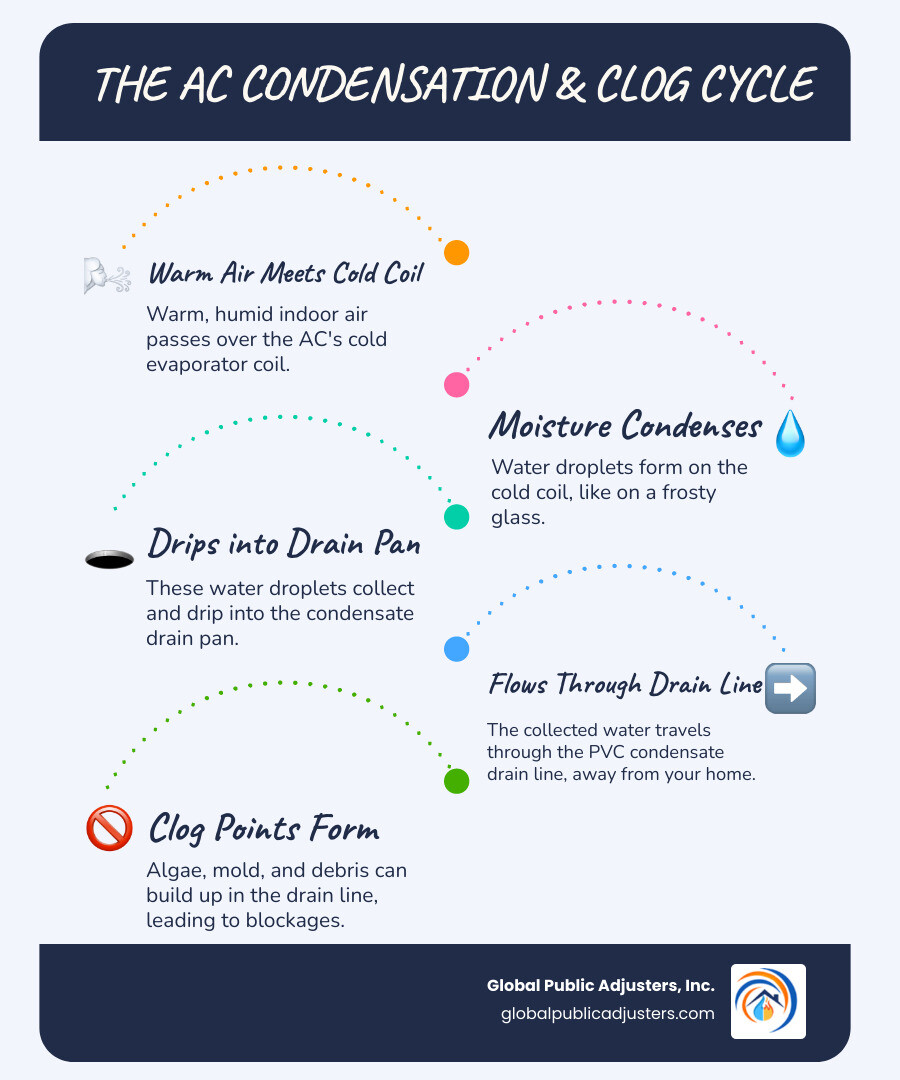
Your AC doesn’t just cool your home; it also removes humidity. This process relies on a component called theevaporator coil.
As warm, humid air passes over the coldevaporator coil, moisture condenses into water droplets. This water drips into a shallowdrain panand flows through aPVC pipe—thecondensate drain line—which carries it safely outside. When working correctly, this system channels gallons of water away from your home daily, preventing moisture damage and mold growth.
What Causes AC Drain Line Clogs?
The dark, damp, and warm interior of the drain line is an ideal environment for growth, especially in humid climates like Florida. The primary culprits are:
- Algae and Mold:These microorganisms thrive in the drain line, forming a thick, slimy biofilm that restricts and eventually blocks water flow. This is the most common cause of aclogged AC drain line.
- Dust and Debris:Your air filter traps most airborne particles, but some dust, dirt, and pet dander can still reach the evaporator coil. Condensation washes these particles into the drain line, where they mix with the slime to create a more solid blockage.
- Lack of Maintenance:Without regular cleaning, clogs are inevitable. An AC drain line is like any other drain; it needs periodic attention to stay clear.
- Improper Installation:If a drain line is installed without a proper downward slope, water can stagnate, accelerating mold and algae growth. Similarly, a P-trap (a U-shaped bend) can collect debris and cause clogs if not maintained.
Warning Signs and Costly Consequences of a Clogged AC Drain Line
Recognizing the early warning signs of aclogged AC drain linecan prevent a minor issue from becoming a major disaster. Look out for these red flags:
- Water puddles or stains:Standing water near your indoor unit or water stains on the ceiling below it are the most obvious signs.
- Full drain pan:The pan under your evaporator coil should be nearly empty. If it’s full, the line is blocked.
- Musty or moldy smells:A mildew smell near your vents or indoor unit indicates stagnant water and potential mold growth.
- AC not cooling or shutting down:Many units have a safety float switch that shuts the system off when the drain pan fills to prevent overflow. If your AC stops working, a clog is a likely culprit.
- Gurgling sounds:Noises from the drain line suggest water is struggling to pass through a partial blockage.
The Dangers of Ignoring a Clog
Ignoring aclogged AC drain linecan lead to costly consequences, especially in humid Florida. A small problem can quickly escalate, causing:
- Water Damage:Overflowing water can soak drywall, ruin insulation, and damage flooring within hours. Learn to spotsome signs of water damage in your hometo act quickly.
- Structural Damage:Persistent leaks, especially from an attic unit, can weaken wooden beams and joists, leading to expensive structural repairs. Understandinghow water can damage your homeis crucial.
- Mold and Mildew Growth:Stagnant water creates a perfect breeding ground for mold, which can spread through your home and ventilation system. This leads to costly remediation and health risks.
- Poor Indoor Air Quality:Mold spores circulating through your HVAC system can trigger allergies, asthma, and other respiratory issues. The CDC warns of serious health complications from mold.
- HVAC System Failure:Water can corrode electrical components, leading to expensive repairs or even a complete system replacement.
- Higher Energy Bills:A partially clogged line forces your system to work harder, increasing electricity consumption.
A clogged drain line is a direct threat to your home, health, and finances. While prevention is best, if damage has already occurred, an experienced public adjuster can be invaluable in the insurance claim process.
How to Unclog Your AC Drain Line: A DIY Guide
Before starting any work, safety is paramount. You will be working with electricity and water, so you must cut the power first.
Step 1: Safety First and Gather Your Tools
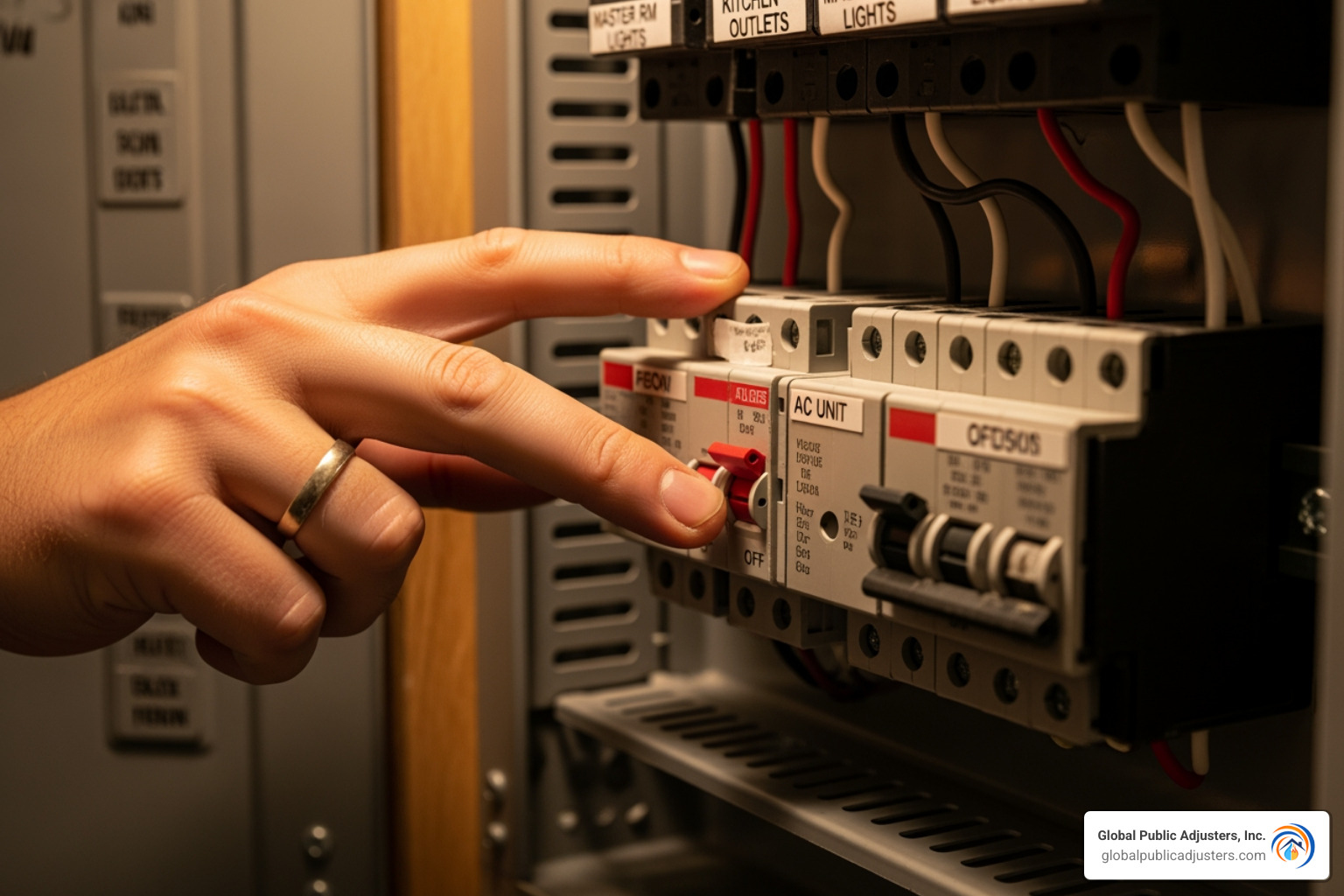
First,turn off the powerto your AC at the thermostat, then flip the corresponding circuit breaker in your electrical panel to the off position. Gather your safety gear and tools:
- Safety:Safety goggles, gloves, and old towels or rags.
- Tools:A wet/dry vacuum, distilled white vinegar, a funnel, and an optional stiff wire brush.
Step 2: Locate the Drain Line and Clear the Blockage
Find your indoor AC unit (air handler), which is often in a closet, attic, or garage. Look for a white PVC pipe coming from it—this is the condensate drain line. You should see a T-shaped vent with a removable cap, which is your access point.
If the drain pan is full, use your wet/dry vacuum to remove the standing water first.
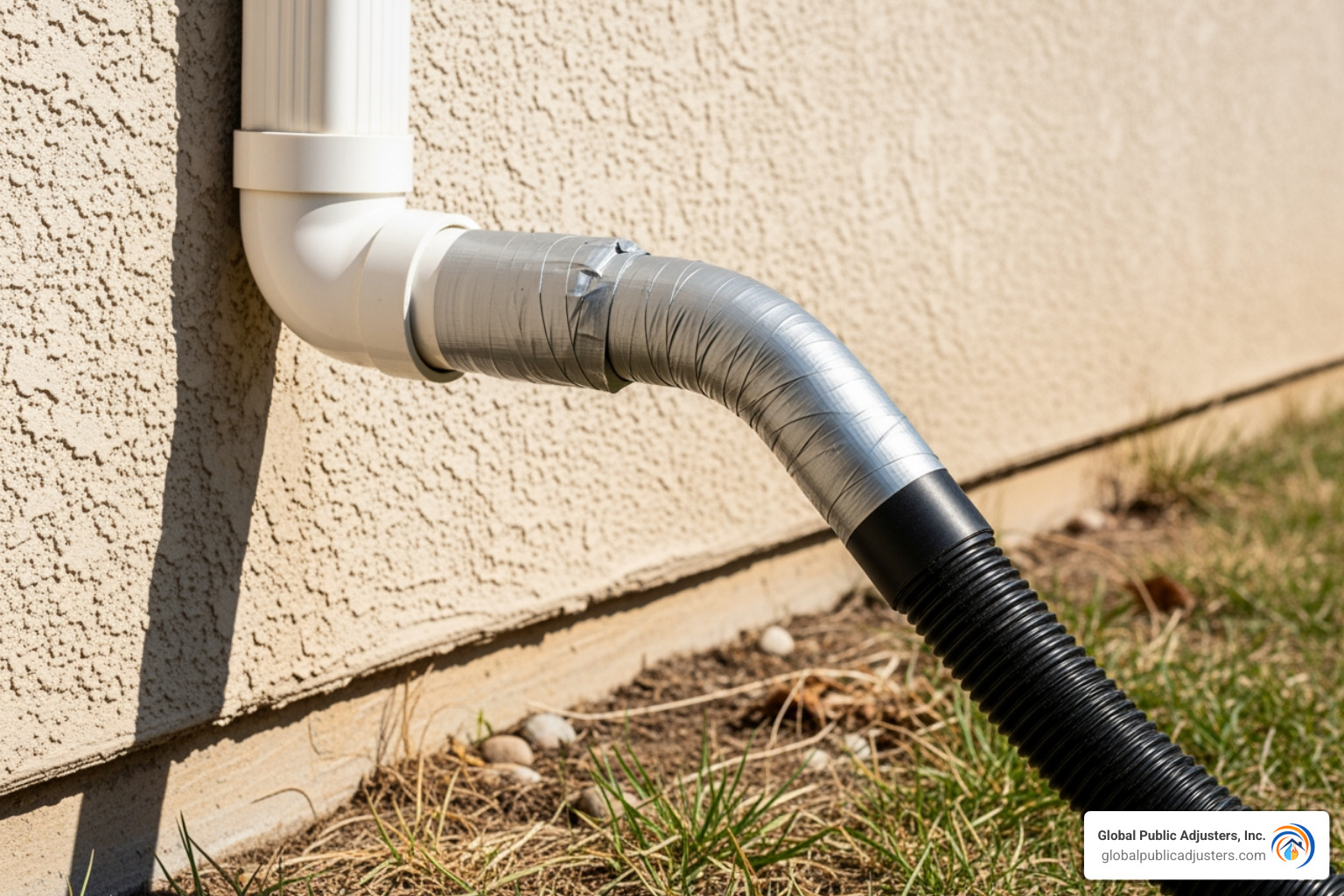
Next, find the drain line’s exit outside your home, usually a small PVC pipe near the outdoor AC unit.Place your wet/dry vacuum hoseover this outdoor pipe, creating a tight seal with your hands or duct tape.Turn on the vacuum for 2-3 minutes.The suction should pull the slimy clog out of the pipe and into the vacuum canister. This is a highly effective method for clearing aclogged AC drain line.
Step 3: Flush and Clean the Line
After vacuuming, return to the indoor unit’s access tee. Use a funnel topour one cup of distilled white vinegarinto the line.Let the vinegar sit for at least 30 minutesto break down any remaining algae and mold.
After 30 minutes,flush the line with 1-2 cups of clean waterto rinse out the vinegar and loosened debris. Check the outdoor exit to confirm that water is flowing freely. If it’s still blocked, you may need to repeat the process or call a professional.
Important:Never use harsh chemical drain cleaners or bleach. These can corrode PVC pipes, damage AC components, and release harmful fumes. Distilled white vinegar is a safer and effective alternative for the organic buildup found in AC drain lines.
Prevention is Key: Keeping Your AC Drain Line Clear
Preventing aclogged AC drain lineis far easier than fixing one. A few simple habits can protect your AC system, prevent water damage, and save you from future headaches, especially in Florida’s humid climate.
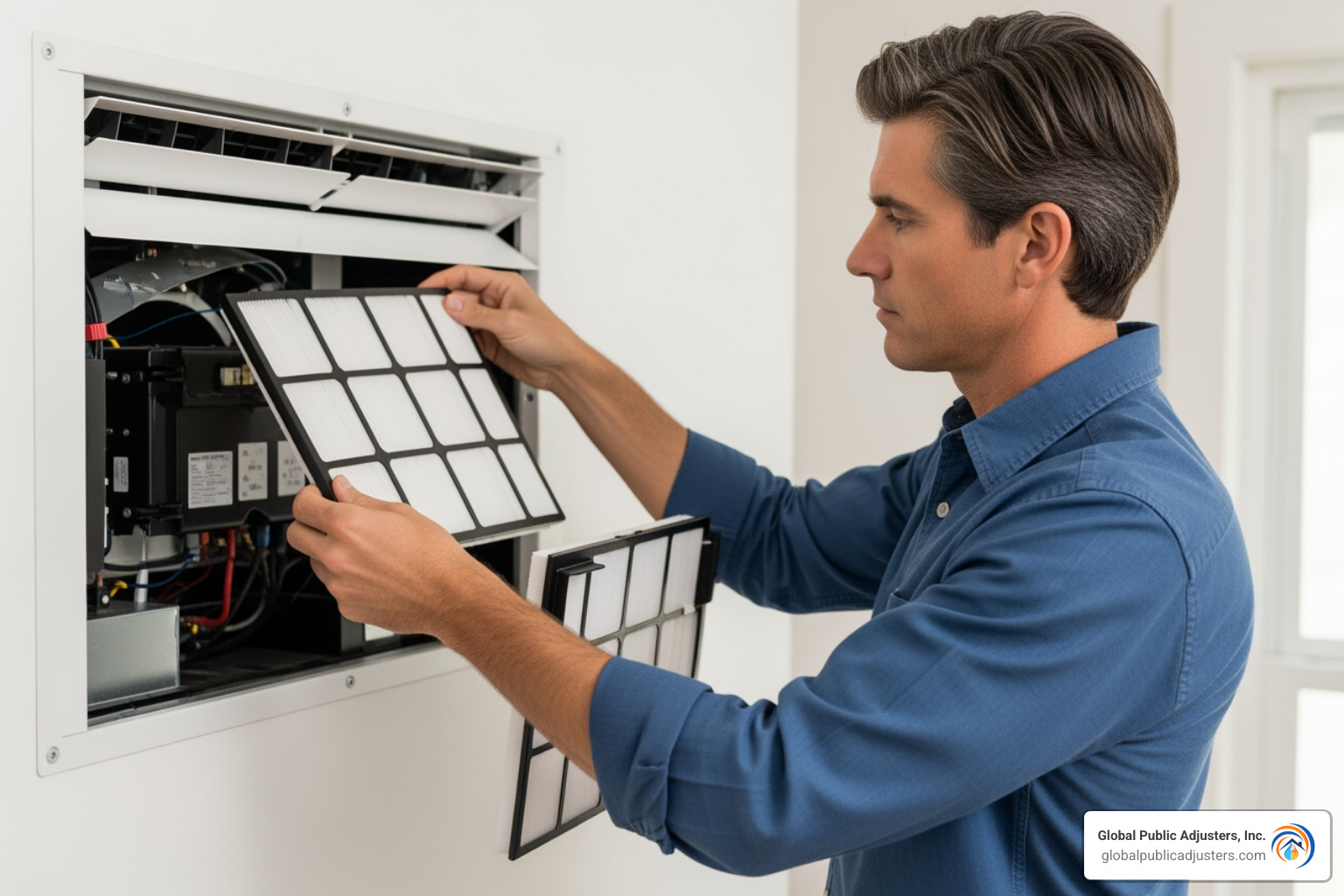
Simple Maintenance to Prevent a Clogged AC Drain Line
Incorporate these tasks into your home maintenance routine to keep your drain line clear:
- Regular Vinegar Flush:Every 3-6 months (quarterly in Florida), pour one cup of distilled white vinegar into the drain line’s access port to kill algae and mold before they build up.
- Change Air Filters:A dirty filter allows dust and debris to enter the system, which then washes into the drain line. Change your filter every 1-3 months (monthly during peak season or with pets).
- Keep the Area Clean:Regularly dust and vacuum around your indoor air handler to reduce the amount of debris that can be pulled into the system.
- Check the Outdoor Exit:Ensure the outdoor drain pipe is clear of grass, leaves, and other obstructions.
- Use Condensate Pan Tablets:These inexpensive tablets sit in the drain pan and slowly dissolve, preventing the growth of algae and bacteria.
When to Call a Professional for a Clogged AC Drain Line
While DIY methods are effective, sometimes you need a professional. Call an HVAC technician if:
- DIY methods fail:If vacuuming and flushing don’t clear the clog, the blockage may be too severe or inaccessible.
- Clogs are recurring:Frequent clogs suggest an underlying issue, like improper installation or a damaged pipe, that a technician can diagnose.
- You see visible water damage:If you have water stains or pooling water, call a pro immediately to prevent further damage. For significant issues like anair conditioning leak Orlando, careful documentation for insurance is key.
- The AC system won’t restart:This could indicate a problem with the safety float switch or another electrical component that requires expert attention.
- You’re not comfortable with the work:HVAC professionals have specialized tools to handle the job quickly and safely.
Frequently Asked Questions about AC Drain Lines
Here are answers to some of the most common questions homeowners have about aclogged AC drain line.
How much does it cost to unclog an AC drain line?
A DIY fix is very inexpensive, typically costing only a few dollars for a bottle of distilled white vinegar. If you need to hire a professional, expect to pay between$75 and $250. The final cost depends on your location in Florida, the severity of the clog, and whether additional services like a system tune-up are performed. Always get a quote upfront.
Can I pour hot water down my AC drain line?
It’s not recommended. While warm (not boiling) water might help with very minor clogs, it’s often ineffective against the thick slime common in Florida. More importantly,never pour boiling waterinto the line, as it can warp or damage the PVC pipes, leading to more serious problems. The vinegar and vacuum methods are safer and more effective.
Will a clogged AC drain line stop my AC from working?
Yes, in most cases. Modern AC units have asafety float switchin the condensate pan. When water backs up due to a clog, the rising water level trips this switch, automatically shutting down the system. This is a crucial safety feature that prevents the pan from overflowing and causing extensive water damage to your home. If your AC suddenly stops working, aclogged AC drain lineis a very likely cause.
Protect Your Home from AC Water Damage
Aclogged AC drain lineis a serious threat to your home. By following the preventative maintenance and DIY steps in this guide, you can protect your HVAC system and your property’s structural integrity.
However, sometimes a clog causes damage before it’s caught. If you’re facing water stains, soaked insulation, or warped floors, the situation can become stressful, especially when it’s time to file an insurance claim. Insurance companies have adjusters working for them—who is working for you?
At Global Public Adjusters, Inc., we have over 50 years of experience helping Florida homeowners and businesses steer complex insurance claims. We specialize in documenting the full extent of water damage from AC leaks, preparing detailed claims, and negotiating with insurance companies to ensure you receive the fair settlement you deserve.
We act as your exclusive advocate, managing the claims process so you can focus on restoring your property. If aclogged AC drain linehas led to water damage, you don’t have to handle it alone. For expert help with yourproperty damage claims in Orlando, contact Global Public Adjusters, Inc. today.