AC leak damage: Avoid Costly 2025 Repairs
Why AC Leak Damage Deserves Your Immediate Attention
AC leak damagehappens when your air conditioner leaks water or refrigerant, causing water intrusion, structural issues, mold, and expensive repairs. A water stain on the ceiling, a musty odor, or pooling water are all signs of this common and costly home emergency.
Quick Answer: What You Need to Know About AC Leak Damage
- Two main types: Water leaks (from clogged drains or frozen coils) and refrigerant leaks (from cracks in the system)
- Common damage: Warped floors, damaged drywall, mold growth, electrical hazards, and weakened structural components
- Immediate action: Turn off your AC, shut off power at the breaker, contain water, and document everything with photos
- Typical repair costs: $125-$300 for drain cleaning, up to $1,200+ for major coil repairs
- Insurance consideration: Sudden leaks are often covered, but gradual damage from poor maintenance may be denied
An AC can produce up to 20 gallons of condensation daily. If it doesn’t drain correctly, the damage is swift. Water can ruin furniture and electronics in hours, while mold can start growing in just 24-48 hours. Unaddressed leaks can lead to structural failure and thousands in repair costs.
This guide covers the causes of AC leaks, how to identify them, the potential damage, immediate actions to take, repair costs, prevention tips, and how to steer your insurance claim for fair compensation.
What Causes an AC to Leak?
When your AC isn’t cooling properly or you find water pooling nearby, it’s a sign of a leak. Understanding the causes ofAC leak damagecan help you identify problems early and save on repairs. Here are the most common culprits.
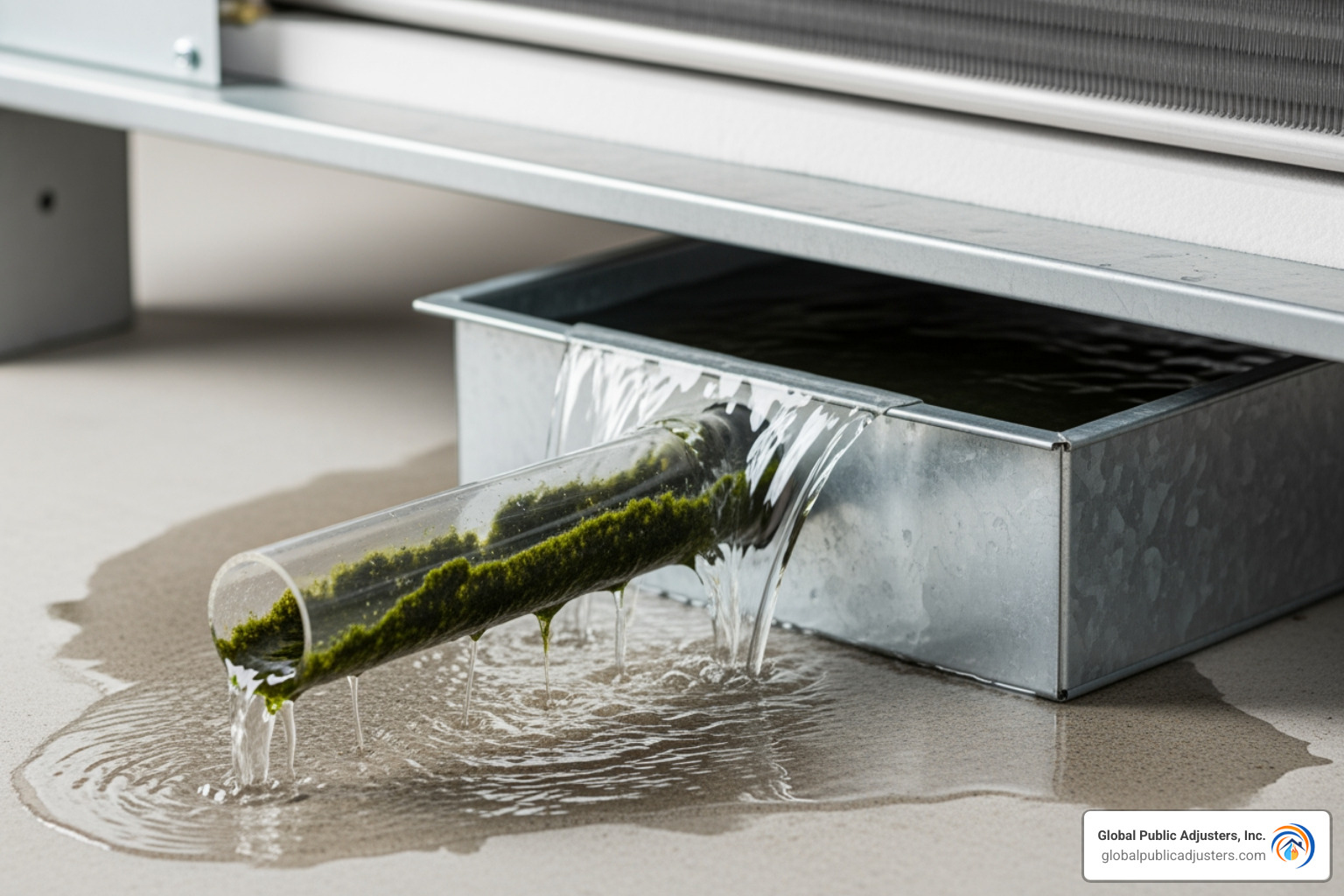
Clogged condensate drain lineis the most common cause of AC water leaks. Your AC removes humidity, creating condensation that drains outside through a PVC pipe. This line can get clogged with algae, mold, and debris, causing water to back up and overflow into your ceiling, walls, or floors.
Dirty air filtersrestrict airflow over the evaporator coil, causing it to freeze. When the ice melts, the sudden rush of water overwhelms the drain pan, leading to a leak. Change your filter every 30 to 90 days to prevent this.
Frozen evaporator coilscan also be caused by low refrigerant or dirt on the coils themselves. As the ice thaws, it creates more water than the drain system can handle. Ice on your indoor unit is a sign of a problem that needs a professional.
Damaged or rusted drain pansare common in older AC units (12-15 years). The pans can rust or crack, allowing water to leak directly into the structure below, often in a ceiling or closet where it goes unnoticed.
Low refrigerantmeans there’s a leak in the system. This causes the evaporator coil to get too cold and freeze, leading to water leaks when it thaws. A certified HVAC technician must find and repair the leak and then recharge the system.
Faulty condensate pumpsare an issue in homes where gravity drainage isn’t possible (like basements). The pump moves condensation outside, and if it fails, water backs up and overflows.
Improper installationcan also be the cause. If the AC unit isn’t level or the drain line has a poor slope, water won’t drain correctly and will back up into your home.
Distinguishing Water Leaks from Refrigerant Leaks
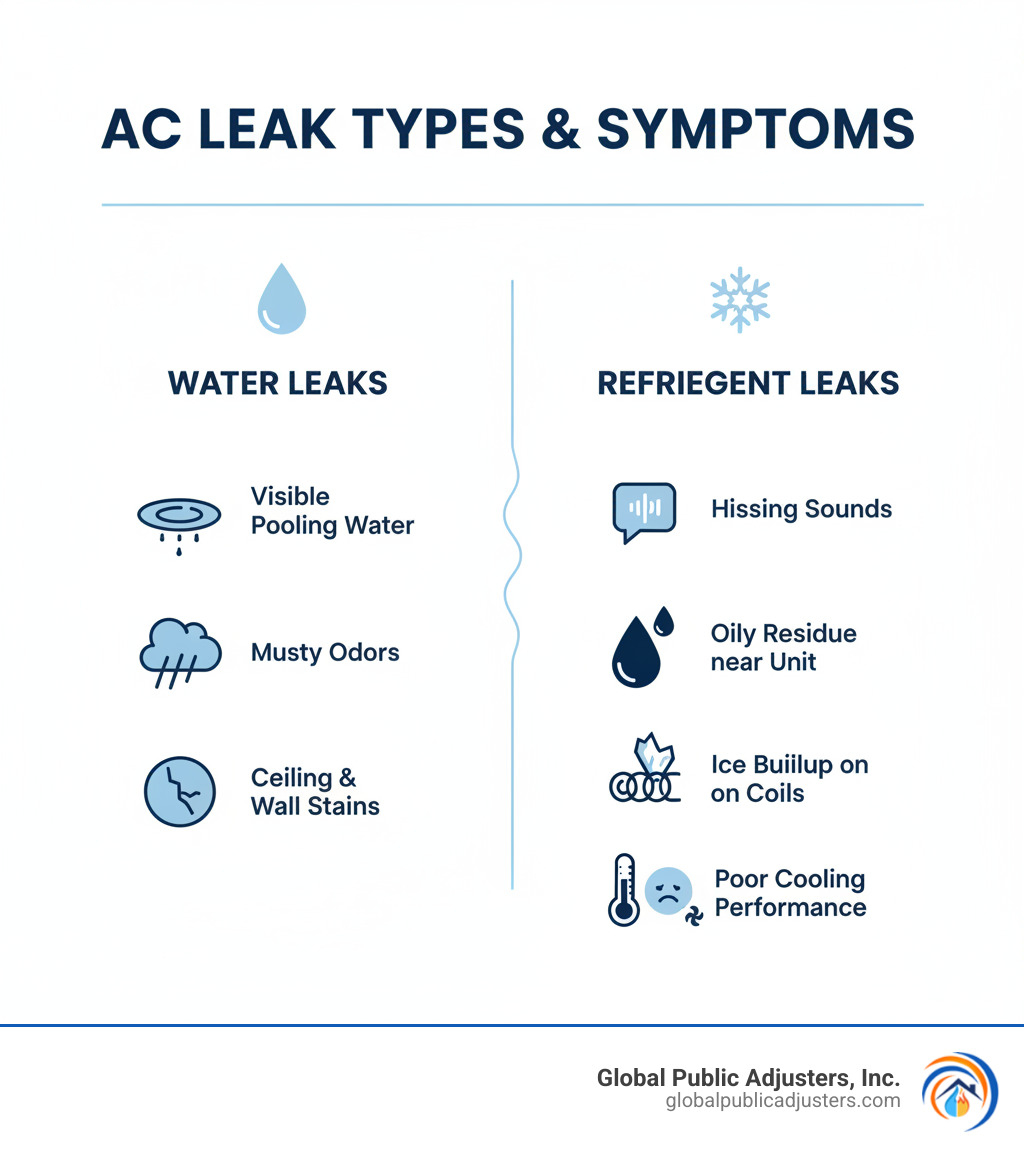
Not all AC leaks are the same. Water leaks cause structural damage and mold, while refrigerant leaks pose health and environmental risks. Here’s how to tell them apart:
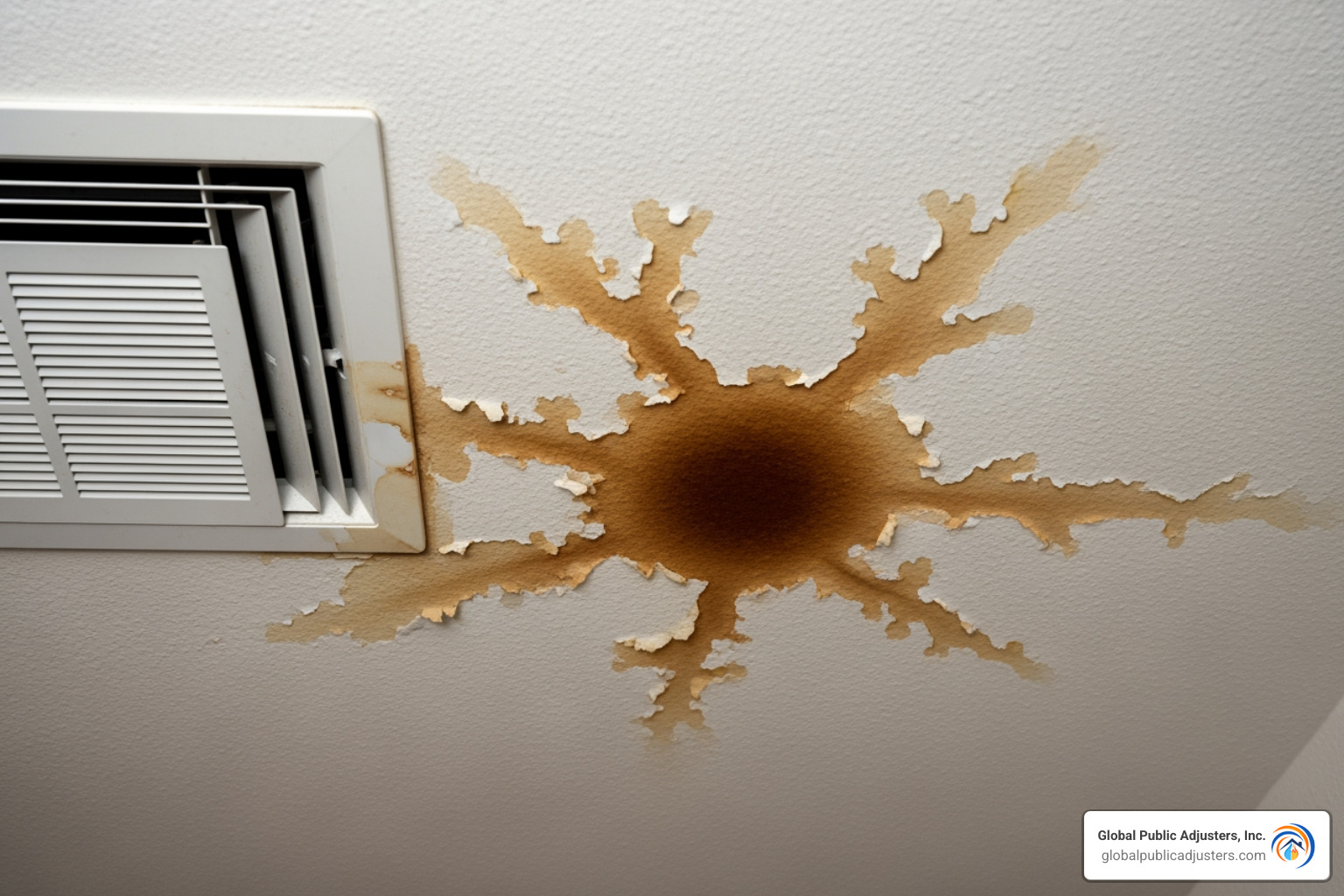
Water leaksleave obvious clues. You’ll see pooling water, spreading stains on ceilings or walls, and a musty, moldy smell. The AC may still cool, but humidity will feel high.
Refrigerant leaksare subtler. Signs include ice on the evaporator coil, an oily residue near connections, poor cooling performance, and a hissing or bubbling sound from the refrigerant lines.
Water leaks create electrical and mold hazards. Refrigerant leaks can cause dizziness, headaches, and nausea, and they harm the environment. If you’re unsure which type of leak you have, call a professional. For more details, see our guide onHow to Tell If Your Air Conditioning Is Leaking.
Your Immediate Action Plan for an AC Leak
Finding an AC leak requires immediate action to minimizeAC leak damage. Follow these steps quickly and methodically.
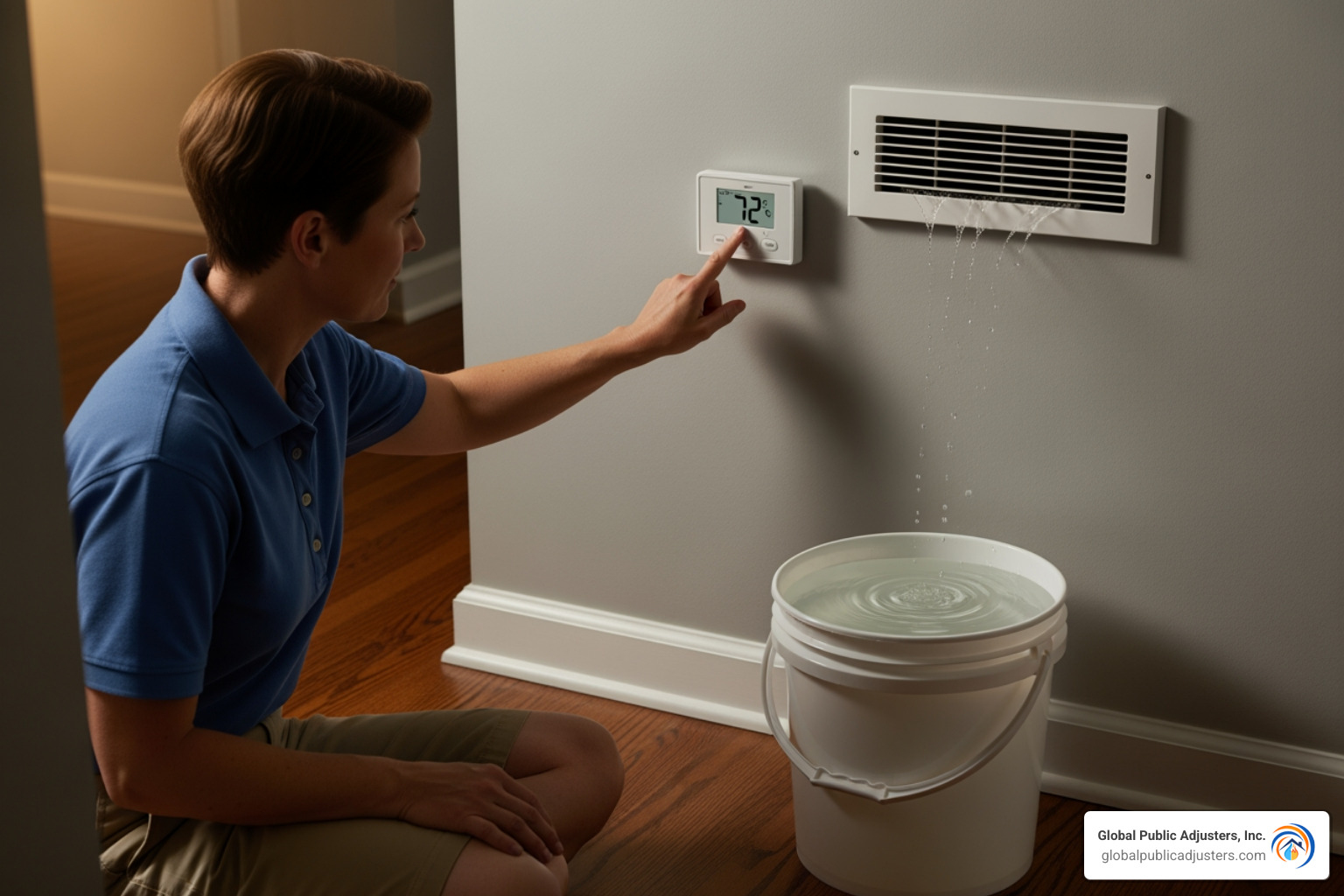
Turn off the AC system immediately.Go to your thermostat and switch it to the “Off” position. This stops the system from producing more condensation and worsening the leak.
Shut off power at the breaker.Head to your electrical panel and flip the breaker that controls your AC unit. This eliminates the risk of electrical shorts and fire hazards from contact with water.
Contain the water with buckets, towels, or anything that helps.Use buckets, towels, or tarps to catch drips and soak up pooled water. Containing the water prevents it from spreading further into floors and walls.
Move furniture and electronics out of harm’s way.If it’s safe to do so, relocate furniture, area rugs, and electronics away from the wet area to prevent water damage.
Document all damage with photos and video for your insurance claim.This step is critical for your insurance claim. Before cleaning up, use your phone to take clear photos and videos of the leak, the water source (if visible), and all damaged property, including ceilings, walls, floors, and personal items. This evidence is your best tool when filing a claim and helps a public adjuster like us at Global Public Adjusters fight for the full compensation you deserve.
Understanding the Full Scope of AC Leak Damage
An AC leak might seem minor, but the resultingAC leak damagecan be extensive, affecting your home’s structure, your health, and your finances.
Structural and Property Destruction
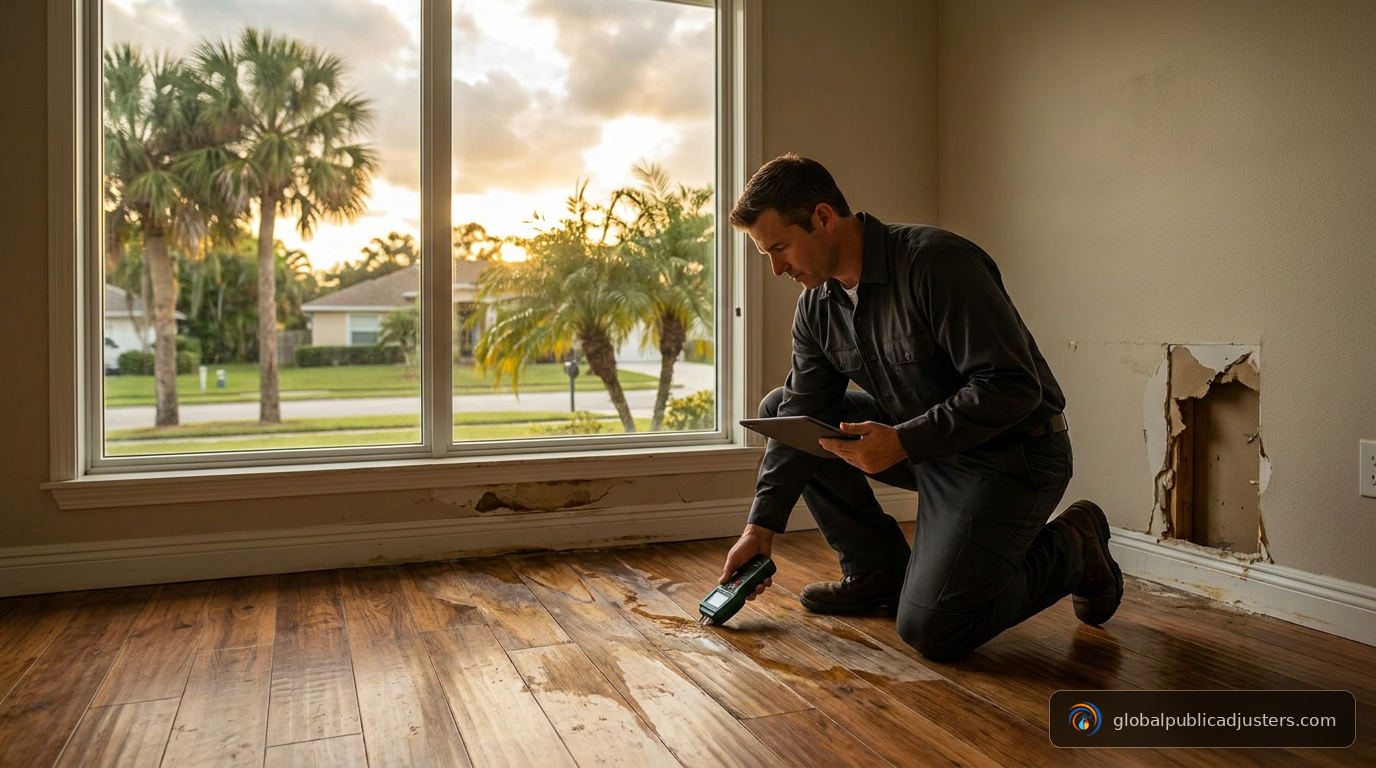
Water from a leak quickly causes significant property damage. It can lead towarped wood floors, causing planks to swell and buckle.Damaged drywall and ceilingsbecome stained and saturated, eventually sagging or even collapsing.Ruined insulation and carpetslose their effectiveness and become a breeding ground for mold. Over time, persistent moisture weakensstructural componentslike wooden beams, leading to rot and instability. For more on how water affects property, see our guides onHow Can Water Damage My Home?andSome Different Types of Water Damage.
The Hidden Dangers: Mold, Health, and Environmental Impact
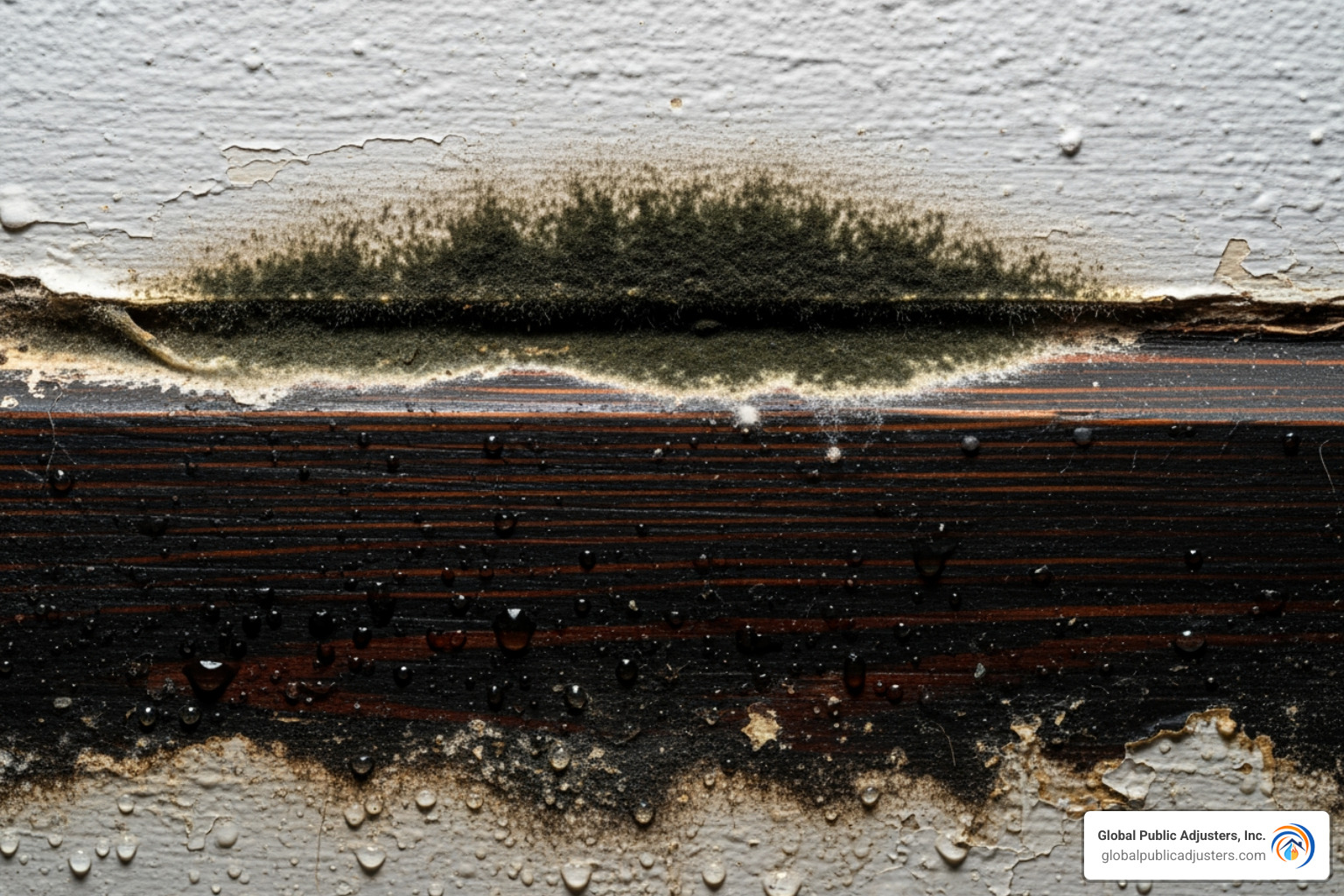
The hidden dangers are often more serious.Mold and mildew growthcan begin in just 24-48 hours in damp areas, spreading behind walls and under floors. This leads to health risks likerespiratory issues and allergic reactions, as mold spores contaminate your home’s air. Furthermore, water mixing with your AC’s wiring creates dangerouselectrical fire hazards.
Refrigerant leaks pose a different threat. Chemicals like R-22 and R-410A are harmful to the environment, contributing to ozone depletion and global warming. The EPA has strictSection 608regulations for their handling due to thisenvironmental harm.
Long-Term Consequences of Ignoring AC leak damage
Ignoring an AC leak leads to severe long-term consequences. It causesreduced system lifespanandpremature component failure, forcing expensive repairs or a full system replacement sooner than expected. A leaking, inefficient AC also works harder, leading toincreased energy bills. The constant moisture can causeworsening structural integrity over timeandchronic humidity issues, making your home uncomfortable and promoting more mold growth.
Financial Strains Caused by AC leak damage
The financial strains are substantial. You’ll face initialrepair costs, but therestoration expensesfor water extraction, mold remediation, and replacing floors and drywall are often much higher. These costs, combined withhigher utility billsand apotential property value decrease, can be overwhelming.
Navigating an insurance claim forAC leak damageadds another layer of stress. Insurers often deny claims due to gradual leaks or alleged lack of maintenance. This is where Global Public Adjusters can help. We specialize inWater Damage Claims Orlando, advocating for homeowners to ensure they receive a full and fair settlement for all damages. With over 50 years of experience, we know how to maximize your claim.
Navigating Repairs, Costs, and Prevention
After stopping the leak, your focus shifts to repairs and prevention. Understanding DIY fixes, professional costs, and maintenance is key to managingAC leak damageeffectively.
DIY Fixes vs. Professional HVAC Service
Some tasks are suitable for homeowners, while others require a certified HVAC professional.
- DIY Tasks:You can easilychange adirty air filterevery 30-90 days to prevent airflow issues that cause leaks. You can also tryclearing simple drain clogsby using a wet/dry vacuum on the outdoor drain line and pouring vinegar down the indoor access point to kill algae.
- Professional Service:Always call a professional forrefrigerant leaks. Handling refrigerant is illegal without EPA certification and can be dangerous. A pro is also needed for replacing arusted drain pan, faulty condensate pump, or damaged evaporator coil. Anyelectrical issuesor problems withimproper installationalso require professional expertise.
Repair Costs and Replacement Considerations
The cost of fixing an AC leak can vary widely:
- Drain cleaning:$125 – $300
- Drain pan replacement:$200 – $400
- Condensate pump replacement:$250 – $500
- Evaporator coil repair:$600 – $1,200+
- Refrigerant leak repair:$200 – $1,000+, plus $300 – $800 for a recharge.
Prices are influenced byunit age,extent of damage, andrefrigerant type. Older R-22 (Freon) is much more expensive than modern R-410a, driving up recharge costs. Emergency service also costs more.
Consider replacement if yourunit is over 12-15 years old, therepair cost is 30-50%of a new unit’s price, or you have a significant leak in anR-22 system. A new unit is often more cost-effective and energy-efficient in these cases.
How Regular Maintenance Prevents Leaks
Prevention is the cheapest way to avoidAC leak damage.
- Change filters regularly:Check them monthly during Florida’s peak cooling season.
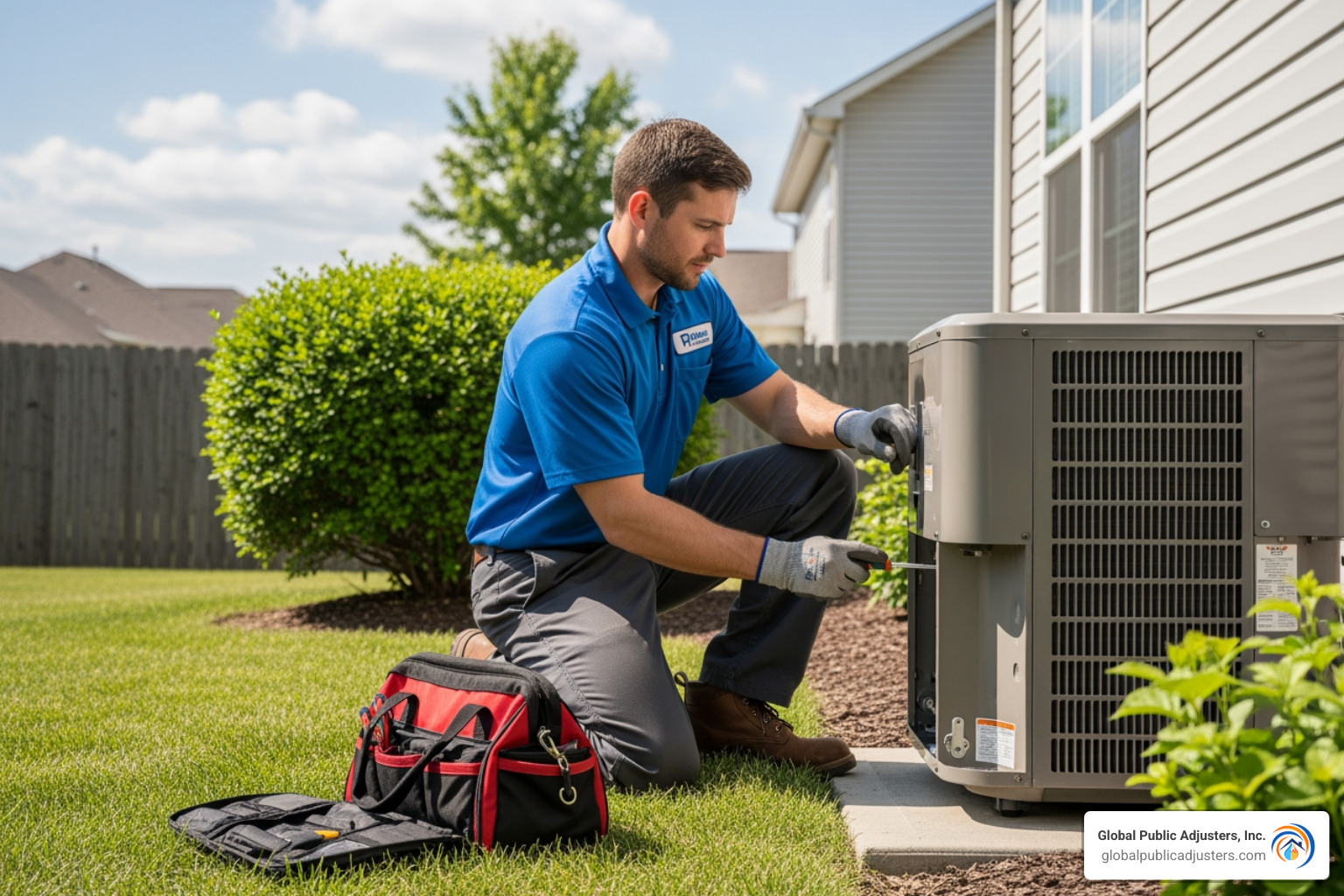
- Schedule annual professional tune-ups:A technician will clean coils, check refrigerant, and inspect the drain system to catch problems early.ENERGY STARalso recommends regular checks.
- Clear the condensate line with vinegar:Pour a cup of vinegar down the line every few months to prevent algae buildup.
- Ensure proper installation:A level unit drains correctly.
- Avoid overcooling:Setting your thermostat below 70°F can cause the coil to freeze and leak.
Frequently Asked Questions about AC Leak Damage
Homeowners dealing withAC leak damageoften have urgent questions. Here are answers to the most common concerns we hear in Florida.
How long does it take for mold to grow after a water leak?
Mold can begin to grow within 24-48 hoursof a water leak, especially in Florida’s warm, humid climate. Spores can colonize damp drywall, insulation, and carpet quickly, often hidden from view. A rapid response is essential to prevent a major mold problem.
Can I claim AC leak damage on my homeowner’s insurance?
Yes, often, but coverage depends on the cause.Most policies cover damage from asudden and accidentalleak, like a burst line or cracked pan. However, insurers may deny claims forgradual leaks caused by poor maintenance. This is why document the leak immediately with photos and videos to prove it was sudden. Keep maintenance records if you have them.
Insurance companies often try to underpay or deny these claims. At Global Public Adjusters, we specialize inProperty Damage Claims OrlandoandWater Damage Claims Orlando. We advocate for you to ensure you get the settlement you deserve.
Is a refrigerant leak dangerous to breathe?
Yes, inhaling concentrated refrigerant is dangerous.It can cause dizziness, headaches, nausea, and, in severe cases, asphyxiation by displacing oxygen. If you suspect a refrigerant leak (hissing sound, chemical smell, ice on lines),ventilate the area immediatelyby opening windows. Turn off your AC and call a certified HVAC professional. Never attempt to fix a refrigerant leak yourself; it is hazardous and requires an EPA-certified technician.
Conclusion: Securing Your Property and Your Claim
The key takeaway is thatAC leak damageis a serious issue that extends far beyond a simple water stain. It threatens your home’s structure, your family’s health, and your financial stability.
As we’ve seen, a small leak can lead to structural rot, mold growth, electrical hazards, and environmental harm. The costs can quickly escalate from a simple repair to thousands in restoration. That’s whyimmediate action and thorough documentationare your most powerful tools. When you find a leak, act fast and take photos and videos of everything.
While regular maintenance can prevent many issues, unexpected leaks still happen. When they do, navigating the insurance process is a major hurdle. Insurers often use “lack of maintenance” clauses to deny claims, even for sudden leaks.
This is whereGlobal Public Adjusters, Inc.provides critical support. With over 50 years of experience, we represent you, not the insurance company. We specialize inProperty Damage Claims Orlandoand know how to counter insurer tactics to ensure you receive a fair settlement for all damages, including hidden costs.
Don’t fight your insurance company alone after dealing with the stress ofAC leak damage. For expert help with yourAir Conditioning Leak Orlandoclaim or any property damage situation, contact us today. We’re here to secure your property and your peace of mind.