Hurricane damage Florida: Catastrophic Cat 5 Fury
Why Understanding Hurricane Damage in Florida Matters Now More Than Ever
Hurricane damage Floridahas reached unprecedented levels following Hurricane Milton’s devastating October 2024 landfall. If you’re dealing with property damage, here’s what you need to know immediately:
Key Facts About Hurricane Milton’s Impact:
- Landfall:October 9, 2024, at Siesta Key as a Category 3 hurricane (120 mph winds)
- Total Damage:$34.3 billion, making it the ninth-costliest Atlantic hurricane on record
- Fatalities:42 deaths in Florida alone
- Power Outages:Over 3 million homes and businesses affected
- Insured Losses:Estimated between $30-60 billion
- Tornadoes:46 confirmed, the largest single-day outbreak in Florida history
- Affected Areas:Hardest hit counties include Sarasota, Manatee, St. Lucie, Volusia, Pinellas, Charlotte, and Collier
Hurricane Milton slammed into Florida’s west coast just two weeks after Hurricane Helene battered the same region. This one-two punch left communities reeling from compounded damage—homes flooded twice in less than a month, beaches stripped bare, and infrastructure pushed beyond breaking points.
The storm’s rapid intensification from a tropical depression to a Category 5 monster in just 48 hours caught many off guard. Milton’s peak intensity of 180 mph winds over the Gulf of Mexico tied it as the most intense Atlantic hurricane ever recorded in that region.
What makes Milton’s damage particularly challengingis the combination of multiple destructive forces: storm surge reaching up to 10 feet, torrential rainfall exceeding 18 inches in some areas, hurricane-force winds, and that unprecedented tornado outbreak. The Spanish Lakes community in Fort Pierce alone lost six lives to a single EF-3 tornado.
For homeowners and business owners now facing the daunting task of recovery, understanding the full scope of this disaster is the first step toward securing fair compensation from insurance companies.

The Path of Destruction: Milton’s Landfall and Impact Zones
When Hurricane Milton roared ashore near Siesta Key in Sarasota County on October 9, 2024, it brought the full arsenal of nature’s fury. The Category 3 storm didn’t just hit one area hard—it carved a path of destruction across the entire state, leaving communities from coast to coast struggling with devastation they’d never imagined.
The storm surge alone told a terrifying story. Walls of water reachingup to 10 feet highcrashed into coastal communities, swallowing homes, businesses, and everything in their path. Florida’s delicate coastline was literally reshaped overnight as the ocean claimed what had once been dry land.
But Milton had a strange twist in store for Tampa Bay. As the hurricane approached, strong offshore winds created what meteorologists call a “reverse surge”—actually pushing wateroutof the bay and dropping water levels by as much as 5 feet. Boats sat on exposed bay floors. Docks hung suspended in air. For a brief moment, residents thought they might dodge the worst. They were wrong. Once the storm passed, the combination of returning water and torrential rainfall turned Tampa Bay into a disaster zone.

The rain was biblical. St. Petersburg recorded18.31 inches in just 24 hours—more than some places see in an entire year. Tampa received more than five times its typical October rainfall in a single day. Streets became rivers. Neighborhoods became lakes. And as the water kept rising,over 3 million homes and businesses across Florida went darkas the power grid buckled under Milton’s assault.
This wasn’t just coastal flooding anymore. This was statewide catastrophe.
Ground Zero: Southwest Florida’s Devastation
If you want to see the true face ofhurricane damage Floridacan suffer, look at Southwest Florida after Milton passed through. From Manasota Key down through Collier County, entire communities were reduced to rubble and debris fields.
Manasota Key took perhaps the worst beating. The storm literally breached the island at Stump Pass State Park, cutting a new channel through what had been solid ground. Beachfront homes that had stood for decades simply vanished, swept away by the relentless surge. Those that remained were often just skeletal frames, their contents scattered across the sand like unwanted confetti.
Siesta Key, where Milton made landfall, looked like a war zone. The popular tourist destination, known for its pristine white sand beaches, was buried under debris and seawater. Structural damage was everywhere—collapsed walls, missing roofs, buildings tilted at impossible angles.
Collier County alone faced $280 million in damage. That’s not just a number on a spreadsheet—that’s thousands of families who lost their homes, businesses shuttered permanently, and livelihoods destroyed. Sarasota County, already reeling from Hurricane Helene just two weeks earlier, absorbed another devastating blow to its coastal properties.
In Pinellas County, two people lost their lives, and the damage to infrastructure was staggering. The iconic Tropicana Field, home to the Tampa Bay Rays, saw its distinctive white dome shredded like tissue paper. The Sarasota Bradenton International Airport lost its entire roof, forcing a complete shutdown and stranding thousands of travelers.
Across the southwest coast, roofs were peeled off homes like opening tin cans. Structures that had weathered decades of Florida storms simply couldn’t withstand Milton’s fury. Many were damaged beyond any hope of repair.
A State-Wide Scourge: Central and East Coast Impact
Milton didn’t stop at the Gulf Coast. The storm marched across Florida with destructive purpose, proving that no community was safe—not even those far from the initial landfall.
Volusia County on the central east coast reported $267 million in damage and four fatalities. St. Lucie County suffered even more tragically, with seven deaths primarily from the historic tornado outbreak that accompanied the hurricane. These weren’t just statistics—these were parents, grandparents, neighbors, and friends whose lives were cut short.
The rainfall records kept falling as Milton moved inland. Rivers like the St. Johns swelled to historic levels and stubbornly refused to recede, keeping entire neighborhoods underwater for days and even weeks. This prolonged flooding became its own disaster, separate from the hurricane itself.
The power grid failure affected every corner of the state. From Orlando to Pensacola, millions sat in darkness as the oppressive Florida heat and humidity made homes unbearable. Refrigerators full of food spoiled. Medical equipment failed. Communication became nearly impossible. The recovery efforts were hampered at every turn by the simple lack of electricity.
For homeowners and business owners across Florida—whether in hard-hit coastal areas or inland communities that flooded—the path forward means navigating the complex world of insurance claims. Understanding your rights and options is crucial. More info about home and business insurance claims can help you get the settlement you deserve after this unprecedented disaster.
The scale ofhurricane damage Floridaexperienced from Milton will take years to fully comprehend and decades to completely repair. But understanding where and how the damage occurred is the first step toward rebuilding stronger than before.
Assessing the Wreckage: A Look at Hurricane Damage in Florida
When the winds finally died down and the waters began to recede, Floridians emerged to survey what Milton had left behind. The scope of destruction was breathtaking—not just in the shattered homes and flooded streets, but in the damage to the very infrastructure that holds communities together.
The economic numbers tell a stark story, but behind every dollar of damage is a family’s cherished home, a business owner’s life work, or a community landmark that has stood for generations. Understanding the full extent of thishurricane damage Floridaexperienced helps put into perspective just how monumental the recovery effort truly is.
Infrastructure and Landmark Devastation
Some images from Milton’s aftermath became instant symbols of the storm’s power. The shredded roof of Tropicana Field, home to the Tampa Bay Rays, made national headlines. Watching the fabric panels whip violently in the wind felt surreal—this was supposed to be a structure built to withstand Florida’s toughest weather.
In downtown St. Petersburg, a construction crane toppled onto the Tampa Bay Times building, a dramatic reminder that even the tools we use to build can become weapons in a hurricane’s arsenal. The building sustained significant damage, though thankfully no one was injured in the collapse.
The ground itself seemed to betray residents in some areas. Enormous sinkholes opened up across Central Florida, with particularly dramatic examples appearing in Orange City and throughout Volusia County. These gaping holes in streets and yards added yet another hazard to an already dangerous situation. Roads washed out completely in some areas, turning familiar routes into impassable waterways.
Air travel ground to a halt as airports across the state closed their doors. Sarasota Bradenton International Airport lost part of its roof—a facility designed to handle Florida weather simply couldn’t withstand Milton’s fury. The Port of Key West suspended all operations, disrupting both the tourist industry and critical supply chains.
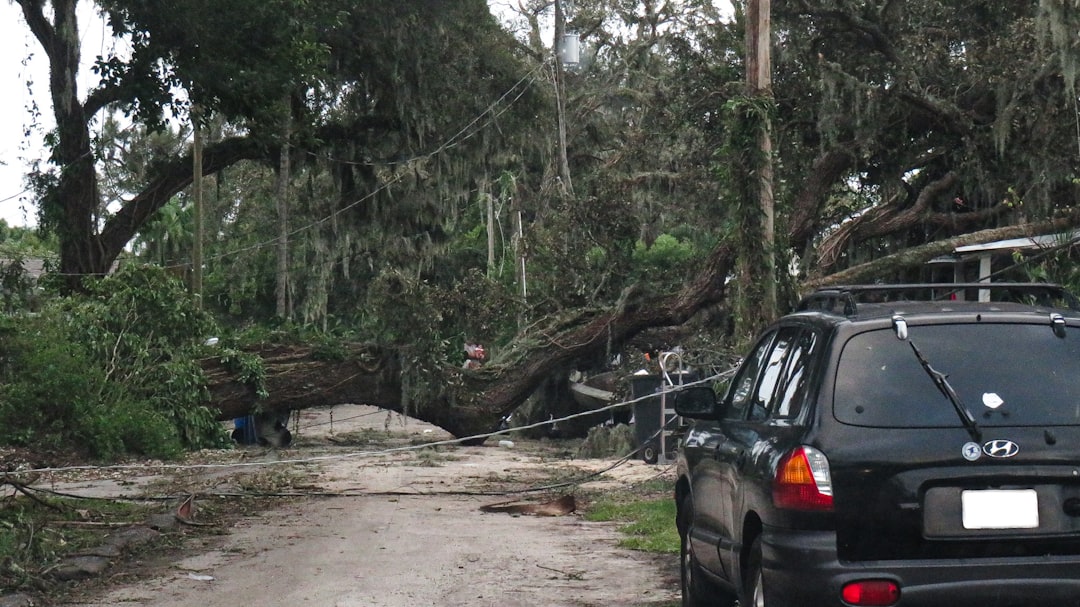
Debris became Florida’s new landscape feature. Fallen trees, twisted metal, scattered belongings, and construction materials blocked roads and made navigation treacherous for days after the storm passed.
A Historic Tornado Outbreak Adds to the Hurricane Damage in Florida
If the hurricane itself wasn’t enough, Milton brought along an unwelcome companion—tornadoes. And not just a few scattered twisters, but a full-blown outbreak that shattered Florida records.
Between October 8th and 9th,46 confirmed tornadoestouched down across the state. To put that in perspective, that’s the largest single-day tornado outbreak in Florida’s entire recorded history, surpassing even the notorious swarm that accompanied Hurricane Irma. These weren’t weak dust devils either—many packed serious punch, with EF-2 intensity winds capable of obliterating structures.
St. Lucie County bore the worst of it, with seven fatalities directly attributed to tornado strikes. The Spanish Lakes community in Fort Pierce was particularly devastated, where residents had mere minutes to seek shelter as tornadoes spun up from Milton’s outer bands.
TheNWS Damage Survey for St. Lucie County Tornado Eventdocumented the destruction in stark detail. In Okeechobee County, steel agricultural buildings were torn apart, and manufactured homes simply ceased to exist—reduced to scattered debris fields. The surveys revealed wind speeds exceeding 110 mph in the strongest tornadoes.
This tornado outbreak added a cruel layer of complexity to thehurricane damage Floridaresidents were already facing. Instead of just dealing with wind and water from one direction, communities had to contend with multiple rotating columns of destruction dropping seemingly at random.
The Staggering Economic Toll of Hurricane Damage in Florida
Now let’s talk numbers—the kind that make even seasoned insurance professionals wince.
Hurricane Milton racked up$34.3 billion in total damages, securing its place as the ninth-costliest Atlantic hurricane ever recorded. That’s billion with a “B”—enough money to fund entire state budgets. The insured losses alone are projected to fall somewhere between $30 billion and $60 billion, placing an enormous burden on property owners and insurance companies alike.
But here’s where it gets really sobering. Milton didn’t hit Florida in isolation. Just two weeks earlier, Hurricane Helene had already pummeled many of the same communities. When you look at these storms together, the financial picture becomes almost incomprehensible:
| Hurricane | Year | Total Estimated Damages |
|---|---|---|
| Ian | 2022 | ~$114 billion |
| Helene | 2024 | ~$78.7 billion |
| Milton | 2024 | ~$34.3 billion |
Hurricane Ian remains Florida’s costliest storm in recent memory, but the back-to-back punch of Helene and Milton combined represents over $113 billion in damages—nearly matching Ian’s toll. According to theU.S. Billion-Dollar Weather and Climate Disastersdatabase, this kind of rapid succession of major storms is virtually unprecedented in Florida’s history.
For homeowners and business owners navigating this financial catastrophe, understanding these numbers matters. Insurance companies are processing thousands of claims simultaneously, and the sheer volume can lead to delays, underpayments, or outright denials. With more information about how we can help with your home and business insurance claims, you can ensure you’re not leaving money on the table during this critical recovery period.
The economic toll extends far beyond immediate repairs. Businesses lost weeks of revenue, tourism took a major hit, and countless families are facing temporary housing costs while their homes are rebuilt. The ripple effects of these financial losses will be felt across Florida’s economy for years to come.
A Storm Like No Other: Rapid Intensification and Climate Questions
Hurricane Milton wasn’t just another storm—it was a meteorological monster that rewrote the playbook on how quickly hurricanes can intensify. What made Milton so terrifying wasn’t just its eventual power, but the breathtaking speed at which it transformed from a manageable system into a catastrophic threat.

The Science Behind Milton’s Explosive Growth
In just 48 hours, Milton exploded from a tropical depression into a Category 5 hurricane with sustained winds of 180 mph. This rapid intensification left meteorologists stunned and gave Florida residents precious little time to prepare for what was coming.
The culprit behind this explosive growth was the abnormally warm waters of the Gulf of Mexico. Think of it like adding fuel to a fire—the warmer the water, the more energy available for the storm to feed on. Milton gorged itself on these unusually hot Gulf waters, changing from a Category 1 to a Category 5 hurricane over open water.
TheHurricane Milton Discussion Number 12 from the National Hurricane Centerdocumented the atmospheric conditions that enabled this unprecedented strengthening. Forecasters tracked perfect conditions for intensification: minimal wind shear, abundant moisture, and those critically warm sea surface temperatures. While Milton did undergo an eyewall replacement cycle—a natural process that can temporarily disrupt a hurricane’s structure—the overall trend was one of relentless strengthening.
By the time Milton reached peak intensity, it had become the most intense Atlantic hurricane ever recorded over the Gulf of Mexico. That’s not a record anyone wanted to see broken, especially those of us dealing withhurricane damage Floridaproperties face in its aftermath.
Climate Change and the Future of Hurricanes
Milton’s extreme behavior has scientists pointing to an uncomfortable truth: this is what climate change looks like in real time. The abnormally high sea surface temperatures that boostd Milton’s intensification were made 400 to 800 times more likely because of climate change. Let that sink in for a moment—hundreds of times more probable.
But warmer oceans aren’t the only factor at play. According to theanalysis on climate change’s influence on Hurricane Milton, climate change made Milton a significantly wetter storm, with an estimated 20-30% more rainfall than it would have produced otherwise. The storm’s winds were also about 10% stronger thanks to our warming atmosphere.
This isn’t just about one storm. We’re seeing a pattern emerge: hurricanes are intensifying faster, dumping more rain, and packing stronger winds. Warmer oceans provide more energy for storm development, while a warmer atmosphere can hold more moisture, leading to those devastating rainfall totals we saw across Florida.
For coastal communities throughout the Sunshine State, this reality demands a fundamental shift in how we think about preparedness. We need infrastructure designed to withstand increasingly powerful storms, evacuation plans that account for rapid intensification, and building codes that reflect the new normal of more intense hurricanes.
The truth is, storms like Milton may become more common, not less. That makes understanding your insurance coverage and knowing how to steer the claims process more critical than ever for Florida homeowners and business owners.
The Human Element: Response, Recovery, and Lessons Learned
Behind every statistic abouthurricane damage Floridaendured during Milton, there’s a human story—families huddled in shelters, first responders working through exhaustion, neighbors pulling each other from floodwaters. The numbers tell one story, but the real measure of this disaster is found in the courage, resilience, and determination of those who lived through it.

Immediate Aftermath: Challenges for Residents and Responders
When the winds finally died down and the rain stopped, the real work began. Search and rescue teams fanned out across flooded neighborhoods, pulling nearly1,000 people and 105 animalsto safety. In Clearwater alone, rescuers worked through the night to evacuate565 residents from a single apartment complexwhere floodwaters had risen to neck level. These weren’t just numbers on a report—these were grandmothers, young families, and beloved pets whose lives depended on the bravery of first responders.
The challenges mounted quickly.Over 3 million homes and businessessat in darkness as the power grid collapsed under Milton’s assault. With the lights out and gas pumps unable to operate, nearly1,500 gas stationsran completely dry. Residents who’d evacuated couldn’t get home. Those who stayed couldn’t get out. Store shelves emptied as supply chains broke down, leaving many without basic necessities.
Federal help arrived, but evenFEMA faced critical staffing challengesthat slowed response times. And as if the immediate crisis wasn’t enough, new health threats emerged from the floodwaters. Cases offlesh-eating bacteria(Vibrio vulnificus) spiked in coastal areas, while standing water became breeding grounds for mosquitoes carrying dengue fever. For storm-weary Floridians still recovering from Helene just two weeks earlier, it felt like the hits just kept coming.
The Long Road to Recovery
Recovery from a disaster of this magnitude doesn’t happen in days or weeks—it takes years.President Biden’s visit to Floridabrought both federal attention and crucial funding commitments, including dedicated resources for electric grid repairs and afederal disaster declarationthat opened doors to emergency assistance. But even with government support, the path forward remains steep.
Across Florida, communities rallied together. Neighbors who barely knew each other before the storm suddenly found themselves working side by side, hauling waterlogged furniture to the curb and clearing debris from streets.Community cleanup effortsbecame a daily ritual, a tangible way to reclaim some sense of control in an overwhelming situation.
Butrebuilding homes and businessesis where the real marathon begins. Many families face months in temporary housing while contractors are booked solid and building materials are scarce. For business owners, every day of closure means lost revenue and uncertain futures. Theinsurance claim process—already complex in the best of times—becomes absolutely critical for recovery.
This is where having experienced advocates makes all the difference. AtGlobal Public Adjusters, Inc., we’ve spent over 50 years helping property owners in Orlando, Pensacola, and across Florida steer the often frustrating maze of insurance claims. We know the tactics insurance companies use to minimize payouts, and we fight to ensure you get every dollar you’re entitled to for yourhurricane damage Floridaclaim. Thelong-term housing needsand financial pressures are real, and having someone in your corner who understands the system can mean the difference between barely getting by and truly rebuilding. Get help with your hurricane damage insurance claim to ensure you’re not leaving money on the table.
Lessons in Preparedness for Coastal Communities
Hurricane Milton taught harsh but necessary lessons to Florida’s coastal communities. When officials warned residents facing the storm surge that “you are going to die” if they didn’t evacuate, it wasn’t hyperbole—it was brutal honesty. Themass evacuationsthat followed represented the largest movement of people since Hurricane Irma, testing every aspect of Florida’s emergency infrastructure.
The experience of back-to-back hurricanes—Helene followed by Milton in less than two weeks—pushed thestorm-weary populationto their limits. Many who’d just finished cleaning up from Helene watched helplessly as Milton undid all their work. This reality is forcing difficult conversations about Florida’s future.
St. Petersburg’s mayor and other leaders are now openly discussing the need forresilient infrastructurethat can withstand not just today’s storms, but the more intense hurricanes climate science predicts for tomorrow.Evacuation ordersneed to be clearer and enforced more strictly. Building codes may need another overhaul.
On a personal level, the storms reinforced basics that can save lives: maintaining stockedpreparedness kitswith water, medications, and important documents; having solidanimal shelter plans(the story of an abandoned dog named Trooper found tied to a fence during Milton led to Florida passing “Trooper’s Law” with stricter penalties for animal abandonment); and developing realistic strategies formanaging back-to-back disasterswhen you’re already exhausted.
The lessons are clear. The question is whether we’ll apply them before the next storm arrives.
Conclusion: Rebuilding Florida and Navigating Your Claim
Hurricane Milton delivered an unprecedented blow to Florida. The storm’s legacy—a record-breaking tornado outbreak, widespread flooding from the coast to inland communities, staggering economic losses reaching $34.3 billion, and the heartbreaking toll of 42 lives lost—will be felt for years to come. The rapid intensification that transformed Milton from a Category 1 to a Category 5 monster in just 24 hours, fueled by abnormally warm Gulf waters, serves as a stark warning about the evolving nature of hurricanes in our changing climate.
Now comes the hard part: rebuilding.
For thousands of Floridians, the journey ahead involves more than just clearing debris and patching roofs. It means navigating the complex world of insurance claims, documenting every inch of damage, and fighting for fair compensation from insurance companies that may not have your best interests at heart. After a disaster of this magnitude, dealing with adjusters, interpreting policy language, and proving the full extent of yourhurricane damage Floridaclaim can feel like facing another storm entirely.
You don’t have to do this alone.
At Global Public Adjusters, Inc., we’ve spent over 50 years standing beside homeowners and business owners across Florida—from Orlando to Pensacola and everywhere in between. We’ve seen what happens when property owners try to handle claims on their own, and we know the difference professional representation makes. Our licensed public adjusters work exclusively for you, not the insurance company. We assess every detail of your damage, prepare comprehensive documentation, and negotiate tirelessly to maximize your settlement.
While you focus on getting your family back to normal and your business back on its feet, we handle the insurance battle. It’s what we do, and we’re good at it.
The road to recovery after Milton will be long, but you don’t have to walk it alone.Get help with your hurricane damage insurance claimtoday, and let our expertise guide you through this challenging time. Florida has always been resilient, and together, we’ll rebuild stronger than before.