Florida hurricane claims: Master 5 Steps to Victory
Why Understanding Florida Hurricane Claims Matters Now More Than Ever
Florida hurricane claimsare among the most complex insurance matters homeowners face. After a major storm, navigating the claims process is critical for your financial recovery. Here’s what you need to know right now:
Quick Answer: Filing a Florida Hurricane Claim
- Report damage immediatelyto your insurer (within 1 year of landfall).
- Document everythingwith photos, videos, and receipts before repairs.
- Understand your hurricane deductible(typically 2-5% of your home’s insured value).
- Expect a responsewithin 14 days and a decision within 90 days.
- Know your rightsunder Florida’s Homeowner Claims Bill of Rights.
Florida’s climate makes hurricanes inevitable. These storms create a maze of paperwork and frustrating negotiations with insurance companies. The aftermath is overwhelming, and the stakes are high. With storms like Hurricane Ian generating over $22 billion in insured losses, the insurance landscape is massive and complicated.
Your hurricane claim isn’t just about repairs—it’s about securing your family’s financial future.
The process has strict deadlines and documentation requirements. Many homeowners find too late that their settlement offer is insufficient or that they’ve missed a critical deadline, jeopardizing their entire claim.
This guide walks you through every stage of theFlorida hurricane claimsprocess, from initial damage assessment to final settlement. You’ll learn about your legal protections, common pitfalls, and when to seek professional help.

Understanding Your Florida Hurricane Insurance Policy
Your hurricane insurance policy is your financial lifeline after a storm, but most homeowners don’t understand their coverage until it’s too late. Based on our experience with families across Florida, a little policy knowledge can be the difference between a fair settlement and a frustrating battle.
Let’s break down the parts of your policy that matter most when a hurricane hits.
What Are Florida’s Hurricane Insurance Deductibles?
Here’s whereFlorida hurricane claimsget tricky. Your hurricane deductible isn’t a flat amount; it’s apercentageof your home’s insured value, typically between 2% and 5%. For a home insured at $300,000 with a 2% deductible, you’re responsible for the first $6,000 of covered damage. This is often more than homeowners expect.
The good news is this deductible appliesannually, not per storm. If you meet your deductible after the first hurricane of the year, you won’t have to pay it again for a second storm in the same year. Check your policy now to know your exact percentage—this detail is crucial when you’re assessing costs.
Key Coverage Types: RCV, ACV, and ALE
Understanding these acronyms is crucial because they determine how much money you’ll receive.
Replacement Cost Value (RCV)is the best-case scenario. Your policy pays to replace damaged property with new materials, with no deduction for age or wear and tear. If your old roof is destroyed, RCV pays for a brand new one.
Actual Cash Value (ACV), however, factors in depreciation. The insurer calculates what your ten-year-old roof was worth right before the storm and pays you that lower amount.
| Feature | Replacement Cost Value (RCV) | Actual Cash Value (ACV) |
|---|---|---|
| Definition | Pays to replace damaged property with new, similar property. | Pays the cost to replace minus depreciation (wear and tear). |
| Payout | Generally higher, covers full cost of new materials and labor. | Generally lower, accounts for age and condition of damaged items. |
| Initial Payment | Often an ACV payment, with the remainder paid upon completion of repairs. | Single payment, no further payments for depreciation. |
| Benefit | Allows homeowners to rebuild or replace without out-of-pocket costs for depreciation. | Lower premiums, but requires more out-of-pocket for replacement. |
Even with an RCV policy, many insurers initially pay only the ACV. They hold back the remaining amount (called “recoverable depreciation”) until you complete repairs and submit receipts. This can create a cash-flow problem for homeowners.
Additional Living Expenses (ALE)is coverage that helps with costs when your home is uninhabitable. ALE covers theextracosts of living elsewhere, such astemporary housing(hotels, rentals),increased food costsfrom eating out,pet boarding, andextra transportation expenses. If your monthly grocery bill of $400 jumps to $800 because you’re eating out, ALE covers the $400 difference. Keep every receipt, as insurers require proof for reimbursement.
Also, watch forpolicy sublimits—caps on specific types of damage (like mold remediation) that are lower than your overall policy limit. These can be an unwelcome surprise.
Want to make sure your policy is truly ready for hurricane season? Check out ourhurricane insurance tipsfor a deeper dive into protecting your coverage.
Navigating the Florida Hurricane Claims Process Step-by-Step
The days after a hurricane are chaotic. We’ve guided hundreds of Florida homeowners through this, and we know that taking the right steps now makes a huge difference in the outcome of yourFlorida hurricane claims.
Think of this as your roadmap. While it may seem overwhelming, each step builds on the last.

Step 1: Immediate Actions and Damage Documentation
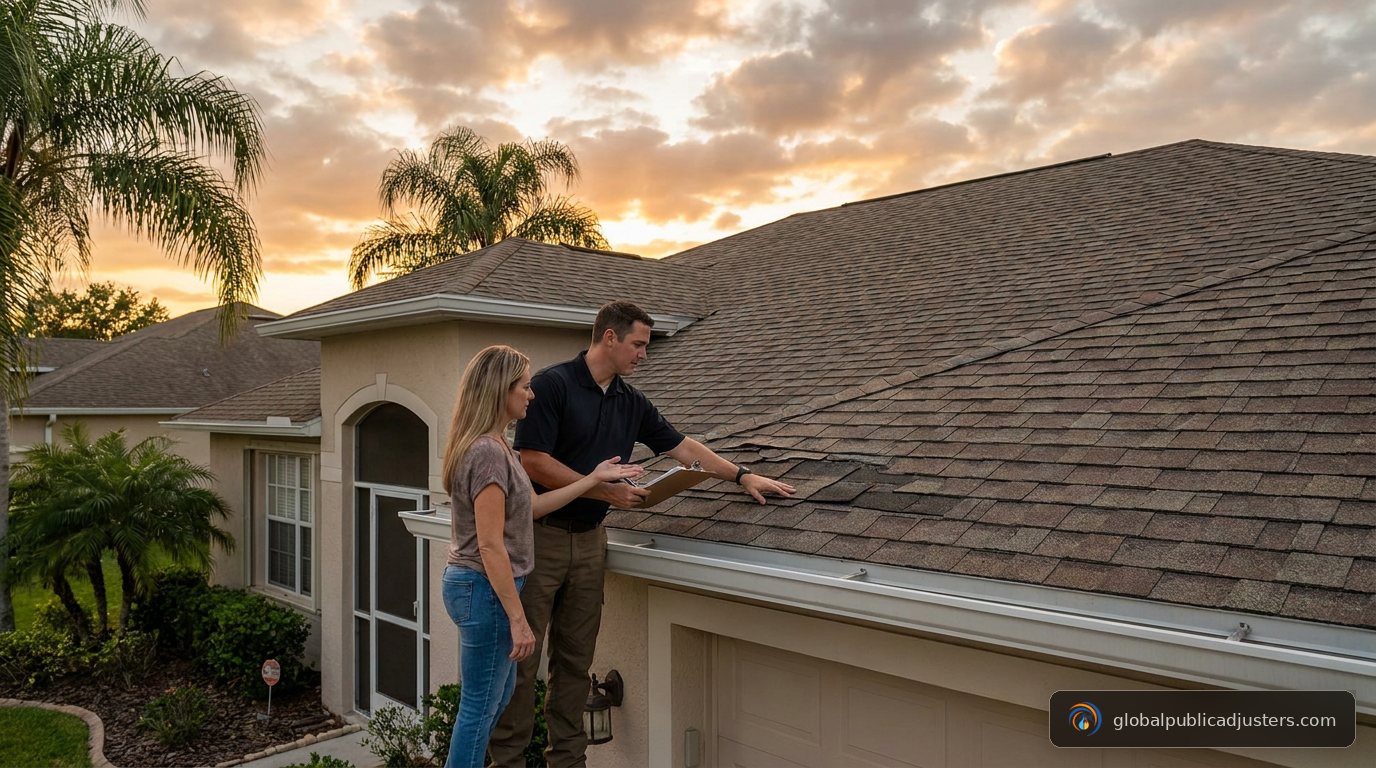
First, ensure it’s safe to enter your property. Look for downed power lines, gas leaks, and structural instability. Once it’s safe, your priority is to prevent further damage. Tarp holes in the roof and board up broken windows. Your policy requires you to take these “reasonable steps.”
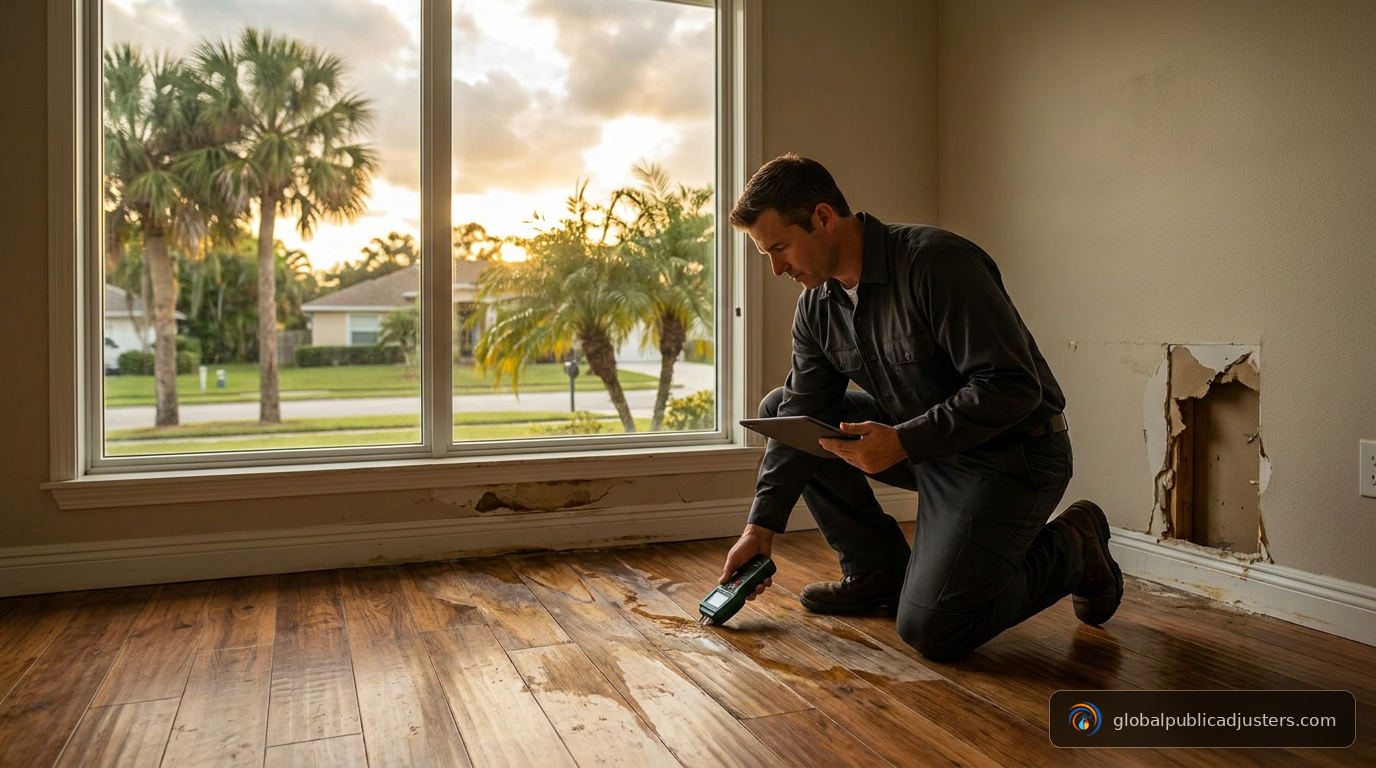
Crucially,document everything before, during, and after temporary repairs.Take photos of the damage before you cover it up and keep all receipts for materials and labor. Your insurer should reimburse these reasonable expenses if you have proof.
Next, conduct a thorough documentation of all damage. Use your smartphone to take clear photos and videos of every affected area, inside and out. Capture both close-ups and wide shots. Don’t forget the roof, fences, sheds, and landscaping. When recording video, narrate what you’re seeing to create a timestamped record (e.g., “This is the master bedroom on October 15th, showing water damage on the ceiling.”).
Create a detailed inventory of damaged belongings, noting their age and pre-storm condition. Any pre-storm photos or receipts are invaluable for proving your losses.
Understanding the varioustypes of property damage caused by hurricaneswill help you know what to look for during this critical phase.
Step 2: Filing Your Claim and Understanding Deadlines
With your documentation ready, notify your insurance company immediately. The sooner you file, the sooner the process starts. Most insurers offer 24/7 hotlines, mobile apps, or online portals. For example, Citizens Insurance Corporation policyholders can call 866.411.2742 or use their website.
Have this information ready:your policy number, current contact information, a description of the damage, your property address, your agent’s name,andyour mortgage company details.
Deadlines forFlorida hurricane claimsare strict. You haveone year from the date the hurricane made landfallto file your initial claim. The landfall date is officially verified by the National Oceanic and Atmospheric Administration (NOAA).
If you find additional damage later, you can file a supplemental claim, but it must be within18 months of the hurricane’s landfall. Missing these legal deadlines can result in a complete loss of your right to coverage. We’ve seen homeowners lose valid claims because they waited too long. For more details, see our guide onwhat are the time limits for hurricane damage claims in Florida.
Step 3: The Insurer’s Response and Your Rights
Once you file, your insurer has specific legal obligations. Knowing your rights puts you in a stronger position.
Within14 days, your insurer must acknowledge receipt of your claim. If you hear nothing, follow up. After you submit your complete “proof of loss” (all documentation and estimates), the insurer has90 days to either pay or deny your claim.They must inform you of any legitimate delays.
Under theFlorida Homeowner Claims Bill of Rights,you have legal protections. You have the right to a clear explanation of your coverage, prompt communication, and copies of any adjuster’s reports about your property.
If you dispute your claim or the settlement offer, you are entitled tofree mediationwith a neutral third party to help reach an agreement. This is a powerful tool that levels the playing field. Don’t be intimidated by the dispute resolution process; it’s a normal step for many homeowners.
The Florida Office of Insurance Regulation maintains a current list of insurer contact informationhere.
Navigating this process alone can be tough. At Global Public Adjusters, Inc., we work with homeowners to ensure insurance companies honor their obligations and you receive every dollar you’re entitled to.
Common Challenges and When to Seek Professional Help
FilingFlorida hurricane claimsshould be straightforward, but it rarely is. You pay your premiums, a storm hits, and your insurer should pay what you’re owed. Unfortunately, the reality is often more complicated.

Common Challenges with Florida Hurricane Claims
After a major hurricane, insurers are overwhelmed, but that doesn’t make your situation less urgent. Common frustrations include:
- Delays:Your claim may sit in a queue for weeks, with repeated requests for information you’ve already sent.
- Underpaid Claims:Adjusters might underestimate repair costs, overlook damage, or apply excessive depreciation, leaving you with a settlement that doesn’t cover your losses.
- Denied Claims:Insurers may deny claims by allegingpre-existing damage, even if the storm made it worse, or by disputing the cause of loss (e.g., wind vs. flood damage).
- Multiple Adjusters:Company turnover can force you to re-explain your situation to new adjusters, slowing down the process.
- Inaccessible Property:If your property is in a restricted area, inspections get delayed. Report this to your insurer immediately.
- Lost Personal Property:Proving what you owned can be difficult without pre-storm photos or inventories.
- Contractor Issues:Finding reliable contractors is tough. Storm chasers and fraudsters often appear, demanding cash upfront and performing shoddy work, which can complicate your claim.
- Bad Faith Practices:In some cases, insurers may intentionally delay or deny a valid claim without a reasonable basis, which is illegal in Florida.
These challenges are why many homeowners seek professional help. Our guide onreasons to consider licensed insurance specialists for hurricane damage claimsexplains more.
When to Hire a Public Adjuster
Insurance companies have teams of experts protecting their interests. Shouldn’t you have an expert protecting yours? A public adjuster works exclusively for you, the policyholder.
At Global Public Adjusters, Inc., we’ve spent over 50 years helping Florida homeowners steer these exact situations. Consider hiring us when:
- Your insurer is unresponsive or uncooperative.If you’re getting the runaround or experiencing unexplained delays, it’s a red flag.
- You receive a lowball settlement offer.If the offer won’t cover your repairs, don’t accept it. We can prepare a detailed estimate and negotiate for a fair settlement.
- The damage is complex.Extensive structural damage, mold, or issues requiring engineering assessments benefit from our expertise.
- You disagree with the insurer’s scope of loss.If the adjuster missed damage or misidentified the cause, we can challenge their assessment with evidence.
- You are unsure about your policy.We can clarify your coverage, sublimits, and how depreciation affects your payout.
Our fees are a percentage of your final settlement, so we only succeed when you do. We are motivated to maximize your claim, and the increased settlement we secure typically far exceeds our fee. This leaves you with more money for repairs and the peace of mind that an expert is handling the complexities while you focus on recovery. You’ve been through a hurricane; you shouldn’t have to fight your insurer alone.
Florida’s Legal Landscape: Policyholder Protections and Resources
When dealing withFlorida hurricane claims, know that the state has a framework of laws and resources designed to protect homeowners. Lawmakers understand your vulnerability after a storm and have created these protections to help.

Your Protections Under Florida Law
Florida’s Homeowner Claims Bill of Rights is your shield, guaranteeing clear explanations of coverage, prompt communication, and fair treatment. It also gives you the right to receive copies of any adjuster’s reports concerning your property.
Additionally, Florida law prohibits insurers from non-renewing your policy for90 daysafter your hurricane-related repairs are complete. This provides breathing room to finish restoration without the fear of losing coverage (this protection doesn’t apply if you stop paying premiums).
If you’ve invested in making your home more storm-resistant, Florida law requires insurers to offermandatory mitigation discountsfor features like impact-resistant windows or reinforced roofs. We’ve helped many homeowners ensure their policies reflect these significant savings.
For those who want to read the specific statutes, the completeFlorida Statutes informationis available online.
State and Local Resources for Homeowners
Beyond legal protections, Florida offers practical resources for your recovery:
- TheFlorida Division of Consumer Serviceshas a statewide helpline at1-877-MY-FL-CFO (1-877-693-5236)to assist with insurance issues.
- TheDisaster Contractors Networkis a state-maintained database of licensed, vetted home repair contractors, helping you avoid fraud.
- The Attorney General’sprice gouging hotline at 1-866-966-7226is where you can report suspiciously high prices for essentials after a disaster.
- TheFlorida Office of Insurance Regulation (OIR)monitors how insurers handle claims to ensure they comply with state law.
- The Florida Division of Emergency Management provides a list ofdisaster recovery resources, including information on FEMA assistance and SBA loans.
These resources reflect generations of experience with hurricanes and are there to help you recover. Don’t hesitate to use them.
Frequently Asked Questions about Florida Hurricane Claims
After working with thousands of Florida homeowners, we’ve noticed certain questions come up repeatedly. Here are direct answers to some of the most common concerns.
What is the statute of limitations for filing a hurricane claim in Florida?
Time is critical forFlorida hurricane claims. Recent changes in Florida law have made the deadlines stricter.
You have1 yearfrom the date the hurricane made landfall to file your initial claim. If you find additional damage later, you have18 monthsfrom the landfall date to file a supplemental claim. The state uses the official landfall date from the National Oceanic and Atmospheric Administration (NOAA) to start the clock. Do not miss these deadlines, as you could lose your right to coverage entirely.
What’s the difference between hurricane damage and flood damage?
This distinction is crucial, as it determines whether your claim is covered. Your standard homeowner’s insurance policy coverswind damagefrom a hurricane—damage from flying debris, torn-off shingles, or fallen trees. If wind caused it, your policy should cover it.
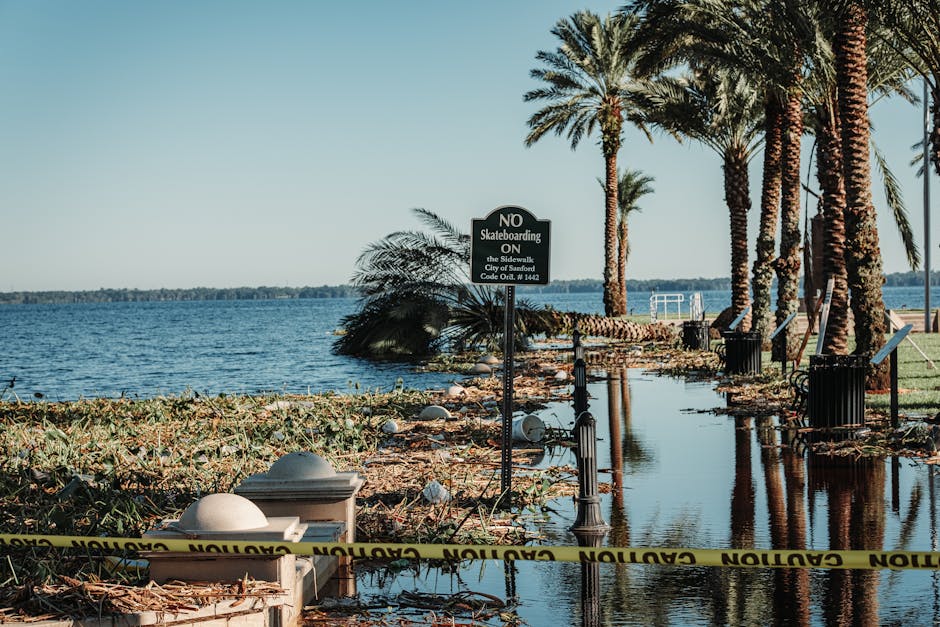
However, your homeowner’s policydoes not cover flood damage. A flood is defined as water entering your home from the ground up, such as from a storm surge or overflowing rivers. Even if the hurricane caused the flood, you need a separate flood insurance policy, typically from the National Flood Insurance Program (NFIP) or a private insurer, for this damage to be covered. This coverage gap has left many Florida families financially stranded.
Can my insurance company drop me after I file a hurricane claim?
This is a common fear, but Florida law offers protection. An insurance companycannotnon-renew your policy for90 daysafter you have completed your hurricane-related repairs. This rule was created to prevent insurers from penalizing homeowners for filing legitimate claims.
However, this protection has exceptions. Your insurer can still cancel or non-renew your policy if you:
- Stop paying your premiums.
- Commit insurance fraud.
- Unreasonably delay necessary repairs after receiving a settlement.
- Exhaust your policy limits due to the extent of the damage.
The 90-day protection is a temporary shield. After it expires, your insurer can choose not to renew your policy based on your claims history. Working with an advocate like Global Public Adjusters, Inc. helps ensure your claim is handled properly from the start, maximizing your settlement while preserving your relationship with your insurer.
Conclusion
Recovering from a hurricane is about reclaiming your peace of mind and financial security. This guide has outlined the essential steps for handlingFlorida hurricane claims, from understanding your policy and documenting damage to meeting deadlines and knowing your rights.
The path forward requires you to be proactive. Document everything, contact your insurer promptly, and remember that Florida law provides protections like the Homeowner Claims Bill of Rights.
However, the reality is that insurance companies have teams working to protect their bottom line. Many homeowners are overwhelmed by technical jargon, lowball offers, and endless negotiations. This is where having an experienced advocate makes all the difference.
At Global Public Adjusters, Inc., we have over 50 years of experience fighting for homeowners and business owners across Florida. We know the tactics insurers use to minimize payouts and how to counter them effectively. When you work with us, you get a dedicated partner committed to securing the fair settlement you deserve.
Our fee is a percentage of your settlement, so we only succeed when you do. The increased payout we secure for our clients almost always far exceeds our fee, putting more money in your pocket for repairs. Your home is your sanctuary. After a hurricane, you deserve to restore it completely.
If you’re struggling with yourFlorida hurricane claims—facing delays, a low offer, or just feeling lost—we are here to help.Get professional help with your claimand let our expertise work for you. Your recovery is too important to leave to chance.