Hurricane Insurance Claim: 5 Steps to Maximize
Why Filing Your Hurricane Insurance Claim Properly Matters
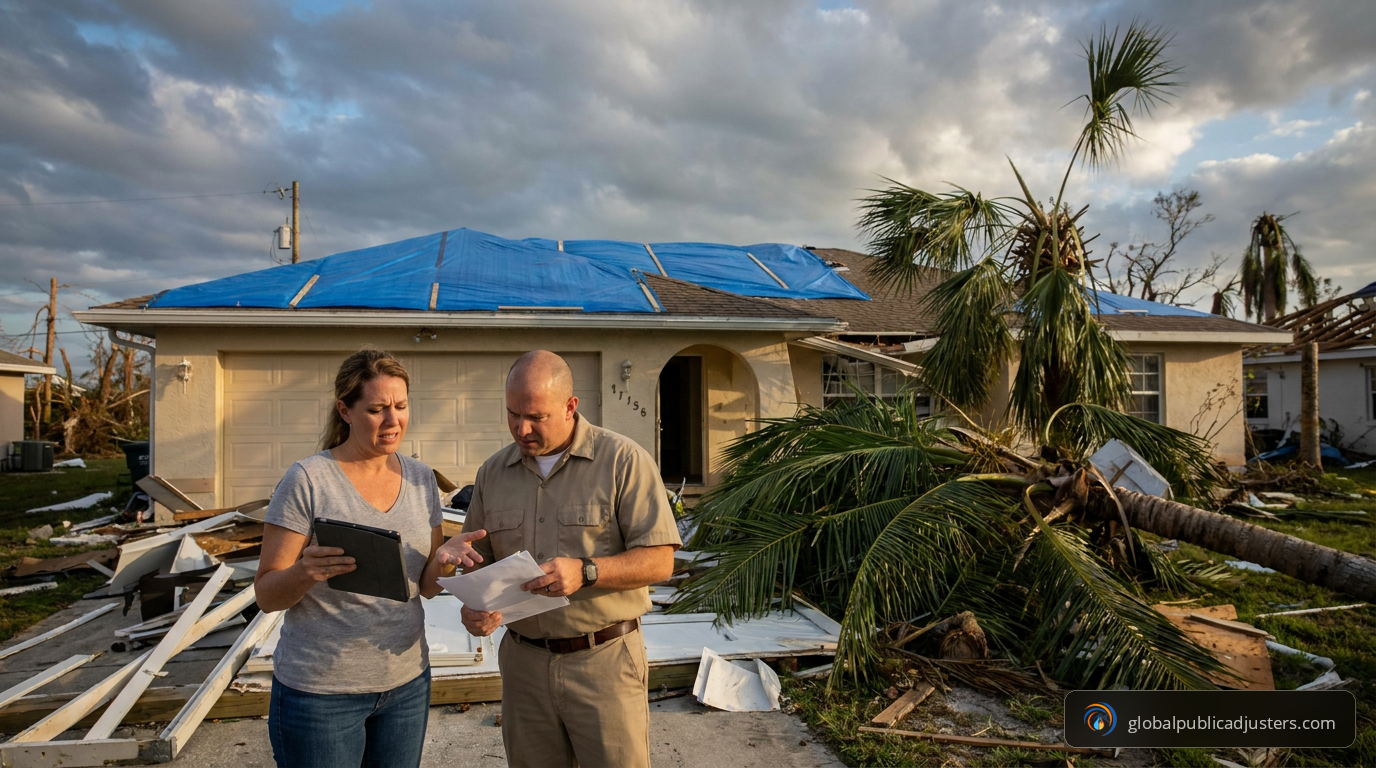
Ahurricane insurance claimis your path to financial recovery after a devastating storm. The process can feel overwhelming, but knowing the right steps can ease your uncertainty and help you regain control.
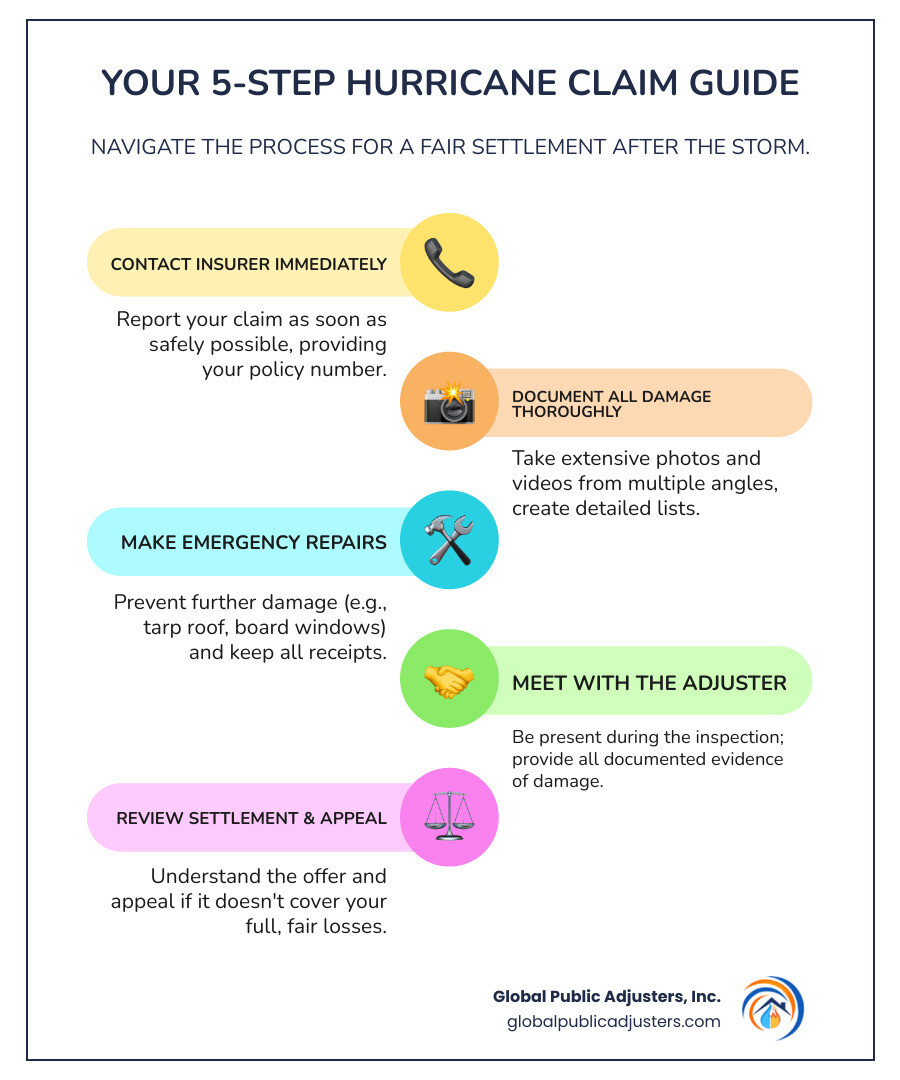
How to File a Hurricane Insurance Claim (Quick Steps):
- Ensure safety first– Don’t return home until authorities confirm it’s safe.
- Contact your insurance company immediately– Report your claim within 24-48 hours.
- Document all damage thoroughly– Take extensive photos and videos.
- Make temporary repairs– Prevent further damage and keep all receipts.
- Meet with the adjuster– Be present during the inspection to point out all damage.
- Review your settlement offer– Understand what is and isn’t covered.
- Consider professional help– Hire a public adjuster for complex or denied claims.
Many homeowners struggle to recover their full losses because they don’t understand the claims process, miss deadlines, or accept lowball settlement offers. Filing a claim properly involves navigating complex issues like wind vs. flood damage, percentage-based deductibles, and knowing that your insurer’s adjuster works for them, not you.
This guide will walk you through every step of filing your hurricane insurance claim—from pre-storm preparation to final settlement.
Before the Storm: Preparing for a Smooth Claims Process
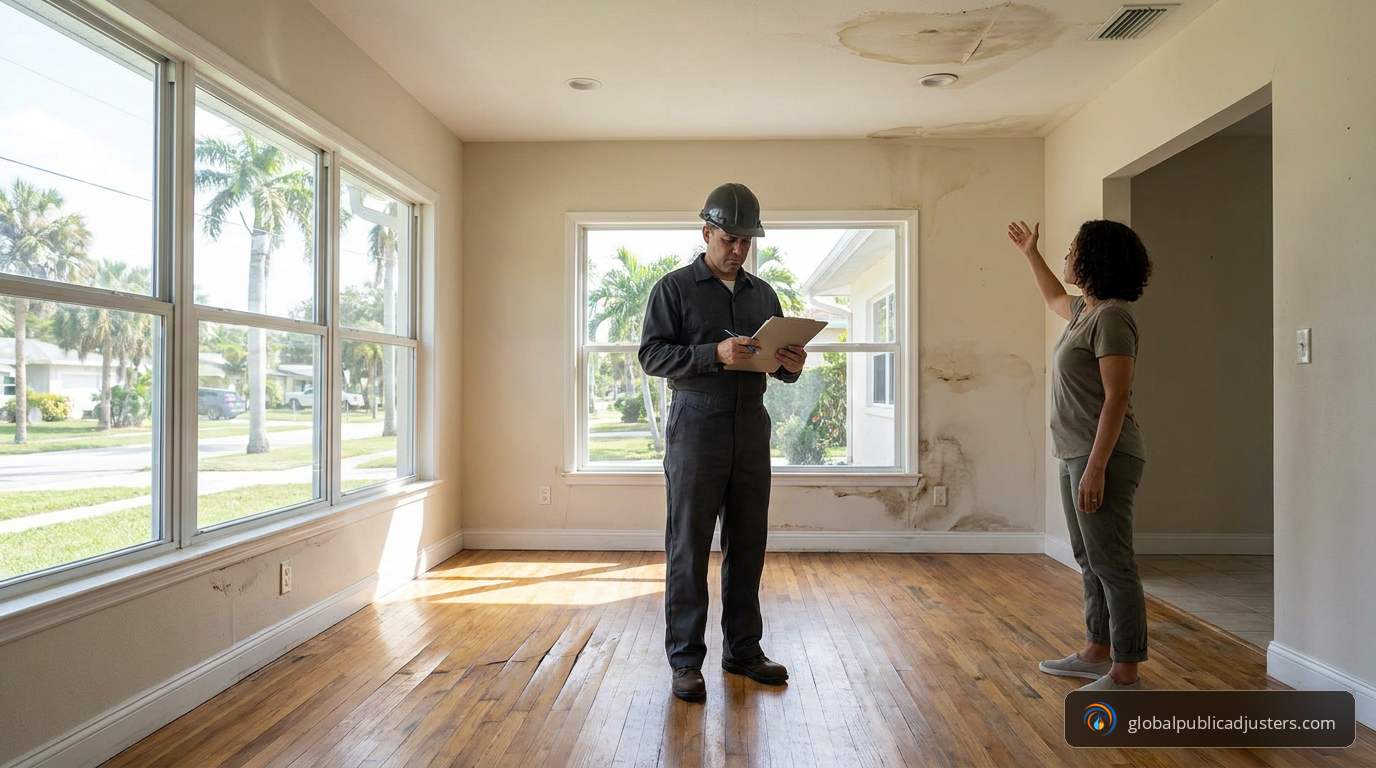
The best time to prepare for ahurricane insurance claimis before a storm hits. Homeowners who prepare in advance typically experience faster settlements and fewer disputes. It’s not about being pessimistic; it’s about being smart.

Start with a detailed home inventory.This is your strongest weapon. Walk through your house taking photos and videos of everything—furniture, electronics, appliances, and even the contents of closets. For valuable items, gather receipts, appraisals, and serial numbers. Without documentation, proving what you owned is difficult.
Review your insurance policy.Understand what’s covered, what’s excluded, and how your deductibles work. With home replacement costs jumping over 30% from 2018 to 2022, ensure your dwelling coverage reflects today’s rebuilding costs, not what you originally paid for your home.
Take pre-storm photos and videos of your property.This creates undeniable “before” evidence. Capture your roof, windows, exterior walls, and landscaping to establish a baseline condition. This protects you from claims that damage was pre-existing.
Create a disaster kitthat includes copies of your insurance policies, agent’s contact information, and your home inventory in a waterproof bag. For a complete checklist, see our guide onHow to Prepare Your Home for a Hurricane.
Store your important documents safely.Keep originals in a fireproof, waterproof safe, and upload digital copies to secure cloud storage. You’ll need access to these documents to file your claim, even if your home is damaged.
These steps can save you months of frustration and thousands of dollars. Being organized before the storm puts you in control of yourhurricane insurance claimprocess.
Immediate Steps to Take After the Hurricane
Once authorities give the all-clear, the actions you take in the first few days will shape your entirehurricane insurance claim.

Your safety comes first.Before entering your home, check for downed power lines, gas leaks, or structural damage. If you have any doubts, wait for professionals.
Once it’s safe,contact your insurance company immediately, ideally within 24 to 48 hours. The sooner you report your claim, the sooner an adjuster is assigned. Your policy requires you to take reasonable steps to prevent further damage (the “duty to protect property”). If you have a hole in your roof and don’t cover it, subsequent rain damage might not be covered.
Documenting Damage for Your Hurricane Insurance Claim
Your smartphone is your most valuable tool. Be meticulous.
- Take photos and videos of everything.Start with wide shots of each room and the exterior, then capture specific damage up close. Photograph every damaged item, including brand names or serial numbers if visible.
- Videos are powerful.Walk through your home slowly, narrating what you see to create a comprehensive record.
- Create a detailed written listof all damaged or destroyed items, both structural and personal. Note the approximate age and value.
- Keep every single receipt.This is critical. Receipts for emergency repairs, tarps, hotel stays, and meals are all part of your claim. Without them, you’re leaving money on the table.
- Get written estimatesfrom contractors for any emergency work to prove the necessity and cost.
For more insight, see our guide on5 Most Common Types of Hurricane Damage.
Making Emergency Repairs
You must protect your home from further harm, but don’t make permanent repairs before the adjuster’s inspection.
- Temporary vs. Permanent Repairs:Tarping a roof, boarding a window, or drying out a room are temporary measures your insurer expects you to take. Replacing the entire roof or installing new windows are permanent repairs that should wait until after the inspection.
- Common Emergency Repairs:
- Tarp your roofto prevent water from causing more damage.
- Board up broken windowsto keep weather out and secure your home.
- Start the drying processimmediately to prevent mold, which is often excluded from coverage. Use fans and dehumidifiers.
Always notify your insurer about emergency repairs you’re making and save all receipts for materials and labor. Your insurer should reimburse you for these reasonable costs. ThePost-Disaster Claims Guide (NAIC)offers additional guidance.
Understanding Your Hurricane Insurance Coverage
Knowing what your policy covers—and what it doesn’t—can mean the difference between a fair settlement and a financial nightmare. Let’s break down the key aspects of yourhurricane insurance claim.
Wind vs. Flood Damage: A Critical Distinction
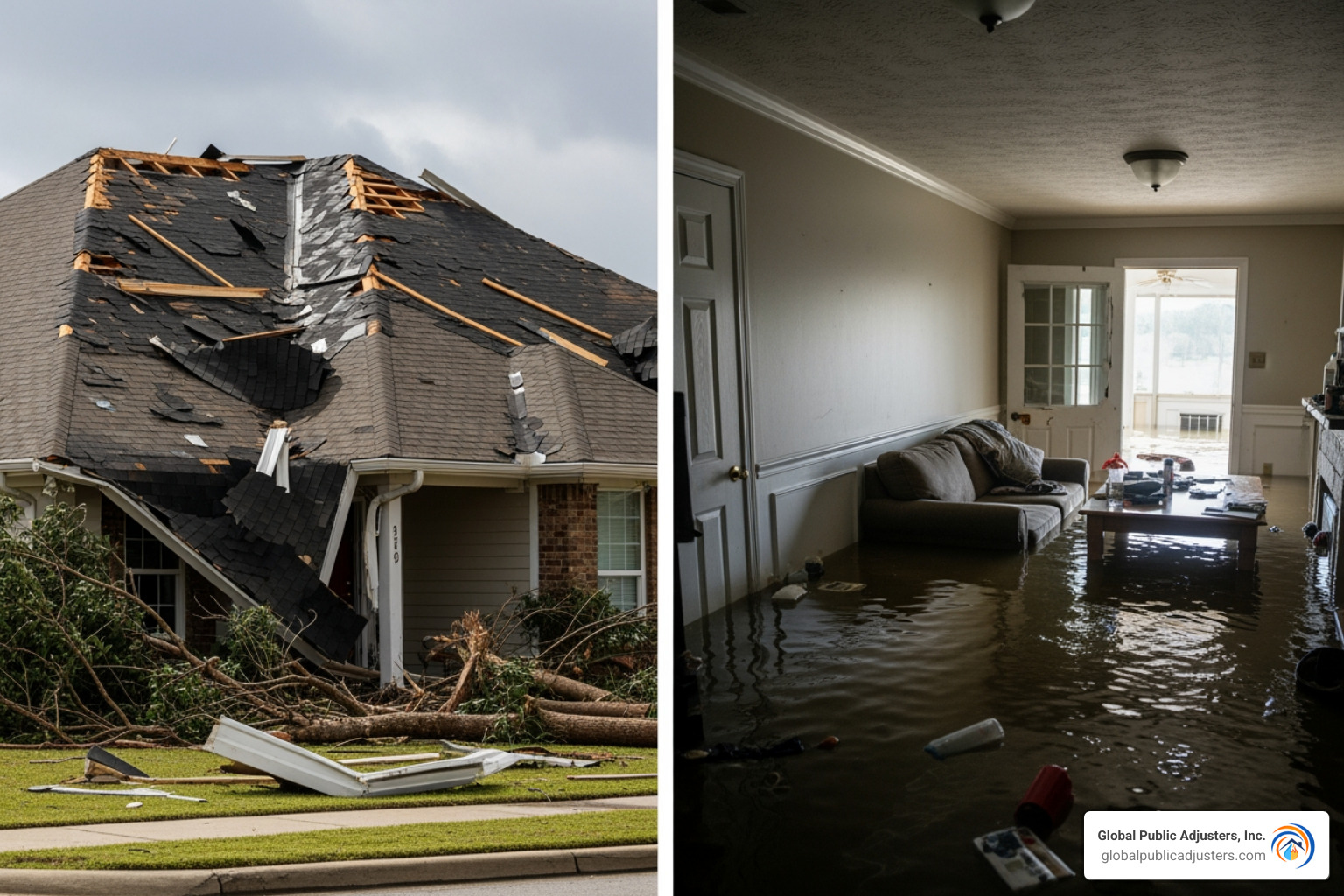
This is where many claims get complicated. Yourstandard homeowners policytypically covers wind damage. If wind tears off shingles or breaks windows, and rain enters through those openings, that’s usually covered.
However,flood damage is explicitly excludedfrom standard policies. This includes storm surge. Even though a hurricane causes it, the ocean water pushed onto your land is considered a flood. If your home is damaged by both wind and flood, your homeowners policy will not cover the flood portion.
This is whyseparate flood insuranceis critical, especially in coastal areas. TheNational Flood Insurance Program (NFIP), provides this coverage, but policies have a 30-day waiting period, so you can’t buy it right before a storm. For more details, see our guide onTypes of Property Damage Caused by Hurricanes.
Decoding Your Hurricane Deductible
Hurricane deductibles are different from standard deductibles and can significantly impact your out-of-pocket costs.
Instead of a fixed dollar amount, ahurricane deductible is a percentage of your home’s insured value. A 2% deductible on a $500,000 home means you pay the first $10,000 of damage. A 5% deductible is $25,000. This percentage-based deductible only applies to damage from a named storm.
In Florida, insurers must offer deductible options of$500, 2%, 5%, and 10%. Review your policy to see which you selected. Florida also has a“single season hurricane deductible”rule: you only pay your hurricane deductible once per season, no matter how many storms cause damage. Learn more atFlorida’s Hurricane Deductible rules.

What are Additional Living Expenses (ALE)?
If a hurricane makes your home unlivable,Additional Living Expenses (ALE)coverage helps with the increased costs you incur.
ALE covers temporary housing costs (like a hotel or rental), increased meal expenses if you can’t cook at home, and other related costs like storage units. This coverage isn’t unlimited; it’s usually capped at a percentage of your dwelling coverage (e.g., 10-20%) or a time limit.
Critically,NFIP flood insurance policies do not cover ALE. If your home is uninhabitable due to flooding alone, you won’t get temporary housing costs from your flood policy. To get reimbursed for ALE, keep meticulous records and save every receipt.
Navigating the Hurricane Insurance Claim Process
Once you’ve documented the damage, you’ll work with insurance professionals to turn your evidence into a fair settlement for yourhurricane insurance claim.
Working with Your Insurance Company’s Adjuster
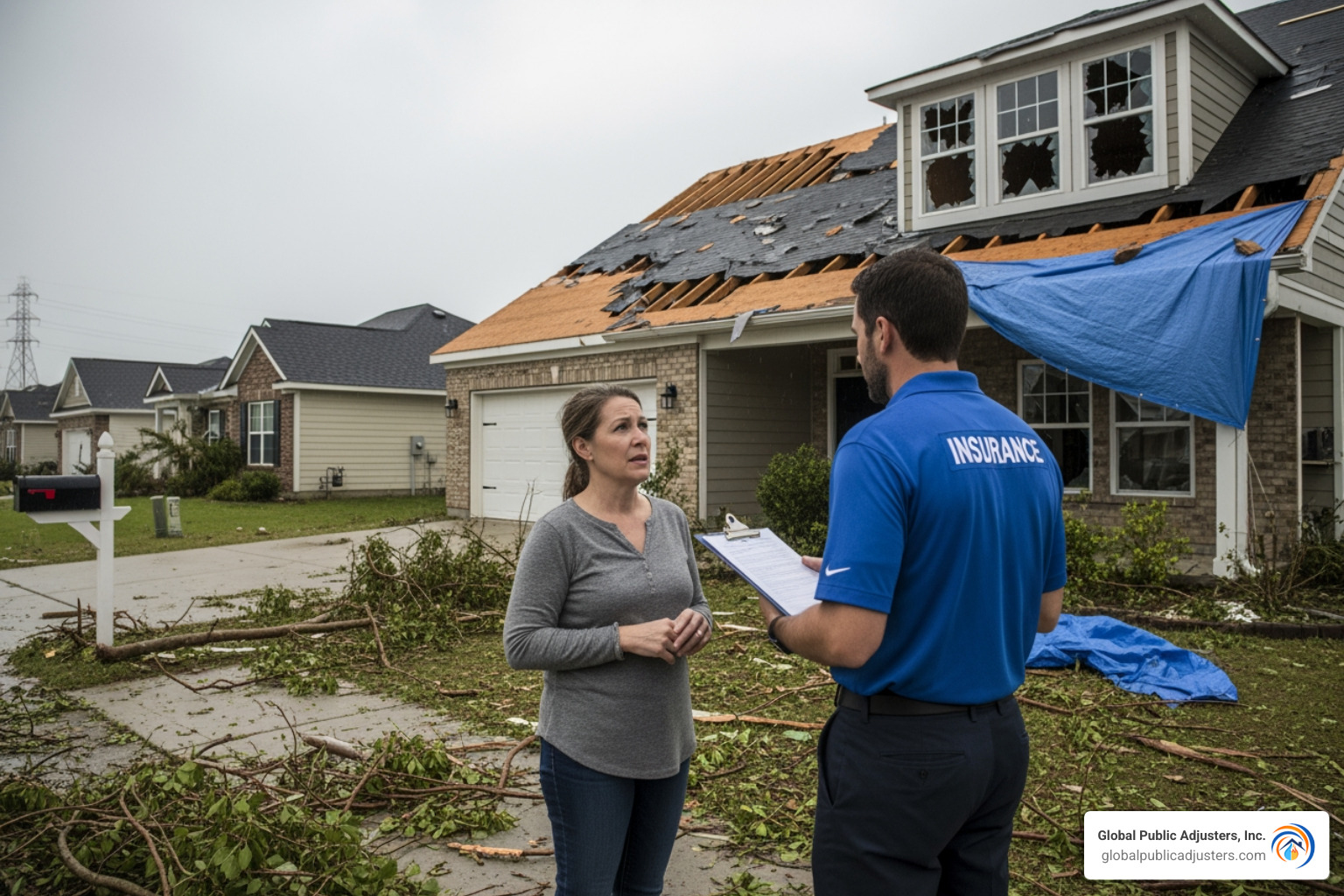
Your insurer will assign an adjuster to assess the damage and estimate repair costs. Remember:the adjuster works for the insurance company, not for you.Their goal is to evaluate the claim according to the policy, which often means minimizing the payout.
After a major hurricane, expect delays. Once your inspection is scheduled,be present.This is your chance to walk the adjuster through the damage and provide your documentation. Come prepared with your home inventory, photos, videos, and repair receipts. Ask questions, take notes, and get the adjuster’s contact information. You will receive a “scope of loss” document detailing the damage and repair estimates. Review it carefully and challenge any inaccuracies or omissions immediately.
When to Hire a Public Adjuster for Your Hurricane Insurance Claim
Sometimes, handling a claim alone isn’t enough. Unlike the insurance company’s adjuster,a public adjuster works exclusively for you.At Global Public Adjusters, Inc., we represent your interests to maximize your settlement.
Consider hiring a public adjuster for:
- Complex claims:Hurricanes often cause multiple types of damage (wind, water, structural). A public adjuster ensures nothing is overlooked.
- Denied or lowball claims:If your claim is rejected or the offer is too low, we can provide a second opinion, re-evaluate the damage, and negotiate aggressively on your behalf.
A public adjuster levels the playing field, handling the paperwork and negotiations so you can focus on recovery. Learn more in our article on7 Reasons to Hire a Public Adjuster When Facing Property Damage Claims.
Challenges with Back-to-Back Storms
When storms like Helene and Milton hit in succession, claims become more complicated. The main challenge isdifferentiating which storm caused which damage.This is why immediate and thorough documentation aftereachstorm is critical to create a clear timeline.
Florida’s“single season hurricane deductible”rule helps, as you only have to pay your hurricane deductible once per season. However, this doesn’t apply to different types of deductibles, like a separate one for a flood claim.
Back-to-back storms also create massive backlogs, delaying inspections and making fair assessments harder. If you’re dealing with damage from multiple storms, professional help is invaluable. For more on recent storms, readUnderstanding Hurricane Milton and What Public Adjusters Can Do for You.
What If Your Insurance Isn’t Enough?
Even with insurance, your settlement might not fully cover your losses. This gap is an unfortunately common reality after major hurricanes.
The Underinsurance Problem
Many homeowners are underinsured without realizing it. With home replacement costs surging over 30% from 2018 to 2022, coverage that was adequate a few years ago may not be today. After a storm, “demand surge” also drives up the cost of labor and materials, further widening the gap.
Different Coverage for Different Properties
Yourhurricane insurance claimdiffers for residential and commercial properties. Business owners need separate business interruption insurance to cover lost income during repairs, a coverage not included in a standard homeowners policy.
When You Need Additional Help
If your settlement falls short, government programs can help bridge the gap:
- FEMA grantsprovide financial aid for essential, uncompensated home repairs.
- TheSmall Business Administration (SBA)offers low-interest disaster loans to homeowners, renters, and businesses for losses not covered by insurance.
- TheDepartment of Housing and Urban Development (HUD)also provides disaster-related grants.
You can explore these options and apply for assistance atDisasterAssistance.gov.
Reopening Your Claim
If you find additional damage after your initial settlement, you may be able to reopen your claim. Time limits apply, so don’t wait. Contact your insurer immediately. A public adjuster can be invaluable in this situation, reassessing the damage and negotiating for additional compensation.
Frequently Asked Questions about Hurricane Claims
After a hurricane, questions are endless. Here are straightforward answers to the most common concerns about yourhurricane insurance claim.
How long do I have to file a hurricane claim in Florida?
While you should notify your insurer immediately (within a few days), Florida law provides specific deadlines for filing ahurricane insurance claim. You generally have a few years from the date of loss to file an initial claim, but you must check your policy for the exact timeline. The clock starts when the hurricane hits, not when you find the damage. Deadlines for supplemental claims (for additional damage found later) are much shorter. Missing a deadline can mean forfeiting your right to compensation. For a detailed breakdown, see:What Are the Time Limits for Hurricane Damage Claims in Florida?
What’s the difference between Replacement Cost Value (RCV) and Actual Cash Value (ACV)?
This distinction can mean thousands of dollars in your settlement.
- Replacement Cost Value (RCV)pays the full cost to repair or replace your damaged property with new materials of similar quality, without deducting for age or wear. If your 10-year-old roof is destroyed, RCV covers a brand-new roof.
- Actual Cash Value (ACV)pays for the depreciated value of your property. It’s the replacement cost minus a deduction for age and condition. For that same 10-year-old roof, ACV would only pay what it was worth at the time of the storm, which is much less than a new one costs.
Many RCV policies first pay the ACV, with the remaining amount (recoverable depreciation) paid after you complete repairs and submit receipts. Check your policy to see which coverage you have.
Does my standard homeowners insurance cover all hurricane damage?
No. This is a dangerous misconception. Your standard homeowners policycovers wind damageand resulting interior water damage (e.g., rain coming through a wind-damaged roof). However, itexplicitly excludes flood damage, including storm surge. If seawater floods your home, your homeowners policy will not cover it.
To be protected from flooding, you need aseparate flood insurance policy, typically from theNational Flood Insurance Program (NFIP). These policies have a 30-day waiting period, so you must plan ahead. Without flood insurance, you could face catastrophic out-of-pocket expenses. For a full breakdown, explore our guide onTypes of Property Damage Caused by Hurricanes.
Conclusion
The road to recovery after a hurricane is long, but you don’t have to walk it alone. Understanding the right steps can make the difference between a fair settlement and leaving thousands of dollars on the table.
The most important lessons for yourhurricane insurance claimare topreparebefore the storm,documentall damage thoroughly, andunderstandyour policy’s details, especially the difference between wind and flood coverage. Most importantly,don’t hesitate to seek professional helpwhen a claim is complex, disputed, or feels unfair.
Recent hurricanes have shown the devastating financial impact these storms have on families and businesses. The insurance process should provide relief, not add to the burden.
At Global Public Adjusters, Inc., we’ve spent over 50 years in Florida standing beside property owners like you. We know the tactics insurance companies use and are passionate about ensuring you receive every dollar you’re entitled to. While your insurer’s adjuster works for them, we work exclusively for you.
If you’re facing an overwhelminghurricane insurance claimor a low settlement offer, we’re here to help.Learn how our public adjusters can help you secure a fair settlementand get your life back on track.