Signs of sinkhole: 7 Hidden Dangers 2025
Why Recognizing Sinkhole Warning Signs Could Save Your Property
Signs of sinkholeactivity often appear months or years before a collapse, as underground voids can grow for centuries before any surface evidence appears. Most sinkholes develop gradually, giving homeowners crucial time to spot the warning signs and take action.
Quick Answer: The most common signs of sinkhole activity include:
- Outdoor signs:Circular ground depressions, slumping fence posts or trees, new ponds after rainfall, wilting vegetation in circular patterns, cloudy well water, and cracks in driveways or pavement
- Indoor signs:Doors and windows that stick or won’t close properly, cracks in walls (especially stair-step patterns), sloping floors, separating walls from ceilings, and popping nails or displaced molding
- Structural signs:Foundation settling, exposed fence posts or building foundations, and gaps between walls and floors
The reality is sobering: about20% of the U.S. is susceptible to sinkholes, with the most damage in Florida, Texas, Kentucky, Tennessee, Alabama, Missouri, and Pennsylvania. Florida alone has over 19,000 identified sinkholes.
By the time you see obvious signs, significant damage may have already occurred beneath your foundation. The financial stakes are enormous, as a single sinkhole can cause millions in damage. Since standard homeowners insurance typically excludes sinkhole damage, early detection is critical for protecting your investment.

What Lies Beneath? Understanding Sinkhole Formation
To understand thesigns of sinkholeactivity, we must look underground. According to theU.S. Geological Survey (USGS), a sinkhole is“a depression in the ground that has no natural external surface drainage, where water drains into the subsurface.”
Sinkholes form in what geologists callkarst terrain—areas where groundwater slowly dissolves soluble rock likelimestoneandgypsum. Rainwater becomes slightly acidic as it absorbs carbon dioxide from the air. As this water seeps into the ground, it dissolves the bedrock over centuries, creating underground voids and caverns.
Several factors can trigger a collapse.Heavy rainfallaccelerates rock dissolution and adds immense weight to the soil above caverns. Conversely,droughtcan be just as dangerous by lowering the water table, which removes the buoyant support for cavern roofs.
Human activities also play a role.Over-pumping groundwater,broken pipes, and the weight of newconstructioncan all provide the final push needed to trigger a collapse.
The Different Faces of Sinkholes
Not all sinkholes behave the same way, which is why recognizing differentsigns of sinkholeactivity is so important.

Dissolution sinkholesform gradually as bedrock dissolves, creating slow-forming depressions on the surface.
Cover-subsidence sinkholesoccur when sand or loose sediment slowly trickles into underground voids, causing the ground to sag over time. These provide more warning but can still cause serious foundation issues.
Cover-collapse sinkholesare the most dramatic. A thick layer of clay soil can mask a growing cavern until it suddenly gives way, creating a deep hole almost overnight.
Artificial sinkholesare triggered by human activities like broken utility lines or excessive irrigation, though the underlying geology is still a key factor.
Your Property’s Distress Signals: The Top Warning Signs of a Sinkhole
Catching thesigns of sinkholeactivity early is a critical skill for homeowners. While signs can be subtle, they are often mistaken for normal settling. When multiple indicators appear, or when changes are sudden, it’s time to pay close attention. Even small sinkholes can cause significant property damage and undermine your home’s foundation.

Outdoor Clues: Unmistakable signs of sinkhole activity in your yard
Your yard is often the first place to reveal hidden dangers. Watch for these outdoorsigns of sinkholeactivity:
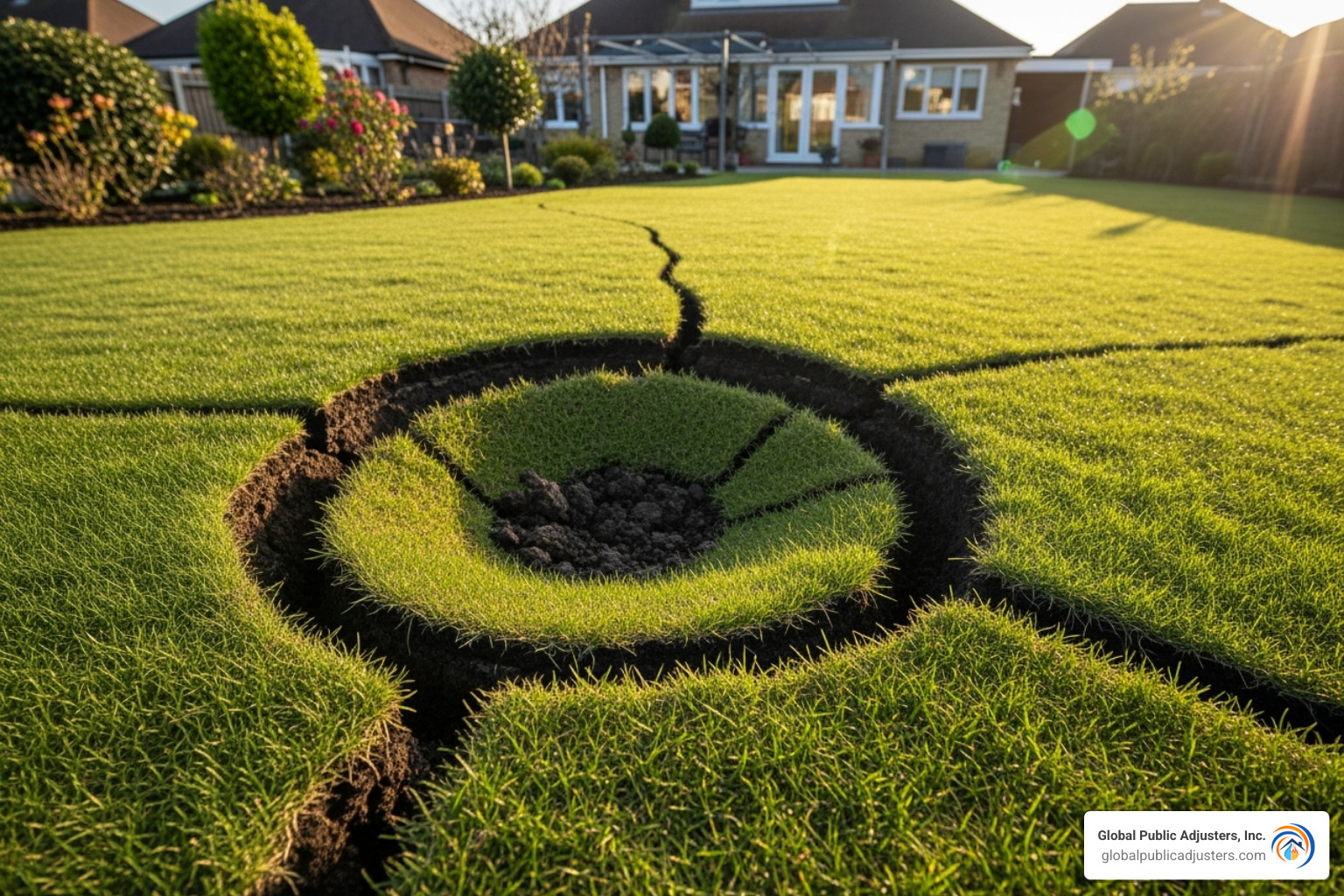
- Ground Depressions or Slumped Areas:Circular or bowl-shaped depressions in your yard, especially if they appear suddenly.
- Circular Cracks in Soil:A circular pattern of cracks in the ground, often around a sunken area.
- Slumping or Leaning Trees and Fence Posts:Trees, fence posts, or utility poles that tilt, lean, or have newly exposed bases.
- New Ponds After Rain:Water collecting in new areas after rainfall, indicating a change in ground contour.
- Wilting or Dying Vegetation in Circular Patterns:A circular patch of stressed or dying plants when surrounding vegetation is healthy.
- Cloudy Well Water:Well water that suddenly becomes cloudy, muddy, or turbid.
- Cracks in Driveways, Walkways, or Patios:New, deep, or expanding cracks in concrete or asphalt, especially interconnected “alligator” patterns.
- Interrupted Utilities:Unexplained interruptions to water, sewer, or electrical service.
Indoor Alarms: Subtle signs of sinkhole trouble inside your home
Manysigns of sinkholeactivity appear inside, often mimicking house settling. It’s crucial to differentiate:
- Wall and Ceiling Cracks:Cracks wider than a pencil, “stair-step” patterns in masonry, or cracks appearing over doorways and windows. Separations where walls meet ceilings are also concerning.
- Sloping or Uneven Floors:Floors that feel uneven or cause a ball to consistently roll in one direction.
- Sticking Doors and Jamming Windows:Doors and windows that suddenly become difficult to open, close, or latch.
- Gaps in Cabinets and Counters:New gaps appearing between countertops and walls, or misaligned cabinets.
- Popping Nails and Displaced Molding:Nails popping out of drywall or molding separating from walls.
- Wet Crawl Space or Basement:Unexplained moisture or standing water in your crawl space or basement.
- Unusual Earthy Smells:A strong, damp, earthy smell inside, especially after rain.
Any single sign might be innocuous. However, observing multiplesigns of sinkholeactivity, or if a sign worsens rapidly, indicates a serious problem. If you see these damages, it’s critical to understand your options forSinkhole Damageclaims.
From Suspicion to Certainty: What to Do Next
If you’ve spotted multiplesigns of sinkholeactivity, taking swift, informed action can make all the difference.
Immediate Safety and Evacuation Protocols
Your safety comes first.If you notice a sinkhole suddenly opening, or if your home’s structure seems severely compromised (rapidly growing cracks, a visible void),evacuate immediatelyandcall 911. Do not go back inside. Once safe, emergency services can secure the area. For less dramatic signs, you can secure the area yourself by roping off ground depressions to prevent accidents.
Professional Inspection and Testing
Confirming a sinkhole requires specialized expertise. Ageotechnical engineeris the professional you need to assess what’s happening beneath your property. They use several non-invasivegeophysical methods:
- Ground-Penetrating Radar (GPR)uses radar pulses to create images of the subsurface, detecting voids and changes in soil density.
- Electrical resistivity testingsends electrical currents into the ground to measure resistance, which helps map out different materials like solid rock versus air-filled voids.
- Standard Penetration Testing (SPT)uses drilling equipment to collect soil samples and measure soil resistance, identifying unstable layers.
These tests are essential for a complete diagnosis and can take several days or weeks.
Navigating Your Insurance: Understanding Sinkhole Coverage
Standard homeowners insurance policies typically exclude sinkhole damage.In states like Florida, insurers must offer sinkhole coverage as an add-on, but it often only applies to“catastrophic ground cover collapse”—damage severe enough to make a home uninhabitable.
If you have coverage and suspect sinkhole activity, contact your insurance company immediately to file a claim. You will need to establish a“date of loss”(when the damage was first noticed). Your insurer will send their own adjuster and geotechnical team.Adjusters work for the insurance company, not for you. Stick to the facts when answering their questions.
Navigating a sinkhole claim is complex, and insurers may deny claims or offer low settlements. This is why an expert advocate likeGlobal Public Adjustersis so valuable. With over 50 years of experience, we work solely for you to maximize your settlement and protect your rights.
If you’re considering coverage, see our guide onShould You Add Sinkhole Coverage to Your Homeowners Insurance?. If you’re already dealing with a claim, learnWhy Hire a Public Adjuster for Sinkhole Damage.
Securing Your Foundation: Repair and Prevention
Once a sinkhole is confirmed, the road to recovery begins. Modern engineering offers several effective methods to stabilize your property, and the right one will depend on the sinkhole’s size, type, and impact on your home’s structure.

Common repair methods include:
- Compaction Grouting:Injecting a thick grout mixture to compact loose soil and fill voids, stabilizing the ground. This is often used for smaller sinkholes.
- Void Filling:Pumping flowable concrete or grout directly into large underground caverns to restore support.
- Underpinning:Extending a damaged foundation deeper into stable soil using piers or piles to provide solid support.
- Slab Jacking:Lifting settled concrete slabs (like driveways) by injecting expanding polyurethane foam underneath.
- Jet Grouting:Using high-pressure jets of grout to create solid, supportive columns within the soil.
Sinkhole repair is never a DIY project and requires specialized engineering knowledge and equipment.
Prevention: Your Best Defense Against Future Problems
While you can’t prevent natural sinkholes, you can reduce your risk by managing your property wisely.
- Proper Water Management:Maintain your gutters and downspouts to direct rainwater far from your foundation. Ensure your yard has effective drainage to prevent water from pooling.
- Fix Plumbing Leaks Promptly:A minor leak in a water or sewer line can saturate and erode the soil around your foundation, creating ideal conditions for a sinkhole.
- Water Conservation:Conserving water, especially during droughts, helps maintain groundwater levels that support the ground beneath your home. Avoid over-pumping or excessive irrigation.
- Mindful Construction:Avoid placing heavy loads (new structures, large concrete patios) in areas where you’ve noticed anysigns of sinkholeactivity. Consult a geotechnical professional before major excavation.
Prevention is far more cost-effective than repair. A little vigilance today can save you from a catastrophic claim tomorrow.
Frequently Asked Questions about Sinkhole Risks
How can I tell the difference between normal house settling and sinkhole activity?
The key differences are speed, scope, and severity.
- Normal house settlingis gradual, occurring over years, and typically results in stable, hairline cracks.
- Signs of sinkholeactivity are often more dramatic. Look formultiple warning signs appearing at once(e.g., wall cracks plus a leaning fence),sudden or rapid changes(cracks that grow quickly, floors that suddenly slope), andspecific crack patternslike stair-step cracks in masonry or cracks over doorways.
When in doubt, call a geotechnical engineer for a professional assessment.
Are sinkholes only a problem in Florida?
No. While Florida is famous for sinkholes due to its limestone bedrock and high water table, about20% of U.S. land is susceptible.
Other high-risk states with “karst terrain” (soluble bedrock) includeTexas, Missouri, Tennessee, Alabama, Kentucky, and Pennsylvania. Each region has unique geological factors, from salt domes in Texas to coal mining history in Pennsylvania. Thesigns of sinkholeactivity are worth watching for in any at-risk area.
Can a small crack in my wall really be a sign of a sinkhole?
A single, small crack is not usually a cause for panic, but it can be an early warning sign. Context is everything. A crack becomes more concerning when it:
- Growslonger, wider, or deeper over time.
- Forms astair-step patternin brick or block walls.
- Appears overdoorways, windows, or where walls meet ceilings, indicating structural stress.
- Isaccompanied by other signs, such as sticking doors or depressions in your yard.
Document any changes with photos and dates. If you see multiplesigns of sinkholeactivity, seek professional help early.
Protecting Your Biggest Investment from the Ground Up
Your home is likely the biggest investment you’ll ever make, and protecting it from the hidden dangers lurking beneath the surface starts with knowledge. Recognizing the earlysigns of sinkholeactivity isn’t just about being a vigilant homeowner – it’s about safeguarding your family’s safety and financial security.
The good news? Most sinkholes don’t appear overnight. They send warning signals months or even years before a catastrophic collapse occurs. By staying alert to these subtle clues – fromcircular ground depressionsandleaning fence postsoutside tosticking doorsandwall cracksinside – you’re taking the most important step in protecting your property.
Proactive measuresmake all the difference. Simple actions like maintaining proper drainage, fixing plumbing leaks promptly, and managing water around your foundation can significantly reduce your risk. And when you do spot warning signs, getting a professional assessment quickly can mean the difference between minor repairs and major reconstruction.
But here’s where many homeowners feel lost: navigating the insurance maze. Sinkhole claims are notoriously complex, with insurance companies often looking for reasons to deny coverage or minimize settlements. Standard homeowners policies typically exclude sinkhole damage, and even when you have specific coverage, proving your claim meets the strict definitions can be challenging.
That’s where having the right advocate becomes invaluable.Navigating a sinkhole claim can be complex, and having an expert advocate like Global Public Adjusters on your side ensures your rights are protected and you receive a fair settlement.With over 50 years of experience, we’ve seen every trick insurance companies use, and we know how to build compelling cases that get results.
Don’t let the complexity of sinkhole claims intimidate you into accepting less than you deserve. Yourproperty safetyandfinancial securityare too important to leave to chance.If you’ve spotted these warning signs,contact us for help with your sinkhole damage claim.We’re here to turn your suspicions into certainty and your claim into the settlement you need to get back on solid ground.