
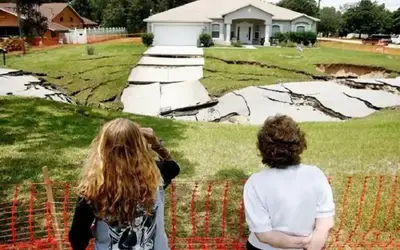
Most of Florida sits on limestone, a rock that slowly dissolves in slightly acidic groundwater. Over time, cavities form underground. When the sand and clay above settle into those cavities, the ground surface moves, sometimes slowly over years and sometimes all at once. The slow version is far more common, and it's the one homeowners miss, because it looks like ordinary cracks in an ordinary house.
This guide covers the warning signs, how to tell them from normal settling, what a Florida homeowners policy actually covers and what to do first if you suspect sinkhole activity.
The Warning Signs of Sinkhole Activity
Inside the house
- New or growing cracks in drywall, plaster or interior block walls, especially diagonal cracks running from the corners of doors and windows
- Doors and windows that start to stick, won't latch or show uneven gaps at the top of the frame
- Cracked floor tile or cracks in the slab that run across several tiles in a line
- Gaps where walls meet the floor or ceiling, or baseboards pulling away
- Floors that feel sloped, where a ball or marble rolls to one side
Outside the house
- Stair-step cracks in concrete block or stucco walls
- Cracks in the driveway, sidewalk or pool deck, and a pool that loses water or starts to tilt
- A circular depression or soft spot in the yard, or new puddles where water never collected before
- Fence posts, trees or utility poles that start to lean
- Exposed foundation or soil pulling away from the slab
- Cloudy or sandy well water, or a circle of plants that dies off suddenly
One sign alone doesn't mean there's a sinkhole. Several signs together, or signs that keep getting worse, are worth a professional look.
Send us photos. Get a licensed adjuster's opinion, free.
- 1Snap photos or video of the damage
- 2Add your policy or the insurer's letter
- 3A licensed adjuster calls you with an honest answer
Sinkhole or Normal Settling?
| Usually settling or shrinkage | Possible sinkhole activity | |
|---|---|---|
| Crack size | Hairline, stays the same | Getting wider or longer over weeks or months |
| Crack pattern | Short, random, near joints | Stair-steps in block, diagonals from door and window corners |
| Doors and windows | Fine, or seasonal sticking | Suddenly stick, won't latch, uneven gaps |
| Floors | Level | Sloping, cracked tile in a line |
| Yard | No change | New depression, ponding or leaning posts |
| Timing | Present for years | Appeared recently or getting worse |
Insurance companies often blame cracks on settlement, shrinkage, poor construction, expansive clay or tree roots. Sometimes that's right. Sometimes it isn't. Telling the difference takes testing, not a quick look.
What Florida Homeowners Insurance Covers
Florida law separates two kinds of coverage, and most homeowners only have the first one.
| Catastrophic ground cover collapse | Sinkhole loss coverage | |
|---|---|---|
| Included? | Required on every Florida homeowners policy | Optional, for an extra premium |
| What it takes | All four: an abrupt collapse, a depression visible to the naked eye, structural damage to the home and the home condemned and ordered vacated | Structural damage to the home, including the foundation, caused by sinkhole activity |
| Covers slow cracking? | Usually no | Yes, if the damage meets the policy's definition of structural damage |
| Where to check | Your policy | Your declarations page, look for sinkhole loss coverage |
If you have sinkhole loss coverage, the insurer generally has to investigate when it can't rule out sinkhole activity. That investigation is usually done by a professional engineer and a professional geologist, and can include ground penetrating radar and soil borings. If sinkhole activity is confirmed, Florida law generally requires repairs to follow the engineer's stabilization plan, such as grouting or underpinning, and payments are often made as the repair work is done rather than as one check.
Florida also has a neutral evaluation program, run through the Department of Financial Services, for disputes over sinkhole claims.
Deadlines That Can End a Sinkhole Claim
- 2 years from discovery. A sinkhole claim is generally barred unless you give the insurer notice within 2 years after you knew or reasonably should have known about the sinkhole loss.
- Repairs and documents. Once a report recommends repairs, there are time limits to sign a repair contract. Ask the insurer in writing what deadlines apply to your claim.
See all Florida claim deadlines.
What to Do If You See the Signs
- Stay safe. If a hole opens suddenly, keep people and pets away, and call 911 if the home is at risk. You can also report it to your county and to the Florida Geological Survey, which tracks subsidence reports.
- Document before you fix anything. Photograph every crack with a tape measure in the frame. Mark the ends of cracks with a pencil and the date, and photograph them again every few weeks.
- Don't patch or paint over cracks until they're documented. Patching can erase the evidence that the damage is growing.
- Check your declarations page for sinkhole loss coverage and its deductible.
- Report the claim in writing and keep a copy. Ask what testing the insurer plans to do.
- Get your own review before you accept a denial that blames settling or construction.
How a Public Adjuster Helps With Sinkhole Claims
Sinkhole and ground movement claims are some of the most technical claims in Florida. We document the damage over time, review the insurer's engineering and geology reports, find what the testing missed and work with independent engineers when the conclusions don't hold up. We also make sure the repair scope includes everything that comes with stabilizing a home: the foundation work, the cracked walls and floors, the doors and windows, and the cost of moving out while the work is done.
Seeing the signs? Send us photos for a free review or call 407-900-5025. Learn more about sinkhole and ground collapse claims and denied claims.
Quick answers
What are the first signs of a sinkhole under a house?
Common early signs are new or growing cracks in walls, floors and the foundation, stair-step cracks in block walls, doors and windows that suddenly stick or won't close, cracks in the driveway or pool deck, and a depression or soft spot forming in the yard. Signs that appear or grow over weeks or months are more concerning than a single old hairline crack.
Does homeowners insurance cover sinkholes in Florida?
Every Florida homeowners policy must cover catastrophic ground cover collapse, which requires an abrupt collapse, a visible depression, structural damage and the home being condemned and ordered vacated. Broader sinkhole loss coverage, for structural damage from sinkhole activity that doesn't meet all four conditions, is optional and costs extra. Check your declarations page.
How long do I have to file a sinkhole claim in Florida?
Florida law generally bars a sinkhole claim unless you give the insurer notice within 2 years after you knew or reasonably should have known about the sinkhole loss. Report suspected damage as soon as you notice it.
How do I know if cracks are from a sinkhole or normal settling?
You usually can't tell by looking. Hairline cracks that stay the same size are often settling or shrinkage. Cracks that are new, getting wider, running in stair-steps or diagonals, or that come with sticking doors and sloping floors need a professional evaluation. Sinkhole investigations use engineers, geologists, ground penetrating radar and soil borings.
Where are sinkholes most common in Florida?
West-central Florida has the most reported sinkhole activity, especially Hernando, Pasco and Hillsborough counties, an area often called sinkhole alley. Polk, Marion, Citrus, Lake and the Orlando area also see frequent activity, but sinkholes can form anywhere in Florida because most of the state sits on limestone.
This article is general information, not legal advice. Every claim and policy is different.
Keep reading
- Hail and Flooding in Hollywood, Fort Lauderdale and Broward (Nov. 17, 2026): What Your Insurance Covers
- Hurricane Isaias Claim Denied or Underpaid? What Pensacola and Panhandle Homeowners Need to Know
- Florida Insurance Claim Deadlines in 2026: Don't Let the Clock Cost You Your Claim
- Find a public adjuster in your city