
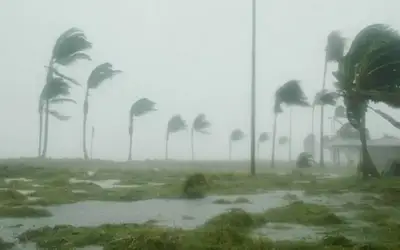
Hurricane Isaias came ashore near Destin on the night of October 9, 2026 as a Category 2 storm with 105 mph winds, and the western Panhandle took the hardest hit. Gusts topped 110 mph in places like Jay and Oriole Beach, rain totals passed 11 inches along the Okaloosa coast, and tens of thousands of families woke up to missing shingles, soaked ceilings and trees on their roofs.
Now a second storm is playing out, this one on paper. Claims are being closed, denied or paid at a fraction of what repairs will actually cost. If that's where you are, this guide explains why it happens, how we push back, and the deadlines you need to know before you decide anything.
What Isaias Did to Pensacola and the Western Panhandle
The National Weather Service office in Mobile and Pensacola recorded an 86-knot gust at Pensacola Beach and Navarre Beach, a 118 mph gust at Jay, and 11.65 inches of rain at Mary Esther. Storm surge pushed nearly 4 feet above normal high tide near Destin. Trees, power lines and roofs went down across Escambia, Santa Rosa and Okaloosa counties.
By late October, Florida's Office of Insurance Regulation had logged more than 62,000 Isaias claims and about $652 million in estimated insured losses. Santa Rosa County alone accounted for nearly 23,000 claims in the first week, followed by Escambia with more than 13,600. A federal disaster declaration now covers the Panhandle counties south and west of Leon County.
Why So Many Isaias Claims Are Being Denied or Underpaid
Within weeks of the storm, insurers had already closed thousands of Isaias claims without paying anything. Some of those decisions are correct. Many deserve a second look. Here are the reasons we see most often:
- "Below your deductible." Florida hurricane deductibles are usually 2% to 10% of your dwelling coverage. A quick inspection that only counts visible shingles can easily land under that number, even when the real damage is well above it.
- "That's flood, not wind." With heavy rain and surge in the mix, insurers sometimes blame water damage on flooding, which most homeowners policies exclude. Wind-driven rain through a damaged roof or window is a different story, and the difference has to be proven.
- "Wear and tear" or "pre-existing." Older roofs are an easy target. But a 15-year-old roof that wasn't leaking on October 8 and is leaking on October 10 tells you something.
- Patch instead of replace. An estimate that pays for a few shingles or one section of drywall may ignore matching rules, code upgrades and damage you can't see from the ground.
- Missed rooms and hidden water. Wet insulation, swollen subfloors and moisture inside walls don't show up in a 20-minute walk-through.
How We Push Back on the Insurance Company's Decision
An insurer's decision isn't the last word just because it's in writing. Florida requires insurers to explain their decisions, and every reason they give can be tested against the policy and the evidence. Here's how we do it:
- We read the denial or estimate line by line. We find exactly what the insurer relied on, and what it left out.
- We read your whole policy. Coverages like ordinance or law, additional living expenses and debris removal are often missing from the first estimate.
- We inspect the property ourselves, with the tools below, and tie every finding to the storm date.
- We build our own estimate using the same pricing software insurers use, so they can't brush it off as a guess.
- We submit and negotiate, through a reopened or supplemental claim, and use options like appraisal or the state's free mediation program when it helps.
Finding the Hidden Damage That Changes the Number
The biggest difference between a denied claim and a paid one is usually evidence. Damage you can't see is damage nobody pays for. That's why we bring more than a clipboard:
Drone surveys capture every slope of the roof up close, including lifted and creased shingles you can't spot from the yard. Infrared cameras show temperature differences where water is hiding in ceilings, walls and attic insulation, without tearing anything open. Moisture meters give hard numbers, room by room, so the insurer can see exactly how far the water spread. Put together, these findings often turn a "below deductible" answer into a full roof, ceiling and interior claim.
The Clock Is Already Running on Your Isaias Claim
This is the part people don't want to hear, but it's the most important. Florida shortened its property claim deadlines, and they run from the date of loss, October 9, 2026, not from the day you got the insurer's letter.
- October 9, 2027: the last day to report a new claim or reopen a closed one.
- April 9, 2028: the last day to report a supplemental claim for damage found later.
- Before then: roofers, mitigation companies and inspectors get booked solid after a storm, and evidence fades as repairs happen. Waiting rarely makes a claim stronger.
And remember, if your claim is tied to the declared emergency, Florida caps public adjuster fees at 10% during the first year after the declaration. After that, the cap goes up to 20%. Getting help sooner can cost you less.
What to Do This Week
- Find your claim number, the insurer's estimate and any denial or closing letter.
- Photograph every room, the roof from the ground, the attic and any stains, even small ones.
- Keep every receipt: tarps, mitigation, hotels, meals and extra mileage.
- Don't sign a final release or accept a "full and final" check until someone has reviewed the numbers.
- Call us for a free review. We'll tell you honestly whether your claim is worth reopening.
Local Help from Our Pensacola Office
Global Public Adjusters has handled Florida property claims since 2013 and has recovered more than $500 million for policyholders. Our Pensacola office at 312 E 9 Mile Rd serves Escambia, Santa Rosa and Okaloosa counties, including Pensacola, Gulf Breeze, Navarre, Pace, Milton and Fort Walton Beach. We work only for you, never for the insurance company.
Got an Isaias claim that doesn't add up? Call 866-903-4448, text us, or request a free claim review. There's no upfront cost, and you'll get a straight answer about where you stand and how much time you have.
Sources: National Weather Service Mobile/Pensacola, Hurricane Isaias post-storm report; Florida Office of Insurance Regulation claim data as reported by Florida Phoenix (Oct. 19, 2026) and News Service of Florida (Oct. 29, 2026); Fla. Stat. 627.70132 and 626.854.
Quick answers
How long do I have to file a Hurricane Isaias insurance claim?
Florida law generally gives you 1 year from the date of loss to report a new or reopened claim, and 18 months for a supplemental claim. For Isaias, which hit on October 9, 2026, that means October 9, 2027 and April 9, 2028.
My Isaias claim was closed without payment. Is it over?
Not necessarily. Claims are often closed because the damage was estimated below the deductible or blamed on flooding or wear and tear. If the inspection missed damage, a reopened or supplemental claim backed by better evidence can change the outcome.
Can a public adjuster help if the insurer already paid part of my claim?
Yes. Many of our cases start with a partial payment. We document the damage the first estimate left out, price it line by line and submit a supplemental claim so the insurer has to respond to the full picture.
How much does a public adjuster cost after Hurricane Isaias?
There's no upfront cost. Florida caps public adjuster fees at 10% for claims tied to a declared state of emergency during the first year, and you only pay if money is recovered.
This article is general information, not legal advice. Every claim and policy is different.