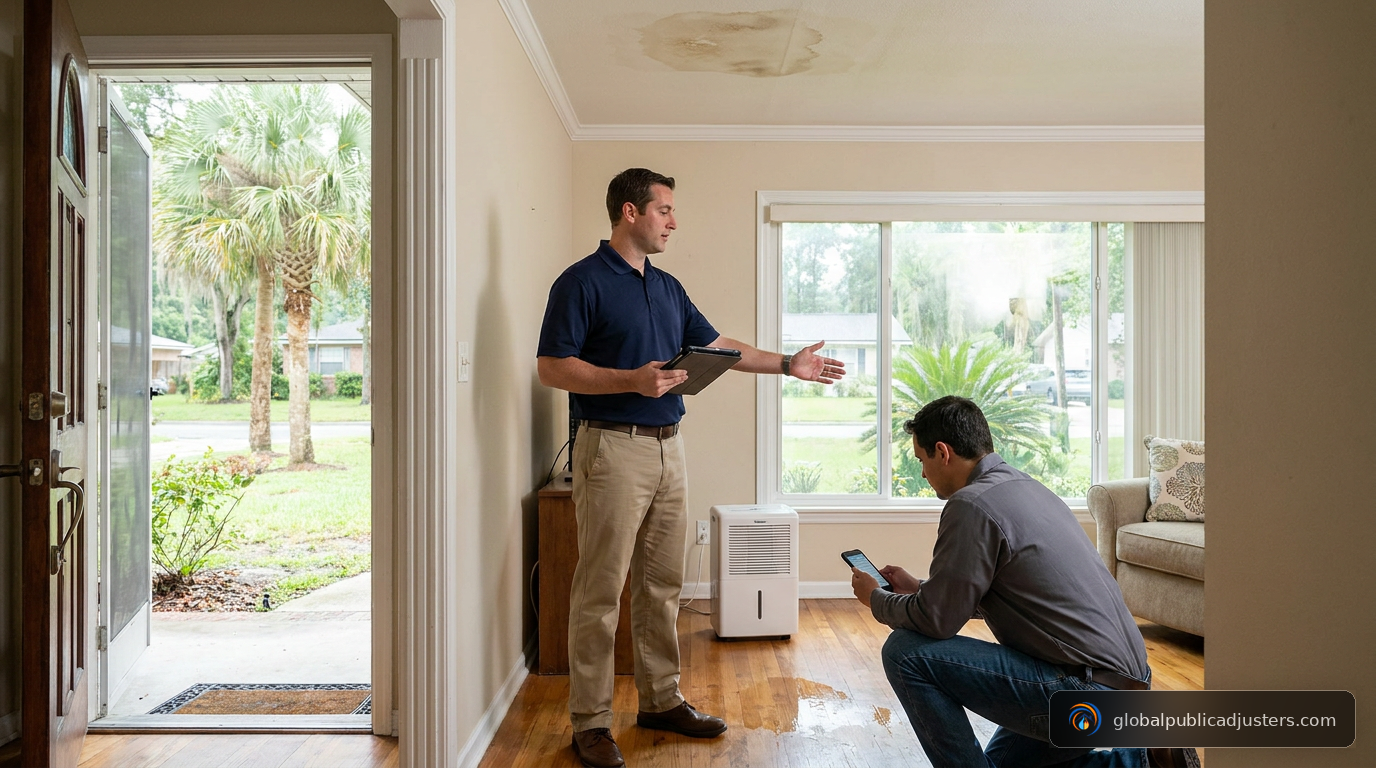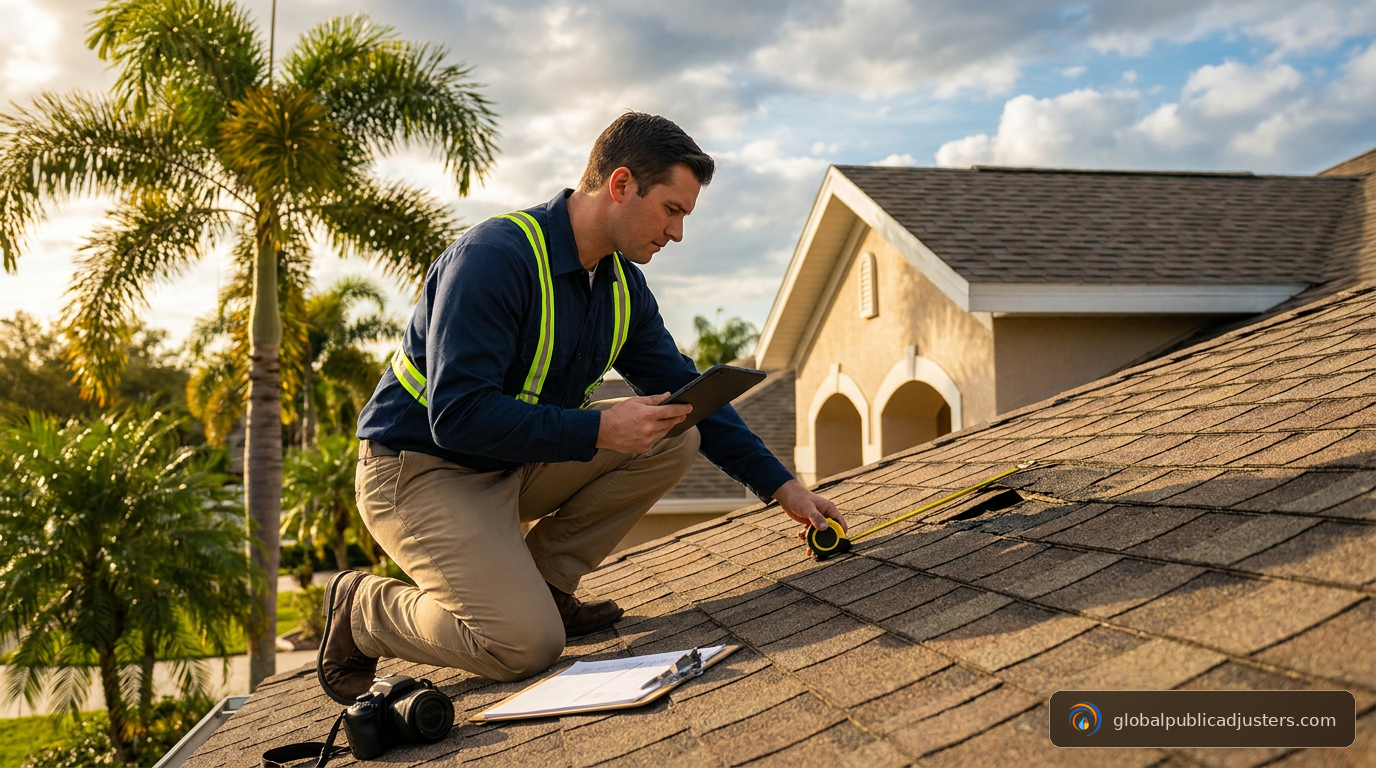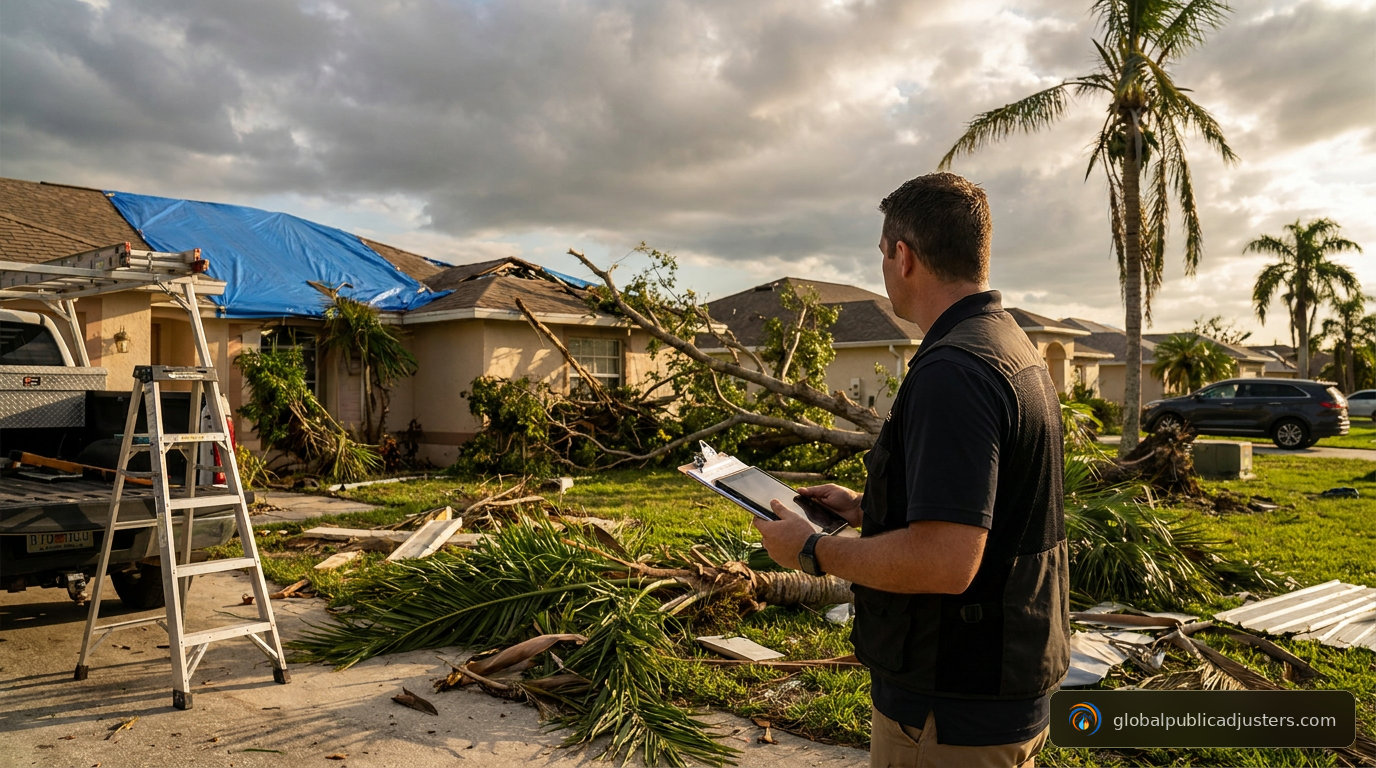
Quick Answer
A Florida hurricane damage insurance claim requires prompt reporting, thorough documentation, and a clear separation of wind versus flood damage before an insurer will issue payment. A licensed public adjuster in Florida can inspect the property, prepare an independent estimate, and negotiate directly with the carrier, often identifying covered damage the insurance company’s own adjuster missed or undervalued. Florida law caps public adjuster fees, typically at 10% for claims tied to a Governor-declared state of emergency and up to 20% otherwise.
Nearly304,408 hurricane-related claimsappear in Florida’s most recent catastrophe reporting dataset, and more than94% of those claims in the largest reported category have already closed, according to state regulators. Yet thousands remain open, some with payment and some without, which raises an uncomfortable question for every Florida homeowner: why do some claims settle quickly and fairly while others stall for months or get paid far below the actual cost of repair? The answer usually comes down to documentation, timing, and whether the policyholder understood how ahurricane damage insurance claim Florida adjusterprocess actually works before the insurance company’s adjuster walked through the door.
This guide breaks down exactly how Florida’s hurricane claims system functions, from the moment a storm makes landfall through final settlement, and explains how a licensed public adjuster can change the outcome of a claim.
What Does the 2026 Florida Claims Data Show?
Florida’s catastrophe claims data gives a clear picture of scale. In the most recent reporting period tracked by the state, insurers logged304,408 total reported claims, with$4.037 billion in total incurred lossesin the largest reported category and$8.511 billion in total paid lossesacross all reported catastrophe data. Public figures from theFlorida Office of Insurance Regulation’s catastrophe reporting toolbreak these numbers down by insurer, giving homeowners a benchmark for how quickly claims in their area are typically resolved.
The 2026 Atlantic hurricane outlook leaned toward a below-average to near-normal season, partly tied to forecast El Niño conditions, according to market analysts tracking reinsurance trends in the 2026 Florida Reinsurance Renewal Report. A quieter forecast does not mean a quiet risk profile. Fitch Ratings has noted that Florida remains a key focus during hurricane season because a single severe landfall near Jacksonville, Tampa, or the southeast coast can generate billions in insured losses regardless of how many total storms form that year.
Separately, Florida represented4.9% of U.S. homeowners-property claims opened in 2025, a relatively modest share of national volume that nonetheless drives an outsized share of insurer losses and litigation, since Florida’s catastrophe claims tend to be larger and more contested than claims in non-coastal states.
Scope: Largest reported catastrophe category
Thousands remain open statewide
Largest reported category
Across all reported catastrophe data
What Is a Hurricane Damage Insurance Claim Adjuster in Florida?
An adjuster is the licensed professional who inspects storm damage, interprets the policy, and determines how much the insurer should pay. In Florida, every adjuster working a hurricane claim, whether representing the insurance company or the homeowner, must be licensed through the Florida Department of Financial Services. This licensing requirement exists precisely because catastrophe claims involve large dollar amounts and complex coverage questions that untrained estimators routinely get wrong.
A hurricane damage insurance claim Florida adjuster reviews the declarations page, endorsements, exclusions, and the actual physical damage to determine whether the loss is covered, what the repair scope should be, and how depreciation or deductibles apply. The quality of that initial inspection often determines the trajectory of the entire claim. Homeowners in Jacksonville, where storm surge and wind-driven rain frequently damage roofs and siding along the St. Johns River corridor, often discover that the insurer’s first inspection undercounts damage that isn’t immediately visible, such as trapped moisture in wall cavities or compromised roof decking.
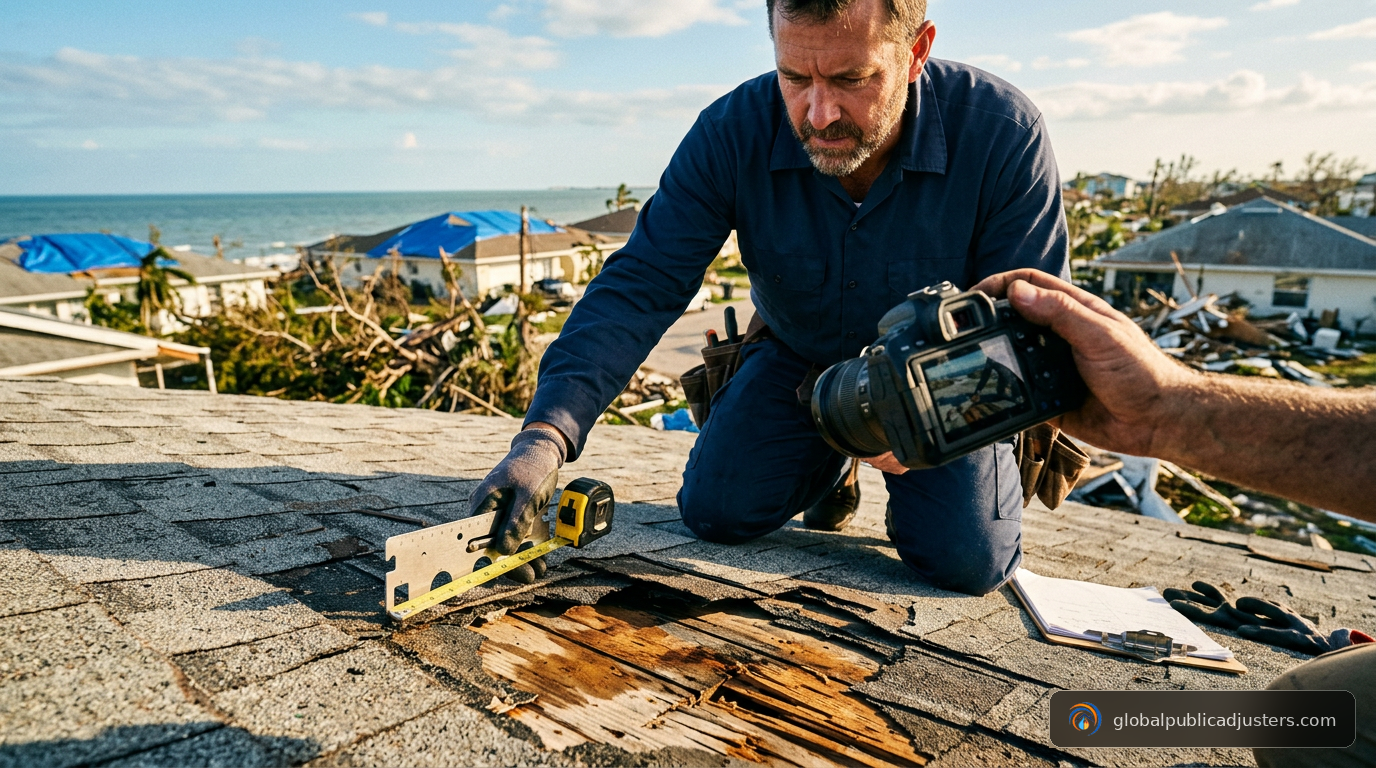
How Do Insurance Adjusters, Independent Adjusters, and Public Adjusters Differ?
Three distinct categories of licensed adjusters work Florida hurricane claims, and confusing them is one of the most common and costly mistakes homeowners make.
| Adjuster Type | Who They Represent | Payment Structure |
|---|---|---|
| Insurance-company adjuster | The insurer directly | Salaried employee of the carrier |
| Independent adjuster | An adjusting firm hired by the insurer | Paid by the firm, not the homeowner |
| Public adjuster | The policyholder | Percentage fee of the settlement, capped by Florida law |
Only one of these three professionals is legally obligated to work in the homeowner’s best interest: the public adjuster. That distinction matters enormously during a dispute, because the insurer’s adjuster and the independent adjuster both have a financial relationship with the carrier, even when they act in good faith. Apublic adjuster handling various claim typescan inspect the same property, apply the same policy language, and frequently arrive at a materially higher, better-documented repair estimate.
“The single biggest mistake we see after a hurricane is a homeowner accepting the first number from the insurance company’s adjuster without independently verifying the full scope of damage. Roof decking, trapped moisture, and HVAC compromise are rarely visible from a one-hour inspection.” — Senior claims consultant, Global Public Adjusters
What Should Florida Homeowners Do Immediately After Hurricane Damage?
The first 72 hours after a storm determine how strong your claim file will be months later. Florida homeowners should move through these steps methodically rather than rushing to call contractors before documenting everything.
- Photograph and video everythingbefore any temporary repairs, including standing water lines, roof damage, downed fencing, and debris patterns.
- Make only emergency repairsrequired to prevent further damage, such as tarping a roof, and keep every receipt.
- Report the claim promptlyto your carrier; Florida policies and statutes impose strict notice deadlines, and delayed reporting is a common reason for denial.
- Avoid signing contractor assignment-of-benefits documentswithout fully understanding what rights you are transferring.
- Request a copy of your full policy, including all endorsements, not just the declarations page.
- Keep a damage lognoting dates, conversations with adjusters, and any verbal commitments made by phone.
Homeowners who want a deeper walkthrough of this process can review ourdetailed tips for filing a hurricane damage claim in Florida, which expands on documentation strategy and common insurer tactics.
Why Does Wind Versus Flood Damage Matter So Much?
Standard Florida homeowners policies cover wind damage but exclude flood damage, which requires a separate National Flood Insurance Program policy or private flood coverage. When a hurricane brings both high winds and storm surge, as is common along Florida’s coastline and inland waterways, insurers frequently attribute as much damage as possible to flooding to limit their payout under the wind-only policy.
This wind-versus-water dispute is one of the most litigated issues in Florida hurricane claims, and it is exactly the kind of causation question a licensed adjuster is trained to untangle. Engineering studies on tropical cyclone wind damage, including research presented at the American Meteorological Society’s analysis of tropical cyclone wind claims from 2007 to 2021, show how difficult it can be to separate wind-driven structural failure from water intrusion without a careful, methodical inspection. Homeowners dealing with this exact dispute should also review our guide onwhat to do when a water damage claim is denied in Florida.
The Florida Public Hurricane Loss Model, maintained through research at Florida Institute of Technology, is one of the tools regulators and insurers use to estimate storm losses statewide, and its underlyinghurricane loss modeling researchillustrates just how variable wind-damage severity can be even within the same neighborhood, depending on construction type, roof age, and elevation.
How Much Does a Public Adjuster Cost in Florida?
Florida law caps what a public adjuster can charge, and the cap depends on whether the claim stems from a Governor-declared state of emergency.
| Situation | Maximum Compensation |
|---|---|
| Claim tied to a Governor-declared state of emergency (first year) | Generally capped around 10% of the claim payment |
| All other claims | Generally capped around 20% of the claim payment |
These caps exist to protect consumers, and any adjuster quoting a fee outside the statutory range should be treated as a red flag. Pricing for repairs themselves varies enormously depending on the scope of hurricane damage, ranging from a few thousand dollars for isolated roof and siding repair to well over$50,000 to $150,000+for homes with structural, HVAC, and extensive water intrusion damage. Because every property, construction type, and policy is different, final repair costs and claim values should always be discussed through a custom inspection rather than a generic estimate.
Florida’s Department of Financial Services also monitors adjuster licensing compliance closely; its July 2026 Compliance Corner bulletin reinforces that consumers should always verify an adjuster’s license number against government-issued identification before signing any contract.
When Should You Hire a Public Adjuster for a Hurricane Claim?
Not every claim needs a public adjuster. A single broken window with a straightforward, undisputed repair estimate may not justify the fee. But Florida homeowners should strongly consider professional representation when any of the following apply.
- The insurer’s estimate seems significantly lower than visible damage suggests.
- There is a dispute over whether damage was caused by wind, flood, or pre-existing conditions.
- The claim involves a large commercial property, condo association, or multi-unit building.
- The insurer has delayed inspection, payment, or communication beyond statutory timeframes.
- Structural damage, mold, or hidden moisture is suspected but not reflected in the initial report.
A recent University of North Florida poll found that Florida homeowners are now more concerned about insurance costs than property taxes, reflecting just how central claims disputes and premium increases have become to household finances statewide. Against that backdrop, maximizing a legitimate claim settlement is not just a legal matter, it is a financial necessity for many families in Jacksonville, Tampa, and across the state. Homeowners who are still rebuilding after water intrusion may also find value in ourstep-by-step water damage claim guide for Jacksonville homeowners.
For a broader strategic overview before a storm even forms, see our completehurricane insurance tips for Florida property owners, which covers pre-season documentation and policy review.
Key Takeaways
- Florida’s 2026 catastrophe data shows304,408 reported claimswith94.2% closedin the largest category, yet thousands remain unresolved.
- Insurance-company adjusters, independent adjusters, and public adjusters serve different parties; only public adjusters are legally bound to represent the homeowner.
- Florida law caps public adjuster fees at roughly10% for Governor-declared emergency claimsand20% for other claims.
- Wind versus flood causation disputes remain one of the most litigated issues in Florida hurricane claims.
- Prompt reporting, thorough photo documentation, and avoiding premature contractor agreements protect the strength of a claim.
- A below-average hurricane season forecast does not eliminate catastrophic risk; a single landfall can generate billions in losses.
- Verifying an adjuster’s Florida license before signing any agreement is a critical consumer protection step.
People Also Ask
How long do I have to file a hurricane claim in Florida?
Florida statute generally requires property insurance claims to be reported within one year of the date of loss, though your specific policy may set shorter notice deadlines. Reporting promptly, ideally within days of the storm, protects your ability to collect evidence while damage is fresh and visible.
Can a public adjuster guarantee a higher settlement?
No. A public adjuster cannot guarantee a specific dollar outcome and cannot create coverage that the policy excludes. What they can do is thoroughly document damage, apply correct policy interpretation, and negotiate professionally, which often results in a more accurate and complete settlement.
Is flood damage covered under a standard Florida homeowners policy?
No. Standard homeowners policies in Florida exclude flood damage, which requires separate flood insurance through the NFIP or a private flood carrier. This is why distinguishing wind damage from storm surge or flood damage is one of the most important steps in any hurricane claim.
What percentage of Florida hurricane claims get denied?
Exact statewide denial rates vary by insurer and storm, but a meaningful share of claims each year are closed without payment, often due to causation disputes, missed deadlines, or disagreements over scope of damage. Reviewing the Florida Office of Insurance Regulation’s catastrophe reporting data can show open-without-payment trends by carrier.
Frequently Asked Questions
What does a hurricane damage insurance claim Florida adjuster actually do?+
They inspect storm damage, interpret the applicable policy language, prepare a repair scope and cost estimate, document contents and additional living expenses, and in the case of a public adjuster, negotiate directly with the insurance company on the homeowner’s behalf.
Do I need a public adjuster for every hurricane claim?+
Not necessarily. Smaller, undisputed claims may not justify the fee, but larger or disputed claims involving structural damage, wind-versus-flood disagreements, or significant underpayment benefit substantially from professional representation.
How is a public adjuster different from the insurance company’s adjuster?+
The insurance company’s adjuster and independent adjusters work for or on behalf of the insurer, while a public adjuster is hired by and represents the policyholder. Only the public adjuster has a legal duty to act in the homeowner’s best interest.
What is the maximum fee a Florida public adjuster can charge?+
Florida law generally caps compensation around 10% of the claim for losses tied to a Governor-declared state of emergency during the first year, and around 20% for claims outside that window. Any fee quoted outside these ranges should be questioned.
Why do insurers dispute wind versus flood damage so often?+
Standard homeowners policies cover wind but exclude flood, so insurers have a financial incentive to attribute damage to flooding whenever storm surge accompanies high winds. This causation question is one of the most heavily disputed issues in Florida hurricane claims.
How can I verify a public adjuster’s license in Florida?+
Florida requires all public adjusters to be licensed through the Department of Financial Services, and you can confirm an adjuster’s license number against their government-issued identification before signing any agreement. This step protects against unlicensed individuals posing as claims professionals after a disaster.
What should I avoid doing right after hurricane damage occurs?+
Avoid making permanent repairs before documenting damage, avoid signing contractor assignment-of-benefits forms without understanding them, and avoid accepting the insurer’s first estimate without an independent review. These mistakes commonly reduce the final settlement amount.
Learn more about how our team approaches complex storm claims on ourabout us page, or review our fullrange of claims services. If your property in Jacksonville or anywhere in Florida has sustained hurricane damage,contact our team for a claim reviewbefore accepting a settlement offer. You can also start from ourhomepageto explore every resource available to Florida policyholders.